The Doctor Who Looked at the Human Body Differently
Some doctors spend their whole lives looking at the human body as a machine made of parts. Bones are treated like sticks. Muscles are treated like ropes. Joints are treated like hinges. When something hurts, the goal is often to “fix the part.”
But Dr. James Stoxen has always looked at the body in a very different way.
Over decades of work, he became known to many as a celebrity doctor, a celebrity health expert, and even a celebrity performance doctor. Some people call him a celebrity wellness coach because of the wide range of people he has helped—from everyday people in pain to world-famous performers, business leaders, and professional athletes.
He has provided VIP medical care, concierge medicine, and worked as a private doctor for celebrities, helping with elite client health and high-profile patient care. His work has taken him into the world of luxury medical services, executive health program design, and the very special world of being an entertainer health specialist.
For many years, he has served as a tour doctor, providing on-tour medical care and working as a backstage doctor for performers who must stay healthy while traveling, performing, and living under intense physical stress. Some people call him a Hollywood doctor. Others know him as a professional athlete doctor.
But titles were never the point.
What made Dr. Stoxen different was not who his patients were—but how he thought about the human body.
He became deeply involved in performance medicine, helping people stay red carpet ready health, support peak performance medicine, and think about longevity medicine and anti-aging medicine in practical, real-world ways. Long before “biohacking for longevity” became a popular phrase, he was already thinking about performance longevity and human performance optimization.
Yet, again, his real breakthrough was not about trends.
It was about understanding something very simple.
The human body does not move like a machine made of levers.
It moves like a system of springs.
The Day Fear Walked into a Living Room
On January 17, 2026, Dr. Stoxen walked into a home where fear had already taken over.
The woman who lived there had been having severe chest pain and tight, restricted breathing. It felt so serious and so frightening that she had contacted her lawyer to start preparing her will. She truly believed she might not survive what was happening.
She later said, “Yesterday, I was in total panic. I thought I was dying.”
That is not a small thing to hear from someone.
This was not about labels or diagnoses. This was about a human being who was scared, exhausted, and losing hope.
After Dr. Stoxen worked with her, and after her body began to settle and her breathing became easier, she looked at him and said something he will never forget:
“This saved my life.”
Those moments are why he does this work.
Not to impress anyone. Not for fame. But because chronic pain recovery, inflammation reduction, and helping the body find a nervous system reset can give people their lives back.
Sometimes, what people need most is not another explanation.
They need their body to feel safe again.
The Body, Stress, and the Spring Inside You
When stress builds up, the body does something very natural. It tightens. It guards. It protects.
This is part of stress physiology and nervous system regulation. It is not a mistake. It is survival.
But when this goes on for too long, the body can lose its natural bounce, its natural movement, and its natural rhythm. That is when people begin to feel stuck, stiff, tired, foggy, and worn down.
They may start looking for help with burnout recovery, brain fog treatment, energy restoration, or even mood optimization. Some people notice links between neuroinflammation, inflammation and depression, and the way their body feels heavy and slow.
Dr. Stoxen has always focused on the brain-body connection, mental clarity optimization, and the idea that the body works as one connected system.
He calls that system the human spring system.
And the way it moves, balances, and adapts is explained by something he developed called human spring biomechanics.
The Integrated Spring-Mass Model and a New Way of Seeing
Most traditional thinking treats the body like a stack of parts.
Dr. Stoxen’s work is based on something called the Integrated Spring-Mass Model. This is a way of understanding the body as a living, moving, elastic system.
In this view, your feet are not just blocks at the bottom of your legs. They are part of foot spring mechanics. Your posture is not just how you stand—it is part of gravity and the body working together. Your whole structure is connected through what is often called the kinetic chain dysfunction when it stops working well.
This is where movement-based medicine, function-first medicine, and root-cause medicine begin to make sense.
Instead of only asking, “Where does it hurt?”
You start asking, “How is the whole system moving?”
This is the heart of the Human Spring Approach.
It is also why Dr. Stoxen has become known as a non-surgical recovery expert and someone associated with non-surgical pain relief and inflammation-based medicine. The focus is not on forcing change. It is on helping the system work the way it was designed to work.
How Posture, Walking, and Daily Life Add Up
Every day, your body deals with gravity. Every step you take is a small test of your system.
This is why posture correction and gait analysis matter. This is why structural balance and movement pattern correction are important ideas. This is also why performance biomechanics and injury prevention biomechanics are not just for athletes.
They are for everyone.
If the spring system does not move well, stress builds up in the wrong places. Over time, this can be connected to many kinds of musculoskeletal medicine problems, nerve compression syndromes, and even complex issues that people search for help with, including when they are looking for a thoracic outlet syndrome expert.
But again, the Human Spring Approach is not about chasing labels.
It is about restoring motion, rhythm, and flow.
A Doctor Known Around the World
Dr. Stoxen is often described as a world-renowned doctor, an international medical speaker, and a keynote medical speaker. He is known as a medical innovator and a bestselling medical author.
He has received elite performer testimonials and has worked as a tour doctor for major artists. Many people consider him a performance medicine pioneer.
But what matters more than any of that is this:
He keeps asking better questions.
Instead of only asking how to fix parts, he asks how to support the whole system.
That is what led to the Human Spring Approach.
Recovery Is Not Just Rest
Many people think recovery means stopping.
But real recovery is often about restoring movement in a gentle, intelligent way.
That is why Dr. Stoxen has worked with people in elite performance recovery, recovery medicine, and intensive recovery program settings. Some people have done a 7-day recovery program. Some have worked with him in private in-home treatment or in a luxury hotel treatment program as part of a VIP recovery week or executive recovery retreat.
These are sometimes described as rapid recovery program, concierge recovery medicine, or even high-intensity rehab environments.
But again, the real goal is simple:
Help the body remember how to move like a spring again.
The Tools People Use at Home
Over time, Dr. Stoxen also helped develop tools that people can use themselves.
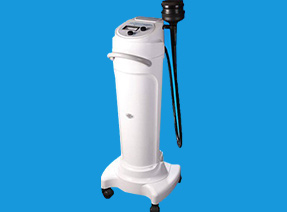
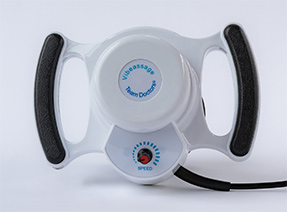
Two of these are the Vibeassage Pro and the Vibeassage Sport.
These are not magic devices. They are not cures. They are tools people use for comfort, relaxation, and to help support their own recovery routines.
Many people use them as part of their personal resilience training, nervous system regulation, and daily care routines. Some use them after work. Some after travel. Some after exercise. Some during stressful periods of life.
They are simply tools to help people take part in their own care.
Which is a big part of the Human Spring philosophy.
Where This Story Is Going
This article is not about selling anything.
It is about helping you understand:
- Why the body works more like a spring than a machine
- Why pain, stiffness, fatigue, and stress often travel together
- Why human spring biomechanics and biomechanics optimization matter in everyday life
- And how a function-first medicine way of thinking can change how you see your own body
In Part 2, we will go deeper into:
- How the spring system actually works
- How stress, inflammation, and guarding patterns build up
- Why the nervous system plays such a big role
- And how movement-based medicine and functional recovery fit into this picture
How the Human Spring System Gets Stressed—and How It Begins to Calm Down
To understand why so many people feel stiff, tired, tight, or worn down, you first have to understand something simple:
Your body is not meant to be rigid.
It is meant to move, bend, stretch, rebound, and adapt. That is the whole idea behind the human spring system.
When everything is working well, your body quietly handles gravity, walking, standing, sitting, lifting, and even stress without you thinking much about it. Your feet, legs, hips, spine, shoulders, and neck all share the work. This is part of what Dr. Stoxen calls human spring biomechanics.
But life is not gentle.
People sit too much. They look down at screens. They rush. They carry stress in their bodies. They get injured. They stop moving in natural ways.
Over time, the spring system does not break all at once. It slowly gets less elastic.
This is where biomechanics optimization and movement pattern correction start to matter. When the body loses its natural bounce, other parts have to work too hard. That is how kinetic chain dysfunction begins.
The Quiet Role of Gravity
You live your whole life inside gravity.
You don’t notice it, but your body does.
Every second of every day, gravity is pushing down on you. Your body’s job is not to fight gravity, but to work with it. This is the idea behind gravity and the body.
When your posture is balanced, your spring system spreads the load. When posture slowly changes, or when muscles stay tight for too long, the load no longer spreads out well.
That is why posture correction and structural balance are not about looking good. They are about making gravity easier to live with.
This is also why gait analysis—the study of how you walk—can tell so much about what is happening in the rest of your body.
Your feet, in particular, matter more than most people realize. Healthy foot spring mechanics help soften every step. When that spring action fades, the stress travels upward.
Stress, Guarding, and the Nervous System
Your body has a built-in alarm system.
When it feels danger, pain, or overload, it tightens up to protect you. This is part of stress physiology and nervous system regulation.
In the short term, this is helpful.
But when stress never really turns off, the body can stay tight even when it doesn’t need to. This is when people start feeling stuck, restricted, and tired.
This is also when people begin searching for help with nervous system reset, resilience training, and burnout recovery.
Some people notice their mind feels cloudy. They look for brain fog treatment or mental clarity optimization. Others feel emotionally flat or overwhelmed and start reading about the brain-body connection, mood optimization, and even the relationship between neuroinflammation and inflammation and depression.
The Human Spring Approach does not separate the mind from the body.
It sees them as one system.
When Small Problems Become Big Ones
Most long-term problems do not start big.
They start as small changes in movement.
A slightly shorter step. A slightly turned foot. A slightly tilted head. A slightly stiff shoulder.
Over time, these small changes can become movement pattern correction issues that never got corrected.
This is how the body slowly shifts into musculoskeletal medicine territory and sometimes even into more complex nerve compression syndromes that send people looking for specialists, including a thoracic outlet syndrome expert.
But again, the Human Spring Approach does not begin with labels.
It begins with asking:
“How is the system moving?”
The Integrated Spring-Mass Model in Simple Words
The Integrated Spring-Mass Model is a fancy name for a simple idea.
Your body is made of weight (mass) and elastic parts (springs). When those springs work well, movement is smooth and efficient. When they don’t, movement becomes heavy and stressful.
This model is the foundation of the Human Spring Approach and of human spring biomechanics.
It is also why Dr. Stoxen focuses so much on function-first medicine and root-cause medicine instead of just chasing symptoms.
Recovery Is About Restoring Motion, Not Forcing It
Many people think recovery means pushing harder.
But often, real functional recovery begins when the body starts to move more easily again.
This is the heart of movement-based medicine.
It is also why people working in recovery medicine and elite performance recovery do not only focus on strength. They focus on rhythm, timing, and flow.
This way of thinking is also used in performance biomechanics and injury prevention biomechanics—not just to fix problems, but to avoid them.
A Story of Fear and Relief
You already read about the woman who thought she was dying.
Her story is not rare.
Many people who feel chest tightness, breathing restriction, or strange nerve sensations become terrified. Their nervous system is already on high alert, and fear makes everything worse.
When the body finally begins to calm down, the relief is not just physical.
It is emotional.
This is part of chronic pain recovery, inflammation reduction, and helping the body find a safer, quieter state.
Why Non-Surgical Approaches Matter
Dr. Stoxen is often described as a non-surgical recovery expert and someone focused on non-surgical pain relief.
This does not mean surgery is never needed for anyone.
It means that many problems come from how the system is working, not from something that needs to be removed or cut.
This way of thinking fits into inflammation-based medicine and function-first medicine—helping the body work better instead of forcing it.
High-Level Care, Same Simple Principles
Over the years, Dr. Stoxen has worked in many high-pressure environments.
He has helped people through intensive recovery program settings, 7-day recovery program experiences, private in-home treatment, and even luxury hotel treatment program setups.
Some people call these VIP recovery week, concierge recovery medicine, executive recovery retreat, rapid recovery program, or high-intensity rehab experiences.
They are sometimes used by people who live under extreme demands—performers, business leaders, and athletes.
But the principles are the same for everyone.
Restore motion.
Calm the nervous system.
Support the spring.
Tools People Can Use Themselves
This is also why Dr. Stoxen helped develop tools like the Vibeassage Pro and Vibeassage Sport.
They are not medical treatments. They are tools people use for comfort, relaxation, and supporting their own routines.
Some people use them after long days. Some after travel. Some after workouts. Some during stressful times.
They are part of a self-care approach that supports nervous system regulation, energy restoration, and daily comfort.
A Doctor Known for Big Stages and Simple Ideas
Dr. Stoxen is known as a world-renowned doctor, international medical speaker, keynote medical speaker, medical innovator, and bestselling medical author.
He has worked as a tour doctor for major artists and is often described as a performance medicine pioneer.
But the idea he teaches is simple:
The body works best when it moves like a spring.
What Comes Next
In Part 3, we will explore:
- How the Human Spring Approach is used in real life
- How performance, recovery, and daily living all connect
- How ideas like human performance optimization, performance longevity, peak performance medicine, and longevity medicine fit into this model
- And how people—from everyday individuals to high-level performers—apply these ideas in their own lives
From Everyday Life to Elite Performance: How the Human Spring Approach Is Used
Most people think that doctors who work with famous performers and top athletes live in a completely different world.
In some ways, that’s true.
Dr. James Stoxen has spent years working in settings that most people never see. He is often described as a celebrity doctor, celebrity health expert, celebrity performance doctor, and celebrity wellness coach. He has provided VIP medical care, practiced concierge medicine, and worked as a private doctor for celebrities who expect the highest level of attention and discretion.
He has taken care of elite client health needs and provided high-profile patient care through luxury medical services and special executive health program arrangements. In the entertainment world, he is known as an entertainer health specialist, a tour doctor, and someone who provides on-tour medical care as a trusted backstage doctor.
Some people even call him a Hollywood doctor.
In sports, he is also known as a professional athlete doctor.
But here is the part that might surprise you:
The body of a world-famous performer and the body of a normal person from a small town work the same way.
Both are built on the human spring system.
Performance Is Not Just for Athletes
When people hear the word “performance,” they often think about sports or concerts.
But performance is really just how well you live your life.
Getting out of bed without pain.
Walking without stiffness.
Thinking clearly at work.
Having energy at the end of the day.
That is why Dr. Stoxen’s work fits into performance medicine, peak performance medicine, and human performance optimization.
It is also why ideas like performance longevity and longevity medicine matter to everyone, not just athletes.
If your body’s spring system is worn down, everything in life feels harder.
If your spring system works well, life feels lighter.
The Same Principles in High-Pressure Worlds
When performers are on tour, they live under constant stress. Travel, strange beds, long rehearsals, bright lights, loud music, and emotional pressure all add up.
That is why Dr. Stoxen has spent so much time as a tour doctor for major artists, helping with on-tour medical care and keeping people functioning night after night.
In these settings, the goal is not just to survive.
The goal is elite performance recovery, recovery medicine, and keeping people ready to perform again tomorrow.
The same ideas are used with business leaders who come in for executive recovery retreat experiences, VIP recovery week programs, or intensive recovery program settings.
Some of these experiences take place in private in-home treatment environments. Others happen in luxury hotel treatment program locations. Some are described as concierge recovery medicine, rapid recovery program, or even high-intensity rehab setups.
The names change.
The principles do not.
The Human Spring Approach in Simple Terms
The Human Spring Approach is not a secret technique.
It is a way of thinking.
It is based on human spring biomechanics and the Integrated Spring-Mass Model, which see the body as a system that is meant to absorb, store, and release energy smoothly.
When that system is working well:
- Movement feels easier
- The body feels lighter
- The nervous system is calmer
- Daily stress is easier to handle
This supports nervous system regulation, energy restoration, and better day-to-day function.
When the system is not working well:
- The body feels heavy
- Movement feels stiff
- The nervous system stays on edge
- Fatigue and tension build up
This is when people start looking for help with burnout recovery, brain fog treatment, and mental clarity optimization.
Why High-Level Clients Care About the Basics
You might think that people who live in the world of red carpets and stadiums want complicated solutions.
Most of them don’t.
They want simple things to work again.
They want to move.
They want to breathe easily.
They want to sleep.
They want their bodies to stop feeling like a problem.
That is why so many of them are drawn to function-first medicine, root-cause medicine, and movement-based medicine instead of just covering things up.
It is also why they care about biomechanics optimization, movement pattern correction, posture correction, gait analysis, and structural balance.
If the basics are off, nothing else works well.
The Role of Stress, Travel, and Pressure
High performers live under pressure.
So do many normal people.
Deadlines, family responsibilities, financial worries, and health fears all put the nervous system on alert.
This is where stress physiology and the brain-body connection become very real.
When stress stays high for too long, people may notice:
- Trouble thinking clearly
- Low energy
- Heavy or tight bodies
- Changes in mood
This is why people start reading about mood optimization, neuroinflammation, and the link between inflammation and depression.
The Human Spring Approach does not treat these as separate problems.
It sees them as different faces of the same system being under too much strain.
Injury, Overuse, and the Chain Reaction
In sports and in life, injuries rarely stay in one place.
A problem in the foot changes the knee.
A problem in the hip changes the back.
A problem in the shoulder changes the neck.
This is kinetic chain dysfunction.
It is also why performance biomechanics and injury prevention biomechanics are so important.
When the spring system loses its smooth flow, stress gets pushed into the wrong places.
Over time, this can show up as musculoskeletal medicine issues or even more complex nerve compression syndromes that send people searching for specialists, including a thoracic outlet syndrome expert.
But again, the Human Spring Approach starts with movement, not labels.
Real Recovery Is About the Whole System
Dr. Stoxen’s reputation as a non-surgical recovery expert and his focus on non-surgical pain relief come from this whole-system thinking.
This fits into inflammation-based medicine and function-first medicine—supporting how the body works instead of fighting it.
It also fits into chronic pain recovery and inflammation reduction approaches that aim to calm the system instead of pushing it harder.
The Role of Simple Tools in Daily Care
Not everyone can spend time in a special recovery setting.
That is why Dr. Stoxen helped create tools like the Vibeassage Pro and Vibeassage Sport.
They are not treatments or cures.
They are tools people use for comfort, relaxation, and daily self-care.
Many people use them as part of their routines to support nervous system regulation, resilience training, and energy restoration.
They are part of learning to take care of your own spring system.
A Doctor Known Worldwide, Teaching Simple Ideas
Dr. Stoxen is widely known as a world-renowned doctor, international medical speaker, keynote medical speaker, medical innovator, and bestselling medical author.
He has received elite performer testimonials and is often described as a performance medicine pioneer.
But the idea he teaches is not complicated:
Your body is a spring system.
Treat it like one.
What Comes Next
In Part 4, the final section, we will bring everything together and talk about:
- How these ideas apply to everyday life at home
- How people build simple daily routines around movement and care
- How the Vibeassage Pro and Vibeassage Sport fit into self-care
- And how the Human Spring Approach becomes a long-term way of living, not a short-term fix
Living in a Way That Supports Your Human Spring
By now, you can see that the Human Spring Approach is not a quick trick or a short program.
It is a way of understanding your body.
It is a way of living.
It is based on the idea that your body is not a stiff machine, but a living, moving system built on the human spring system and explained through human spring biomechanics and the Integrated Spring-Mass Model.
When people first hear this, many of them feel a sense of relief.
They realize that their body is not “broken.”
It is just tired, stressed, and overloaded.
A Body That Was Built to Adapt
Your body was built to walk, bend, reach, twist, and recover.
It was built to handle gravity through foot spring mechanics, structural balance, and the way it manages gravity and the body every day.
When the spring system is working well, movement feels lighter. When it is not, life starts to feel heavy.
This is why posture correction, gait analysis, movement pattern correction, and biomechanics optimization are not just for athletes. They are for anyone who wants to feel better in daily life.
The Nervous System Comes First
One of the most important parts of the Human Spring Approach is understanding the nervous system.
When the nervous system feels threatened, it tightens the body.
When it feels safe, the body lets go.
This is the heart of nervous system regulation, stress physiology, and what many people describe as a nervous system reset.
This is also why people notice changes in their energy, mood, and thinking when their body begins to calm down.
They may start to feel more clear-headed, which connects to mental clarity optimization and brain fog treatment.
They may feel emotionally lighter, which connects to mood optimization, the brain-body connection, and even the way people think about neuroinflammation and inflammation and depression.
Again, this is not about making claims.
It is about understanding how deeply connected the body and mind really are.
Why People Get Stuck in Pain and Fatigue
Most long-term problems are not caused by one big event.
They come from years of small stress.
Too much sitting.
Too much tension.
Too little natural movement.
Too much pressure to “push through.”
Over time, this can show up as stiffness, heaviness, and many kinds of musculoskeletal medicine complaints. In some people, it can involve more complex nerve compression syndromes that send them searching for specialists, including a thoracic outlet syndrome expert.
But the Human Spring Approach always comes back to the same question:
“How is the whole system working?”
Recovery as a Lifestyle, Not an Emergency
Many people only think about recovery when things get really bad.
But real functional recovery and chronic pain recovery work best when recovery becomes part of daily life.
This is where movement-based medicine, function-first medicine, and root-cause medicine all come together.
Instead of waiting for breakdown, you start supporting the system every day.
This also fits into inflammation-based medicine and non-surgical pain relief thinking, which focus on helping the body work better instead of forcing it.
It is also why Dr. Stoxen is often described as a non-surgical recovery expert.
How High Performers and Everyday People Are the Same
Dr. Stoxen’s career has taken him into some very unusual places.
He is known as a celebrity doctor, celebrity health expert, celebrity performance doctor, and celebrity wellness coach. He has provided VIP medical care, worked in concierge medicine, and served as a private doctor for celebrities.
He has supported elite client health and high-profile patient care through luxury medical services and special executive health program arrangements. He has worked as an entertainer health specialist, a tour doctor, providing on-tour medical care as a trusted backstage doctor. Some people call him a Hollywood doctor. In sports, he is also known as a professional athlete doctor.
He has helped people prepare for demanding performances through performance medicine, peak performance medicine, human performance optimization, performance longevity, longevity medicine, and anti-aging medicine in practical, real-world ways. Long before these ideas were popular, he was already thinking about biohacking for longevity and human performance optimization in simple, useful terms.
He has helped people recover through elite performance recovery, recovery medicine, and special programs like intensive recovery program, 7-day recovery program, VIP recovery week, private in-home treatment, luxury hotel treatment program, concierge recovery medicine, executive recovery retreat, rapid recovery program, and high-intensity rehab.
He is known as a world-renowned doctor, international medical speaker, keynote medical speaker, medical innovator, and bestselling medical author. He has received many elite performer testimonials and is often called a performance medicine pioneer.
But here is the truth:
A famous person’s body and your body work the same way.
Both are built on springs.
The Role of Simple Daily Care
Not everyone can go to a special retreat or work one-on-one with a doctor.
That is why Dr. Stoxen helped create tools like the Vibeassage Pro and Vibeassage Sport.
They are not medical treatments or cures.
They are tools people use for comfort, relaxation, and daily self-care.
Many people use them as part of routines that support nervous system regulation, resilience training, energy restoration, and simple recovery after long days, travel, or physical work.
They are one small part of learning to take care of your own body.
A Way of Thinking That Lasts
The Human Spring Approach is not something you “finish.”
It becomes part of how you live.
You start to notice how you sit.
How you walk.
How you breathe.
How you carry stress.
You begin to respect the spring inside you.
You begin to understand performance biomechanics, injury prevention biomechanics, and how kinetic chain dysfunction happens when one part of the system stops working well.
You stop seeing your body as a collection of broken parts and start seeing it as one connected system.
A Final Story of Why This Matters
Remember the woman who thought she was dying?
She did not need a new label.
She needed her body to calm down.
She needed her breathing to come back.
She needed her nervous system to feel safe again.
When that happened, she said, “This saved my life.”
That is what this work is really about.
Not hype.
Not promises.
Not miracles.
Just helping the human spring work the way it was designed to work.
The Simple Truth
Your body is not a machine.
It is a spring system.
When you take care of it, support it, and stop fighting it, life becomes easier.
That is the heart of the Human Spring Approach.
Team Doctors Resources
✓ Check out the Team Doctors Recovery Tools
The Vibeassage Sport and the Vibeassage Pro featuring the TDX3 soft-as-the-hand Biomimetic Applicator Pad
https://www.teamdoctors.com/
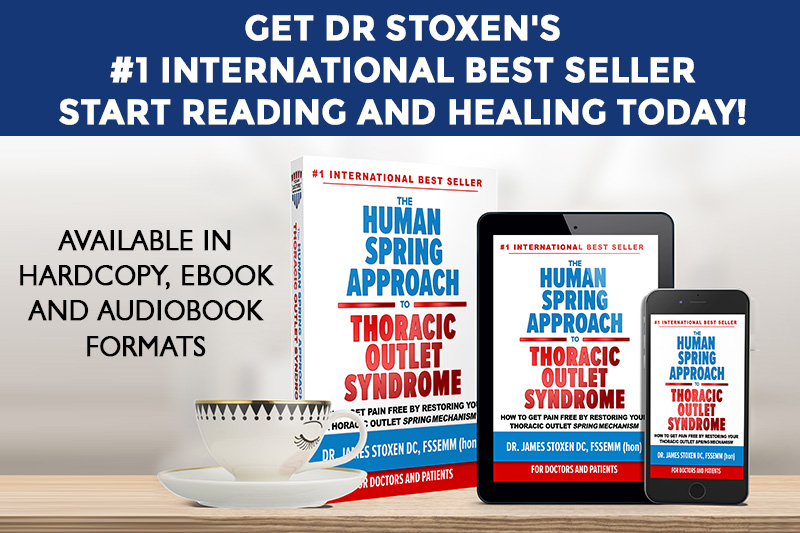
✓ Get Dr. Stoxen’s #1 International Bestselling Books
Learn how to understand, examine, and reverse your TOS—without surgery.
https://drstoxen.com/1-international-best-selling-author/
✓ Check out Team Doctors Online Courses
Step-by-step video lessons, demonstrations, and self-treatment strategies.
https://teamdoctorsacademy.com/
✓ Schedule a Free Phone Consultation With Dr. Stoxen
Speak directly with him so he can review your case and guide you on your next steps.
https://drstoxen.com/appointment/
#ThoracicOutletSyndrome #TOS #ArmNumbness #ShoulderPain #NerveCompression #PostureMatters #UpperExtremity #ChronicPainEducation #Biomechanics #MovementHealth #NeckPain #HandTingling #ClinicalObservation #ConservativeCare #RehabEducation #SoftTissue #VascularSymptoms #NeurologicalSymptoms #PatientEducation #TeamDoctors

Dr James Stoxen DC., FSSEMM (hon) He is the president of Team Doctors®, Treatment and Training Center Chicago, one of the most recognized treatment centers in the world.
Dr Stoxen is a #1 International Bestselling Author of the book, The Human Spring Approach to Thoracic Outlet Syndrome. He has lectured at more than 20 medical conferences on his Human Spring Approach to Thoracic Outlet Syndrome and asked to publish his research on this approach to treating thoracic outlet syndrome in over 30 peer review medical journals.
He has been asked to submit his other research on the human spring approach to treatment, training and prevention in over 150 peer review medical journals. He serves as the Editor-in-Chief, Journal of Orthopedic Science and Research, Executive Editor or the Journal of Trauma and Acute Care, Chief Editor, Advances in Orthopedics and Sports Medicine Journal and editorial board for over 35 peer review medical journals.
He is a much sought-after speaker. He has given over 1000 live presentations and lectured at over 70 medical conferences to over 50,000 doctors in more than 20 countries. He has been invited to speak at over 300 medical conferences which includes invitations as the keynote speaker at over 50 medical conferences.
After his groundbreaking lecture on the Integrated Spring-Mass Model at the World Congress of Sports and Exercise Medicine he was presented with an Honorary Fellowship Award by a member of the royal family, the Sultan of Pahang, for his distinguished research and contributions to the advancement of Sports and Exercise Medicine on an International level. He was inducted into the National Fitness Hall of Fame in 2008 and the Personal Trainers Hall of Fame in 2012.
Dr Stoxen has a big reputation in the entertainment industry working as a doctor for over 150 tours of elite entertainers, caring for over 1000 top celebrity entertainers and their handlers. Anthony Field or the popular children’s entertainment group, The Wiggles, wrote a book, How I Got My Wiggle Back detailing his struggles with chronic pain and clinical depression he struggled with for years. Dr Stoxen is proud to be able to assist him.
Full Bio) Dr Stoxen can be reached directly at teamdoctors@aol.com