I first met Anastasia during one of the most physically and emotionally overwhelming periods of her life.
She was a mother working from home—like millions during the pandemic—shifting between caring for her children, managing a demanding remote workload, and unknowingly placing her body under a pattern of strain that would eventually trigger one of the most severe cases of thoracic outlet syndrome I have treated outside of surgery centers and elite performance environments.
Her symptoms began innocently. She worked long hours at a kitchen counter, her body twisted slightly, her monitor positioned too far left, and her arms elevated at unnatural angles.
This prolonged posture created tension that accumulated day after day. Soon she started feeling tightening across her neck, shoulders, and collarbone, with discomfort spreading toward her sternum.
What began as mild tension quietly escalated into deep muscular contraction involving the scalene muscles, pectoralis minor, and the delicate region beneath the clavicle where the subclavius muscle lies.
When these muscles tighten, especially the anterior scalene muscle, they can distort the thoracic outlet and compress the nerves and vessels passing beneath the clavicle.
Many patients describe this as burning, squeezing, or pressure radiating down the arm—exactly like Anastasia experienced.
She reported numbness in hand, hand numbness and tingling, numbness in arm and hand, and tingling radiating from the collarbone down the arm.
Her symptoms worsened with certain positions—reading while lying on her back, lifting her head repeatedly while interacting with her children, and holding her phone with her neck flexed—all of which further triggered irritation consistent with tight scalene muscles symptoms, muscle under clavicle pain, and early stages of anterior scalene syndrome.
Before she found me, she sought help from multiple chiropractors.
She explored massage therapy, physical therapy, chiropractic treatment, and even acupuncture, but none of these approaches identified or resolved the underlying muscular compression. Her symptoms rapidly intensified.
Within two weeks her collarbone region, upper back, sternum, and shoulders felt as though they were “on fire”—her exact words. She struggled to breathe deeply at night. She could not relax her muscles. Her nervous system was stuck in hypervigilance, and sleep became nearly impossible.
One night, convinced she might be experiencing a cardiac emergency, she went to the emergency department.
They performed full imaging, including MRI, scans, and ECG. Her heart was clear.
But once again, she left without answers.
No one recognized that the combination of arm tingling, collarbone burning, anterior chest pain, and positional breathing difficulty pointed directly toward progressive thoracic outlet syndrome, involving layers of muscular contraction affecting the thoracic muscles, scalene muscles, and surrounding support structures.
In this stage, some patients begin to express symptoms associated with related conditions such as pectoralis minor syndrome, anterior scalene muscle syndrome, and thoracic myalgia.
Although she did not experience every symptom seen in severe TOS, she did present a nearly textbook pattern of progressive muscular hypertonicity and neurovascular irritability.
She did not experience discoloration issues sometimes associated with advanced cases—such as blue finger—and I emphasize this distinction because accuracy matters. Her presentation was severe, but strictly neurogenic and muscular, not vascular.
Desperate for clarity, she began searching online.
That is when she found my book, The Human Spring Approach to Thoracic Outlet Syndrome.
She told me later that reading the description of how the body’s spring mechanisms fail—how muscles contract and lose elasticity under stress—felt like reading a mirror of her own life. She emailed me, hoping for direction. I responded immediately.
She told me she couldn’t travel. She couldn’t sleep, couldn’t lie flat, couldn’t tolerate long car rides, and certainly could not fly. Her symptoms were worsening daily.
I understood what needed to be done.
Some cases cannot wait for travel arrangements or scheduling weeks in advance.
She required immediate intervention to prevent her condition from escalating into chronic muscular contraction cycles that would be exponentially harder to reverse.
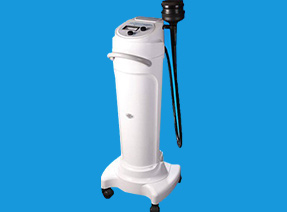
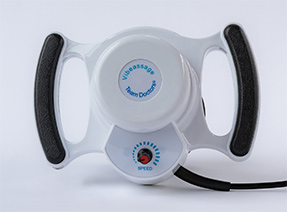
So I flew to Kansas City the next day with a full portable clinic: treatment table, medical tools, and the biomimetic vibration instruments I designed—specifically the Vibeassage Sport and Vibeassage Pro—which have become essential in massaging the sore muscles and preparing deep musculature for precision manual work.
When I arrived, I performed a complete orthopedic, neurological, and functional examination.
I tested every joint, every muscle, every motion pattern. I evaluated how neck tilt affected nerve tension, how arm elevation affected circulation, and how clavicular pressure reproduced her symptoms.
I palpated through the thoracic outlet and confirmed severe contraction in the anterior scalene muscle, scalene muscles, pectoralis minor, and subclavius muscle—a classic multilayer compression signature.
Her case was, without exaggeration, severe. But it was also reversible.
She did not need an anterior scalenectomy, nor a pectoralis minor tenotomy, nor any form of rib resection. Her issue was muscular, not structural.
The solution was to release each contracted muscle of the thoracic outlet—slowly, systematically, and precisely—using a combination of vibration decompression, deep manual treatment, and postural re-education.
We began immediately.
For hours each day—often more than 10 hours—we worked to decompress each muscle implicated in her compression pattern.
First I used the Vibeassage Pro to reduce deep inflammation and allow for safer manual entry into the contracted tissues.
Then I began the painstaking work of muscles scalene treatment, anterior scalene syndrome treatment, and targeted decompression across the thoracic outlet. I treated every contributing fiber: the thoracic muscles, the deep clavicular tissues, the pectoralis minor, and each adhesion restricting the upper rib mechanics.
By the end of Day 2, she experienced a dramatic reduction in tingling. By Day 3, she slept—truly slept—for the first time in weeks.
By Day 5, the burning sensations had faded, her breath expanded easily, and her posture began to restore its natural spring-like balance.
She felt hope again. And this time, it was real.
By the morning of Day 3, Anastasia experienced the first unmistakable signs that her body was finally emerging from the cycle of contraction and inflammation that had consumed her life for weeks.
Her breathing deepened. The oppressive tightness across her sternum eased. The burning sensations that once radiated from her collarbone into her arm began dissolving.
Most importantly, the neurological irritability that produced numbness in hand, hand numbness and tingling, and numbness in arm and hand diminished significantly.
These changes are predictable when the root cause—muscular compression—is removed. Many patients initially assume their condition is neurological, arthritic, circulatory, or even cardiac, especially when they feel pain in the chest, shoulder, and collarbone region simultaneously.
But with thoracic outlet syndrome, the explanation is often mechanical: the compressed musculature of the thoracic outlet reduces the available tunnel space for nerves and vessels, triggering radiating symptoms that mimic more ominous diagnoses.
In Anastasia’s case, the principal contributing tissues were the scalene muscles, the anterior scalene muscle, the pectoralis minor, and the subclavius muscle—a cluster of structures that form the muscular gateway through which the neurovascular bundle travels from the neck into the arm.
When these tissues tighten from stress, posture collapse, or repetitive positioning, they create powerful compression forces.
This can lead to patterns commonly classified under anterior scalene syndrome, pectoralis minor syndrome, or broader variants of thoracic myalgia.
Although she never developed advanced vascular symptoms or circulatory shutdown, her muscular tension alone was enough to produce significant neurological irritation.
Her symptoms worsened with certain positions—head forward, arms elevated, shoulders protracted—all of which further closed the thoracic outlet.
These patterns are so consistent that they appear across nearly all severe cases, regardless of age, profession, or background.
Many patients come to me after being offered surgical solutions such as anterior scalenectomy or pectoralis minor tenotomy, procedures that once were considered the standard of care.
But surgery removes tissue without addressing the underlying dysfunction of the body’s spring system.
The body was never designed to be treated as a rigid lever system; it is an integrated, compliant spring mechanism.
When that spring is overloaded, the muscles contract defensively. Removing the muscles does not reverse the contraction pattern—it simply alters the anatomy.
This is why patients often fail to respond to post-surgical TOS exercises, TOS Physical Therapy, or generalized thoracic outlet syndrome physical therapy exercises.
The true solution lies in restoring joint play, releasing chronic contraction, and resetting the muscular circuitry controlling the thoracic outlet.
For Anastasia, this required methodical, sustained, and highly targeted work.
The Treatment Process
Before each manual session, I used the Vibeassage Pro across her upper body.
The biomimetic applicator allows deep decompression through rhythmic, low-amplitude vibration, worked the tension out of the muscles.
This technique prepares the tissue layers for precise manual therapy by softening hypertonic fibers and reducing guarding reflexes.
Once the tissues were warmed and decompressed, I applied deep manual treatment—fraction of an inch at a time—along every contributing fiber.
This included:
- The belly and attachments of the anterior scalene muscle
- The deep fibers of the scalene muscles
- The costoclavicular interval involving the subclavius muscle
- The upper ribs and fascial planes of the thoracic muscles
- The tendinous and muscular segments of the pectoralis minor
This approach is not simply “trigger point therapy.” It is a structured, layered decompression process requiring patience, anatomical precision, and the ability to interpret the tissue response moment to moment.
As we progressed, her symptoms changed predictably. The burning around the sternum diminished as the clavicular region began to expand. Pressure between the shoulder blades softened. The tingling radiating down her arm—once constant—became intermittent, then positional, and finally resolved completely by the end of treatment.
Because she initially struggled to sleep and breathe fully, we also performed gentle corrective work on her rib mechanics.
The upper ribs often become fixed when the surrounding musculature remains in hypertonic contraction. Once we restored mobility, her thoracic expansion returned, and the sense of chest restriction disappeared.
The Psychological Burden
One of the most important aspects of Anastasia’s case was the psychological strain she endured before reaching me.
Like many patients, she encountered a bewildering cycle: symptoms escalating rapidly, contradictory explanations from different practitioners, emergency-level discomfort without answers, and the frightening sense that her body was no longer under her control.
This emotional distress amplifies muscular tension.
When a patient lives in a state of fear, their sympathetic nervous system elevates muscle tone—making conditions such as thoracic outlet syndrome worse.
During our sessions, she frequently expressed relief that someone finally understood the pattern, could explain each symptom, and could show her step-by-step how the condition developed and how we would reverse it.
That clarity—and the immediate physical improvement she felt each day—helped her nervous system shift out of the crisis mode that had kept her symptoms locked in place.
Why Her Posture Made Everything Worse
Her home setup was a perfect storm.
Twisting at the waist, reaching forward with elevated arms, craning the neck downward at a phone, and repeatedly lifting her head while interacting with her children—all these movements compressed the thoracic outlet. Each little action added micro-strain to the already overloaded thoracic muscles, scalene muscles, and pectoralis minor.
The worst combination was reading while lying down with her arms flexed upward and her head propped forward. This position is known to exacerbate muscle under clavicle pain, intensify anterior scalene syndrome symptoms, and reinforce the downward pull of the shoulders that magnifies compression.
The Turning Point
By Day 5, she no longer experienced:
- burning across the collarbone
- sternum pressure
- neck-shoulder tension
- tingling down the arm
- nighttime breathing difficulty
Her postural alignment improved. Her cervical mechanics normalized. Her thoracic outlet regained space. The muscles that once behaved like locked steel cables now moved like healthy elastic springs.
For the first time in weeks, she could lie down, breathe deeply, sleep through the night, and use her arm without fear of symptom resurgence.
When I left Kansas City, she was not only relieved—she was empowered. She understood what caused her condition, why it worsened so quickly, and exactly how to prevent it from returning.
I instructed her and her husband on how to use the Vibeassage Sport and Vibeassage Pro at home, and gave her a precise progression of strengthening drills to maintain thoracic outlet stability.
Her recovery had begun, but more importantly—she now possessed the tools to maintain it.
By the final day of treatment, Anastasia was experiencing a degree of physical relief and mobility that had felt impossible only a week earlier.
The most striking moment came early that morning when she took a full, deep breath without the gripping tightness that once seized her chest and upper ribs. Her posture had transformed—her shoulders rested naturally instead of pulling upward; her neck regained its natural alignment; her thoracic outlet, once compressed and inflamed, now functioned freely.
This transformation did not occur by accident. It occurred because we reversed the primary drivers of her condition: chronic muscular contraction, inflammation, and mechanical compression.
Once these forces were removed, the nervous system finally relaxed, blood flow improved, and the cascade of symptoms began to unravel.
Why Severe TOS Seems Mysterious to Patients
Many individuals with thoracic outlet syndrome spend months—sometimes years—searching for answers because their symptoms seem scattered: burning in the chest, tension in the neck, pain around the collarbone, radiating symptoms into the arm, difficulty breathing in certain positions, and numbness or tingling in the hand.
But these symptoms share a single mechanical root: compression of the thoracic outlet structures by overloaded muscles such as the scalene muscles, pectoralis minor, and subclavius muscle.
These muscles tighten from a combination of posture collapse, repetitive strain, and neuro-inflammatory loop activation.
If the muscles remain chronically engaged, the brachial plexus and subclavian vessels passing beneath the clavicle are compressed.
This can create the tingling, burning, and numb sensations like Anastasia’s numbness in hand, hand numbness and tingling, or numbness in arm and hand with shoulder pain.
This placed her at high risk for progression toward more complex forms of thoracic outlet syndrome, including variants sometimes addressed surgically with procedures such as anterior scalenectomy or pectoralis minor tenotomy.
Fortunately, by intervening early and comprehensively, we avoided those outcomes entirely.
Restoring the Body’s Spring Mechanics
Throughout her treatment, we rebuilt the spring mechanics of her upper kinetic chain.
Muscles are supposed to act like springs—absorbing force, storing elastic energy, and releasing it efficiently.
When they become rigid, inflamed, and shortened, the entire system collapses. This leads to the defensive tightening that worsens symptoms.
Each day of treatment followed the same sequence:
- Deep vibration decompression using the Vibeassage Pro, allowing fluid movement through congested tissues.
- Layered manual treatment along the thoracic outlet, including targeted
- muscles scalene treatment
- anterior scalene syndrome treatment
- precision work through the thoracic muscles and clavicular fascia
- Myofascial release for thoracic outlet syndrome, applied fiber-by-fiber across every contributing muscle.
- Mobility restoration through guided movement, rib mechanics work, and neural glide evaluation.
- Progressive rebalancing of posture and shoulder mechanics.
Her tissues responded beautifully. Muscles that once felt like concrete softened.
The pectoralis minor, one of the strongest contributors to brachial plexus compression, regained normal elasticity.
The scalene muscles, once in constant contraction, released enough tension to restore the height and openness of her thoracic outlet.
Why Traditional Therapies Failed Her
Anastasia had already tried massage therapy, physical therapy, chiropractic treatment, and acupuncture.
While these approaches can help some patients, they often fail in severe thoracic outlet cases for one simple reason:
They do not treat every compressed muscle of the thoracic outlet with enough depth, duration, and precision.
Many programs focus heavily on thoracic outlet syndrome exercises, TOS stretches, or general strengthening. But when the muscles are in a hypertonic state—locked in overload—exercise alone cannot break the contraction cycle. Similarly, short appointments do not provide the level of intensity required to decompress the deep fibers of the anterior scalene muscle, the subclavius muscle, or the pectoralis minor.
This is why her previous providers could not help her, even though they acted in good faith. The muscular compression was simply too severe.
The Role of Home Treatment
Before I left Kansas City, I trained Anastasia and her husband in a structured home-care protocol using the Vibeassage Sport and Vibeassage Pro. These devices allowed her to maintain tissue softness, support circulation, and prevent re-contraction of the thoracic outlet.
I also provided her with a progression of exercises for thoracic outlet syndrome, including:
- graded mobility drills
- scapular retraining
- controlled rib expansion
- postural alignment work
These were not generic exercises; they were tailored precisely to her biomechanics, ensuring safe and sustainable improvement.
We also reviewed modification of daily habits:
- No reading while lying on her back with her head elevated
- No prolonged forward-flexed phone posture
- No twisting at the waist while typing
- Frequent decompression breaks during computer work
She embraced every instruction with discipline and optimism.
Her Recovery
By the end of treatment, Anastasia’s symptoms had resolved.
The burning sensations, collarbone pain, sternum tension, and neurological symptoms were gone.
She could finally sleep at night, breathe fully, and move through her day without fear of sudden flare-ups.
Her transformation was emotional not only for her but for her family. The fear she once felt—fear of not being able to care for her children, fear of life never returning to normal—had been replaced with relief, confidence, and physical freedom.
Two years later, she remains symptom-free.
She uses her Vibeassage Sport at home, maintains her exercises, and continues to honor the posture principles we discussed.
She is living proof of what is possible when thoracic outlet syndrome is treated at its root—muscular compression—rather than through invasive procedures.
Final Clinical Reflection
Anastasia’s case exemplifies how dramatically the body can recover when every contributing muscle is addressed with precision, persistence, and a deep understanding of human biomechanics. Her story is not just about healing; it is about reclaiming her life, her breath, her peace, and her confidence in her own body.
For those enduring similar symptoms—burning in the collarbone, radiating arm tingling, neck and shoulder tightness, or unexplained chest tension—her journey is a reminder:
You are not broken.
You are compressed.
And compression can be undone.
Team Doctors Resources
✓ Team Doctors Recovery Tools
Vibeassage Sport & Pro featuring the TDX3 soft-as-the-hand Biomimetic Applicator Pad
https://www.teamdoctors.com/
✓ Dr. Stoxen’s Bestselling Books
Learn how to understand, examine, and reverse your TOS—without surgery.
https://drstoxen.com/1-international-best-selling-author/
✓ Team Doctors Online Courses
Step-by-step lessons, demonstrations, and self-treatment strategies.
https://teamdoctorsacademy.com/
✓ Schedule a Free Phone Consultation
Speak directly with Dr. Stoxen to review your case.
https://drstoxen.com/appointment/
#ThoracicOutletSyndrome #TOSRecovery #NeckPainRelief #ScaleneMuscles #PectoralisMinorSyndrome #CarpalTunnelMisdiagnosis #DeepTissueTherapy #VibeassagePro

Dr James Stoxen DC., FSSEMM (hon) He is the president of Team Doctors®, Treatment and Training Center Chicago, one of the most recognized treatment centers in the world.
Dr Stoxen is a #1 International Bestselling Author of the book, The Human Spring Approach to Thoracic Outlet Syndrome. He has lectured at more than 20 medical conferences on his Human Spring Approach to Thoracic Outlet Syndrome and asked to publish his research on this approach to treating thoracic outlet syndrome in over 30 peer review medical journals.
He has been asked to submit his other research on the human spring approach to treatment, training and prevention in over 150 peer review medical journals. He serves as the Editor-in-Chief, Journal of Orthopedic Science and Research, Executive Editor or the Journal of Trauma and Acute Care, Chief Editor, Advances in Orthopedics and Sports Medicine Journal and editorial board for over 35 peer review medical journals.
He is a much sought-after speaker. He has given over 1000 live presentations and lectured at over 70 medical conferences to over 50,000 doctors in more than 20 countries. He has been invited to speak at over 300 medical conferences which includes invitations as the keynote speaker at over 50 medical conferences.
After his groundbreaking lecture on the Integrated Spring-Mass Model at the World Congress of Sports and Exercise Medicine he was presented with an Honorary Fellowship Award by a member of the royal family, the Sultan of Pahang, for his distinguished research and contributions to the advancement of Sports and Exercise Medicine on an International level. He was inducted into the National Fitness Hall of Fame in 2008 and the Personal Trainers Hall of Fame in 2012.
Dr Stoxen has a big reputation in the entertainment industry working as a doctor for over 150 tours of elite entertainers, caring for over 1000 top celebrity entertainers and their handlers. Anthony Field or the popular children’s entertainment group, The Wiggles, wrote a book, How I Got My Wiggle Back detailing his struggles with chronic pain and clinical depression he struggled with for years. Dr Stoxen is proud to be able to assist him.
Full Bio) Dr Stoxen can be reached directly at teamdoctors@aol.com