In my clinical experience, one of the most misunderstood aspects of Thoracic Outlet Syndrome involves the anatomy and mechanics of the neck muscles. Many individuals stretch their necks instinctively when discomfort appears, believing this will reduce tension. Mechanically, however, the opposite can occur.
The scalene muscles—anterior, middle, and posterior—originate from the cervical vertebrae, typically spanning C3 through C6. These muscles attach directly to the first and second ribs and serve as important stabilizers for both the neck and upper rib cage.
Because of these attachments, the scalenes play a role not only in head positioning but also in rib movement during breathing. Their function becomes particularly important when the head is loaded to one side.
When an individual side-bends the neck, the weight of the head, which averages around four and a half kilograms, is transferred onto the scalene muscles on that side. This load is not insignificant.
To support this weight, the scalenes contract reflexively. As they contract, they pull upward on their rib attachments, creating first rib elevation.
This upward rib movement narrows the thoracic outlet. The space between the neck and chest wall becomes smaller, especially when the rib approaches the clavicle.
Within this confined region pass the brachial plexus nerves, the subclavian artery, and the subclavian vein. Even subtle changes in rib height can alter the available space for these structures.
Many individuals are unaware of how quickly this narrowing can occur. Even short periods of sustained side-bending can activate this mechanism, particularly when repeated throughout the day.
A pattern I commonly see is individuals stretching their necks because they feel tight. They may tilt their head repeatedly, hold the position, or combine it with shoulder depression.
Rather than reducing tension, this action increases load on the scalenes. As the muscles fatigue from supporting the head’s weight, they contract more strongly to maintain stability.
This fatigue-driven contraction lifts the rib further, worsening thoracic outlet compression instead of relieving it.
As compression increases, neural tissue becomes irritated. One of the earliest signs is tingling in the fourth and fifth digits.
These fingers correspond to the lower portion of the brachial plexus, which is particularly sensitive to compression when the first rib elevates.
Patients often notice this tingling during or after neck stretching, overhead activity, or postures that side-load the head.
Initially, the sensation may be intermittent. Over time, with repeated exposure, it can progress to numbness, aching, heaviness, or radiating discomfort throughout the arm.
These symptoms are often misinterpreted as peripheral nerve problems. However, the origin may be much higher in the kinetic chain.
Understanding this relationship helps explain why symptoms often worsen with activities that appear benign. The thoracic outlet is a narrow anatomical space with little tolerance for added compression.
Any movement that elevates the first rib—especially when combined with muscle guarding, posture strain, or fatigue—can significantly reduce available space.
In my clinical observations, individuals with chronic neck tension often unknowingly reinforce this cycle. Stretching becomes a repetitive habit, and each repetition reinforces rib elevation.
Over time, the tissues become more sensitive. The nervous system responds by increasing protective tone, further tightening the scalenes.
This creates a feedback loop. Increased tone elevates the rib. Elevated rib increases compression. Compression increases sensitivity and guarding.
Because this process is mechanical, it does not always show up on static imaging. X-rays and MRIs taken at rest may appear normal.
However, symptoms emerge during movement, posture changes, or sustained loading of the neck.
This is why understanding scalene anatomy and mechanics is essential in evaluating Thoracic Outlet Syndrome.
The goal of education is not to discourage all movement, but to clarify which movements increase load on vulnerable structures.
Recognizing how side-bending the neck affects rib position allows individuals to interpret their symptoms more accurately.
When tingling appears in the fourth and fifth digits, it may signal rib elevation rather than a hand or wrist problem.
This awareness helps individuals adjust habits before symptoms escalate.
Thoracic Outlet Syndrome is not solely a condition of tight muscles. It is a condition of altered mechanics, load distribution, and space reduction.
By understanding how the head, neck, and ribs interact, the patterns behind symptoms become clearer.
Education empowers individuals to move with intention rather than instinct.
When the mechanics are understood, patients often report fewer flare-ups and a better ability to predict symptom behavior.
This discussion highlights the importance of viewing Thoracic Outlet Syndrome as a dynamic interaction between anatomy and movement.
Understanding the role of the scalenes bridges the gap between symptoms and structure, allowing individuals to connect what they feel with what is mechanically occurring inside the thoracic outlet.
Team Doctors Resources
✓ Check out the Team Doctors Recovery Tools
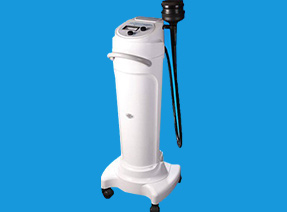
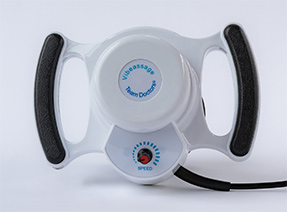
The Vibeassage Sport and the Vibeassage Pro featuring the TDX3 soft-as-the-hand Biomimetic Applicator Pad
https://www.teamdoctors.com/
✓ Get Dr. Stoxen’s #1 International Bestselling Books
Learn how to understand, examine, and reverse your TOS—without surgery.
https://drstoxen.com/1-international-best-selling-author/
✓ Check out Team Doctors Online Courses
Step-by-step video lessons, demonstrations, and self-treatment strategies.
https://teamdoctorsacademy.com/
✓ Schedule a Free Phone Consultation With Dr. Stoxen
Speak directly with him so he can review your case and guide you on your next steps.
https://drstoxen.com/appointment/
#ThoracicOutletSyndrome #ScaleneMuscles #FirstRibElevation #TOSAnatomy #NeckMechanics #BrachialPlexus #UpperExtremitySymptoms #NeckPainEducation #PostureMechanics #MovementAwareness #TOSAwareness #MuscleGuarding #DynamicCompression #NeurogenicTOS #PainEducation #Biomechanics #ClinicalAnatomy #UpperBodyHealth #WhatIsTOS #RehabilitationScience
References
- Roos, D. B. “Thoracic Outlet Syndrome Is Underdiagnosed.” Muscle & Nerve 22, no. 1 (1999): 126–129.
- Sanders, Richard J., and Neal S. Pearce. “Neurogenic Thoracic Outlet Syndrome.” Journal of Vascular Surgery 36, no. 3 (2002): 669–676.
- Urschel, Harold C., and R. B. Razzuk. “The Neurovascular Compression Syndromes of the Thoracic Outlet.” Annals of Thoracic Surgery 50, no. 3 (1990): 484–490.

Dr James Stoxen DC., FSSEMM (hon) He is the president of Team Doctors®, Treatment and Training Center Chicago, one of the most recognized treatment centers in the world.
Dr Stoxen is a #1 International Bestselling Author of the book, The Human Spring Approach to Thoracic Outlet Syndrome. He has lectured at more than 20 medical conferences on his Human Spring Approach to Thoracic Outlet Syndrome and asked to publish his research on this approach to treating thoracic outlet syndrome in over 30 peer review medical journals.
He has been asked to submit his other research on the human spring approach to treatment, training and prevention in over 150 peer review medical journals. He serves as the Editor-in-Chief, Journal of Orthopedic Science and Research, Executive Editor or the Journal of Trauma and Acute Care, Chief Editor, Advances in Orthopedics and Sports Medicine Journal and editorial board for over 35 peer review medical journals.
He is a much sought-after speaker. He has given over 1000 live presentations and lectured at over 70 medical conferences to over 50,000 doctors in more than 20 countries. He has been invited to speak at over 300 medical conferences which includes invitations as the keynote speaker at over 50 medical conferences.
After his groundbreaking lecture on the Integrated Spring-Mass Model at the World Congress of Sports and Exercise Medicine he was presented with an Honorary Fellowship Award by a member of the royal family, the Sultan of Pahang, for his distinguished research and contributions to the advancement of Sports and Exercise Medicine on an International level. He was inducted into the National Fitness Hall of Fame in 2008 and the Personal Trainers Hall of Fame in 2012.
Dr Stoxen has a big reputation in the entertainment industry working as a doctor for over 150 tours of elite entertainers, caring for over 1000 top celebrity entertainers and their handlers. Anthony Field or the popular children’s entertainment group, The Wiggles, wrote a book, How I Got My Wiggle Back detailing his struggles with chronic pain and clinical depression he struggled with for years. Dr Stoxen is proud to be able to assist him.
Full Bio) Dr Stoxen can be reached directly at teamdoctors@aol.com