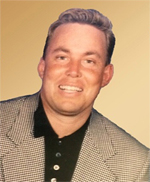
For more than three decades, Anthony Field has been one of the most recognizable faces in children’s entertainment. As the founder and co-star of The Wiggles, Field helped create what would become the most commercially successful children’s musical group in history. Dressed in his signature blue skivvy, he bounced across stages with tireless enthusiasm, leading sing-alongs that became embedded in the childhood memories of millions.
From the outside, the story looked flawless.
The Wiggles sold tens of millions of albums and DVDs worldwide. They produced hit television series, performed hundreds of shows every year, and regularly filled arenas with parents and children singing in unison. Their cultural impact extended well beyond entertainment: the group earned international recognition for its positive messaging and was appointed UNICEF Goodwill Ambassadors for their contributions to children’s wellbeing.
Yet behind the bright colors, the constant smiling, and the carefully choreographed energy, Anthony Field was fighting a private battle that nearly ended his career—and his life.
A Performer Built on Motion
The Wiggles’ success was inseparable from movement. Their performances demanded more than musical talent; they required constant physical output. Jumping, dancing, rolling, running, and exaggerated gestures were not optional—they were the language of the show. For years, Field thrived on that physicality. He was active, disciplined, and deeply committed to maintaining the pace required by an international touring schedule.
But sustained physical output, especially when layered on top of chronic stress, repetitive motion, and insufficient recovery, can quietly accumulate consequences. By the early 2000s, those consequences began to surface.
What started as intermittent discomfort slowly evolved into something far more serious.
When Pain Becomes a Constant Companion
Anthony Field began experiencing widespread, persistent pain that could not be explained by a single injury. It was not the sharp pain of a torn muscle or the predictable ache of overuse. It was diffuse, relentless, and exhausting—affecting his neck, shoulders, chest, and upper body.
Alongside the pain came fatigue that no amount of rest seemed to resolve. Performances that once energized him now required immense effort simply to endure. Recovery times lengthened. Sleep became disrupted. Concentration faltered.
Despite remaining physically active and outwardly successful, Field’s body was showing signs of systemic distress.
As the physical symptoms worsened, another, more insidious problem emerged.
The Descent into Depression
Chronic pain rarely exists in isolation. Over time, Anthony Field developed severe clinical depression. The emotional toll was profound. The man whose career revolved around joy, positivity, and connection began to feel detached, overwhelmed, and hopeless.
Depression is often framed as a purely psychological condition, but Field’s experience did not fit that narrative neatly. There was no single emotional trigger, no dramatic life event that explained the depth of his suffering. Instead, his mental health deteriorated in parallel with his physical health.
Eventually, his condition became life-threatening. Field later revealed that there were moments when he questioned whether he would survive—not only professionally, but personally.
For someone whose identity was intertwined with performance and movement, the prospect of losing both physical function and emotional stability was devastating.
Conventional Answers Fell Short
Like many people facing chronic, unexplained pain, Field sought help through conventional medical channels. The results were limited. Treatments tended to focus on isolated symptoms rather than the broader pattern. Pain was addressed separately from fatigue. Mental health was considered apart from physical health.
This fragmented approach offered little lasting relief.
What Field needed was not another short-term intervention or symptom-specific solution. He needed a framework that could explain why so many systems in his body seemed to be failing at once.
A Different Way of Looking at the Body
Field eventually sought care from two chiropractors, one of whom was Dr. James Stoxen, a clinician known for treating complex musculoskeletal and neurological conditions.
What distinguished this approach was not a single technique or modality, but a fundamentally different philosophy.
Rather than asking, “How do we suppress these symptoms?” the question became, “What is driving the inflammation and dysfunction throughout the entire system?”
This perspective treated Anthony Field’s condition not as a collection of unrelated problems, but as a whole-body inflammatory process affecting multiple interconnected systems:
- Muscular: chronic overuse, sustained contraction, and protective guarding
- Neurological: irritation and dysregulation of nerve pathways
- Biomechanical: altered movement patterns and load distribution
- Metabolic: systemic inflammation affecting cellular and chemical balance
The goal was not rapid relief. It was restoration.
Understanding Systemic Inflammation
Inflammation is a normal and necessary biological response. It allows the body to heal after injury or infection. But when inflammation becomes chronic and systemic—persisting long after its original purpose—it can disrupt virtually every aspect of human physiology.
In Field’s case, inflammation was not confined to a single joint or muscle group. It permeated his system. This chronic inflammatory state contributed not only to physical pain, but also to profound fatigue and emotional instability.
Modern research has increasingly shown that systemic inflammation plays a significant role in mood disorders, including depression. Pro-inflammatory cytokines can interfere with neurotransmitter balance, energy metabolism, and brain signaling.
Anthony Field’s experience would later become a striking real-world illustration of this connection.
The IDO Pathway and the Mind–Body Link
As inflammation in Field’s body was gradually reduced through comprehensive care, something unexpected occurred.
His depression began to lift.
The explanation lies in a biochemical pathway that bridges immune function and mental health: the indoleamine 2,3-dioxygenase (IDO) enzyme. Under inflammatory conditions, IDO activity increases, diverting the amino acid tryptophan away from serotonin production and into alternative metabolic pathways.
Less tryptophan available for serotonin synthesis means reduced serotonin levels—a well-established contributor to depression.
By lowering systemic inflammation, IDO activity decreases. Tryptophan availability improves. Serotonin production rebounds.
In Anthony Field’s case, improvements in physical inflammation coincided with measurable improvements in mood, motivation, and emotional resilience.
His depression was not treated as an isolated mental illness. It was addressed as part of a larger physiological imbalance.
Recovery Without a Deadline
The process was neither fast nor simple. There was no single breakthrough moment, no dramatic overnight transformation. Instead, progress came incrementally—through consistent, methodical work aimed at restoring normal function across systems.
As pain diminished, Field’s energy returned. As energy returned, movement quality improved. As movement improved, inflammation continued to decrease.
And as inflammation subsided, the fog of depression began to clear.
What emerged was not merely symptom relief, but a fundamental shift in how his body functioned.
Thirteen Years of Stability
Perhaps the most remarkable outcome of Anthony Field’s recovery is not that he returned to the stage—but how long the results lasted.
Following this intervention, Field experienced thirteen consecutive years of being in the best physical and mental health of his adult life. He continued performing, touring internationally, recording new music, and sustaining the demanding pace that The Wiggles required.
The chronic pain that once dominated his daily existence no longer defined him. The depression that nearly ended his life receded alongside the physical dysfunction that fueled it.
For someone whose career depended on physical expression, this was nothing short of extraordinary.
Telling the Story Publicly
For many years, Field kept this journey largely private. Eventually, however, he chose to share it publicly—not for sympathy, but for education.
He documented his experience in a deeply personal account that includes more than seventy photographs from his private collection. The images trace his life on and off stage, offering rare insight into the contrast between public success and private suffering.
By telling his story, Field challenged several deeply ingrained assumptions:
- That chronic pain must be accepted as a permanent condition
- That depression can always be separated from physical health
- That successful, active people are immune to systemic illness
Why Anthony Field’s Story Matters
Anthony Field’s journey resonates far beyond the world of children’s entertainment.
It underscores the reality that chronic inflammation can manifest simultaneously as physical pain, fatigue, and depression. It demonstrates the limitations of treating symptoms in isolation. And it highlights the importance of viewing the human body as an integrated system rather than a collection of independent parts.
Most importantly, it offers evidence—practical, lived evidence—that recovery is possible even after years of suffering, when underlying causes are addressed comprehensively.
A Broader Lesson in Modern Health
In an era where healthcare often prioritizes speed, specialization, and symptom management, Field’s experience serves as a counterpoint. It suggests that some of the most complex and debilitating conditions require time, patience, and a willingness to look beyond conventional silos.
His story does not reject modern medicine. Instead, it expands the conversation—inviting clinicians and patients alike to consider inflammation, biomechanics, neurology, and mental health as interconnected pieces of the same puzzle.
The Man Behind the Wig
Today, Anthony Field remains a symbol of joy for millions of families around the world. But his legacy now includes something deeper: a reminder that even those who dedicate their lives to making others happy are still human.
They can hurt.
They can struggle.
And with the right understanding and care, they can heal.
Anthony Field’s story is not simply inspirational. It is instructive. It challenges outdated divisions between mind and body and offers a powerful example of what can happen when health is treated as a whole.
Behind the big red wig was never just a performer.
There was always a human being—and a body capable of recovery.

Dr James Stoxen DC., FSSEMM (hon) He is the president of Team Doctors®, Treatment and Training Center Chicago, one of the most recognized treatment centers in the world.
Dr Stoxen is a #1 International Bestselling Author of the book, The Human Spring Approach to Thoracic Outlet Syndrome. He has lectured at more than 20 medical conferences on his Human Spring Approach to Thoracic Outlet Syndrome and asked to publish his research on this approach to treating thoracic outlet syndrome in over 30 peer review medical journals.
He has been asked to submit his other research on the human spring approach to treatment, training and prevention in over 150 peer review medical journals. He serves as the Editor-in-Chief, Journal of Orthopedic Science and Research, Executive Editor or the Journal of Trauma and Acute Care, Chief Editor, Advances in Orthopedics and Sports Medicine Journal and editorial board for over 35 peer review medical journals.
He is a much sought-after speaker. He has given over 1000 live presentations and lectured at over 70 medical conferences to over 50,000 doctors in more than 20 countries. He has been invited to speak at over 300 medical conferences which includes invitations as the keynote speaker at over 50 medical conferences.
After his groundbreaking lecture on the Integrated Spring-Mass Model at the World Congress of Sports and Exercise Medicine he was presented with an Honorary Fellowship Award by a member of the royal family, the Sultan of Pahang, for his distinguished research and contributions to the advancement of Sports and Exercise Medicine on an International level. He was inducted into the National Fitness Hall of Fame in 2008 and the Personal Trainers Hall of Fame in 2012.
Dr Stoxen has a big reputation in the entertainment industry working as a doctor for over 150 tours of elite entertainers, caring for over 1000 top celebrity entertainers and their handlers. Anthony Field or the popular children’s entertainment group, The Wiggles, wrote a book, How I Got My Wiggle Back detailing his struggles with chronic pain and clinical depression he struggled with for years. Dr Stoxen is proud to be able to assist him.
Full Bio) Dr Stoxen can be reached directly at teamdoctors@aol.com