The Day hius Arm Started to Run Out of Oxygen
Long before anyone used the words compartment syndrome of the forearm, Greg already knew something was wrong.
It wasn’t just pain.
Pain, he could tolerate. He had lived with shoulder pain for years. He had lived through surgeries, rehab, setbacks, and adaptations. Pain had become background noise.
This was different.
This was a feeling of pressure—a deep, expanding, suffocating tightness in the arm forearm that did not behave like normal muscle fatigue. When he used his hand, the arm felt heavy. When he worked at the computer or held his phone, the forearm would swell and harden. When he tried to grip something repeatedly, strength didn’t warm up.
It faded.
That was the first true warning sign of compartment syndrome.
The Quiet Beginning of a Dangerous Process
The human forearm is divided into multiple compartments. Inside those compartments live the forearm flexors and forearm extensors, along with arteries, veins, and nerves. The walls of those compartments are made of fascia—tough, inelastic tissue.
When muscles inside swell from inflammation or overuse, the compartment cannot expand.
Pressure rises.
As pressure rises, it compresses:
- Blood vessels
- Nerves
- Lymphatic drainage
This is the fundamental mechanism of compression syndrome.
At first, the body compensates.
Then it can’t.
The Difference Between Acute and Chronic
Most doctors are trained to recognize acute compartment syndrome—the dramatic, emergency version that happens after fractures or crush injuries. The arm becomes tight, shiny, extremely painful. The acute compartment syndrome symptoms are severe and obvious.
But chronic compartment syndrome is quieter.
More deceptive.
This form—often called chronic exertional compartment syndrome—builds slowly from:
- Overuse
- Repetitive strain
- Sustained muscle tension
- Poor circulation
- Chronic inflammation
In Greg’s case, years of compensating for a collapsing shoulder, combined with endless computer and phone use, had turned his forearm into a pressure chamber.
The etiology of compartment syndrome in his arm was not trauma.
It was load without release.
The First Signs Everyone Misses
Looking back, the compartment syndrome signs and symptoms were there:
- Forearm tightness that didn’t go away
- A deep aching pressure during use
- Rapid fatigue
- Weakening grip with repetition
- A sense of fullness or swelling in the muscular forearm
- Occasional tingling and heaviness in the hand
These are classic compartment syndrome symptoms.
But because there was no fracture, no accident, no dramatic event, they were dismissed.
“Tendonitis.”
“Overuse.”
“Get stronger.”
“Stretch more.”
None of those addresses pressure inside a closed compartment.
When Blood Can’t Get Back In Fast Enough
The most dangerous moment came quietly.
Greg noticed that when he squeezed something repeatedly—like a stress ball or a grip device—his hand became weaker instead of stronger.
That should never happen.
In healthy muscle, repeated contractions increase blood flow. Oxygen delivery improves. Performance stabilizes or increases.
In arm compartment syndrome, the opposite happens.
Each contraction increases pressure.
Each contraction further restricts blood flow.
Oxygen delivery falls.
Strength drops.
This is the physiology of severe compartment syndrome.
Left untreated, this process can escalate into:
- Acute compartment syndrome
- Tissue death
- Permanent nerve damage
- Emergency compartment syndrome operation (fasciotomy)
The Surgical Endpoint Nobody Explains
When pressure reaches a critical point, the only recognized emergency treatment is compartment syndrome surgery—cutting the fascia open to release pressure.
This can save a limb.
But it comes at a cost:
- Large scars
- Risk of infection
- Risk of nerve injury
- Long rehabilitation
- Often permanent weakness
Patients then live in the world of:
- “Before and after compartment syndrome surgery”
- “Life after compartment syndrome surgery”
- Sometimes multiple surgeries if it’s bilateral compartment syndrome
And most people are never told:
If chronic exertional compartment syndrome is caught early and treated aggressively, surgery can sometimes be avoided.
But only if the treatment is intense enough and frequent enough to actually change tissue pressure.
Why Greg Was Sliding Toward an Emergency
By the time Greg reached Dr. Stoxen, he was already in the danger zone.
The grip test revealed the truth instantly:
- Each squeeze weaker than the last
- Clear evidence of vascular compromise
- Proof that oxygen was not being delivered fast enough
This is not just pain.
This is ischemia.
This is how tissue dies.
This is why compartment syndrome cure cannot be passive.
The Hidden Connection to the Shoulder
What made Greg’s case even more dangerous was the upstream problem.
His shoulder was unstable and partially dislocated.
That meant:
- Nerve tension was increased
- Vascular flow was compromised before blood even reached the arm
- The forearm was already operating on reduced supply
The forearm compartments were the last choke point in a chain of compression.
This is how you get:
- Double crush
- Triple crush
- And eventually system-wide failure
The shoulder and the forearm were not two problems.
They were one collapsing pressure system.
Why Most Treatments Fail Before Surgery Is Even Suggested
By the time Greg’s condition had a name—chronic exertional compartment syndrome—he had already spent years inside the modern medical maze.
He had seen:
- Orthopedic surgeons
- Physical therapists
- Chiropractors
- Massage therapists
- Sports medicine specialists
Each had offered a piece of the puzzle.
None had solved the pressure.
The Fundamental Mistake
Almost all conservative care for compartment syndrome of the forearm fails for one simple reason:
The dose is too small.
Compartment pressure is not a mild problem. It is a mechanical and vascular crisis inside a closed space. You do not reverse it with:
- 10 minutes of massage
- A few stretches
- Two visits per week
- A home exercise sheet
Yet that is exactly what most systems provide.
Insurance-based care is designed for symptom management, not pressure reversal.
Why Chronic Becomes Acute
The progression is predictable:
- Chronic compartment syndrome begins with activity-related pressure.
- Blood flow becomes temporarily compromised.
- Symptoms appear only with use.
- Over time, baseline pressure rises.
- Eventually, even rest does not fully relieve it.
- One day, a threshold is crossed.
- The condition becomes acute compartment syndrome.
At that point, doctors stop talking about therapy and start talking about emergency surgery.
The Surgical Funnel
Once a patient enters this stage, the language changes:
- “There is no other option.”
- “This is limb-threatening.”
- “We need to do a fasciotomy.”
And to be clear: in true acute cases, that is correct.
But Greg was still in the salvageable window.
Barely.
The Physiology Nobody Explains
To reverse severe compartment syndrome, four things must happen:
- Inflammation must be physically moved out of the compartment
- Muscle tone must be reduced so the compartment stops self-pressurizing
- Blood vessels must reopen and stay open
- Fascial compliance must improve enough to tolerate normal muscle expansion
This does not happen passively.
It requires:
- Hours, not minutes
- Daily work, not weekly
- Mechanical flushing, not just relaxation
Why the Vibeassage Mattered
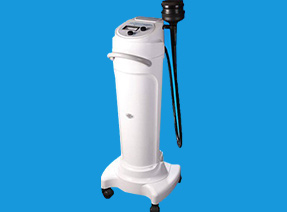
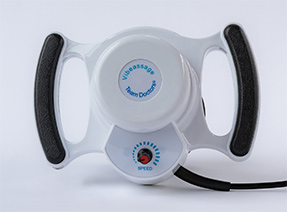
Dr. Stoxen used the Vibeassage not as a “massage tool,” but as a circulatory and tissue-mobilization instrument.
The vibration:
- Improves microcirculation
- Reduces muscle guarding
- Helps move inflammatory fluid
- Prepares tissue for deep manual work
But the device alone was not the treatment.
It was the combination:
- Vibration
- Sustained deep tissue release
- Daily repetition
- Progressive softening of the compartments
The Brutal Reality of the Work
Some sessions lasted hours.
Greg described it as grueling.
Not because it was reckless—but because the tissue was severely contracted and inflamed. You cannot gently persuade a pressure chamber to open.
You must systematically dismantle the pressure.
The Moment They Nearly Lost the Window
On one of the early days, Greg’s forearm swelled more than usual after treatment.
To an untrained eye, this might have looked like worsening.
In reality, it was reperfusion—blood returning to tissue that had been partially starved.
This is a dangerous moment in any ischemic condition.
Too much pressure too fast can cause further damage.
Too little progress means surgery.
This is the razor’s edge where:
- Compartment syndrome treatment either works
- Or becomes compartment syndrome surgery
The Signs of Reversal
Slowly, unmistakably, the signs changed:
- The forearm softened
- The “cement-like” feeling diminished
- The hand stayed warm longer
- The grip no longer collapsed with repetition
These were the opposite of acute compartment syndrome symptoms.
This was pressure normalization.
Why Most People Never Get This Chance
Most patients never receive this level of care because:
- Insurance does not pay for it
- Clinics are not structured for it
- Practitioners are not trained for it
- And the system assumes surgery is inevitable
So patients go from:
- Chronic compartment syndrome treatment →
- To surgical consult →
- To compartment syndrome operation
Greg did not.
Because he found someone who treated the mechanics, not just the diagnosis.
The Day Surgery Was No Longer Necessary
The moment Dr. Stoxen knew Greg was out of immediate danger did not come from a scan.
It came from a squeeze.
The same grip strength test that had once revealed a steady collapse in power was repeated.
First squeeze: strong.
Second squeeze: strong.
Third squeeze: strong.
No drop-off.
No fading.
No vascular failure.
That simple test told a story no MRI ever could:
Blood flow had been restored.
What That Meant Medically
From a clinical standpoint, this meant:
- The compartment syndrome signs and symptoms were reversing
- The internal pressure in the forearm compartments had fallen
- The arteries were no longer being crushed during muscle contraction
- Oxygen was reaching tissue faster than it was being consumed
This is the functional definition of compartment syndrome relief.
And it happened without surgery.
Why This Was So Rare
In the medical literature, the default narrative is:
Chronic exertional compartment syndrome eventually requires fasciotomy.
But what is rarely discussed is why conservative care fails:
- Not enough intensity
- Not enough frequency
- Not enough mechanical force to change tissue pressure
Greg’s case proved that chronic exertional compartment syndrome treatment can work—if it is dosed correctly.
Avoiding the Surgical Aftermath
Because the pressure normalized, Greg avoided:
- The scars of compartment syndrome surgery
- The long recovery of after compartment syndrome surgery
- The risk of infection or nerve damage
- The possibility of needing repeat surgery
- The permanent weakness that often follows
There would be no “before and after compartment syndrome surgery” photos.
There would be no surgery at all.
The Shoulder Connection Revisited
As the forearm recovered, something else became obvious.
The shoulder was stabilizing.
The two problems had always been linked:
- Shoulder collapse reduced blood flow upstream
- Forearm compartments were the final choke point
When the shoulder was resuspended and the forearm decompressed, the entire arm began to behave normally again.
This is not how body parts are usually treated.
But it is how systems recover.
The Bigger Lesson About Surgery
Greg had nearly undergone two major procedures:
- Compartment syndrome operation
- Reverse shoulder replacement surgery
Both were presented as inevitable.
Both were avoided.
This does not mean surgery is never needed.
It means mechanical causes must be exhausted first.
Reframing the Question
Instead of asking:
- “Do I need this surgery?”
The better question becomes:
- “Has anyone restored the mechanics that failed?”
In Greg’s case, the answer was no—until now.
The End of the Danger Phase
By the end of the fifth day:
- Forearm pressure was normal
- Grip strength was stable
- Pain was gone
- The arm felt alive again
The emergency had passed.
Not because something was removed.
But because space was restored.
Three Human Spring–Based Health Tips from Story 2
1. Never Ignore Pressure-Based Symptoms
Deep tightness, heaviness, and strength loss with use are vascular warnings, not just muscle fatigue.
2. Restore Flow Before You Cut
Many cases of chronic compartment syndrome progress to surgery only because compression was never aggressively reversed.
3. Fix the Entire Chain
Local symptoms often come from upstream collapse. Always look for the first place the spring failed.
Team Doctors Resources
✓ Check out the Team Doctors Recovery Tools
The Vibeassage Sport and the Vibeassage Pro featuring the TDX3 soft-as-the-hand Biomimetic Applicator Pad
https://www.teamdoctors.com/
✓ Get Dr. Stoxen’s #1 International Bestselling Books
Learn how to understand, examine, and reverse your TOS—without surgery.
https://drstoxen.com/1-international-best-selling-author/
✓ Check out Team Doctors Online Courses
Step-by-step video lessons, demonstrations, and self-treatment strategies.
https://teamdoctorsacademy.com/
✓ Schedule a Free Phone Consultation With Dr. Stoxen
Speak directly with him so he can review your case and guide you on your next steps.
https://drstoxen.com/appointment/
#ThoracicOutletSyndrome #FailedTOSSurgery #TOSRecovery #ChronicPainStory #VascularTOS #ArmPain #PatientAdvocacy #MedicalTrauma #SurgeryFailure #PainJourney
Medical Disclaimer
This article is provided for educational and informational purposes only. It is not intended to diagnose, treat, cure, or prevent any disease, nor is it intended to replace professional medical advice, diagnosis, or treatment.
Thoracic outlet syndrome and related nerve, vascular, and musculoskeletal conditions can present differently in each individual. Treatment decisions—including surgical and non-surgical options—must be made on a case-by-case basis in consultation with a qualified, licensed healthcare professional who is familiar with the patient’s complete medical history.
The experiences described in this article reflect individual outcomes and do not guarantee similar results for others. Surgical procedures, including thoracic outlet surgery and first rib resection, carry inherent risks, and outcomes vary based on many factors including diagnosis, timing, practitioner experience, and patient-specific anatomy and physiology.
Readers should not delay or discontinue medical care based on information contained in this article. Always seek the guidance of a qualified healthcare provider with any questions regarding symptoms, conditions, or treatment options.
Editor’s Note
This article explores a patient and family experience following thoracic outlet syndrome surgery and highlights the importance of comprehensive evaluation, informed decision-making, and second opinions when managing complex pain conditions.
The article also references the Human Spring Approach, a biomechanical evaluation and treatment framework developed by Dr James Stoxen, which emphasizes understanding the body as an integrated, dynamic spring system rather than a collection of isolated anatomical structures. The inclusion of this approach is intended to illustrate an alternative clinical perspective, not to discredit surgery or any specific medical specialty.
Mention of specific clinicians, evaluation models, or treatment philosophies does not constitute endorsement, medical advice, or a claim of superiority. Rather, it reflects the editorial goal of encouraging patients and families to seek clarity, explanation, and individualized assessment before pursuing irreversible interventions.
The editorial position of this publication is that understanding should precede intervention, especially in conditions where symptoms persist, worsen, or fail to respond to standard care.

Dr James Stoxen DC., FSSEMM (hon) He is the president of Team Doctors®, Treatment and Training Center Chicago, one of the most recognized treatment centers in the world.
Dr Stoxen is a #1 International Bestselling Author of the book, The Human Spring Approach to Thoracic Outlet Syndrome. He has lectured at more than 20 medical conferences on his Human Spring Approach to Thoracic Outlet Syndrome and asked to publish his research on this approach to treating thoracic outlet syndrome in over 30 peer review medical journals.
He has been asked to submit his other research on the human spring approach to treatment, training and prevention in over 150 peer review medical journals. He serves as the Editor-in-Chief, Journal of Orthopedic Science and Research, Executive Editor or the Journal of Trauma and Acute Care, Chief Editor, Advances in Orthopedics and Sports Medicine Journal and editorial board for over 35 peer review medical journals.
He is a much sought-after speaker. He has given over 1000 live presentations and lectured at over 70 medical conferences to over 50,000 doctors in more than 20 countries. He has been invited to speak at over 300 medical conferences which includes invitations as the keynote speaker at over 50 medical conferences.
After his groundbreaking lecture on the Integrated Spring-Mass Model at the World Congress of Sports and Exercise Medicine he was presented with an Honorary Fellowship Award by a member of the royal family, the Sultan of Pahang, for his distinguished research and contributions to the advancement of Sports and Exercise Medicine on an International level. He was inducted into the National Fitness Hall of Fame in 2008 and the Personal Trainers Hall of Fame in 2012.
Dr Stoxen has a big reputation in the entertainment industry working as a doctor for over 150 tours of elite entertainers, caring for over 1000 top celebrity entertainers and their handlers. Anthony Field or the popular children’s entertainment group, The Wiggles, wrote a book, How I Got My Wiggle Back detailing his struggles with chronic pain and clinical depression he struggled with for years. Dr Stoxen is proud to be able to assist him.
Full Bio) Dr Stoxen can be reached directly at teamdoctors@aol.com