Many people begin asking do i have thoracic outlet syndrome after noticing arm, hand, or shoulder symptoms that do not behave like a simple muscle strain.
These concerns often arise gradually, not from a single injury, but from subtle changes in posture, circulation, and nerve behavior over time.
A common question is is this thoracic outlet syndrome, especially when symptoms fluctuate throughout the day.
Thoracic outlet–related patterns tend to worsen with arm elevation, prolonged sitting, or repetitive upper-body activity.
When discussing thoracic outlet syndrome symptoms, it is important to understand that no single sign appears in every individual.
Patients often report combinations of sensory, motor, and circulation-related changes rather than one isolated complaint.
Early signs of thoracic outlet syndrome are frequently dismissed because they come and go.
Intermittent tingling, arm heaviness, or fatigue may appear long before constant pain develops.
Some individuals first notice symptoms of thoracic outlet syndrome in arm during overhead tasks.
Activities such as washing hair, reaching shelves, or holding a phone can provoke symptoms within seconds or minutes.
Among the earliest complaints are early signs of thoracic outlet syndrome involving subtle weakness.
Grip strength may feel reduced even though no visible muscle loss is present.
Many people search for how to know if i have tos because imaging studies are often inconclusive.
Thoracic outlet patterns frequently depend on body position, making static tests less revealing.
Patients commonly ask what does thoracic outlet syndrome feel like because descriptions vary widely.
Some describe pressure, others burning, and some experience deep fatigue rather than sharp pain.
One of the most reported complaints is shoulder pain and arm numbness occurring together.
This combination suggests both mechanical loading and neural sensitivity within the shoulder-neck region.
Sensory changes such as arm numbness and tingling may extend into the hand or fingers.
These sensations often increase when the arm is elevated or held away from the body.
Neck involvement is common, including neck pain radiating to arm during head rotation or prolonged screen use.
This pattern reflects the close relationship between cervical posture and upper limb nerve pathways.
Hand symptoms such as hand tingling and weakness can be especially concerning.
Fine motor tasks may feel awkward even without visible swelling.
Many individuals describe pins and needles in arm that appear suddenly and disappear just as quickly.
This intermittent nature often delays further evaluation.
Mechanical loading can trigger arm pain when lifting, especially during repetitive tasks.
The discomfort may not appear immediately but builds as tissues fatigue.
Overhead motion frequently provokes shoulder pain when raising arm above shoulder height.
This response is commonly linked to reduced space in the upper chest and shoulder region.
A classic positional sign is numbness when arms are overhead.
This occurs because elevation changes the relationship between nerves, vessels, and surrounding structures.
Circulatory signs may include a cold hand or arm compared to the opposite side.
Temperature differences can reflect altered blood flow rather than external conditions.
Motor complaints such as weak grip strength often accompany sensory changes.
Patients may drop objects or feel less confident using the affected hand.
Some individuals experience burning pain in shoulder that spreads toward the chest or arm.
This sensation may increase with prolonged static posture.
Discomfort localized as pain under collarbone is frequently reported.
This area represents a key transition zone for nerves and vessels entering the arm.
A sensation of shoulder heaviness can develop even without visible swelling.
This heaviness often worsens by the end of the day.
Fatigue patterns such as arm fatigue easily are common in repetitive work.
Tasks that once felt effortless may suddenly feel exhausting.
Neural sensitivity may appear as nerve pain in arm that follows no single nerve distribution.
This diffuse pattern can be confusing for patients.
Night symptoms like tingling fingers at night often disrupt sleep.
Side-lying or arm positioning during sleep can influence symptom intensity.
Strength asymmetry, such as one arm weaker than the other, may become noticeable during daily activities.
This difference often appears before measurable muscle loss.
A deep aching pain down the arm may worsen with prolonged sitting.
Static postures tend to amplify compression-related symptoms.
Specific finger involvement, including tingling pinky and ring finger, is frequently noted.
These fingers are commonly affected due to their nerve pathways.
Some individuals report arm numbness from neck movements rather than arm motion alone.
This highlights the role of cervical mechanics.
Questions like do i have thoracic outlet syndrome often arise after multiple evaluations yield no clear answer.
Thoracic outlet patterns can mimic several other conditions.
Visual observation can provide valuable clues.
In my clinical experience, asymmetry often becomes apparent when the hands and forearms are compared carefully.
A useful method involves photographing both hands from directly above.
The camera must be centered to avoid perspective distortion that alters apparent thickness.
When reviewing images, widening of the hand may be subtle.
Swelling does not always appear dramatic.
Tendon visibility on the back of the hand is another key observation.
Reduced definition may suggest fluid accumulation or altered circulation.
Finger thickness differences may only be noticeable side to side.
Careful comparison is essential.
Nail bed color provides additional information.
Pale or uneven coloration may indicate vascular involvement.
Forearm symmetry should also be assessed.
Differences in contour or fullness can be meaningful.
These visual findings do not diagnose any condition.
They simply highlight patterns that warrant further evaluation.
Thoracic outlet–related patterns often involve posture mechanics.
Forward head posture and rounded shoulders can alter tissue loading [1].
The brachial plexus and subclavian vessels pass through a confined space.
Changes in muscle tone can affect that space [2].
Sustained muscle guarding may contribute to reduced adaptability.
This can increase sensitivity during movement.
Circulatory changes may occur alongside neural symptoms.
This overlap explains why symptoms vary widely between individuals [3].
Education plays a key role in understanding these patterns.
Awareness helps individuals observe changes earlier.
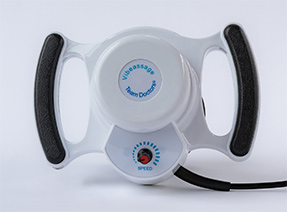
Tools such as the Vibeassage® are sometimes discussed in educational contexts.
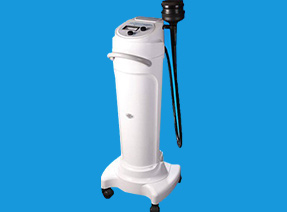
The Vibeassage® Sport and Vibeassage® Pro are designed with biomechanical principles in mind.
The TDX3 soft-as-the-hand Biomimetic Applicator Pad is often referenced for its surface characteristics.
It is associated with discussions on tissue interaction, not medical treatment.
Team Doctors® emphasizes education around movement and observation.
Understanding patterns allows for more informed conversations.
Thoracic outlet syndrome is not a single presentation.
It exists along a spectrum of mechanical and physiological changes [4].
Recognizing patterns early may reduce uncertainty.
Observation, not assumption, is the starting point.
Team Doctors Resources
✓ Check out the Team Doctors Recovery Tools
The Vibeassage Sport and the Vibeassage Pro featuring the TDX3 soft-as-the-hand Biomimetic Applicator Pad
https://www.teamdoctors.com/
✓ Get Dr. Stoxen’s #1 International Bestselling Books
Learn how to understand, examine, and reverse your TOS—without surgery.
https://drstoxen.com/1-international-best-selling-author/
✓ Check out Team Doctors Online Courses
Step-by-step video lessons, demonstrations, and self-treatment strategies.
https://teamdoctorsacademy.com/
✓ Schedule a Free Phone Consultation With Dr. Stoxen
Speak directly with him so he can review your case and guide you on your next steps.
https://drstoxen.com/appointment/
#ThoracicOutletSyndrome #TOS #ArmNumbness #ShoulderPain #NerveCompression #VascularCompression #HandSwelling #PostureMechanics #BrachialPlexus #ScaleneMuscles #NeckPain #UpperExtremity #Circulation #Biomechanics #PainPatterns #ClinicalObservation #EducationOnly #TeamDoctors #HumanMovement #HealthEducation
References
- Sanders, R. J., & Hammond, S. L. Thoracic outlet syndrome: A review. Journal of Vascular Surgery 55, no. 3 (2012): 897–905. https://doi.org/10.1016/j.jvs.2011.10.012
- Povlsen, B., Hansson, T., & Povlsen, S. Treatment for thoracic outlet syndrome. Cochrane Database of Systematic Reviews (2014). https://doi.org/10.1002/14651858.CD007218.pub3
- Illig, K. A. et al. Thoracic outlet syndrome. Journal of Vascular Surgery 53, no. 3 (2011): 845–852. https://doi.org/10.1016/j.jvs.2010.09.010
- Atasoy, E. Thoracic outlet syndrome: Anatomy. Hand Clinics 20, no. 1 (2004): 7–14. https://doi.org/10.1016/S0749-0712(03)00087-7

Dr James Stoxen DC., FSSEMM (hon) He is the president of Team Doctors®, Treatment and Training Center Chicago, one of the most recognized treatment centers in the world.
Dr Stoxen is a #1 International Bestselling Author of the book, The Human Spring Approach to Thoracic Outlet Syndrome. He has lectured at more than 20 medical conferences on his Human Spring Approach to Thoracic Outlet Syndrome and asked to publish his research on this approach to treating thoracic outlet syndrome in over 30 peer review medical journals.
He has been asked to submit his other research on the human spring approach to treatment, training and prevention in over 150 peer review medical journals. He serves as the Editor-in-Chief, Journal of Orthopedic Science and Research, Executive Editor or the Journal of Trauma and Acute Care, Chief Editor, Advances in Orthopedics and Sports Medicine Journal and editorial board for over 35 peer review medical journals.
He is a much sought-after speaker. He has given over 1000 live presentations and lectured at over 70 medical conferences to over 50,000 doctors in more than 20 countries. He has been invited to speak at over 300 medical conferences which includes invitations as the keynote speaker at over 50 medical conferences.
After his groundbreaking lecture on the Integrated Spring-Mass Model at the World Congress of Sports and Exercise Medicine he was presented with an Honorary Fellowship Award by a member of the royal family, the Sultan of Pahang, for his distinguished research and contributions to the advancement of Sports and Exercise Medicine on an International level. He was inducted into the National Fitness Hall of Fame in 2008 and the Personal Trainers Hall of Fame in 2012.
Dr Stoxen has a big reputation in the entertainment industry working as a doctor for over 150 tours of elite entertainers, caring for over 1000 top celebrity entertainers and their handlers. Anthony Field or the popular children’s entertainment group, The Wiggles, wrote a book, How I Got My Wiggle Back detailing his struggles with chronic pain and clinical depression he struggled with for years. Dr Stoxen is proud to be able to assist him.
Full Bio) Dr Stoxen can be reached directly at teamdoctors@aol.com