How Ed Coans Strength Training Designed His Body as a Human Spring
Long before anyone ever talked about the Human Spring Approach, long before patients ever used a Vibeassage Pro or a Vibeassage Sport at home, everything started in the gym.
Not a fancy gym.
Not a gym with screens and machines and cables everywhere.
Just iron, bars, plates, chalk, and people trying to get stronger.
Back then, strength training had a very different culture. If you were a Powerlifting guy, your world revolved around three lifts: the Squat, the Bench press, and the Deadlift. Everything you did was aimed at getting those three lifts stronger. People talked about their One-rep max (1RM) like it was their personal signature. Your numbers told your story.
But the smart lifters knew something important. You didn’t just walk into the gym and try to lift heavy every day. You had to follow a plan. You had to use Progressive overload. You had to think in terms of Max effort training, a Strength cycle, and eventually a Peaking phase. Some people even used formal Periodization, breaking the year into phases so the body could adapt without breaking down.
If you were serious, you trained for a Powerlifting meet. Some people lifted in Raw lifting, using only a belt and maybe knee sleeves. Others lifted in Equipped lifting, using suits and Knee wraps to handle heavier weights. Almost everyone wore a Lifting belt. And if you were smart, you always had a Spotter.
But here’s what most outsiders didn’t understand: real progress didn’t come from just lifting heavier.
It came from learning how your body actually worked.
In every lift, people argued about Bar path. They talked about the Lockout. They debated which Accessory exercises mattered most. Good coaches talked about the Posterior chain—the hips, glutes, hamstrings, and back—and how much of lifting power really comes from there. And the best lifters always did Weak point training, because they knew something simple:
A chain only breaks at its weakest link.
Back then, we didn’t have bands, chains, boards, or all the fancy tools people use now. We used our brains. We used variations. We changed stance. We changed grip. We changed angles. We changed volume. We changed emphasis.
If your hips and back were strong but your legs were behind, you might switch to high-bar squats with a closer stance. If your chest was strong but your triceps were weak, you might do more close-grip work. If your pull off the floor was weak, you might change where you pulled from.
The whole idea was simple: fix the weak link, and the whole system gets stronger.
And this way of thinking didn’t come from medicine.
It came from training.
The Body Is Not Just Parts — It Is a System
Over time, something became very clear: the body never works as just one muscle at a time. Everything is connected. When you Squat, your ankles, knees, hips, spine, and shoulders are all involved. When you Bench press, your legs, hips, back, shoulders, and arms all work together. When you Deadlift, almost nothing is left out.
And when something in that system is not working well, the body doesn’t stop.
It compensates.
That’s why some lifters could lift huge weight but always felt beat up. That’s why some people had one lift that always lagged behind. And that’s why smart coaches started looking not just at strength, but at movement.
This same way of thinking later became critical in understanding patients.
Because patients are not broken parts either.
They are systems.
From the Gym to the Clinic
One of the earliest lessons came from something very personal.
My own father did not have a very strong back.
And I know that because I was his chiropractor.
People who came into the office didn’t know it, but sometimes he would walk around with his shirt off. And if you knew what to look for, you could see it. You could see the tension patterns. You could see where the structure was carrying load well, and where other areas were working too hard to make up for it.
That was a powerful lesson:
The body always shows you its weak links long before it finally breaks.
In the gym, that weak link shows up as a missed lift.
In life, it often shows up as stiffness, fatigue, or recurring discomfort.
Discovering That the Body Acts Like a Spring
As years went on, something else became clear.
The best athletes were not just strong.
They were elastic.
They moved differently. They didn’t look stiff. They didn’t look robotic. They looked like they loaded and released energy. They looked like they had bounce.
This is where the idea of the body behaving like a spring starts to make sense.
In engineering, people talk about a Spring-mass model. It’s a simple way to describe how structures store and release energy. In the human body, this shows up in things like Elastic energy storage and Elastic recoil. Instead of wasting energy, the body can store it briefly and give it back.
This is not mystical. It is mechanical.
And you can see it clearly when you start watching athletes who do jumping, running, and explosive movements.
The Bridge to Explosive Training
This is where the world of Olympic Weightlifting and Plyometrics starts to overlap with strength training.
In Olympic lifting, movements like the Snatch and the Clean and jerk depend on speed, timing, and coordination. You don’t grind these lifts. You move them. You accelerate. You drop under the bar. You receive it in a Catch position or Receiving position.
Even in simpler versions like the Power clean or Power snatch, you see the same thing: speed matters. Bar speed matters. Timing and coordination matter. The lifter has to reach Triple extension at the ankles, knees, and hips, then Pull under, then control the Turnover and stabilize.
To do this well, you need Mobility, Technique training, and a sense of rhythm. You train on a Weightlifting platform. You use a Hook grip. You learn to move smoothly instead of just pushing harder.
And then there is the whole world of Plyometrics.
This is where ideas like the Stretch-shortening cycle, Reactive strength, and Explosive power come in. This is where Jump training, Box jumps, Depth jumps, Bounding, and Hopping drills show you something amazing: the body is designed to load and unload like a spring.
In these movements, Ground contact time matters. Shock absorption matters. Landing mechanics matter. The body has to control Deceleration control and move smoothly through the Amortization phase before pushing off again.
This is not about brute force.
This is about smart force.
It is about the Rate of force development, Dynamic stability, and Neuromuscular training.
In other words: it is about how well your body uses its built-in spring system.
Strength Without Spring Is Expensive
Here is something many people don’t realize:
You can be strong and still move poorly.
You can lift heavy and still waste energy.
When the body loses its natural springiness, everything becomes harder. Walking costs more energy. Standing costs more energy. Lifting costs more energy. Even sitting can feel tiring.
This is one of the ideas that later became central to the Human Spring Approach: the goal is not just to be strong, but to be elastic, efficient, and coordinated.
Where the Vibeassage Tools Fit In (Without Making Claims)
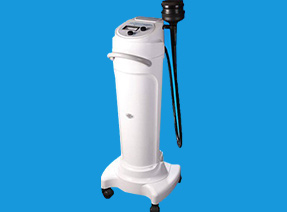
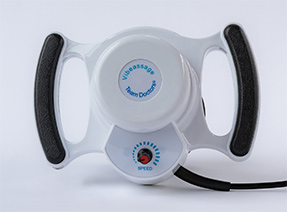
Years later, tools like the Vibeassage Pro and the Vibeassage Sport were designed with a simple idea in mind: give people a way to apply gentle, controlled vibration and pressure to their own muscles at home, to help them explore relaxation, circulation, and movement quality in their own bodies.
Not to “fix” anything.
Not to “cure” anything.
But to help people become more aware of their own tissues, their own tension patterns, and their own movement.
Just like stretching, just like foam rolling, just like massage, these are self-care tools. They are about comfort, relaxation, and body awareness.
And body awareness is where everything starts.
The Big Idea That Came From All of This
From powerlifting to Olympic lifting to plyometrics to clinical work, one idea kept coming back:
The body is not a stack of parts.
It is an integrated spring system.
When that system moves well, life feels easier.
When that system loses its spring, everything feels heavier.
This is the idea that slowly became what Dr. James Stoxen now calls the Human Spring Approach.
Not a miracle.
Not a promise.
Not a shortcut.
But a way of understanding how the body is designed to work.
How the Body Stores and Releases Energy — and Why That Ability Slowly Fades
If you watch a young child run, jump, and change direction, you will notice something right away.
They don’t look stiff.
They don’t look heavy.
They look like they bounce.
They run, stop, turn, and jump with a kind of lightness that seems effortless. Their bodies naturally use Elastic recoil and Elastic energy storage without anyone ever teaching them how.
This is the body acting the way it was designed to act — more like a spring than a machine made of stiff parts.
The Hidden Gift: The Stretch-Shortening Cycle
In sports science, there is a simple but powerful idea called the Stretch-shortening cycle. It means that when a muscle and tendon are gently stretched first, they can shorten more powerfully and more efficiently right after.
You see this in Plyometrics, where Jump training uses movements like Box jumps, Depth jumps, Bounding, and Hopping drills. You also see it in throwing movements like Medicine ball throws. In all of these, the body briefly stores energy and then releases it.
This is not about straining.
It is about timing.
When this works well, the body has better Reactive strength, better Explosive power, and better Rate of force development. It also spends less energy doing the same job.
Engineers describe this using the Spring-mass model, but you don’t need to be an engineer to feel the difference. You feel it when your legs feel bouncy instead of heavy. You feel it when walking feels easy instead of tiring.
The Quiet Importance of Shock Absorption
Every step you take sends force up through your body.
If your body handles that force well, your joints and muscles act like a good suspension system. This is Shock absorption. It depends on good Landing mechanics, good Dynamic stability, and good Deceleration control.
When you land from a small jump or step off a curb, your body briefly passes through what is called the Amortization phase — the moment between absorbing force and pushing off again. If that moment is smooth and controlled, movement feels easy. If it is stiff and jerky, everything feels harder.
This is not about being an athlete.
This is about being human.
Olympic Lifting Shows the Same Spring
In Olympic Weightlifting, this spring-like behavior is easy to see.
In the Snatch and the Clean and jerk, the lifter does not slowly push the weight up. They accelerate it, reach Triple extension, then Pull under the bar and receive it in a strong Receiving position or Catch position.
Even in simpler versions like the Power clean or Power snatch, the lifter must coordinate speed, position, and balance. The Turnover of the bar, the Bar speed, and the precise Timing and coordination all matter more than raw pushing strength.
To train these lifts, athletes spend a lot of time on Technique training, improving Mobility, practicing Front squat, Overhead squat, and even the Split jerk. They train on a Weightlifting platform, use a Hook grip, and learn how to move smoothly under load instead of fighting it.
The lesson is simple:
Power does not come from stiffness.
Power comes from good spring.
The Problem: We Slowly Lose Our Spring
Here is the part that almost nobody talks about.
As people get older, or more sedentary, or more stressed, or more guarded, they slowly lose this natural spring.
They move more carefully.
They brace more.
They tighten more.
They stop trusting their bodies to absorb and release force.
None of this happens overnight.
It happens a little at a time.
At first, it just feels like stiffness. Then it feels like fatigue. Then it feels like everything costs more effort.
Walking feels heavier.
Standing feels more tiring.
Climbing stairs feels like work.
This does not mean something is “broken.”
It often just means the spring system is not being used very well.
Strength Training Can Either Help or Hurt This
Strength training is not the enemy of spring.
But it can be done in a way that ignores it.
In Powerlifting, for example, the goal is often to move the most weight possible in the Squat, Bench press, and Deadlift. Lifters train their One-rep max (1RM) using Progressive overload, Max effort training, and long Strength cycle plans that lead into a Peaking phase before a Powerlifting meet.
Some lift in Raw lifting, some in Equipped lifting, some use Knee wraps, almost all use a Lifting belt, and smart lifters always use a Spotter.
They think about Bar path, Lockout, Accessory exercises, the Posterior chain, and Weak point training.
All of this is fine.
But if all you ever do is move slowly, brace hard, and grind, you can become strong and stiff at the same time.
Strength without spring is expensive.
It costs more energy.
It feels heavier.
Why the Body Starts Guarding Itself
When the body feels unstable, tired, or stressed, it often responds by tightening.
This is not a mistake.
It is a protection strategy.
The nervous system is trying to create safety by making things more rigid.
But rigidity is the opposite of good spring.
Over time, this guarding makes movements smaller, slower, and more cautious. The body becomes less willing to go through smooth bending, absorbing, and rebounding.
Again, this is not a diagnosis.
It is just a pattern.
Where Gentle Tools Come In
This is one place where simple self-care tools like the Vibeassage Pro and Vibeassage Sport can fit into a person’s daily life.
Not as medical devices.
Not as treatments.
But as ways to explore relaxation, gentle stimulation, and body awareness.
Just like massage, stretching, or foam rolling, these tools can be part of a routine that helps people notice where they are tight, where they hold tension, and where movement feels restricted.
Awareness always comes before change.
The Big Picture Idea
The body is not meant to move like a stiff robot.
It is meant to move like a living spring.
The more we move with timing, rhythm, and coordination, the more energy we save.
The more we brace and stiffen, the more energy everything costs.
This is one of the core ideas behind what Dr. James Stoxen calls the Human Spring Approach: learning to see the body not as a collection of parts, but as an integrated spring system that works best when it is allowed to store and release energy naturally.
How Modern Life Slowly Flattens the Human Spring
Most people do not lose their “bounce” because of one big injury.
They lose it a little at a time.
They lose it in chairs.
They lose it in cars.
They lose it in stress.
They lose it in habits.
And they usually don’t notice it happening.
The Quiet Drift Toward Stiffness
Think about how much time most people spend sitting.
Sitting at a desk.
Sitting in a car.
Sitting on a couch.
The body is very good at adapting to whatever it does most. If you spend most of your time in small, limited positions, your body slowly gets better at being small and limited.
Over time, people start moving less through their hips, less through their spine, less through their shoulders and ankles. They start to brace more and move less.
This does not mean anything is “wrong.”
It just means the spring system is being used less.
The Body Always Chooses Safety First
When the nervous system senses stress, fatigue, or uncertainty, it often responds by tightening the body.
This is a normal, human response.
Tension feels safer than looseness.
Stiffness feels more controlled than bounce.
But stiffness also blocks the natural Shock absorption and Elastic recoil that make movement easy.
Instead of flowing smoothly through Landing mechanics and Deceleration control, the body starts to move in short, careful steps. The Amortization phase — that smooth moment between absorbing force and pushing off again — becomes rushed or skipped.
Over time, Ground contact time increases, movements feel heavier, and the body relies less on Elastic energy storage and more on effort.
The Spring Is Still There — It’s Just Not Being Used
Here is the hopeful part.
The human body does not forget how to be a spring.
It just gets out of practice.
Even people who feel stiff and heavy can often feel moments of lightness again when they move in water, walk on a beach, or play casually with children.
Those moments are not magic.
They are the spring system waking up.
Why Explosive Movements Look So Different
When you watch athletes doing Plyometrics, you can see the opposite of stiffness.
In Jump training, Box jumps, Depth jumps, Bounding, and Hopping drills, the goal is not just to jump high. The goal is to move with good timing, short Ground contact time, and smooth transitions through the Stretch-shortening cycle.
Good athletes show great Reactive strength, Dynamic stability, and Rate of force development not because they are tense, but because they are well-coordinated.
They use the body’s natural Spring-mass model instead of fighting it.
The Same Is True in Weightlifting
In Olympic Weightlifting, stiffness is a disadvantage.
In the Snatch and the Clean and jerk, lifters must reach Triple extension, then Pull under quickly and receive the bar in a stable Receiving position or Catch position.
Even in the Power clean or Power snatch, success depends on Bar speed, Turnover, and precise Timing and coordination, not just strength.
That is why weightlifters spend so much time on Technique training, Mobility, Front squat, Overhead squat, and the Split jerk. They train on a Weightlifting platform, use a Hook grip, and practice moving smoothly under load.
They are not trying to become stiff.
They are trying to become efficient.
The Contrast With Grinding Strength
In Powerlifting, training often focuses on pushing limits in the Squat, Bench press, and Deadlift. Lifters chase their One-rep max (1RM) using Progressive overload, Max effort training, long Strength cycle plans, and careful Periodization that leads to a Peaking phase for a Powerlifting meet.
Some lift in Raw lifting, some in Equipped lifting, some use Knee wraps, most use a Lifting belt, and smart lifters always use a Spotter.
They analyze Bar path, fight for Lockout, choose Accessory exercises, build the Posterior chain, and do Weak point training.
All of this builds strength.
But if this is all someone ever does, and they never train smooth, elastic movement, the body can become very capable and very stiff at the same time.
The Everyday Version of This
You do not have to be a lifter to see this pattern.
Many people move through life braced.
They hold their breath when they stand up.
They tighten their shoulders when they walk.
They move like they are always carrying something fragile.
Again, this is not a failure.
It is a protection strategy.
But over time, it makes everything cost more effort.
Small Inputs Can Change Big Patterns
This is where simple daily habits can make a difference.
Walking more.
Moving in different ways.
Gently exploring range of motion.
And yes, using simple self-care tools like the Vibeassage Pro or Vibeassage Sport to help notice tight areas and encourage relaxation and circulation.
Not as treatments.
Not as cures.
Just as ways to reconnect with your own body.
Just like stretching, massage, or warm showers, these are about comfort and awareness.
The Central Idea Keeps Coming Back
The body works best when it can:
- Absorb force
- Store energy
- Release energy
- Move smoothly
When it cannot do these things, life feels heavier.
This is the simple, human idea behind what Dr. James Stoxen calls the Human Spring Approach.
Not a program.
Not a promise.
But a way of understanding how your body is designed to move.
The Human Spring Approach: A Simpler Way to Understand Your Body
By now, one idea should feel very clear.
Your body is not just a stack of parts.
It is a living system that works best when it can bend, load, absorb, and release force smoothly — like a spring.
This simple idea is what Dr. James Stoxen calls the Human Spring Approach.
It is not a treatment.
It is not a promise.
It is a way of understanding how the body is designed to move.
Where This Way of Thinking Came From
This perspective did not come from one book or one lab.
It came from decades of watching people move.
It came from watching athletes train for Powerlifting and seeing how the Squat, Bench press, and Deadlift depend on the whole body working together, not just one muscle.
It came from watching lifters chase their One-rep max (1RM) using Progressive overload, Max effort training, long Strength cycle plans, and Periodization that leads to a Peaking phase before a Powerlifting meet.
It came from seeing the difference between Raw lifting and Equipped lifting, from watching people use Knee wraps, a Lifting belt, and a Spotter, and from hearing endless discussions about Bar path, Lockout, Accessory exercises, the Posterior chain, and Weak point training.
And it also came from watching Olympic Weightlifting, where the Snatch and the Clean and jerk depend on speed, timing, and precision.
In movements like the Clean, the Jerk, the Power clean, and the Power snatch, you can clearly see Triple extension, the quick Pull under, the smooth Turnover, and the stable Receiving position or Catch position.
Weightlifters train Mobility, Technique training, Front squat, Overhead squat, and the Split jerk. They train on a Weightlifting platform, use a Hook grip, and care deeply about Bar speed and Timing and coordination.
And it came from watching Plyometrics, where Jump training, Depth jumps, Box jumps, Bounding, Hopping drills, and Medicine ball throws show the body using the Stretch-shortening cycle, Reactive strength, and Explosive power.
In these movements, Ground contact time, Shock absorption, Landing mechanics, Deceleration control, and the Amortization phase all matter. The body is clearly using Elastic energy storage, Elastic recoil, Dynamic stability, and the Rate of force development in a way that fits perfectly with the Spring-mass model.
All of these worlds point to the same idea:
The human body is designed to move like a spring.
What This Means for Regular People
You do not need to be an athlete to benefit from this way of thinking.
You do not need to lift heavy weights.
You do not need to jump on boxes.
This is about how you walk.
How you stand.
How you sit.
How you get up.
How you carry things.
How you move through your day.
When your body moves in a spring-like way, things tend to feel easier.
When it moves in a stiff, guarded way, everything tends to feel heavier.
This is not a diagnosis.
It is not a claim.
It is just a common human experience.
The Role of Awareness
One of the most important parts of the Human Spring Approach is awareness.
Before anything can change, you have to notice:
Where you hold tension.
Where you move easily.
Where you move cautiously.
Where you brace without realizing it.
Awareness does not require a clinic.
It starts at home.
Where the Vibeassage Pro and Vibeassage Sport Fit In
This is where tools like the Vibeassage Pro and Vibeassage Sport can be part of a healthy self-care routine.
They are not medical treatments.
They are not cures.
They are not making claims.
They are simply tools for comfort, relaxation, and exploration of your own body.
Just like massage, stretching, or foam rolling, they can help you:
- Notice tight areas
- Explore relaxation
- Encourage circulation
- Improve body awareness
Some people like to use them after exercise. Some like to use them at the end of the day. Some like to use them while watching TV or before bed.
There is no “correct” protocol here.
This is about listening to your own body.
A Different Way to Think About Strength and Health
Many people think health is about forcing the body to behave.
The Human Spring Approach suggests something gentler:
Work with how the body is designed.
Let it move.
Let it bend.
Let it absorb and release force.
Let it be a spring.
This does not mean “do nothing.”
It means do things in a way that respects how the system works.
The Long View
Over a lifetime, habits matter more than heroic efforts.
Small, regular movement.
Simple self-care.
Moments of relaxation.
Moments of awareness.
All of these help keep the spring alive.
The Simplest Summary
Your body is not a machine.
It is not a stack of parts.
It is a living, moving, adaptable spring system.
The Human Spring Approach is simply a way to understand that idea and live in a way that works with it instead of against it.
And tools like the Vibeassage Pro and Vibeassage Sport are just that — tools — that some people choose to use as part of a comfortable, mindful, self-care routine.
Nothing more.
Nothing less.
Team Doctors Resources
✓ Check out the Team Doctors Recovery Tools
The Vibeassage Sport and the Vibeassage Pro featuring the TDX3 soft-as-the-hand Biomimetic Applicator Pad
https://www.teamdoctors.com/
✓ Get Dr. Stoxen’s #1 International Bestselling Books
Learn how to understand, examine, and reverse your TOS—without surgery.
https://drstoxen.com/1-international-best-selling-author/
✓ Check out Team Doctors Online Courses
Step-by-step video lessons, demonstrations, and self-treatment strategies.
https://teamdoctorsacademy.com/
✓ Schedule a Free Phone Consultation With Dr. Stoxen
Speak directly with him so he can review your case and guide you on your next steps.
https://drstoxen.com/appointment/
#ThoracicOutletSyndrome #Ergonomics #DeskPosture #WorkFromHomePain #TechNeck #OfficePosture #NeckPain #ShoulderPain #ArmPain #ChronicPainHelp #PostureFix #HumanSpring #Biomechanics #HealthTips #PainPrevention

Dr James Stoxen DC., FSSEMM (hon) He is the president of Team Doctors®, Treatment and Training Center Chicago, one of the most recognized treatment centers in the world.
Dr Stoxen is a #1 International Bestselling Author of the book, The Human Spring Approach to Thoracic Outlet Syndrome. He has lectured at more than 20 medical conferences on his Human Spring Approach to Thoracic Outlet Syndrome and asked to publish his research on this approach to treating thoracic outlet syndrome in over 30 peer review medical journals.
He has been asked to submit his other research on the human spring approach to treatment, training and prevention in over 150 peer review medical journals. He serves as the Editor-in-Chief, Journal of Orthopedic Science and Research, Executive Editor or the Journal of Trauma and Acute Care, Chief Editor, Advances in Orthopedics and Sports Medicine Journal and editorial board for over 35 peer review medical journals.
He is a much sought-after speaker. He has given over 1000 live presentations and lectured at over 70 medical conferences to over 50,000 doctors in more than 20 countries. He has been invited to speak at over 300 medical conferences which includes invitations as the keynote speaker at over 50 medical conferences.
After his groundbreaking lecture on the Integrated Spring-Mass Model at the World Congress of Sports and Exercise Medicine he was presented with an Honorary Fellowship Award by a member of the royal family, the Sultan of Pahang, for his distinguished research and contributions to the advancement of Sports and Exercise Medicine on an International level. He was inducted into the National Fitness Hall of Fame in 2008 and the Personal Trainers Hall of Fame in 2012.
Dr Stoxen has a big reputation in the entertainment industry working as a doctor for over 150 tours of elite entertainers, caring for over 1000 top celebrity entertainers and their handlers. Anthony Field or the popular children’s entertainment group, The Wiggles, wrote a book, How I Got My Wiggle Back detailing his struggles with chronic pain and clinical depression he struggled with for years. Dr Stoxen is proud to be able to assist him.
Full Bio) Dr Stoxen can be reached directly at teamdoctors@aol.com