Ed Coan: Perspective From the Platform
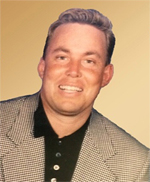
Ed Coan is widely regarded as the greatest powerlifter of all time, and his career offers a rare opportunity to study strength training through real-world performance rather than theory alone.
Across decades of competition, his lifts became a living laboratory for understanding how the human body adapts to extreme loading.
In my clinical experience, observing elite lifters provides insight into how powerlifting biomechanics differ from recreational lifting patterns.
Ed Coan’s success highlights how refined movement efficiency often outweighs brute force.
By 1986, Coan totaled 2,242 pounds at approximately 220 pounds of bodyweight.
At the time, this level of output challenged prevailing assumptions about human limits in strength sports.
His performance in the squat, bench press, and deadlift demonstrated how optimized lever arms and joint stacking influence total load capacity.
Each lift showed consistency in bar path and positional control.
Eds Chiropractor, Dr. Stoxen’s Human Spring Approach: Powerlifting Through a Spring Lens
Dr. James Stoxen developed the Human Spring Approach from decades of observing how the body manages load under real-world forces rather than laboratory ideals.
At its core, the model frames the human body not as a system of rigid levers, but as an integrated network of elastic components designed to absorb, store, and release energy.
In the context of powerlifting, this perspective helps explain why certain lifters demonstrate exceptional longevity under extreme loads.
Rather than relying solely on muscular force, elite lifters often distribute stress through compliant structures that behave like biological springs.
The Human Spring Approach emphasizes how joints, connective tissues, and muscular chains cooperate to manage force during heavy lifting.
When load is introduced efficiently, energy is temporarily stored and then returned during movement transitions.
In my clinical experience, lifters who demonstrate consistent performance tend to maintain spring compliance rather than excessive stiffness.
This balance allows the system to buffer load without collapsing or over-bracing.
During the squat, for example, controlled descent allows elastic loading across the hips, knees, and spinal structures.
This stored energy contributes to ascent efficiency when timing and alignment are preserved.
In the bench press, the concept extends through the lower body, trunk, and upper extremities.
Force generation begins at the feet and transfers through a coordinated spring system rather than isolated muscular contraction.
The deadlift provides one of the clearest demonstrations of spring mechanics.
Hip hinging loads posterior structures that function as large, energy-recycling elements.
The Human Spring Approach also helps explain why excessive rigidity can be counterproductive.
Over-stiffening limits energy transfer and increases localized stress.
Rather than eliminating stiffness entirely, the model emphasizes adaptive stiffness that responds to load magnitude and direction.
This allows the system to remain stable without sacrificing efficiency.
From a training perspective, this framework encourages movement quality over maximal effort frequency.
Load progression respects tissue adaptation timelines rather than forcing constant peak output.
The approach also reframes fatigue.
Loss of spring efficiency often precedes visible breakdown in lifting form.
Many individuals describe feeling “flat” or disconnected during heavy sessions.
From a spring perspective, this reflects reduced elastic contribution rather than pure strength loss.
The Human Spring model integrates well with strength cycling concepts.
Periods of reduced intensity allow spring elements to recover compliance.
This perspective aligns with long-term performance seen in lifters who sustain output across decades.
It emphasizes durability as a biomechanical outcome rather than a genetic accident.
By viewing the body as a spring-based system, training decisions become more strategic.
The goal shifts from forcing adaptation to preserving system integrity.
In strength sports, this framework offers a lens for understanding why certain lifters continue progressing while others plateau or break down.
It prioritizes load distribution, timing, and coordination over isolated force production.
Ultimately, the Human Spring Approach provides a biomechanical explanation for elite performance sustainability.
It reframes strength not as raw output alone, but as the ability to manage force intelligently over time.
Coan’s approach to the squat emphasized controlled descent and elastic recoil without excessive speed.
This pattern allowed reliable transfer of force from the hips and knees into the bar.
In the bench press, observers often note his efficient leg drive and stable shoulder positioning.
These elements reduced unnecessary motion and improved force transfer through the torso.
The deadlift became his signature expression of posterior dominance.
His mastery of the posterior chain demonstrated how hip extension drives vertical displacement of the bar.
Rather than chasing novelty, Coan refined lifting technique year after year.
Small technical improvements compounded into significant long-term gains.
Many individuals describe chasing a higher one rep max as the ultimate goal of training.
Coan treated maximal attempts as outcomes of preparation rather than daily objectives.
His training emphasized progressive overload applied patiently across long cycles.
Load increases were calculated, not emotional.
Programming revolved around compound lifts rather than isolated movements.
This allowed coordinated adaptation across multiple joints and muscle groups.
Observers often attribute his dominance to maximal strength alone.
However, neurological efficiency played a major role in sustaining performance.
Repeated exposure to heavy loads facilitated neural adaptation that improved motor unit recruitment.
This reduced wasted effort during maximal attempts.
Coan’s training phases demonstrated intentional periodization.
Volume and intensity were manipulated to peak precisely for competition.
Heavy phases focused on training intensity, while accumulation blocks increased training volume.
This balance reduced stagnation and overuse.
A defining element of his longevity was respect for rest and recovery.
High-level output was never separated from adequate restoration time.
Grip mechanics were treated as foundational rather than accessory.
Strong grip strength ensured efficient force transmission during pulls.
His approach to lockout mechanics reflected attention to joint sequencing.
Improved lockout strength often determined successful maximal attempts.
Competition preparation differed from off-season work.
Specific meet preparation protocols sharpened timing and confidence.
Coan competed successfully in both raw powerlifting and equipped powerlifting eras.
This adaptability reflected deep understanding of mechanical assistance and resistance.
Over time, his powerlifting totals continued to rise despite advancing age.
This challenged assumptions about inevitable performance decline.
Training blocks were organized into distinct strength cycles.
Each cycle served a specific physiological purpose.
Strategic use of a deload week prevented chronic overload.
This allowed connective tissues to adapt alongside muscle.
Mobility work was never excessive but always targeted.
Focused mobility for lifters preserved joint range without destabilization.
Longevity also depended on conservative decision-making.
Thoughtful injury prevention lifting strategies limited unnecessary risk.
Coan’s career underscores the importance of mechanical efficiency over maximal aggression.
High power output was achieved through coordination, not chaos.
His methods continue to influence modern powerlifting program design.
Coaches study his lifts frame by frame to extract usable principles.
Rather than copying surface details, the lesson lies in understanding structure.
Efficient lifting form reflects internal organization, not external appearance.
Core stability played a silent role in every successful attempt.
Consistent core bracing maintained spinal alignment under extreme load.
Across decades, Coan demonstrated that dominance comes from mastery, not intensity alone.
His platform perspective remains a benchmark for evaluating elite performance.
Team Doctors Resources
✓ Check out the Team Doctors Recovery Tools
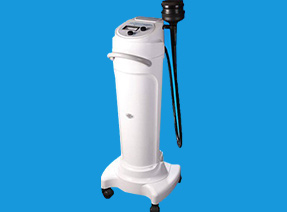
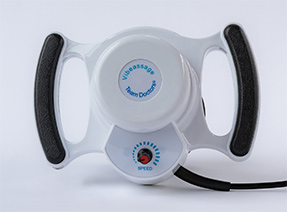
The Vibeassage Sport and the Vibeassage Pro featuring the TDX3 soft-as-the-hand Biomimetic Applicator Pad
https://www.teamdoctors.com/
✓ Get Dr. Stoxen’s #1 International Bestselling Books
Learn how to understand, examine, and reverse your TOS—without surgery.
https://drstoxen.com/1-international-best-selling-author/
✓ Check out Team Doctors Online Courses
Step-by-step video lessons, demonstrations, and self-treatment strategies.
https://teamdoctorsacademy.com/
✓ Schedule a Free Phone Consultation With Dr. Stoxen
Speak directly with him so he can review your case and guide you on your next steps.
https://drstoxen.com/appointment/
#powerlifting #edcoan #strengthtraining #biomechanics #barbelltraining #strengthsports #compoundlifts #maximalstrength #liftingtechnique #posteriorchain #trainingvolume #trainingintensity #restandrecovery #rawpowerlifting #equippedpowerlifting #meetprep #poweroutput #corebracing #injuryprevention #strengthcycles
References
[1] Stone, M. H., Stone, M. E., & Sands, W. A. Principles and Practice of Resistance Training. Human Kinetics. https://us.humankinetics.com/products/principles-and-practice-of-resistance-training
[2] Zatsiorsky, V. M., & Kraemer, W. J. Science and Practice of Strength Training. Human Kinetics. https://us.humankinetics.com/products/science-and-practice-of-strength-training
[3] McGill, S. M. Low Back Disorders: Evidence-Based Prevention and Rehabilitation. Human Kinetics. https://us.humankinetics.com/products/low-back-disorders
[4] Haff, G. G., & Triplett, N. T. Essentials of Strength Training and Conditioning. NSCA. https://www.nsca.com/store/product-detail/essentials-of-strength-training-and-conditioning-4th-edition/

Dr James Stoxen DC., FSSEMM (hon) He is the president of Team Doctors®, Treatment and Training Center Chicago, one of the most recognized treatment centers in the world.
Dr Stoxen is a #1 International Bestselling Author of the book, The Human Spring Approach to Thoracic Outlet Syndrome. He has lectured at more than 20 medical conferences on his Human Spring Approach to Thoracic Outlet Syndrome and asked to publish his research on this approach to treating thoracic outlet syndrome in over 30 peer review medical journals.
He has been asked to submit his other research on the human spring approach to treatment, training and prevention in over 150 peer review medical journals. He serves as the Editor-in-Chief, Journal of Orthopedic Science and Research, Executive Editor or the Journal of Trauma and Acute Care, Chief Editor, Advances in Orthopedics and Sports Medicine Journal and editorial board for over 35 peer review medical journals.
He is a much sought-after speaker. He has given over 1000 live presentations and lectured at over 70 medical conferences to over 50,000 doctors in more than 20 countries. He has been invited to speak at over 300 medical conferences which includes invitations as the keynote speaker at over 50 medical conferences.
After his groundbreaking lecture on the Integrated Spring-Mass Model at the World Congress of Sports and Exercise Medicine he was presented with an Honorary Fellowship Award by a member of the royal family, the Sultan of Pahang, for his distinguished research and contributions to the advancement of Sports and Exercise Medicine on an International level. He was inducted into the National Fitness Hall of Fame in 2008 and the Personal Trainers Hall of Fame in 2012.
Dr Stoxen has a big reputation in the entertainment industry working as a doctor for over 150 tours of elite entertainers, caring for over 1000 top celebrity entertainers and their handlers. Anthony Field or the popular children’s entertainment group, The Wiggles, wrote a book, How I Got My Wiggle Back detailing his struggles with chronic pain and clinical depression he struggled with for years. Dr Stoxen is proud to be able to assist him.
Full Bio) Dr Stoxen can be reached directly at teamdoctors@aol.com