Got TOS? I Know How You Feel. I felt like you for 7 years. This is what I found that works
For seven years, I lived in a body that felt like it was slowly betraying me.
It didn’t happen all at once. It started as neck pain that wouldn’t quite go away. Then came the upper back pain. Then the shoulder pain. Then the strange sensations in my arms—first tingling, then numbness, then weakness. At times my hands felt clumsy and uncooperative, like they didn’t fully belong to me anymore.
What made it worse was not just the pain. It was the confusion.
No one could explain what was happening to me.
And the most humiliating part? During most of those seven years, I was a chiropractic student surrounded by doctors. I was training to become a physician who helped people with exactly these kinds of problems—yet I couldn’t fix myself, and neither could anyone else around me.
This book exists so you don’t have to live that experience.
The Injury That Started Everything
When I was in college, I played rugby for the Las Vegas Rugby Club. I weighed about 140 pounds and was playing against former college football players who weighed 200 to 260 pounds. Rugby is not a gentle sport. There are no pads. No helmets. Just bodies, momentum, and impact.
In a tournament in Santa Barbara, I was playing hooker, the man in the middle of the scrum. If you don’t know what a scrum is, imagine sixteen men jamming their heads, necks, and shoulders together and then driving forward with everything they have.
In one of those scrums, two huge players lifted me by my shorts off the ground and slammed me forward into the opposing team. We all locked together. Then the man next to me slipped in the mud.
When he fell, he drove me straight down, headfirst, into a puddle.
My forehead hit hard clay.
I felt my neck snap like a twig.
For a moment, my whole body lit up with a strange electrical sensation. My arms and legs went numb. Then the full weight of both teams—nearly a ton of human bodies—collapsed on top of my rib cage and back.
The air was crushed out of my lungs. I was underwater. I tried to breathe and sucked in mud.
I was drowning.
Finally, a teammate grabbed me and pulled me out.
I remember one thing very clearly as they carried me off the field: excruciating pain under my right rib cage.
Later I found out that my fourth, fifth, and sixth ribs had broken. When I breathed in, I felt sharp pain in my lower neck and between my shoulder blades. My arms felt numb. My hands were tingling. My fingers felt strange and distant.
I also had a concussion. For days I had nausea, dizziness, and vision problems.
But at the time, all I knew was that my body had changed.
The Pain That Never Really Left
I recovered enough to function. But I never recovered completely.
The neck pain stayed. The upper back pain stayed. The shoulder pain stayed. The rib pain came and went.
A year later, I was at the National College of Chiropractic outside Chicago, studying obsessively—twelve hours a day, head down, hunched over books.
They used to call it “student syndrome.” Today they’d call it “computer syndrome.”
All I knew was that sitting and studying made everything worse.
Then I got rear-ended by a drunk driver going 70 miles per hour.
Another whiplash.
Another concussion.
Another massive flare-up of pain in my neck, upper back, shoulders, and ribs.
This time something new started happening.
I began waking up with swollen hands.
At first, I thought it must be carpal tunnel syndrome. I was doing trigger point therapy for hours a day. My hands worked constantly. That seemed logical.
But the swelling didn’t go away—even when I stopped working with my hands.
Then I noticed something that scared me: one forearm was visibly larger than the other.
That is not carpal tunnel.
I just didn’t know yet what it actually meant.
Seven Years of Being Wrongly Labeled
Over the next seven years, I went to everyone.
Chiropractors. Physical therapists. Sports doctors. Orthopedic surgeons. Neurologists. Neurosurgeons. Pain doctors. Massage therapists. Acupuncturists.
Each one gave me a different explanation.
Herniated disc.
Rotator cuff problem.
Pinched nerve.
Intercostal neuritis.
Fibromyalgia.
Every diagnosis. Every treatment. Every promise.
Nothing lasted.
Some things helped a little. Most didn’t.
Trigger point injections helped for a few days at best. Then the pain came right back.
I was offered anti-inflammatory drugs, muscle relaxants, and painkillers. I refused them. I didn’t want to numb my nervous system. I wanted to understand what was wrong with my body.
But eventually even I started to lose faith.
Three surgeons told me, “Well, you’ve tried everything. Why don’t you try surgery?”
One of them examined me for about three minutes, didn’t order an MRI, and told me I probably needed rotator cuff surgery.
That was the moment I realized something was very wrong with the system.
The Scariest Discovery
One day it finally dawned on me that the swelling in my arm wasn’t a hand problem.
It was a drainage problem.
The blood wasn’t getting out of my arm properly.
No one had ever told me that severe muscle spasm and compression between the collarbone and first rib could crush the subclavian vein.
No one had told me that this could lead to a blood clot.
No one had told me that if that clot broke loose and went to my lungs, I could die.
That is called a pulmonary embolism.
About 600,000 people get one every year in the United States.
About 60,000 die.
Most within an hour.
That’s when I realized this wasn’t just about pain anymore.
This was about survival.
The Darkest Period
By this point, my neck was cracking constantly. Then it started cracking when I wasn’t trying to crack it. Then my muscles started twitching.
Real, visible twitching. In my neck. In my shoulders. In my arms.
I developed nervous tics.
One night, a woman I was on a date with asked me, “Why do you keep twitching like that?”
I told her the truth. My nerves were overreactive. My muscles were in spasm all the time.
Then she asked what I did for a living.
When I told her I was studying to be a chiropractor, she just looked at me and said, “Why don’t you go to a doctor?”
That one hurt.
Because I had been to all of them.
Standing at the Edge
I was exhausted.
I was in pain every day.
I started thinking about giving up medicine.
I started thinking about disability.
I started thinking about surgery.
And then one question stopped me cold:
Can surgery cut pain out of your body?
No.
It can only cut tissue out of your body.
The Beginning of the Real Answer
The only thing that ever helped me consistently was when my father adjusted my first rib.
But even that didn’t last—because the mechanics of my body were still broken.
What I eventually realized—years later—is this:
Nothing in my body was “bad.”
Nothing needed to be removed.
My problem was compression created by dysfunction.
And dysfunction cannot be fixed with a knife.
Good. Then we’re going to do this properly and at full depth:
For a long time, I didn’t even know the words “thoracic outlet syndrome.”
I only knew my body felt like it was slowly being crushed from the inside out.
The pain had a strange pattern. My neck always felt tight, as if someone were slowly tightening a vise around it. My shoulders felt heavy, like they were being dragged downward. My upper back burned. Sometimes my arms felt weak and clumsy. Sometimes my hands tingled. Sometimes one arm felt bigger, heavier, more congested than the other. Sometimes my grip felt unreliable.
And the strangest part was that nothing showed up on scans in a way that explained the whole picture.
Every doctor I saw was looking for a broken part.
A torn tendon.
A herniated disc.
A pinched nerve.
Something they could point to and say, “There. That’s the thing. That’s what we fix.”
But my body didn’t feel like it had one broken part.
It felt like a system that had lost its ability to move properly.
The Day the Pattern Finally Made Sense
The first real clue came from something almost embarrassingly simple.
The only thing that ever gave me reliable relief—even if it didn’t last—was when my father adjusted my first rib.
Not my neck.
Not my mid-back.
Not my shoulder.
My first rib.
When he freed that rib, my neck loosened. My shoulder dropped. My arm felt lighter. My breathing felt easier.
Then, hours later or the next day, everything would slowly tighten again.
That was the moment I started asking a different kind of question:
Not “What structure is damaged?”
But:
“What is collapsing?”
Discovering the Tunnel
Eventually, I learned the anatomy I should have been taught to think about from the beginning.
The nerves, artery, and vein that go to your arm do not travel in open space.
They pass through a tunnel formed by:
- The neck muscles (especially the scalenes)
- The first rib
- The collarbone
- The chest and shoulder structures
This tunnel is not rigid.
It is alive.
It changes shape with posture, breathing, muscle tone, fatigue, stress, and load.
And that is where everything in my story suddenly made sense.
I hadn’t “damaged a part.”
I had lost space.
Why Everyone Misses It
Medicine is trained to look for static problems.
Tears.
Bulges.
Fractures.
Lesions.
But the thoracic outlet is a dynamic system.
It fails because:
- Muscles become chronically contracted
- Fascia becomes dense and glued together
- Joints lose motion
- The shoulder collapses downward and forward
- The rib cage loses its spring
- The neck loses its ability to float
And when that happens, the tunnel narrows.
Not because the anatomy is bad.
But because the mechanics are broken.
The Moment I Realized Surgery Was the Wrong Universe
When surgeons talk about thoracic outlet syndrome, they talk about:
- Removing the first rib
- Cutting out the scalene muscles
Think about that for a moment.
Imagine a bridge collapsing because the cables have lost tension and the supports have shifted.
And the solution is:
“Let’s remove one of the support beams and cut the cables.”
That is not engineering.
That is destruction.
The first rib is not the problem.
The scalenes are not the problem.
They are part of the suspension system of the neck and shoulder.
Cutting them out does not restore function.
It just removes load-bearing structure from an already failing system.
The Missing Concept: The Body Is a Spring System
What I eventually realized—long before I had a name for it—is that the human body is not a stack of parts.
It is a spring-mass system.
The rib cage is a spring.
The spine is a spring.
The shoulder is suspended from springs.
Your ability to maintain space for nerves and blood vessels depends on elastic recoil, not rigid structure.
When injury, inflammation, and chronic guarding set in, the springs stiffen.
When springs stiffen, space disappears.
That’s not a surgical problem.
That’s a mechanical and biological problem.
Why My Body Kept Getting Worse
Looking back, my progression makes perfect sense.
Rugby injury: sudden trauma to neck, ribs, and shoulder.
Then years of:
- Studying hunched forward
- Another whiplash
- Long hours of manual work
- Chronic muscle guarding
- Chronic inflammation
My body wasn’t healing.
It was adapting by bracing.
And bracing is the fastest way to collapse space.
The Swollen Arm Was the Final Warning
When my arm started swelling, that wasn’t a mystery anymore.
The vein was being crushed between my collarbone and first rib.
That is not a hand problem.
That is not a wrist problem.
That is a drainage problem caused by collapse of the tunnel.
And that’s when I realized something terrifying:
If this system could compress a vein…
It could also compress an artery.
Or nerves.
Or both.
And it could do it silently until something catastrophic happened.
The Great Lie: “We’ll Just Remove the Compression”
Surgeons talk about “removing the compression” as if it were a tumor.
But compression in thoracic outlet syndrome is not a thing.
It is a behavior of a system that has lost its ability to manage load and space.
You don’t fix that by removing anatomy.
You fix that by restoring function.
The Beginning of the Real Solution
When I finally started thinking in terms of:
- Reducing tone
- Restoring glide
- Rehydrating fascia
- Restoring joint motion
- Restoring spring
Everything changed.
Deep tissue work wasn’t about “beating up muscles.”
It was about changing the physical properties of tissue.
Vibration wasn’t about “massage.”
It was about neurologically and mechanically resetting tone, circulation, and stiffness.
And for the first time in years, my body started to open instead of close.
Why Cutting Creates a New Problem
If you remove the first rib, you:
- Destabilize the base of the neck
- Change load paths permanently
- Create scar tissue in the tunnel
- Reduce the body’s ability to adapt
If you remove the scalenes, you:
- Destroy part of the suspension system
- Remove dynamic control of the neck and rib cage
- Replace living tissue with non-elastic scar
You don’t get a better tunnel.
You get a stiffer, dumber, less adaptable one.
The Real Question Patients Are Asking
When people come to me now, what they’re really saying is:
“I’ve tried everything. I’m tired. I’m scared. And someone told me surgery is my last hope.”
What they’re really asking is:
“Is there a way to fix this without destroying part of my body?”
And the honest answer is:
Yes. If you fix the mechanics instead of cutting the structure.
There is a moment in every long illness when you realize the most dangerous thing is not the pain.
It is the story you have been told about the pain.
For years, I had been told some version of the same thing: something in my body was “wrong,” “damaged,” or “degenerating,” and the only real solution was to either manage it forever or remove something.
But nothing about my body felt broken in that way.
It felt locked.
It felt bound.
It felt like a system that had lost its ability to move, adapt, and breathe.
The Quiet Turning Point
The real turning point did not come from a new diagnosis.
It came from a new way of thinking.
I stopped asking, “What structure is causing this?”
And I started asking, “What mechanical behavior is creating this?”
When I looked at my own body through that lens, everything suddenly made sense.
The rugby injury had not “damaged a part.” It had shocked the system.
The whiplash had not “injured a disc.” It had further stiffened an already guarded structure.
Years of studying hunched forward and working with my hands had not “overused a muscle.” They had trained my body to live in chronic bracing.
And chronic bracing is the enemy of space.
What Compression Really Is
Compression is not something you “have.”
It is something your body does when it loses its ability to manage load.
When tissues are healthy, hydrated, elastic, and mobile, the body creates space automatically.
When tissues become inflamed, fibrotic, dense, and guarded, the body collapses inward.
That is what happened to me.
Not suddenly.
Gradually.
Relentlessly.
Why Everyone Was Looking in the Wrong Place
Every practitioner I saw was trained to look for a lesion.
A disc.
A tear.
A nerve.
Something discrete.
But thoracic outlet syndrome is not a lesion.
It is a system failure.
It is what happens when the neck, rib cage, and shoulder lose their suspension and begin to sag and stiffen.
The tunnel doesn’t close because the bones are bad.
It closes because the springs that hold it open stop working.
The Body Is Not a Stack of Parts
This is the central misunderstanding in modern musculoskeletal medicine:
The body is not a machine made of rigid pieces.
It is a living spring system.
Your spine is a spring.
Your rib cage is a spring.
Your shoulder hangs from springs.
Your ability to keep nerves and blood vessels free depends on elastic tension and recoil, not rigid alignment.
When that spring system stiffens, space disappears everywhere.
Not just in one spot.
What Deep Tissue Actually Does
Deep tissue work is not about “pressure.”
It is about changing the physical state of tissue.
It is about:
- Breaking up densification
- Restoring glide between layers
- Rehydrating fascia
- Reducing chronic tone
- Allowing muscles to lengthen again
- Letting joints move again
When tissue quality changes, mechanics change.
And when mechanics change, space returns.
What Vibration Actually Does
Vibration is not “massage.”
It is a neurological and mechanical reset.
It:
- Lowers protective muscle guarding
- Improves circulation
- Reduces abnormal tone
- Changes how the nervous system perceives load
- Allows tissues to accept movement again
Together, deep tissue and vibration don’t “treat a symptom.”
They restore a system.
The First Time My Body Truly Let Go
The first time I combined proper tissue work, proper decompression, and proper mechanical thinking, something completely different happened.
My body didn’t just feel “looser.”
It felt lighter.
My shoulders didn’t just drop.
They floated.
My breathing didn’t just improve.
It expanded.
And for the first time in years, my arms felt like they belonged to me again.
Not because something had been removed.
But because something had been restored.
The Fatal Flaw in Rib Resection
Removing the first rib does not “fix compression.”
It removes part of the suspension system.
It permanently alters load paths.
It creates scar tissue in one of the most delicate neurovascular corridors in the body.
It trades a dynamic, living system for a stiffer, less adaptable one.
And worst of all, it does nothing to fix the reason the system collapsed in the first place.
The Fatal Flaw in Cutting the Scalenes
The scalenes are not the enemy.
They are part of the active suspension system of the neck and upper rib cage.
They become tight because the system is failing.
Cutting them out is like cutting the cables on a bridge because the bridge is sagging.
You haven’t fixed the problem.
You’ve just removed the last thing that was still trying to hold it up.
Why Surgery Sometimes “Works” (At First)
Some people feel better after surgery.
Here is why:
- The system is forced to change
- Scar tissue temporarily alters mechanics
- Nerves sometimes calm down for a while
- The brain perceives a “reset”
But the underlying mechanical failure is still there.
And now the system is less capable of adapting than it was before.
That’s why so many surgical patients are never truly normal again.
What I Eventually Realized
Nothing in my body needed to be removed.
It needed to be:
- Decompressed
- Rehydrated
- Rebalanced
- Re-suspended
- Re-trained
In other words, it needed to be returned to being a spring system.
The Day I Knew I Was Actually Better
The day I knew I was really better was not the day the pain disappeared.
It was the day I realized I was no longer afraid of my body.
I could work.
I could train.
I could travel.
I could live.
And I wasn’t managing a condition.
I had restored a function.
The 25-Year Proof
I have now been free of thoracic outlet syndrome for over 25 years.
Not by avoiding life.
Not by protecting myself.
Not by removing parts of my body.
But by understanding how the body actually works.
The Question Every Patient Must Ask
Not:
“Which part should I remove?”
But:
“How do I restore the system that is collapsing?”
Why I Wrote This
I wrote this because I was once where you are.
Confused.
In pain.
Misdiagnosed.
Running out of hope.
And being told, gently or not so gently, that cutting something out of my body was the only remaining option.
It wasn’t.
It still isn’t.
The Real Truth
Thoracic outlet syndrome is not a surgical disease.
It is a mechanical failure of a spring system.
And spring systems are not fixed with knives.
They are fixed by restoring elasticity, movement, and load sharing.
Final Words
If you are suffering, please understand this:
Your body is not broken.
It is adapted to stress.
And adaptations can be undone.
Not by destruction.
But by restoration.
10 Reasons to Choose the Non-Surgical Human Spring Approach Over First Rib Resection & Scalenectomy
| Structural Surgery Model(First Rib Resection & Scalenectomy) | Human Spring Approach(Non-Surgical Evaluation & Restoration) |
| 1. Removes anatomy to create spaceCuts or removes the first rib and scalene muscles to “open” the thoracic outlet | Restores space without cuttingCreates space by restoring elastic spring suspension that naturally protects nerves and vessels |
| 2. Treats compression as a fixed structural problem | Recognizes compression as dynamic Compression changes with posture, load, fatigue, and movement |
| 3. Assumes anatomy is the primary cause | Identifies Poor Posture habits as the root cause of inflammation leading to reflex muscle contraction that twists and compressed the body springs Focuses on teaching patients how to live in harmony with gravity. |
| 4. Relies heavily on imaging and anatomy | Relies on inflammation mapping testing Evaluates where the inflammation is, how severe is it and how long it will take to flush out. |
| 5. Measures success by surgical completion | Measures success by functional recovery Improved strength, endurance, sensation, circulation, and tolerance to activity and no pain |
| 6. Creates space by removal | Creates space by releasing the inflammation that nerves detect and warn the spinal cord that sends messages to the muscles of the area to contact, twist and compress the joints and thoracic outlet. |
| 7. Ignores how forces travel through the body | Teaches patients how their body and specifically the thoracic outlet is engineered with springs and muscle contraction on springs compresses them causing pain and thoracic outlet syndrome. How do we live in harmony with gravity is the key. |
| 8. Can destabilize the systemRemoves load-bearing structures that once helped suspend tissue | Stabilizes the spring mechanism with balanced lever and spring training. Restores joint compliance, muscle timing, and elastic load sharing |
| 9. Assumes nerves will recover once anatomy is cleared | Understands nerves remain irritated if mechanics remain compressed. |
| 10. Limited options if surgery fails | Provides a recovery framework even after failed surgery Addresses why symptoms persist instead of escalating procedures |
#ThoracicOutletSyndrome #TOSRecovery #ChronicPainRecovery #NonSurgicalHealing #AvoidUnnecessarySurgery #Biomechanics #HumanSpring #NerveCompression #PainFreeLiving #RootCauseMedicine #RestoreFunction #DeepTissueTherapy #VibrationTherapy #SportsInjuryRecovery #PatientEducation
#ThoracicOutletSyndrome #ChronicArmPain #NerveCompression #ShoulderPain #ArmNumbness #HumanSpringApproach #Biomechanics #NervePain #PostureCorrection #StructuralHealth #MovementMedicine #ChronicPainSolutions #PainScience #FunctionalMedicine #RehabDoneRight
Team Doctors Resources
✓ Check out the Team Doctors Recovery Tools
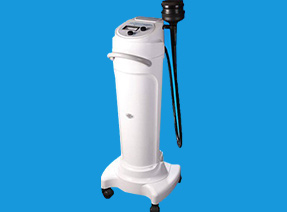
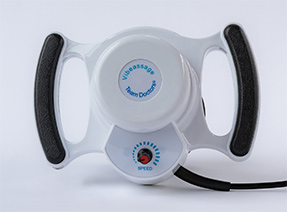
The Vibeassage Sport and the Vibeassage Pro featuring the TDX3 soft-as-the-hand Biomimetic Applicator Pad
https://www.teamdoctors.com/
✓ Get Dr. Stoxen’s #1 International Bestselling Books
Learn how to understand, examine, and reverse your TOS—without surgery.
https://drstoxen.com/1-international-best-selling-author/
✓ Check out Team Doctors Online Courses
Step-by-step video lessons, demonstrations, and self-treatment strategies.
https://teamdoctorsacademy.com/
✓ Schedule a Free Phone Consultation With Dr. Stoxen
Speak directly with him so he can review your case and guide you on your next steps.
https://drstoxen.com/appointment/
#ThoracicOutletSyndrome #FailedTOSSurgery #TOSRecovery #ChronicPainStory #VascularTOS #ArmPain #PatientAdvocacy #MedicalTrauma #SurgeryFailure #PainJourney
Medical Disclaimer
This article is provided for educational and informational purposes only. It is not intended to diagnose, treat, cure, or prevent any disease, nor is it intended to replace professional medical advice, diagnosis, or treatment.
Thoracic outlet syndrome and related nerve, vascular, and musculoskeletal conditions can present differently in each individual. Treatment decisions—including surgical and non-surgical options—must be made on a case-by-case basis in consultation with a qualified, licensed healthcare professional who is familiar with the patient’s complete medical history.
The experiences described in this article reflect individual outcomes and do not guarantee similar results for others. Surgical procedures, including thoracic outlet surgery and first rib resection, carry inherent risks, and outcomes vary based on many factors including diagnosis, timing, practitioner experience, and patient-specific anatomy and physiology.
Readers should not delay or discontinue medical care based on information contained in this article. Always seek the guidance of a qualified healthcare provider with any questions regarding symptoms, conditions, or treatment options.
Editor’s Note
This article explores a patient and family experience following thoracic outlet syndrome surgery and highlights the importance of comprehensive evaluation, informed decision-making, and second opinions when managing complex pain conditions.
The article also references the Human Spring Approach, a biomechanical evaluation and treatment framework developed by Dr James Stoxen, which emphasizes understanding the body as an integrated, dynamic spring system rather than a collection of isolated anatomical structures. The inclusion of this approach is intended to illustrate an alternative clinical perspective, not to discredit surgery or any specific medical specialty.
Mention of specific clinicians, evaluation models, or treatment philosophies does not constitute endorsement, medical advice, or a claim of superiority. Rather, it reflects the editorial goal of encouraging patients and families to seek clarity, explanation, and individualized assessment before pursuing irreversible interventions.
The editorial position of this publication is that understanding should precede intervention, especially in conditions where symptoms persist, worsen, or fail to respond to standard care.

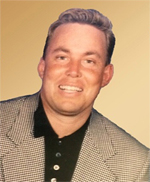
Dr James Stoxen DC., FSSEMM (hon) He is the president of Team Doctors®, Treatment and Training Center Chicago, one of the most recognized treatment centers in the world.
Dr Stoxen is a #1 International Bestselling Author of the book, The Human Spring Approach to Thoracic Outlet Syndrome. He has lectured at more than 20 medical conferences on his Human Spring Approach to Thoracic Outlet Syndrome and asked to publish his research on this approach to treating thoracic outlet syndrome in over 30 peer review medical journals.
He has been asked to submit his other research on the human spring approach to treatment, training and prevention in over 150 peer review medical journals. He serves as the Editor-in-Chief, Journal of Orthopedic Science and Research, Executive Editor or the Journal of Trauma and Acute Care, Chief Editor, Advances in Orthopedics and Sports Medicine Journal and editorial board for over 35 peer review medical journals.
He is a much sought-after speaker. He has given over 1000 live presentations and lectured at over 70 medical conferences to over 50,000 doctors in more than 20 countries. He has been invited to speak at over 300 medical conferences which includes invitations as the keynote speaker at over 50 medical conferences.
After his groundbreaking lecture on the Integrated Spring-Mass Model at the World Congress of Sports and Exercise Medicine he was presented with an Honorary Fellowship Award by a member of the royal family, the Sultan of Pahang, for his distinguished research and contributions to the advancement of Sports and Exercise Medicine on an International level. He was inducted into the National Fitness Hall of Fame in 2008 and the Personal Trainers Hall of Fame in 2012.
Dr Stoxen has a big reputation in the entertainment industry working as a doctor for over 150 tours of elite entertainers, caring for over 1000 top celebrity entertainers and their handlers. Anthony Field or the popular children’s entertainment group, The Wiggles, wrote a book, How I Got My Wiggle Back detailing his struggles with chronic pain and clinical depression he struggled with for years. Dr Stoxen is proud to be able to assist him.
Full Bio) Dr Stoxen can be reached directly at teamdoctors@aol.com