A Rare Thoracic Outlet Case Caused by Hidden Shoulder Dislocation: What I Discovered in Richard’s Evaluation
After treating thoracic outlet patients for more than four decades, very few cases surprise me. But every so often, a patient arrives whose presentation challenges even the most seasoned clinician. Richard was one of those cases.
He came to me after years of misdiagnosis, confusion, failed evaluations, and worsening symptoms. His story is a powerful example of why thoracic outlet conditions require more than routine imaging, generalized Physical Therapy, or standard Massage Therapy. They require a deep understanding of the spring-like mechanics of the human body and how muscle tone, inflammation, and joint position interact.
When Richard arrived in Chicago, he had already experienced the full rotation of healthcare pathways—Chiropractic Treatment, Acupuncture, multiple scans, vascular testing, and even recommendations for invasive surgery, including anterior scalenectomy, first rib resection, and potential muscle removal. None of it had resolved his symptoms. None of it had identified the true cause.
The First Clue: Vascular Congestion Without Clear Soft-Tissue Explanation
Richard described progressive discoloration of the left shoulder during workouts, swelling, and bulging veins lasting up to 24 hours. Over time, he developed:
- neck pain
- neck shoulder pain
- neck stiffness
- neck pain and headaches
- constant neck pain
- tingling in collarbone
- chest pain around collar bone
- collarbone neck and shoulder pain
- collarbone and arm pain
- neck pain causes without clarity
- arm neck pain
- and intermittent neck pain and dizziness
Many clinicians had attributed these symptoms to tight scalene muscles, muscle spasms in neck, or generic thoracic outlet compression. Yet MRIs and ultrasounds failed to reveal the source. Even when a second MRI finally showed 50% reduced blood flow, the diagnosis still stopped at the surface.
Several specialists recommended surgery based on classic patterns—anterior scalene muscle syndrome, pectoralis minor syndrome, or compression from the subclavius muscle, thoracic muscles, and muscles scalene. But Richard’s story didn’t fit the typical progression. His symptoms fluctuated with activity and positioning in a way that suggested dynamic, not static, compression.
A Full Biomechanical Examination Revealed the Real Problem
Because thoracic outlet diagnoses are often incomplete, I insist on a comprehensive hands-on examination. Imaging alone cannot detect joint play abnormalities, subtle instability, or functional compression patterns.
Within minutes of testing, I suspected this was not standard neurogenic or vascular outlet compression—nor was it caused by classic muscle hypertonicity of the anterior scalene muscle, pectoralis minor, or subclavius muscle alone.
While Richard lay supine, I placed my thumb over his shoulder. With gentle pressure, his humeral head slipped downward—almost an inch and a half—into the thoracic outlet. This was a rare positional fault: a downward and forward displacement consistent with a subtle shoulder dislocation, not just a subluxation.
In short, the shoulder itself had migrated into the outlet.
This explained everything:
- The vein was mechanically compressed from above and below.
- The chronic guarding had triggered tight scalene muscles symptoms and anterior scalene syndrome symptoms.
- His daily stretching routine had worsened instability, not relieved it.
- Hypertonic muscles were reacting to joint misalignment and inflammation—not simply “tightness.”
In fact, Richard’s dedication to stretching had stretched the capsule, not the muscle—creating capsule laxity that allowed the humeral head to drift downward into the outlet. This type of case is so rare that out of thousands of thoracic outlet patients I’ve treated, I’ve only seen three with this precise mechanism.
Why Stretching Was Making Him Worse
When the shoulder capsule becomes overstretched, the stabilizing muscles contract to splint the joint. Patients misinterpret this contraction as tightness and stretch even more—making the instability worse. With the shoulder slipping downward, the scalene muscles hypercontract reflexively, lifting the rib and narrowing the outlet.
This is why I teach my patients that generalized stretching is one of the biggest aggravators of thoracic outlet symptoms.
Stretching:
- Increases instability
- Raises the first rib higher into the outlet
- Activates protective tone in the scalene muscles
- Irritates the inflamed tissues
- Intensifies compression
- Can worsen vascular obstruction
- Increases risk of clot formation
This is why I rarely recommend stretching for thoracic outlet patients—particularly when symptoms resemble anterior scalene muscle syndrome, pectoralis minor syndrome, anterior scalene syndrome, or thoracic myalgia.
Instead, the priority must be restoring normal tone with Myofascial Release for Thoracic Outlet Syndrome, targeted deep tissue, and vibration-based therapy to flush inflammation—not overstretching.
The Treatment Plan That Finally Made Sense
Richard had worked hard on self-treatment using deep tissue techniques from my book. His efforts were impressive—and effective—at reducing hyper-tonicity in the muscles controlling outlet tension. But because the underlying joint instability had never been addressed, the vein remained compressed.
Once we identified the source, the treatment plan became clear:
1. Stop all stretching immediately.
The capsule was already overstretched, and stretching was the primary cause of the downward shoulder displacement.
2. Reset shoulder alignment repeatedly.
Each session involved manually lifting and repositioning the shoulder to restore its neutral mechanical alignment.
3. Apply targeted deep tissue to reduce hyper-tone.
This included the pectoralis minor, scalene group, subclavius, and surrounding structures contributing to outlet narrowing.
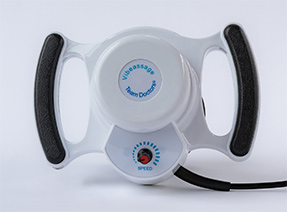
4. Use vibration massage to move inflammation out of the area.
This is key to breaking the tone–inflammation–compression cycle and restoring elasticity.
5. Initiate strict-form strengthening to stabilize the shoulder.
This prevents recurrence of the downward migration and supports long-term recovery.
6. Teach him safer home care strategies such as
- TOS Stretches alternatives (non-stretch approaches)
- TOS Physical Therapy principles
- TOS Exercises, TOS Self Treatment, and strengthening patterns
- A personalized Exercises for Thoracic Outlet Syndrome PDF
- Correct Thoracic Outlet Syndrome Physical Therapy Exercises
Richard’s commitment to the plan has been exceptional. His discoloration episodes are decreasing, his shoulder stability is improving, and his overall vascular performance is recovering.
A Final Thought From the Doctor
Richard’s case reinforces a crucial lesson:
Thoracic outlet syndrome is not always caused by the muscles—sometimes it is caused by the joints. And if you don’t look for instability, you will never find it.
This is why I stress a complete biomechanical examination before recommending:
- Thoracic Outlet Syndrome Physical Therapy
- Chiropractic for Thoracic Outlet Syndrome
- Thoracic Outlet Physical Therapy
- Thoracic Outlet Syndrome Massage
- Thoracic Outlet Syndrome Massage Treatment
- Acupuncture for Thoracic Outlet Syndrome
- or Exercises to Relieve Thoracic Outlet Syndrome
Every patient is different. But the principle remains:
Restore joint alignment. Reduce inflammation. Normalize tone. Reinforce stability.
That is how hundreds of TOS cases have been reversed in my clinic—without surgery.
Team Doctors Resources
✓ Check out the Team Doctors Recovery Tools
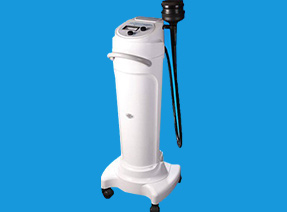
The Vibeassage Sport and the Vibeassage Pro featuring the TDX3 soft-as-the-hand Biomimetic Applicator Pad
https://www.teamdoctors.com
✓ Get Dr. Stoxen’s #1 International Bestselling Books
Learn how to understand, examine, and reverse your TOS—without surgery.
https://drstoxen.com/1-international-best-selling-author
✓ Check out Team Doctors Online Courses
Step-by-step video lessons, demonstrations, and self-treatment strategies.
https://teamdoctorsacademy.com
✓ Schedule a Free Phone Consultation With Dr. Stoxen
Speak directly with him so he can review your case and guide you on your next steps.
https://drstoxen.com/appointment

Dr James Stoxen DC., FSSEMM (hon) He is the president of Team Doctors®, Treatment and Training Center Chicago, one of the most recognized treatment centers in the world.
Dr Stoxen is a #1 International Bestselling Author of the book, The Human Spring Approach to Thoracic Outlet Syndrome. He has lectured at more than 20 medical conferences on his Human Spring Approach to Thoracic Outlet Syndrome and asked to publish his research on this approach to treating thoracic outlet syndrome in over 30 peer review medical journals.
He has been asked to submit his other research on the human spring approach to treatment, training and prevention in over 150 peer review medical journals. He serves as the Editor-in-Chief, Journal of Orthopedic Science and Research, Executive Editor or the Journal of Trauma and Acute Care, Chief Editor, Advances in Orthopedics and Sports Medicine Journal and editorial board for over 35 peer review medical journals.
He is a much sought-after speaker. He has given over 1000 live presentations and lectured at over 70 medical conferences to over 50,000 doctors in more than 20 countries. He has been invited to speak at over 300 medical conferences which includes invitations as the keynote speaker at over 50 medical conferences.
After his groundbreaking lecture on the Integrated Spring-Mass Model at the World Congress of Sports and Exercise Medicine he was presented with an Honorary Fellowship Award by a member of the royal family, the Sultan of Pahang, for his distinguished research and contributions to the advancement of Sports and Exercise Medicine on an International level. He was inducted into the National Fitness Hall of Fame in 2008 and the Personal Trainers Hall of Fame in 2012.
Dr Stoxen has a big reputation in the entertainment industry working as a doctor for over 150 tours of elite entertainers, caring for over 1000 top celebrity entertainers and their handlers. Anthony Field or the popular children’s entertainment group, The Wiggles, wrote a book, How I Got My Wiggle Back detailing his struggles with chronic pain and clinical depression he struggled with for years. Dr Stoxen is proud to be able to assist him.
Full Bio) Dr Stoxen can be reached directly at teamdoctors@aol.com