The Reversal: How a 10-Year Collapse Was Finally Unwound
For ten years, Shauna lived inside a body that no longer felt like her own.
It was not just the arm pain.
It was the constant awareness that something was wrong.
The heaviness.
The pulling.
The weakness.
The coldness.
The numbness.
The color change.
Every day, her nervous system lived on edge.
Every movement carried doubt.
Every use of her right arm came with fear.
By the time she walked into Dr. Stoxen’s clinic, she was not looking for comfort.
She was looking for a way out.
Why This Was Not Just Another Treatment Attempt
She had already tried:
- physical therapy for thoracic outlet syndrome
- stretching for thoracic outlet syndrome
- exercises for thoracic outlet syndrome
- home exercises for TOS
- movement therapy for TOS
- postural therapy for thoracic outlet syndrome
- nerve glides for arm pain
- Full rehab for thoracic outlet syndrome
She had lived the truth of:
- why PT doesn’t work for TOS
- physical therapy made TOS worse
- why stretching makes symptoms worse
- can stretching worsen nerve compression
- does exercise help TOS (not when structure is failing)
So this time, she was not optimistic.
She was cautious.
The First Principle: Stop Forcing, Start Unloading
Dr. Stoxen did not begin by trying to “strengthen” anything.
He began by reducing load.
He explained that her body was not weak.
It was collapsed.
And collapsed systems do not need more force.
They need less compression.
The goal was simple:
Take pressure off the nerves and blood vessels
Restore space
Let the structure rise back up
The Tools Were Simple — The Application Was Not
Her treatment centered around:
- thoracic outlet syndrome massage
- manual therapy for thoracic outlet syndrome
- deep tissue for thoracic outlet syndrome
- soft tissue treatment for TOS
- myofascial release thoracic outlet syndrome
- manual therapy nerve compression
- And especially vibration therapy for arm pain
But this was not spa massage.
This was structural decompression work.
Every contact had a purpose:
- To let guarded tissue release
- To restore glide between layers
- To allow joints to open
- To let the shoulder rise
- To let the rib cage expand
- To let the clavicle float
The Moment She Knew This Was Different
It happened during the first session.
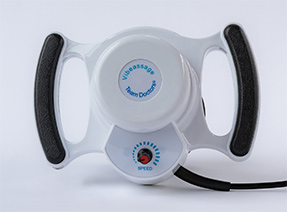
As the Vibeassage was applied and the deep tissues were worked, she felt something she had not felt in years.
Her neck softened.
Her shoulder felt lighter.
Her chest felt more open.
And then she noticed something that made her heart race:
Her hand felt warm.
Not temporarily.
Not superficially.
Warm in a deep, living way.
Then the tingling began to fade.
Then the heavy, dragging sensation in her arm started to lift.
This was not pain relief.
This was circulation and nerve conduction returning.
Why This Could Only Happen When Compression Was Removed
Her symptoms had never been caused by damage.
They had been caused by pressure.
Pressure on nerves.
Pressure on vessels.
Pressure from a shoulder that had been hanging too low for too long.
As that pressure was reduced, her nervous system did what it had been trying to do for ten years:
It normalized.
The Second Principle: The Body Heals When You Stop Crushing It
For years, her body had been fighting gravity with tension.
That tension was not the enemy.
It was support.
Now, as the structure was being restored, that emergency tension could finally let go.
This is why:
- does massage help thoracic outlet syndrome? → Yes, when it changes structure
- massage vs PT for TOS → Only one addresses compression
- can physical therapy fix thoracic outlet syndrome? → Not if it ignores suspension
- does chiropractic help TOS? → Only if it reduces load, not increases it
Early Changes That Could Not Be Explained Away
Within the first phase of care:
- Her hand stayed warm
- The color normalized
- The tingling stopped waking her up at night
- The numbness receded
- The heaviness decreased
- The pain began to fade
And most importantly:
Her arm no longer felt like it was hanging from her body.
It felt supported.
Why This Was a Reversal, Not a Temporary Improvement
Temporary improvements fade.
This did not.
Because the cause was being addressed.
Not the symptom.
Not the tissue.
Not the scan.
The structure.
When Structure Changes, Everything Changes
The most important changes in Shauna’s body did not happen all at once.
They happened progressively.
But unlike the slow decline she had lived through for ten years, this time the change was moving in the opposite direction.
Upward.
The Shoulder That Had Been Falling Started Rising
For years, her right shoulder had sat subtly lower than her left.
Not enough to draw attention in a mirror.
Enough to crush tunnels.
As the treatments continued, something remarkable happened:
Her shoulder position changed.
Not because someone forced it.
Not because someone manipulated it.
But because the tissues that had been holding it down finally let go.
As that happened:
- The clavicle floated higher
- The rib cage expanded better
- The neck felt longer
- The chest felt more open
This is the mechanical opposite of collapse.
Why Posture Changed Without “Posture Exercises”
She was not given aggressive posture drills.
She was not told to “hold herself up.”
Her posture changed because the structure could finally support itself.
That is the difference between:
- Forcing posture
- And restoring suspension
For years, she had lived in:
- arm and shoulder pain
- arm neck pain
- arm and neck pain
- upper arm pain
- arm pain from neck
- arm swelling
- arm and hand numbness
As the structure changed, these did not need to be “treated.”
They resolved.
The Tunnels Stayed Open
The most important difference between this and everything she had tried before was simple:
The improvement lasted.
Because the tunnel was no longer being crushed from above.
The space stayed open.
That is why:
- The hand stayed warm
- The color stayed normal
- The tingling did not return
- The heaviness did not come back
Why Exercises Failed Before — And Why They Can Work Later
Early in her journey, exercises had made her worse.
Now, they could help.
Because you cannot strengthen a collapsing bridge.
But once the bridge is supported, you can reinforce it.
This is why:
- does exercise help TOS → Only after decompression
- best exercises for arm numbness → Only when nerves are not being crushed
- can physical therapy fix thoracic outlet syndrome → Only after structure is restored
Before, she lived:
- why PT doesn’t work for TOS
- physical therapy made TOS worse
- why stretching makes symptoms worse
- can stretching worsen nerve compression
Now, movement no longer threatened her nervous system.
The Difference Between Temporary Relief and Structural Change
She had felt temporary relief before.
This was different.
Temporary relief:
- Feels good
- Fades
- Leaves you afraid to move
Structural change:
- Feels stable
- Holds
- Gives you confidence back
She began using her arm without fear.
Not because she was “brave.”
Because her body no longer felt dangerous.
Why This Is Still Non-Invasive Medicine
Nothing was cut.
Nothing was removed.
Nothing was destabilized.
Her recovery was built on:
- conservative treatment options TOS
- non invasive therapy for thoracic outlet syndrome
But done with mechanical intelligence, not generic protocols.
What Her Story Proves Clinically
Shauna’s recovery proves:
- arm pain causes are often not in the arm
- thoracic outlet syndrome arm pain is usually from collapse above
- thoracic outlet syndrome hand numbness and thoracic outlet syndrome hand pain are compression problems
- thoracic outlet syndrome fingers symptoms and thoracic outlet syndrome hand swelling can be reversible
- thoracic outlet syndrome elbow pain and thoracic outlet syndrome armpit pain are part of the same tunnel failure
- TOS arm pain, TOS shoulder, and TOS hand are one mechanical problem
Why She Did Not Relapse
The biggest fear after chronic pain is:
“What if it comes back?”
It didn’t.
Because the cause had been changed.
Not managed.
Not medicated.
Not ignored.
Changed.
The Bigger Meaning of One Woman’s Recovery
Shauna did not just get her arm back.
She got her life back.
For ten years, her world had been quietly shrinking. She planned her days around pain. She avoided activities she loved. She moved carefully. She lived with constant awareness of her right arm, her shoulder, her neck, and her hand.
She lived with arm pain, arm and shoulder pain, arm neck pain, and arm and neck pain so long that it had become part of her identity.
And then it wasn’t.
The Final Phase: Returning to Normal Life
As the weeks went on and her structure continued to hold, she began to test her body again.
Not recklessly.
Not fearfully.
Just normally.
She used her arm without thinking.
She lifted things without bracing.
She moved without calculating consequences.
And nothing bad happened.
That was the real proof.
Not just that the pain was gone — but that the fear was gone.
Why This Was a True Reversal
Most chronic pain patients experience cycles:
Better.
Worse.
Better.
Worse.
Shauna did not.
Because the cause had been changed.
Her problem had never been “irritated tissue.”
It had been mechanical compression.
Once that compression was gone, her nervous system did not need to keep sending danger signals.
What This Says About So-Called “Chronic” Conditions
Her case forces an uncomfortable question:
How many people are told their condition is chronic…
…when it is actually mechanical?
How many people are told to manage symptoms…
…when the structure causing the symptoms could be changed?
She had lived with:
- arm pain causes that were misunderstood
- arm and hand numbness that was never explained
- arm swelling and circulation fear
- arm pain from neck and upper arm pain
- And every version of thoracic outlet syndrome arm pain
None of that was permanent.
It was positional.
Why Her Case Applies to More Than Thoracic Outlet Syndrome
Thoracic outlet syndrome is just one place where tunnels can collapse.
The same mechanics apply to:
- Neck pain
- Shoulder pain
- Low back pain
- Sciatic pain
- Carpal tunnel–type symptoms
- Postural nerve compression syndromes
Anywhere the body depends on space.
Anywhere the body depends on suspension.
The Core Principle: The Body Is a Spring System
Shauna’s recovery only makes sense if you understand one thing:
The human body is not a stack of parts.
It is a spring-suspended system.
When the springs fail:
- The body sinks
- Spaces close
- Nerves get trapped
- Blood flow gets compromised
- Pain appears
When the springs are restored:
- The body rises
- Spaces reopen
- Nerves breathe
- Circulation returns
- Pain disappears
Why Cutting Anatomy Is the Wrong Direction
Shauna had read the stories.
Ribs removed.
Muscles cut.
Necks destabilized.
Lives made worse.
Her recovery proves something important:
You do not fix a collapsing building by removing support beams.
You fix it by restoring support.
That is why:
- conservative treatment options TOS
- non invasive therapy for thoracic outlet syndrome
…are not “second best.”
They are mechanically correct.
The Emotional Side No One Talks About
Chronic pain does something to people.
It makes them cautious.
It makes them smaller.
It makes them doubt their bodies.
It makes them plan around limitation.
One of the most profound changes in Shauna was not physical.
It was psychological.
She stopped thinking of her body as fragile.
She started trusting it again.
The Full Circle Moment
Fifteen years after that fall in Las Vegas, that moment no longer defines her life.
It is just a story.
Not a sentence.
Not a warning.
Not a life divider.
Just a story.
What Her Journey Teaches Every Patient
Shauna’s case teaches something every patient should know:
If your symptoms:
- Change with position
- Change with load
- Change with posture
- Change with use
- Change with decompression
Then your problem is probably mechanical.
And mechanical problems can be fixed.
The Final Truth
Her thoracic outlet syndrome was not a disease.
It was a collapsed suspension system.
And when that system was restored…
…the pain had no reason to exist anymore.
Team Doctors Resources
✓ Check out the Team Doctors Recovery Tools
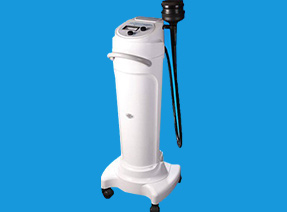
The Vibeassage Sport and the Vibeassage Pro featuring the TDX3 soft-as-the-hand Biomimetic Applicator Pad
https://www.teamdoctors.com/
✓ Get Dr. Stoxen’s #1 International Bestselling Books
Learn how to understand, examine, and reverse your TOS—without surgery.
https://drstoxen.com/1-international-best-selling-author/
✓ Check out Team Doctors Online Courses
Step-by-step video lessons, demonstrations, and self-treatment strategies.
https://teamdoctorsacademy.com/
✓ Schedule a Free Phone Consultation With Dr. Stoxen
Speak directly with him so he can review your case and guide you on your next steps.
https://drstoxen.com/appointment/
#ThoracicOutletSyndrome #FailedTOSSurgery #TOSRecovery #ChronicPainStory #VascularTOS #ArmPain #PatientAdvocacy #MedicalTrauma #SurgeryFailure #PainJourney
Medical Disclaimer
This article is provided for educational and informational purposes only. It is not intended to diagnose, treat, cure, or prevent any disease, nor is it intended to replace professional medical advice, diagnosis, or treatment.
Thoracic outlet syndrome and related nerve, vascular, and musculoskeletal conditions can present differently in each individual. Treatment decisions—including surgical and non-surgical options—must be made on a case-by-case basis in consultation with a qualified, licensed healthcare professional who is familiar with the patient’s complete medical history.
The experiences described in this article reflect individual outcomes and do not guarantee similar results for others. Surgical procedures, including thoracic outlet surgery and first rib resection, carry inherent risks, and outcomes vary based on many factors including diagnosis, timing, practitioner experience, and patient-specific anatomy and physiology.
Readers should not delay or discontinue medical care based on information contained in this article. Always seek the guidance of a qualified healthcare provider with any questions regarding symptoms, conditions, or treatment options.
Editor’s Note
This article explores a patient and family experience following thoracic outlet syndrome surgery and highlights the importance of comprehensive evaluation, informed decision-making, and second opinions when managing complex pain conditions.
The article also references the Human Spring Approach, a biomechanical evaluation and treatment framework developed by Dr James Stoxen, which emphasizes understanding the body as an integrated, dynamic spring system rather than a collection of isolated anatomical structures. The inclusion of this approach is intended to illustrate an alternative clinical perspective, not to discredit surgery or any specific medical specialty.
Mention of specific clinicians, evaluation models, or treatment philosophies does not constitute endorsement, medical advice, or a claim of superiority. Rather, it reflects the editorial goal of encouraging patients and families to seek clarity, explanation, and individualized assessment before pursuing irreversible interventions.
The editorial position of this publication is that understanding should precede intervention, especially in conditions where symptoms persist, worsen, or fail to respond to standard care.

Dr James Stoxen DC., FSSEMM (hon) He is the president of Team Doctors®, Treatment and Training Center Chicago, one of the most recognized treatment centers in the world.
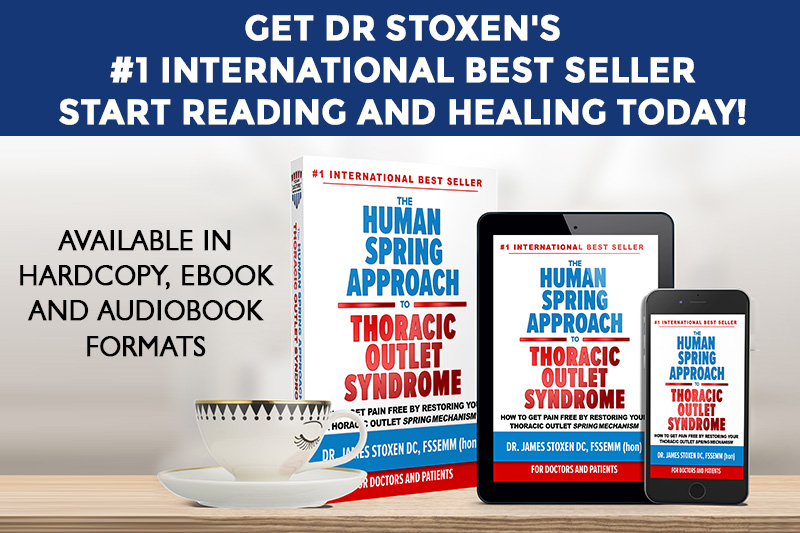
Dr Stoxen is a #1 International Bestselling Author of the book, The Human Spring Approach to Thoracic Outlet Syndrome. He has lectured at more than 20 medical conferences on his Human Spring Approach to Thoracic Outlet Syndrome and asked to publish his research on this approach to treating thoracic outlet syndrome in over 30 peer review medical journals.
He has been asked to submit his other research on the human spring approach to treatment, training and prevention in over 150 peer review medical journals. He serves as the Editor-in-Chief, Journal of Orthopedic Science and Research, Executive Editor or the Journal of Trauma and Acute Care, Chief Editor, Advances in Orthopedics and Sports Medicine Journal and editorial board for over 35 peer review medical journals.
He is a much sought-after speaker. He has given over 1000 live presentations and lectured at over 70 medical conferences to over 50,000 doctors in more than 20 countries. He has been invited to speak at over 300 medical conferences which includes invitations as the keynote speaker at over 50 medical conferences.
After his groundbreaking lecture on the Integrated Spring-Mass Model at the World Congress of Sports and Exercise Medicine he was presented with an Honorary Fellowship Award by a member of the royal family, the Sultan of Pahang, for his distinguished research and contributions to the advancement of Sports and Exercise Medicine on an International level. He was inducted into the National Fitness Hall of Fame in 2008 and the Personal Trainers Hall of Fame in 2012.
Dr Stoxen has a big reputation in the entertainment industry working as a doctor for over 150 tours of elite entertainers, caring for over 1000 top celebrity entertainers and their handlers. Anthony Field or the popular children’s entertainment group, The Wiggles, wrote a book, How I Got My Wiggle Back detailing his struggles with chronic pain and clinical depression he struggled with for years. Dr Stoxen is proud to be able to assist him.
Full Bio) Dr Stoxen can be reached directly at teamdoctors@aol.com