Many people live for years with strange and scary arm symptoms that don’t seem to make sense.
One day the arm feels normal.
Another day it feels heavy, tight, and uncomfortable.
Sometimes the hand gets cold.
Sometimes the arm changes color.
Sometimes it swells after activity.
Some people notice poor circulation in arm and don’t know why. Others experience arm swelling and pain that seems to come and go. Some see blue or purple arm symptoms or notice a cold hand circulation problem when they hold their arm in certain positions.
They may be told things like:
“You probably slept on it wrong.”
“You’re just tense.”
“Your posture is bad.”
“Your scans look normal.”
And yet, the arm still doesn’t feel right.
Some people notice signs that feel more serious, like blood flow blocked to arm, arm heaviness and swelling, or arm discoloration and pain after using the arm for a while. Others notice arm swelling after activity, arm pressure with activity, or a swollen arm after exercise.
These problems can be confusing and frightening.
And they often don’t come from where people think they do.
A Real Patient Story That Changed Everything
In January of 2026, I was thinking back to a patient I had treated in England.
He worked as a recruiter on the Isle of Wight and spent most of his day on the phone. Over time, he developed a severe, chronic muscle spasm in the front of his shoulder and chest area.
Eventually, he even developed a blood clot in his arm.
Doctors told him: First rib resection and scalenectomy is medically necessary.
His father said, “No first rib resection. No scalene surgery! No invasive surgery for my son!”
First rib resection and scalenectomy is a major, irreversible operation performed deep in the neck and upper chest. It involves permanently removing part or all of the first rib and cutting away one or more of the scalene muscles in order to create space around nerves and blood vessels.
This area contains some of the most critical structures in the body, including the brachial plexus nerves, subclavian artery and vein, lung apex, and sympathetic nerve fibers. Surgery in this region is technically demanding and carries risks that cannot be undone once tissue is removed.
Unlike soft-tissue therapies or mechanical restoration approaches, this surgery alters anatomy permanently.
What This Surgery Actually Does
Removes a load-bearing rib that helps stabilize the shoulder girdle
Cuts key neck muscles that help control posture, breathing, and shoulder mechanics
Creates space by subtracting structure, not by restoring normal mechanics
Relies on scar tissue to “hold things together” after anatomy is removed
Once performed, there is no way to restore the original anatomy.
Known Risks and Long-Term Concerns
Even when technically successful, patients may experience:
Persistent or worsened nerve pain
Chronic neck and shoulder instability
Weakness or altered shoulder mechanics
Numbness, tingling, or burning sensations
Scar-related nerve irritation
Vascular complications
Breathing changes due to altered rib and muscle function
Long recovery periods with uncertain outcomes
Some patients report new symptoms after surgery that did not exist before.
Why Outcomes Are Unpredictable
Thoracic outlet symptoms are often caused by dynamic, functional problems — posture, movement patterns, muscle tone, joint compression, and inflammation.
Removing bone and muscle does not guarantee that:
Inflammation will resolve
Nerves will calm down
Blood flow will normalize
The nervous system will exit protective mode
If the underlying mechanical and inflammatory drivers are not addressed, symptoms can persist even after surgery.
The Irreversibility Problem
If this surgery fails, there is no way to put the rib back or restore the removed muscles.
That makes this procedure fundamentally different from conservative care, where treatments can be adjusted, stopped, or reversed.
His father argued with them! “No first rib resection. No scalene surgery for my son!”
The doctors fought back with the father but he held his ground. Thank God!
In other words, they didn’t think surgery was the right answer.
Because of COVID travel restrictions, I couldn’t get to England until many months later.
When I finally examined him, I checked everything carefully.
His first rib was fine.
His scalenes (the neck muscles people often blame) were not especially painful.
But the front of his shoulder—especially the coracobrachialis and the short head of the biceps—felt like a concrete wall.
Here is what was happening:
When you moved his arm out to the side even a little bit, his entire arm would:
- Fill with blood
• Become extremely painful
• Then turn pale and cold
This is what people often describe when they talk about blood flow issues in arm, arm circulation problems, or a cold hand or arm that appears in certain positions.
In his case, the problem wasn’t his rib.
It was mechanical compression in the front of the shoulder.
In simple terms, tight, overworked tissues were pressing on important structures. This is the kind of situation people are often describing when they talk about vein compression in shoulder, vein compression symptoms arm, or vascular compression shoulder.
Instead of working on his neck or ribs, I worked on the front of the shoulder—on the subclavius, coracobrachialis, and surrounding tissues.
Then I gently moved his arm out a little more.
“How does that feel?”
Better.
We worked some more.
Moved it a little more.
This went on for about three hours.
Later, we were sitting and watching TV. His arm was resting up and back.
I said, “Did you notice anything?”
He said, “What?”
I said, “Look at your arm.”
He looked and said, “My arm is over my head.”
I said, “Exactly. And look at your hand—it’s warm. It’s pink.”
For the first time in a long time, his arm was no longer pulling on his thoracic outlet and shutting off circulation.
The problem was never his rib.
It was the front of his shoulder.
And once that was addressed, the blood flow problems shoulder and arm behavior changed dramatically.
Why These Symptoms Are So Confusing
People often use many different words to describe these problems:
They might say they have hand swelling and discoloration or a blue or purple hand.
They might notice arm feels heavy and tight or complain of arm vein pain.
They might feel strange arm color changes pain or describe circulatory issues arm pain.
Some are told they might have vascular thoracic outlet symptoms or vascular tos signs. Others are told it’s “just inflammation” or “just posture.”
From the patient’s point of view, it can feel like this:
“My arm doesn’t behave like a normal arm anymore.”
Sometimes the arm looks normal at rest.
Sometimes it feels full, tight, or heavy.
Sometimes it changes color.
Sometimes it feels cold.
This is what people often mean when they talk about arm circulation disorder symptoms, reduced blood flow to arm, blood flow obstruction arm, or arm swelling from compression.
The scary part is not just how it feels.
The scary part is that it seems unpredictable.
The Big Mistake: Looking Only for One Broken Part
Modern medicine is very good at looking for:
- A torn structure
• A broken structure
• A blocked vessel
• A damaged nerve
And those things do matter.
But many arm and shoulder circulation problems are mechanical and functional, not just “broken part” problems.
They often come from:
- How the arm is being held
• How the shoulder is being loaded
• How the tissues are being pulled tight over time
• How the body is adapting to long hours of the same posture
When these mechanical stresses build up, you can get vascular nerve compression symptoms without a single structure being “broken.”
This is why someone can have:
- Normal scans
• Normal tests
• And still have very real symptoms
A Simpler Way to Think About the Body: The Human Spring
The Human Spring Approach looks at the body differently.
Instead of thinking of the body as a machine made of stiff parts, it looks at the body as a living spring system.
A healthy spring:
- Compresses
• Rebounds
• Moves freely
• Does not get stuck
But a spring that is held in one position too long, overloaded, or twisted can become:
- Stiff
• Shortened
• Restricted
• Unbalanced
When that happens in the shoulder and chest area, it can change how space is shared between muscles, nerves, and blood vessels.
That’s when people start to notice things like:
- arm pressure with activity
• swollen arm after exercise
• arm swelling after activity
• arm heaviness and swelling
Not because something suddenly “broke,” but because the spring system is no longer moving freely.
Why Position Matters More Than People Realize
Many people notice their symptoms change with position.
Arm down: feels better.
Arm up: feels worse.
Arm out to the side: strange pressure, color change, or heaviness.
That is a huge clue.
It tells us we are not just dealing with a “plumbing problem.”
We are dealing with a space and tension problem.
This is how people end up describing:
- blood flow blocked to arm in certain positions
• blood flow issues in arm that come and go
• arm circulation problems that change with posture
In simple terms:
The tissues are pulling on each other in a way that narrows space when the arm moves.
Where Tools Like Vibeassage Fit In (Safely and Honestly)
Dr. James Stoxen uses hands-on work in his office. But he also teaches patients how to take care of their own tissues at home.
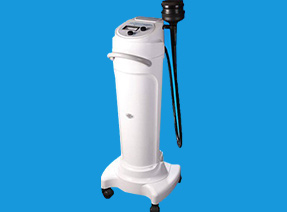
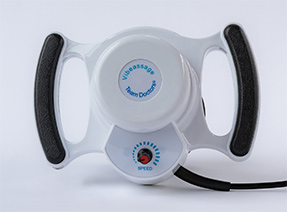
This is where tools like the Vibeassage Pro and Vibeassage Sport come in.
They are not magic.
They are not medical treatment.
They do not “cure” anything.
They are tools for self-care and tissue maintenance.
Used gently and intelligently, they can help a person:
- Explore tight areas
• Relax overworked tissues
• Improve comfort and movement
• Become more aware of their own body
This is similar to stretching, foam rolling, or massage—just in a different form.
The goal is not to force anything open.
The goal is to help the spring system move more easily.
The Big Idea So Far
Many people with arm symptoms are not dealing with a single broken part.
They are dealing with a mechanical tension and compression problem that affects how their arm, shoulder, and chest move together.
That’s why symptoms can look like:
- vein compression in shoulder
• blood flow obstruction arm
• arm swelling from compression
• arm circulation disorder symptoms
And yet still change with position, posture, and activity.
The Shoulder Is Not a Hinge — It’s a Hanging Spring System
Most people think of the shoulder like a door hinge.
They imagine the arm swinging on a simple joint.
But that is not how the shoulder really works.
The arm is not bolted to the body.
It is suspended.
It hangs from the neck, chest, shoulder blade, and upper ribs by a web of muscles, tendons, and soft tissues. Together, these tissues act like a living spring and suspension system.
That spring system is supposed to:
- Hold the arm up
• Let it move in many directions
• Absorb load and tension
• And protect the important structures that pass from the chest into the arm
Those important structures include nerves and blood vessels.
When the spring system is healthy, there is enough moving space for everything to slide and adapt as the arm moves.
When the spring system becomes tight, stiff, or unbalanced, that moving space can become narrowed in certain positions.
That is when people begin to notice strange symptoms.
Why Position Changes Everything
Many patients say things like:
“My arm feels fine when it’s down.”
“But when I lift it or reach out, something feels wrong.”
That is a huge clue.
It means the problem is not just inside a blood vessel or a nerve.
It means the shape and tension of the space is changing when the arm moves.
This is why some people experience blood flow blocked to arm only in certain positions, or notice blood flow issues in arm that come and go depending on how they hold their shoulder.
It is also why someone can have a cold hand or arm in one position and a warm hand in another.
Nothing magical changed.
The spring system changed its shape.
How Compression Slowly Develops
Compression usually does not start suddenly.
It builds slowly over time from things like:
- Long hours at a desk
• Long hours on the phone
• Reaching forward all day
• Holding tension in the chest and shoulders
• Old injuries that never fully relaxed
Over time, certain muscles stay slightly tight all the time.
They stop acting like flexible springs and start acting like short ropes.
When that happens, the shoulder and arm are no longer hanging freely.
They are being pulled forward, down, or inward.
This can slowly reduce the space that nerves and blood vessels pass through.
That is when people begin to notice things like:
- arm feels heavy and tight
• arm pressure with activity
• arm heaviness and swelling
• arm swelling after activity
Not because something suddenly broke—but because the spring system is no longer sharing load and space evenly.
Why Circulation Symptoms Can Look So Strange
Blood vessels are soft and flexible.
They are meant to bend and slide as you move.
But they do not like being pressed, stretched, or kinked over and over again.
When the shoulder spring system becomes too tight in certain directions, it can begin to press on veins or arteries during movement.
That is how people end up noticing:
- vein compression in shoulder
• vein compression symptoms arm
• blood flow obstruction arm
• reduced blood flow to arm
In daily life, this can show up as:
- arm swelling and pain after use
• arm swelling from compression
• swollen arm after exercise
• arm vein pain or strange pressure
Because veins carry blood back from the arm, vein pressure problems often show up as fullness, swelling, or heaviness rather than sharp pain.
That is why people often describe arm circulation disorder symptoms as a heavy, tight, bursting, or pressured feeling.
Why Color Changes Happen
Some people notice their hand or arm change color.
They may see:
- blue or purple arm symptoms
• arm discoloration and pain
• hand swelling and discoloration
• A blue or purple hand in certain positions
This does not mean the arm is “dying.”
It means blood is not moving in and out normally for that moment.
When blood comes in but does not leave easily, the arm can look darker or more purple.
When blood does not come in easily, the hand may look pale and feel cold, which is what people describe as a cold hand circulation problem or cold hand or arm.
Again, the key idea is this:
👉 The space and tension around the vessels is changing with position.
Why Nerves Can Be Involved Too
Nerves travel through the same crowded areas as blood vessels.
They also do not like being:
- Pressed
• Stretched
• Or held under tension for long periods
That is why many people experience vascular nerve compression symptoms at the same time as circulation symptoms.
This can include:
- Aching
• Tingling
• Weakness
• Or a strange “not right” feeling in the arm
Some people are told they may have vascular thoracic outlet symptoms or vascular tos signs.
Those names are just ways of describing where the traffic jam is happening.
They do not explain why the traffic jam formed.
The Traffic Jam Analogy
Imagine a highway that normally has six open lanes.
Now imagine construction slowly closes one lane… then another… then another.
Cars can still get through.
But traffic becomes:
- Slower
• More crowded
• More sensitive to rush hour
• More likely to back up
Your shoulder and arm spaces work the same way.
At rest, things may look okay.
But when you use the arm, lift it, or load it, the “traffic” increases.
That is when people notice:
- circulatory issues arm pain
• blood flow problems shoulder
• arm color changes pain
• arm circulation problems
The system is not broken.
It is crowded and tense.
Why Imaging Often Misses This
Most scans look at the body lying still.
But these problems happen during movement and position changes.
If the space only narrows when the arm is lifted or held forward, a normal scan may look “fine.”
That is why people can be told:
“Your MRI looks normal.”
And still have very real symptoms like:
- poor circulation in arm
• blood flow blocked to arm
• arm swelling after activity
The problem is functional and mechanical, not just structural.
The Human Spring View
The Human Spring Approach looks at all of this and says:
“Let’s stop asking only what is broken.”
“Let’s also ask how the spring system is moving, sharing load, and maintaining space.”
When the spring system is free:
- Space is protected
• Movement is smooth
• Circulation adapts
• Nerves glide
When the spring system is stiff:
- Space narrows
• Movement feels restricted
• Symptoms show up with activity and position
Where Gentle Self-Care Fits In
This is where gentle, regular self-care matters.
Not aggressive.
Not forceful.
Not painful.
Tools like the Vibeassage Pro and Vibeassage Sport are self-care tools, like stretching or massage tools.
They are meant to help:
- Relax overworked tissues
• Improve comfort
• Improve awareness of tight areas
• Encourage better movement habits
They are not a medical treatment and not a cure.
They are part of taking care of your own spring system.
The Big Idea of Part 2
Your shoulder and arm are not a hinge.
They are a hanging, living spring system.
When that spring system becomes stiff and unbalanced, it can:
- Change space
• Change pressure
• Change circulation
• Change nerve comfort
That is how people end up with symptoms like:
- arm heaviness and swelling
• blood flow obstruction arm
• arm swelling from compression
• vein compression symptoms arm
Even when nothing looks “broken” on a scan.
How Everyday Life Slowly Changes the Shoulder Spring (And What You Can Do About It)
Most people do not hurt their shoulder or arm in one big accident.
Instead, the problem builds slowly.
It builds from:
- Sitting
• Reaching forward
• Using a phone or computer
• Driving
• Working with the arms in front of the body
• Holding stress in the chest and shoulders
None of these things are “bad.”
But when they are done for hours, every day, for years, they slowly change the shape and tension of the shoulder spring system.
The Front of the Shoulder: The Most Overworked Area in Modern Life
In modern life, we live in front of us.
We look forward.
We reach forward.
We work forward.
So the muscles in the front of the shoulder and chest do much more work than the muscles in the back.
Over time, the front muscles can become:
- Short
• Tight
• Overworked
• Always “slightly on”
When that happens, they start to pull the shoulder and arm forward and down.
This changes the way the arm hangs.
This is how many people slowly drift into positions that make them more likely to notice:
- arm feels heavy and tight
• arm pressure with activity
• arm heaviness and swelling
Not because they are broken, but because the spring balance is changing.
Why the Problem Often Isn’t in the Neck
Many people think arm circulation or nerve problems must start in the neck.
Sometimes they do.
But very often, the real restriction is lower and more forward, in the chest and front of the shoulder.
This is why some people are told they might have vascular thoracic outlet symptoms or vascular tos signs, but scans of the neck and ribs do not explain everything.
The tug-of-war is happening in front.
When the front tissues become tight and thick, they can begin to:
- Change shoulder position
• Change arm tension
• Change how space behaves when the arm moves
That is when people begin to notice things like:
- blood flow problems shoulder
• vein compression in shoulder
• vascular compression shoulder
How This Turns Into Swelling, Heaviness, and Color Changes
When veins are gently but constantly pressed or kinked during movement, blood can have a harder time leaving the arm.
That is how people end up with:
- arm swelling after activity
• swollen arm after exercise
• arm swelling from compression
• arm swelling and pain
Over time, this can also show up as:
- arm circulation disorder symptoms
• blood flow issues in arm
• arm circulation problems
Some people also notice:
- arm discoloration and pain
• hand swelling and discoloration
• A blue or purple hand or blue or purple arm symptoms in certain positions
Again, this does not mean something sudden or dangerous is happening.
It means the spring system is not managing space well in that position.
Why Some People Get Cold Hands
If the spring system is pulling in a way that reduces incoming blood in certain positions, the hand can feel cold or look pale.
That is what people mean when they say they have a cold hand circulation problem or cold hand or arm.
Just like the patient in the England story, the hand could change temperature and color based on position alone.
That tells us the problem is mechanical and positional, not just a fixed blockage.
The Role of Nerves in All This
Nerves and blood vessels travel together.
When space becomes crowded, both can be affected.
That is why people often have vascular nerve compression symptoms along with heaviness, swelling, or strange circulation feelings.
This can include:
- Aching
• Tingling
• Fatigue
• Weakness
• Or just a sense that the arm “doesn’t like” certain positions
The Maintenance Mindset: Think Like You Brush Your Teeth
Most people do not brush their teeth only when they hurt.
They brush them to prevent problems.
Your shoulder and arm spring system works the same way.
Because modern life keeps pulling us forward, we need to:
- Give tissues a chance to relax
• Give joints a chance to move
• Give the spring system a chance to stay balanced
This is not medical treatment.
This is basic body maintenance.
Where Vibeassage Pro and Vibeassage Sport Fit
Dr. James Stoxen uses hands-on work in his office, but he also teaches people how to take care of their own bodies at home.
The Vibeassage Pro and Vibeassage Sport are self-care tools.
They are in the same category as:
- Stretching
• Massage
• Foam rolling
• Mobility work
They are not medical devices for diagnosis or treatment.
They are tools to help people:
- Explore tight areas
• Relax overworked tissues
• Improve comfort
• Improve awareness
• Encourage better movement habits
Used gently and intelligently, they can help people support their own spring system.
The “Don’t Force It” Rule
The goal is never to:
- Jam things open
• Push through sharp pain
• Or try to “fix” something aggressively
The goal is to:
- Soften
• Relax
• Explore
• And gradually restore better movement freedom
Remember: this is a living spring, not a rusty bolt.
Why Consistency Beats Intensity
Ten minutes a day of gentle care is better than one brutal hour once a month.
The spring system responds to:
- Frequent
• Gentle
• Calm input
Over time, this helps the body remember how to move more freely.
How This Helps Real-Life Symptoms
When the spring system moves better, many people notice that:
- Their arm feels lighter
• They tolerate activity better
• They have fewer episodes of heaviness
• Their arm behaves more normally in different positions
This can change how often they notice things like:
- poor circulation in arm
• blood flow blocked to arm
• blood flow obstruction arm
• reduced blood flow to arm
Not because anything magical happened—but because space is being managed better.
A Real Recovery Without Surgery — And a Smarter Way to Think About Your Body
Let’s go back to the patient in England.
The recruiter from the Isle of Wight.
He had been living with frightening arm symptoms for a long time.
At different times, he had experienced:
- arm swelling and pain
• arm heaviness and swelling
• blood flow issues in arm
• arm circulation problems
• arm discoloration and pain
• And even episodes that looked like blue or purple arm symptoms
At one point, he had even developed a blood clot. That made everything scarier.
Naturally, people started thinking in surgical terms.
Ribs.
Neck muscles.
Structures that might need to be “removed” to create space.
But when I finally examined him in person, something didn’t fit that story.
The Most Important Discovery
His first rib was fine.
His neck muscles were not the main problem.
The real problem was in the front of his shoulder.
Those tissues were so tight and overworked that they were pulling his entire arm and shoulder forward and down.
When his arm was moved out to the side, even a little bit, his arm would:
- Fill up
• Become extremely painful
• Then turn pale and cold
This is exactly what people describe when they talk about:
- blood flow blocked to arm
• blood flow obstruction arm
• reduced blood flow to arm
• Or a cold hand circulation problem
It was not a mystery.
It was mechanical.
The spring system was being pulled into a bad shape.
The Different Strategy: Don’t Cut — Change the Tension
Instead of thinking:
“What should we remove?”
The Human Spring Approach asks:
“What is pulling too hard, and how do we let it relax?”
So we worked on:
- The subclavius
• The coracobrachialis
• The front-of-shoulder tissues
• The chest and arm connections
Slowly.
Gently.
We would work.
Then move the arm a little.
Then work some more.
Then move it a little more.
Each time, the arm tolerated a bit more space.
Each time, the spring system became a little less stuck.
The Moment That Proved Everything
After about three hours of this gentle, progressive work, we were sitting and watching TV.
His arm was resting up and back.
I said, “Did you notice anything?”
He said, “What?”
I said, “Look at your arm.”
He looked and said, “My arm is over my head.”
Then he looked at his hand.
It was warm.
It was pink.
It looked normal.
For the first time in a long time, his arm was no longer showing:
- cold hand or arm
• arm color changes pain
• hand swelling and discoloration
• Or that heavy, full feeling people describe as arm circulation disorder symptoms
Nothing was cut.
Nothing was removed.
The spring tension was simply changed.
What Happened After That
Over time, as he continued taking care of the tissues and his movement habits, the episodes became:
- Less frequent
• Less intense
• Less scary
He no longer lived in fear of:
- swollen arm after exercise
• arm swelling after activity
• arm pressure with activity
• Or arm vein pain that came out of nowhere
That does not mean he became a robot with a perfect body.
It means his spring system learned to behave more normally again.
Why This Is So Important to Understand
Many people are told they have:
- vein compression in shoulder
• vascular compression shoulder
• vascular nerve compression symptoms
• Or vascular thoracic outlet symptoms
Those labels describe where the traffic jam shows up.
They do not explain why the traffic jam formed.
The Human Spring Approach focuses on the why:
- Tension
• Posture
• Habit
• Load
• And time
Where Vibeassage Fits In (Truthfully and Safely)
Dr. James Stoxen uses hands-on work in his clinic.
But he also teaches people how to take care of their own bodies at home.
That is where Vibeassage Pro and Vibeassage Sport come in.
They are:
- Self-care tools
• Body maintenance tools
• Tissue comfort tools
They are not medical treatment.
They are not a cure.
They do not diagnose or fix diseases.
They are simply tools that help people:
- Relax tight tissues
• Explore stiff areas
• Improve comfort
• Improve movement awareness
• Support their own spring system
Just like stretching, massage, or foam rolling.
The Long-Term Mindset That Actually Works
The biggest mistake people make is thinking:
“How do I fix this once and be done forever?”
Your body does not work that way.
You live in it every day.
You sit.
You work.
You reach forward.
You carry stress.
So your body needs:
- Regular care
• Gentle attention
• Movement
• And occasional “resetting” of tension
This is how you reduce the chances of living in cycles of:
- poor circulation in arm
• circulatory issues arm pain
• arm swelling from compression
• blood flow problems shoulder
A Calm, Rational Way to Think About Symptoms
Strange arm symptoms are scary.
But most of the time, they are mechanical behavior problems, not emergencies.
They are your body saying:
“The spring system is not sharing space well right now.”
That is very different from:
“Something is broken and must be removed.”
The Big Picture
The Human Spring Approach does not promise miracles.
It offers something better:
A clear, logical way to understand your body.
A way to see your arm and shoulder as:
- A hanging spring system
• That must move
• Must adapt
• And must be cared for
When you think this way, symptoms like:
- arm feels heavy and tight
• blue or purple hand
• arm circulation problems
• blood flow blocked to arm
Stop feeling mysterious.
They start making mechanical sense.
The Final, Honest Message
Your body is not a machine made of rigid parts.
It is a living spring system.
When that spring system is free, your arm behaves normally.
When that spring system is pulled out of balance, strange things happen.
The goal is not to fight your body.
The goal is to take care of how it moves, how it rests, and how it adapts.
That is the heart of the Human Spring Approach.
Closing Thought
That patient did not get better because something was removed.
He got better because the spring system was allowed to work again.
And that is a much calmer, safer, and more intelligent way to think about your body.
Team Doctors Resources
✓ Check out the Team Doctors Recovery Tools
The Vibeassage Sport and the Vibeassage Pro featuring the TDX3 soft-as-the-hand Biomimetic Applicator Pad
https://www.teamdoctors.com/
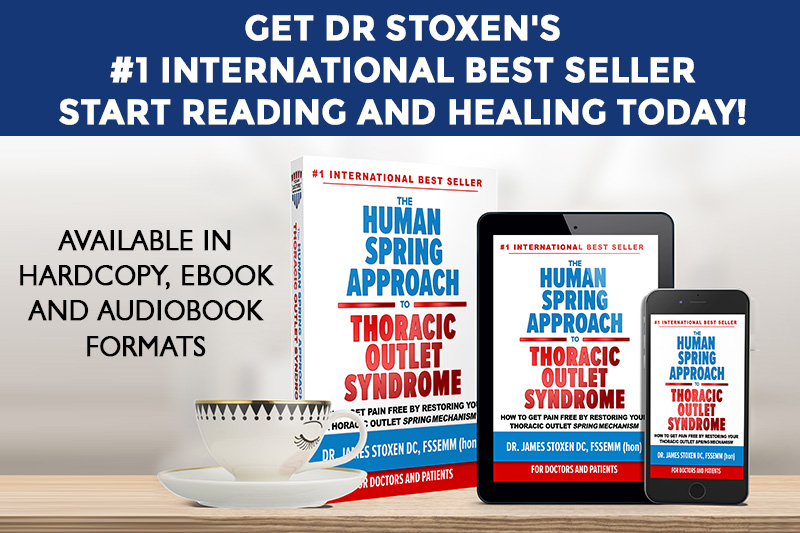
✓ Get Dr. Stoxen’s #1 International Bestselling Books
Learn how to understand, examine, and reverse your TOS—without surgery.
https://drstoxen.com/1-international-best-selling-author/
✓ Check out Team Doctors Online Courses
Step-by-step video lessons, demonstrations, and self-treatment strategies.
https://teamdoctorsacademy.com/
✓ Schedule a Free Phone Consultation With Dr. Stoxen
Speak directly with him so he can review your case and guide you on your next steps.
https://drstoxen.com/appointment/
#ThoracicOutletSyndrome #TOSSurgery #FirstRibResection #ChronicPainChoices #PainTreatment #InformedConsent #PatientAdvocacy #NonSurgicalOptions #ConservativeCare #PainRecovery #HealthDecisions #MedicalChoices #BodyHealing #SecondOpinion #PainSolutions

Dr James Stoxen DC., FSSEMM (hon) He is the president of Team Doctors®, Treatment and Training Center Chicago, one of the most recognized treatment centers in the world.
Dr Stoxen is a #1 International Bestselling Author of the book, The Human Spring Approach to Thoracic Outlet Syndrome. He has lectured at more than 20 medical conferences on his Human Spring Approach to Thoracic Outlet Syndrome and asked to publish his research on this approach to treating thoracic outlet syndrome in over 30 peer review medical journals.
He has been asked to submit his other research on the human spring approach to treatment, training and prevention in over 150 peer review medical journals. He serves as the Editor-in-Chief, Journal of Orthopedic Science and Research, Executive Editor or the Journal of Trauma and Acute Care, Chief Editor, Advances in Orthopedics and Sports Medicine Journal and editorial board for over 35 peer review medical journals.
He is a much sought-after speaker. He has given over 1000 live presentations and lectured at over 70 medical conferences to over 50,000 doctors in more than 20 countries. He has been invited to speak at over 300 medical conferences which includes invitations as the keynote speaker at over 50 medical conferences.
After his groundbreaking lecture on the Integrated Spring-Mass Model at the World Congress of Sports and Exercise Medicine he was presented with an Honorary Fellowship Award by a member of the royal family, the Sultan of Pahang, for his distinguished research and contributions to the advancement of Sports and Exercise Medicine on an International level. He was inducted into the National Fitness Hall of Fame in 2008 and the Personal Trainers Hall of Fame in 2012.
Dr Stoxen has a big reputation in the entertainment industry working as a doctor for over 150 tours of elite entertainers, caring for over 1000 top celebrity entertainers and their handlers. Anthony Field or the popular children’s entertainment group, The Wiggles, wrote a book, How I Got My Wiggle Back detailing his struggles with chronic pain and clinical depression he struggled with for years. Dr Stoxen is proud to be able to assist him.
Full Bio) Dr Stoxen can be reached directly at teamdoctors@aol.com