When Olivier Seguier first contacted me from the south of France, he spoke with the quiet exhaustion of someone who had been living inside his pain for far too long.
Years of symptoms, dismissals, and failed treatments had worn him down. He was a nurse—strong, capable, compassionate—but by the time he reached me, he could no longer work, no longer fish, no longer sleep without waking in agony. His body, once his ally, had become something he feared.
His case was already severe before he ever stepped foot in Chicago.
He described constant muscle spasms in neck, deep burning tension anchoring his left shoulder, and the unmistakable tightness of tight scalene muscles gripping his airway and neurovascular bundle.
Every movement, every breath, every attempt to lie down or sit still triggered the same rigid response from his scalene muscles, his pectoralis minor, and his anterior scalene muscle.
He spoke of the sensation as “a hand slowly tightening around my collarbone,” which aligned perfectly with what I see in advanced thoracic outlet syndrome: the layered compression of muscle, fascia, and inflamed tissues pulling the first rib upward and downward at the same time.
When he mentioned pain radiating beneath the clavicle, I immediately recognized the sign of muscle under clavicle pain, one of the early signals of brachial plexus irritation.
But in Olivier’s case, it had progressed much further. He described anterior scalene syndrome symptoms rising into his neck, while tight scalene muscles symptoms wrapped around into his chest.
He had all the patterns of pectoralis minor syndrome, combined with anterior scalene syndrome and its deeper cousin, anterior scalene muscle syndrome, a triple-layered compression that commonly fools clinicians who do not examine the full thoracic outlet.
He told me he had been advised to undergo an anterior scalenectomy, and even a pectoralis minor tenotomy, procedures that remove or sever muscles but fail to address the true pathology:
the inflammatory overload saturating all thoracic muscles, including the overlooked subclavius muscle, which in his case was so tense it felt like a violin string under the clavicle.
What Olivier needed was not another surgery.
He needed someone to find every layer of compression, every inflamed muscle, every dysfunctional movement pattern, and reverse them—systematically.
Before he ever arrived in Chicago, he had already tried the usual pathways:
– massage therapy
– physical therapy
– chiropractic treatment
– acupuncture
He even completed multiple rounds of standard TOS protocols:
– thoracic outlet syndrome exercises
– exercises for thoracic outlet syndrome
– thoracic outlet syndrome physical therapy
– thoracic outlet syndrome massage
– thoracic outlet physical therapy
– thoracic outlet syndrome massage treatment
He downloaded exercises for thoracic outlet syndrome pdf routines, performed exercises to relieve thoracic outlet syndrome, and attempted chiropractic for thoracic outlet syndrome as well as acupuncture for thoracic outlet syndrome.
He tried muscles scalene treatment, anterior scalene syndrome treatment, and even non-standard approaches recommended in online groups.
But nothing changed.
In fact, he was getting worse.
By the time we met on video call, the damage had become severe.
He had neurological symptoms piercing down both arms, a heaviness that made even lifting a phone a struggle, and episodes of respiratory tension caused by the deep binding of his thoracic outlet musculature.
He had endured years of thoracic myalgia, gripping spasms through his intercostals, and pain so intense he could no longer sit or stand for more than 30 minutes.
His scans, tests, and medical files had led surgeons to recommend rib resection. And while rib resection can be helpful for some structural compressions, it is rarely—very rarely—the source of the true problem.
The source is the inflammatory cycle forged by years of muscular micro-contractions, guarding reflexes, and oxygen-deprived tissue. Surgeries like rib resection, scalenectomy, or pectoralis minor tenotomy remove pieces, but they do not solve the pattern.
When Olivier finally made the decision to fly 7,000 kilometers to Chicago, he did so out of desperation—but also out of courage.
I remember the morning he arrived.
His father, who traveled with him, carried his bags because Olivier’s arms were simply too weak.
He held his left arm against his chest, instinctively guarding it.
He walked with the posture of someone bracing against pain—chin forward, shoulder elevated, rib cage rotated.
I could see the compensation patterns before he even sat down.
During my examination, I palpated each muscle of his thoracic outlet, testing tone, joint play, trigger points, nerve mobility, vascular flow, and structural alignment.
What I found shocked him, but not me: his left shoulder was dislocated.
This was the hidden factor every previous clinician had missed.
His acromioplasty had removed bone, but the mechanical misalignment beneath it remained uncorrected. No amount of therapy can fix pain when the joint itself is out of position.
When I reset the shoulder, there was a soft, subtle clunk—followed by a visible change in his breathing.
The pain that had tormented him for years vanished in seconds. His eyes widened. He sat upright. His father, watching quietly in the corner, covered his mouth in disbelief.
But the shoulder was only part of his story.
To fully reverse his thoracic outlet syndrome, we needed to release all 12 muscles involved in the compression cycle.
That is where the Vibeassage protocol began.
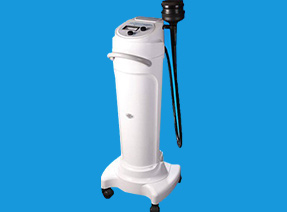
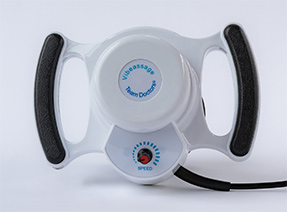
For the next several hours, I used the Vibeassage Pro, combining vibration with targeted pressure to increase deep tissue circulation.
The device softened each muscle until it reached the pliability necessary for manual decompression. Only when inflammation is reduced can deep tissue work be performed safely.
Then began the precision work—muscle by muscle, layer by layer.
I began with the scalenes—the most misunderstood and most mistreated muscles in thoracic outlet syndrome.
With Olivier lying comfortably on the treatment table, I palpated the belly of the tight scalene muscles, tracing the rope-like fibers of the scalene muscles that had been gripping his cervical spine and restricting blood flow for years.
Every clinician he had seen before me had stretched them, needled them, or heated them, but no one had systematically removed the inflammatory load binding them into chronic contraction.
This is why so many patients fail to improve: the goal is not to stretch the muscle, but to restore the brain’s ability to relax it.
That requires a full reprogramming of the tissue.
Using the Vibeassage Pro, I softened the tissue until the vibration penetrated into the deeper layers. Only then did I begin the deep decompression—holding each trigger point until the neurological guarding pattern released. This is how we reverse the contraction reflex that keeps patients locked in pain.
Olivier felt the sensations immediately—the electrical waves, the warmth, the sudden moments when his breathing opened. He said it felt like someone “untangling wires inside the neck.” And in many ways, that is exactly what was happening.
After the scalenes, I worked on the pectoralis minor, which in his case was so overdeveloped and inflamed that it had rotated his entire rib cage forward.
This muscle is responsible for a large percentage of misdiagnosed thoracic outlet cases.
When it contracts, it drags the shoulder downward while pulling the ribs upward, trapping the neurovascular bundle in the worst possible way.
Olivier had clear signs of pectoralis minor syndrome, which explained why his symptoms radiated through the chest wall and down the arm.
Most of his previous practitioners had only massaged the surface—but the true dysfunction was buried deep beneath layers of fibrotic scar tissue.
I continued the decompression across the thoracic muscles, locating knots of tension buried between the ribs.
Each area required precise pressure: firm enough to disrupt the chronic contraction, gentle enough to avoid aggravating the nerves.
When I reached the subclavius muscle, Olivier inhaled sharply.
This muscle, often ignored entirely in medical school, can cause some of the most intense muscle under clavicle pain in all of thoracic outlet syndrome.
Releasing the subclavius felt like dropping a stone from his shoulder.
His neck lengthened. His clavicle lifted. His arm warmed almost instantly.
The next stage was decompression of the anterior scalene muscle, a structure so critical to TOS that surgeons often recommend removing it entirely through an anterior scalenectomy.
But for Olivier, the problem was not the muscle itself—it was the thoracic myalgia and chronic bound fascia compressing it.
Removing a muscle that is only reacting to inflammation would not have helped him. Restoring its natural movement, however, would.
As I continued working through the 12 muscles of his thoracic outlet, Olivier experienced moments of heat, tingling, and sudden relief.
These sensations indicated that circulation was returning along pathways that had been obstructed for years.
When I reached the deeper fibers of the anterior scalene muscle syndrome, I held pressure until the tissue softened like clay.
The release was so profound that his pulse visibly increased in the radial artery.
He told me warmth shot all the way to his fingertips.
Each session lasted many hours.
Between sessions, Olivier’s father would help him ice, stretch gently, hydrate, and rest.
They were deeply committed to this process. I could see the worry in his father’s eyes on day one—but as each day passed, that fear turned into hope.
By day three, Olivier’s left-sided compression—the worst of the two—was completely resolved. He could lift his arm effortlessly. The radiating symptoms were gone.
The electrical shocks, the gripping sensations, the intercostal spasms—gone. He looked like a different man.
We moved to the right side.
Although his right side had been less symptomatic initially, it had gradually begun mirroring the left as his condition worsened.
Years of guarding patterns had forced his body to compensate by shifting his rib cage and elevating his right shoulder.
When I tested the right scalene and muscles scalene, I found tightness nearly as severe.
Using the Vibeassage protocol again, followed by precise decompression, we reversed the dysfunction almost as quickly as on the left. His body responded beautifully.
On day five, we performed the final releases on the pectoralis minor, the thoracic muscles, and the rib attachments.
By the end of the day, he stood taller, breathed more deeply, and held his shoulders with natural ease. His posture no longer resembled someone bracing against pain.
His range of motion was symmetrical.
His grip strength returned.
His neurological symptoms had vanished.
That evening, his father pulled me aside and, with tears in his eyes, said, “I have my son back.”
I will never forget that moment.
Before Olivier left Chicago, I taught him the daily protocols that would maintain his recovery:
– vibration therapy on the thoracic outlet using the Vibeassage Pro or Vibeassage Sport
– deep breathing drills to prevent scalene hypertonicity
– shoulder mechanics training
– posture retraining
– walking technique to reduce cervical load
– footwear adjustments to avoid asymmetrical rib cage rotation
We concluded with a full demonstration of how to maintain decompression independently at home.
Olivier purchased the portable Vibeassage unit before returning to France—determined to protect his recovery for life.
But the truth is, he had already won his life back before he ever boarded that plane home.
When a patient travels across an ocean, through multiple countries, navigating trains, cars, and planes in crippling pain—my responsibility is not simply to treat them.
My responsibility is to restore their life. And with Olivier, I could sense from the moment he walked into my clinic that life had been on hold for far too long.
Before his final day of treatment, I examined him again—neck rotation, arm elevation, scapular glide, rib symmetry, neurological reaction time, and vascular openness.
What I found confirmed the transformation we had worked so hard to achieve.
His muscle spasms in the neck were gone.
The once-rigid tight scalene muscles had relaxed into soft, pliable tissue.
The scalene muscles no longer compressed his brachial plexus.
The pectoralis minor, once inflamed and shortened, now allowed his shoulder to sit naturally rather than dragged downward.
The anterior scalene muscle showed normal contract-relax patterns without guarding.
There was no more muscle under clavicle pain, no more burning, no more electrical shocks.
His anterior scalene syndrome symptoms had vanished, along with the radiating discomfort that once ruled his life.
His tight scalene muscles symptoms—tingling, breath restriction, arm heaviness—were gone.
There were zero indicators of pectoralis minor syndrome or anterior scalene syndrome left.
Every intervention we performed had a purpose.
Nothing was random. Nothing was superficial.
In cases like Olivier’s, superficial care only delays recovery.
With him, we worked layer by layer, clearing each area of inflamed fascia until the thoracic outlet opened fully and stayed open.
This is why his muscles scalene treatment succeeded where others failed.
This is why he never needed an anterior scalene syndrome treatment based on surgery.
This is why we avoided procedures like pectoralis minor tenotomy or anterior scalenectomy—interventions that address anatomy, not the inflammation that drives dysfunction.
Olivier is proof of something important:
Pain is rarely a mystery.
It is a message.
And when understood correctly, it can be reversed.
After completing day six, I stood back and watched him move—smoothly, confidently—free of the protective rigidity that once controlled his posture.
The thoracic muscles that had been locked in chronic contraction were supple.
The subclavius muscle, formerly a source of stabbing under-clavicle pain, was quiet and functional.
His ribs glided normally, eliminating the thoracic myalgia that once made breathing feel like a battle.
To keep him stable, we reviewed his full home program one more time.
1. The Vibration Protocol
Using the Vibeassage Pro or Vibeassage Sport, he would treat the scalenes, pec minor, subclavius, and intercostals daily to increase circulation, relaxes muscle guarding, and keeps tissue elastic.
2. Self-Decompression of the Thoracic Outlet
He learned to perform gentle myofascial releases to prevent recurrence of symptoms like
numb fingers, numbness in hand, hand numbness and tingling, numbness in arm and hand, cold hands, hand numbness tingling, numbness in arm and hand with shoulder pain, even rare signs like blue finger or tingling ribs symptoms.
3. Movement Re-education
We corrected his sitting mechanics, sleeping position, walking gait, rib cage elevation, scapular rhythm, and cervical alignment.
4. Exercise Progression
I gave him a detailed program of
thoracic outlet syndrome exercises,
exercises for thoracic outlet syndrome,
thoracic outlet syndrome physical therapy,
thoracic outlet syndrome massage,
thoracic outlet physical therapy,
thoracic outlet syndrome massage treatment,
myofascial release for thoracic outlet syndrome,
exercises for thoracic outlet syndrome pdf,
exercises to relieve thoracic outlet syndrome,
chiropractic for thoracic outlet syndrome,
acupuncture for thoracic outlet syndrome,
TOS exercises,
TOS Physical Therapy,
TOS self treatment,
TOS stretches,
and full thoracic outlet syndrome physical therapy exercises for long-term function.
He understood now—he wasn’t just recovering; he was rebuilding his spring system.
Before he left the clinic for the final time, Olivier shook my hand, then pulled me into a hug. His father, standing behind him, wiped the tears from his face.
The last time I had seen that man cry was on day one—when he feared he might lose the son he once knew. This time, they were tears of relief.
As they walked toward the exit, I noticed something small but meaningful:
Olivier’s stride was relaxed. His shoulders were loose. His breathing was effortless. He looked ten years younger.
Recovering from a condition as crippling as severe thoracic outlet syndrome is more than a physical victory—it is the return of identity, hope, purpose, and possibility.
I tell every patient this truth:
If you treat the cause, not the symptoms, the body can heal in ways you never imagined.
Olivier is living proof.
He traveled 7,000 kilometers across continents—not for surgery, not for medication, not for temporary relief—but for a real solution, a path forward.
And he left Chicago with exactly that.
A restored body.
A restored life.
And the knowledge to stay healthy for decades to come.
Team Doctors Resources
✓ Check out the Team Doctors Recovery Tools
The Vibeassage Sport and the Vibeassage Pro featuring the TDX3 soft-as-the-hand Biomimetic Applicator Pad
https://www.teamdoctors.com
✓ Get Dr. Stoxen’s #1 International Bestselling Books
Learn how to understand, examine, and reverse your TOS—without surgery.
https://drstoxen.com/1-international-best-selling-author
✓ Check out Team Doctors Online Courses
Step-by-step video lessons, demonstrations, and self-treatment strategies.
https://teamdoctorsacademy.com
✓ Schedule a Free Phone Consultation With Dr. Stoxen
Speak directly with him so he can review your case and guide you on your next steps.
https://drstoxen.com/appointment
#ThoracicOutletSyndrome #NeurogenicTOS #ArterialTOS #TOSSymptoms #ChronicNeckPainRelief #CarpalTunnelMisdiagnosis #ScaleneMusclePain #PectoralisMinorSyndrome #MuscleInflammationRelief #DeepTissueTherapy #VibrationTherapy #TOSRecoveryJourney #MedicalHealingStory #ChronicPainSurvivor #DrJamesStoxen

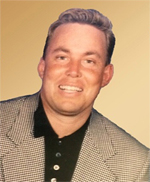
Dr James Stoxen DC., FSSEMM (hon) He is the president of Team Doctors®, Treatment and Training Center Chicago, one of the most recognized treatment centers in the world.
Dr Stoxen is a #1 International Bestselling Author of the book, The Human Spring Approach to Thoracic Outlet Syndrome. He has lectured at more than 20 medical conferences on his Human Spring Approach to Thoracic Outlet Syndrome and asked to publish his research on this approach to treating thoracic outlet syndrome in over 30 peer review medical journals.
He has been asked to submit his other research on the human spring approach to treatment, training and prevention in over 150 peer review medical journals. He serves as the Editor-in-Chief, Journal of Orthopedic Science and Research, Executive Editor or the Journal of Trauma and Acute Care, Chief Editor, Advances in Orthopedics and Sports Medicine Journal and editorial board for over 35 peer review medical journals.
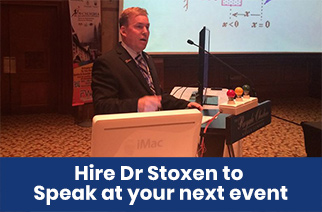
He is a much sought-after speaker. He has given over 1000 live presentations and lectured at over 70 medical conferences to over 50,000 doctors in more than 20 countries. He has been invited to speak at over 300 medical conferences which includes invitations as the keynote speaker at over 50 medical conferences.
After his groundbreaking lecture on the Integrated Spring-Mass Model at the World Congress of Sports and Exercise Medicine he was presented with an Honorary Fellowship Award by a member of the royal family, the Sultan of Pahang, for his distinguished research and contributions to the advancement of Sports and Exercise Medicine on an International level. He was inducted into the National Fitness Hall of Fame in 2008 and the Personal Trainers Hall of Fame in 2012.
Dr Stoxen has a big reputation in the entertainment industry working as a doctor for over 150 tours of elite entertainers, caring for over 1000 top celebrity entertainers and their handlers. Anthony Field or the popular children’s entertainment group, The Wiggles, wrote a book, How I Got My Wiggle Back detailing his struggles with chronic pain and clinical depression he struggled with for years. Dr Stoxen is proud to be able to assist him.
Full Bio) Dr Stoxen can be reached directly at teamdoctors@aol.com