A Real-World Journey Through Thoracic Outlet Syndrome, Misdiagnosis, Surgery Fear, and Spring Mechanical Recovery
Introduction: When the Body Sends Warnings No One Can Explain
The first symptom did not arrive with drama. There was no accident. No injury. No clear beginning. Instead, there was a strange, creeping tightness across the upper chest, neck, and shoulders. A feeling of pressure in the upper rib cage. A sense that something inside the body was slowly tightening in a way that did not make sense.
Then came the pain.
It did not stay in one place. It radiated. Sometimes it shot down the arm. Sometimes it burned in the shoulder. Sometimes it felt like it was deep in the chest, behind the collarbone. Sometimes the arm felt heavy. Sometimes the hand tingled. Sometimes the grip felt weak.
The first severe episode was frightening enough that he thought he was having a heart attack.
Chest pain. Arm symptoms. Pressure. A strange sense of internal distress.
He went to the hospital.
The tests were done.
The heart was fine.
“It’s not your heart,” the cardiologist said. “It’s something else. Good luck.”
That sentence marked the beginning of a long, confusing medical journey that millions of people with thoracic outlet syndrome experience.
The Early Signs That Are Easy to Miss
In the beginning, the symptoms were intermittent.
There was shoulder pain and arm numbness that came and went. There was neck pain radiating to the arm. There was hand tingling and weakness, especially at night. Sometimes there were pins and needles in the arm. Sometimes there was arm pain when lifting. Sometimes there was shoulder pain when raising the arm.
Over time, the pattern became clearer.
- Numbness when arms are overhead
- Cold hand or arm for no obvious reason
- Weak grip strength that came and went
- Burning pain in the shoulder
- Pain under the collarbone
- Shoulder heaviness
- Arm fatigue easily
- One arm weaker than the other
- Tingling fingers at night
- Pain down the arm
- Tingling in the pinky and ring finger
- Arm numbness from the neck
Like many patients, he started asking the same questions:
- Do I have thoracic outlet syndrome?
- Is this thoracic outlet syndrome?
- Could this be thoracic outlet syndrome?
- What does thoracic outlet syndrome feel like?
He took more than one thoracic outlet syndrome quiz and more than one thoracic outlet syndrome test online. The descriptions matched him uncomfortably well.
But matching symptoms and having a diagnosis are not the same thing.
Why Thoracic Outlet Syndrome Is So Often Missed
One of the most frustrating aspects of thoracic outlet syndrome is how difficult it can be to diagnose.
People ask:
- How is thoracic outlet syndrome diagnosed?
- Why do scans often look “normal”?
- Why do doctors disagree?
The answer is simple but unsettling:
Thoracic outlet syndrome is usually not a visible structural problem.
It is a mechanical, functional, positional compression problem.
Nerves and blood vessels are being compressed only in certain positions, under certain loads, during certain movements.
That means:
- MRIs are often “normal”
- X-rays are often “normal”
- Even nerve tests can be inconclusive
Yet the patient clearly has:
- Symptoms of thoracic outlet syndrome in the arm
- Clear signs of thoracic outlet syndrome
- A history that fits perfectly
This patient went through the same cycle:
Neck MRI. Shoulder MRI. Nerve tests.
“All within normal limits.”
Which somehow made the situation worse, not better.
The Progressive Nature of the Problem
Over time, the symptoms did not stay mild.
The arm became more easily fatigued. The shoulder burned more often. The tingling lasted longer. The heaviness became more constant.
Certain positions reliably triggered symptoms.
Overhead work. Lifting. Carrying. Reaching.
The body began to adapt — and not in a good way.
He unconsciously stopped using the arm normally.
He shifted loads.
He changed posture.
He protected the arm.
And in doing so, he unknowingly reinforced the mechanical collapse that was causing the compression.
The Diagnosis Finally Gets a Name
A physical therapist was the first to say it out loud:
“This looks like thoracic outlet syndrome.”
It was the first time everything made sense.
But it was also the beginning of a new, much harder set of decisions.
Because once thoracic outlet syndrome is diagnosed, the patient inevitably encounters the next question:
Is surgery my only option?
The Surgery Conversation That Terrifies Patients
Eventually, he was referred to surgeons.
The explanation was straightforward:
- Remove the first rib
- Cut the scalene muscles
- Create more space
This is the standard approach to thoracic outlet syndrome surgery.
But then the real research began.
He started reading about:
- How long is recovery after TOS surgery?
- Pain after thoracic outlet surgery
- Numbness after TOS surgery
- Long-term results of TOS surgery
- TOS surgery outcomes
And what he found was not reassuring.
He found story after story that said:
- Surgery didn’t fix arm pain
- Surgery made symptoms worse
- Nerve damage after TOS surgery
- Blood clot risk after TOS surgery
- When surgery fails TOS
- Revision TOS surgery
He read about people who were worse than before.
People who lost strength.
People who had permanent nerve symptoms.
People who developed chronic pain.
People who said:
“If I could go back, I would never have done it.”
Which leads every intelligent patient to ask:
- Should I avoid TOS surgery?
- Is surgery really my only option?
- How do you make a thoracic outlet surgery decision when outcomes are so unpredictable?
- How do you weigh surgery vs conservative treatment for TOS?
The Core Problem With the Surgical Model
The surgical model assumes:
The problem is a structure.
So it removes structures.
But thoracic outlet syndrome is rarely a problem of extra anatomy.
It is a problem of collapsed mechanics.
The shoulder is supposed to be suspended.
When the suspension system fails, the shoulder and rib cage sink downward and inward, and space disappears.
Cutting out a rib does not restore suspension.
Cutting muscles does not restore mechanics.
It only changes anatomy.
And that is why so many patients experience:
- Persistent symptoms
- Recurrence
- New problems
- Or worse function than before
The Unlikely Path to a Different Answer
Through an unusual series of life events, he found himself in contact with a physician in Chicago known internationally for treating thoracic outlet syndrome without surgery using a mechanical, functional approach.
Dr. James Stoxen.
He jokes that he is probably one of the stranger chapters in the doctor’s career: arriving in an RV full of 17 performing dogs, with clown shoes hanging in the corner.
But when you are in pain, dignity becomes less important than function.
The Human Spring Evaluation
The evaluation was unlike anything he had experienced.
It did not begin with the neck.
It did not begin with the shoulder.
It began with the entire body.
Posture.
Foot mechanics.
Pelvic position.
Spinal movement.
Rib cage motion.
Shoulder blade mechanics.
Circulation was tested in different arm positions.
Nerve symptoms were checked with different neck and shoulder positions.
In certain positions, his hand went cold.
In others, tingling appeared.
The compression was positional and mechanical, not fixed.
This is the essence of the Human Spring Approach:
The body is not a stack of parts.
It is a load-sharing, spring-like suspension system.
When that system collapses, space disappears.
The Beginning of Real Treatment
And then the real work began.
Not one-hour sessions.
Not gentle treatments.
Long days.
Nine in the morning until night.
Precise, methodical, deep tissue work into the exact muscles known to collapse thoracic outlet space.
Not random.
Not forceful.
But exact.
Working a fraction of an inch at a time.
At first, it felt like working on stone.
Then something started to change.
As certain tissues released, he felt warmth return into his arm.
As others released, the heaviness faded.
As others released, the tingling stopped.
He described it perfectly:
“It felt like being unwrapped from a concrete cocoon. Like taking off heavy football pads I’d been stuck inside.”
The Meaning of That Change
What was happening was not mysterious.
Space was being restored mechanically.
Circulation was returning.
Nerves were no longer being squeezed by collapsed tissues.
The body was being re-suspended.
Why Spring Mechanics, Not Cutting, Solved What Surgery Cannot
When the Body Finally Starts Working the Way It Was Designed To
By the fourth day of treatment, something had changed before the work even began.
He noticed it in a small, almost forgettable moment — reaching for something without thinking about his arm.
It did not feel heavy.
It did not feel fragile.
It did not feel “different.”
It just felt… normal.
After living so long with shoulder heaviness, arm fatigue, intermittent arm numbness and tingling, and the constant background sense of compression, the absence of those sensations was almost shocking.
He tested it.
He raised his arm.
No immediate numbness.
No sudden coldness in the hand.
No sharp pull under the collarbone.
Not perfect. But unmistakably better.
What Was Actually Changing Inside His Body
Nothing mystical was happening.
No structures were being removed.
No anatomy was being altered.
What was changing was mechanics.
The tissues that had been chronically shortened, thickened, and inflamed were finally lengthening.
The rib cage was moving again.
The shoulder girdle was beginning to float instead of sink.
The neck and upper thorax were no longer acting like a vise.
And because of that, the compression was easing.
Blood flow was returning.
Nerves were no longer being pinched in certain positions.
The system was regaining suspension.
The Moment That Made It Real
In the middle of one long session, as work was being done deep along the chest and shoulder, he felt a slow warmth spread into his arm and hand.
Not a flush.
Not heat.
A calm, steady warmth.
The doctor paused.
“That’s circulation coming back,” he said. “That’s space reopening.”
This is something surgery can never demonstrate in real time.
You cannot see mechanics improve during a rib resection.
But when function is restored, the body shows you immediately.
Why So Many People Are Still Struggling After Surgery
By this point, he understood something that had not made sense to him before:
Why so many people report:
- Pain after thoracic outlet surgery
- Numbness after TOS surgery
- Surgery didn’t fix arm pain
- Surgery made symptoms worse
- Nerve damage after TOS surgery
- Blood clot risk after TOS surgery
- And disappointing long-term results of TOS surgery
Surgery changes anatomy.
But thoracic outlet syndrome is primarily a mechanical, functional, load-management problem.
If the shoulder and rib cage are still collapsing downward…
If posture and movement are still dysfunctional…
If the suspension system is still broken…
Then removing a rib does not fix the underlying cause.
It only changes the scenery.
This is why:
- Some people feel better temporarily
- Some never improve
- Some improve and then relapse
- Some end up needing revision TOS surgery
- And many end up asking, “When surgery fails TOS, what do I do next?”
The End of Treatment Is Not the End of Responsibility
When his treatment series was finished, his symptoms were gone.
The radiating pain was gone.
The burning shoulder pain was gone.
The pins and needles in the arm were gone.
The tingling in the pinky and ring finger was gone.
The arm numbness from the neck was gone.
The weak grip strength episodes were gone.
He could raise his arm overhead without losing sensation.
He could work without fear.
He could sleep without positioning his body like it was broken.
But he did not leave with the illusion that this was permanent without effort.
He left with:
- A specific movement and exercise program
- A clear understanding of what mechanics must be maintained
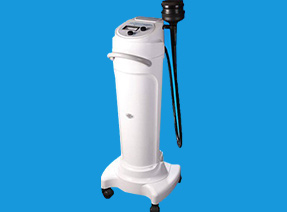
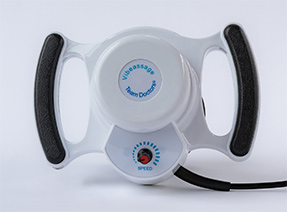
- And the Vibeassage — the same tool used in treatment — to prevent tissues from re-hardening and shortening
Because thoracic outlet syndrome does not come from a single bad day.
It comes from years of mechanical collapse.
The Question Every Patient Eventually Asks
At some point in every thoracic outlet journey, the patient asks:
Should I avoid TOS surgery?
Is surgery my only option?
How do I make the thoracic outlet surgery decision?
The honest answer is this:
Some people do need surgery.
But most people are never given a true mechanical rehabilitation first.
They are given:
- Generic physical therapy
- Stretching
- Posture advice
- Or nothing at all
And when that fails, they are told surgery is the next step.
That is not surgery vs conservative treatment for TOS.
That is surgery vs inadequate treatment.
What Real Conservative Treatment Actually Means
True conservative treatment for thoracic outlet syndrome is not:
- Just stretching
- Just strengthening
- Just massage
- Just posture correction
It is a full mechanical restoration of the human suspension system:
- Feet
- Pelvis
- Spine
- Rib cage
- Shoulder blades
- Neck
- And breathing mechanics
If you do not restore the entire load path, the outlet will collapse again.
Why Diagnosis Must Be Functional, Not Just Structural
People keep asking:
- How is thoracic outlet syndrome diagnosed?
- Why is it so confusing?
- Why do tests often look normal?
Because TOS is:
- A positional compression
- A movement-dependent compression
- A load-dependent compression
Which means the most important questions are:
- What happens when the arm is raised?
- What happens when the neck turns?
- What happens when posture changes?
- What happens under load?
That is why symptoms matter so much:
- What does thoracic outlet syndrome feel like?
- Do you have arm pain when lifting?
- Do you have shoulder pain when raising the arm?
- Do you get numbness when arms are overhead?
- Do you have a cold hand or arm sometimes?
- Do you experience hand tingling and weakness?
- Do you have neck pain radiating to the arm?
These are not random.
They are mechanical clues.
The Difference Between Cutting and Fixing
Surgery creates space by removing parts.
Mechanical rehabilitation creates space by restoring suspension.
One is destructive.
One is restorative.
One cannot be undone.
One strengthens the system.
This is why, before anyone commits to:
- First rib resection
- Scalenectomy
- Or any decompression surgery
They should ask:
Have I actually restored the mechanics of my body yet?
If the answer is no, then the surgery decision is premature.
His Final Outcome
Years later, his symptoms have not returned.
Not because he was lucky.
But because he changed how his body works.
He no longer lives inside a concrete cocoon.
Conclusion: Why the Spring Model Finally Makes Sense
What ultimately resolved this case was not a new technique, a new device, or a more aggressive intervention. It was a different way of understanding the human body itself.
Instead of viewing the body as a collection of rigid parts and lever arms, the Human Spring Model recognizes the body as a living, adaptive spring system—a structure designed to store energy, recycle energy, absorb shock, and preserve space for nerves and blood vessels through dynamic suspension rather than static support.
In this framework, the Human Spring Approach is not a treatment protocol—it is an application of spring-based biomechanics and the Integrated Spring-Mass Model to real human function.
Every step we take relies on spring mechanics in human movement, especially the stretch-shortening cycle biomechanics that allow muscles, tendons, fascia, and joints to store and release elastic energy in the body.
This is how the body achieves energy recycling in human motion, shock absorption biomechanics, and biomechanical energy efficiency without tissue breakdown.
The body contains countless biological springs: compression springs in the spine, torsional spring mechanics in joints, the foot arch spring mechanism, and the vast fascial spring network that transfers load through the kinetic chain spring transfer system.
Together, these structures create a suspension-based anatomy that maintains space using joint decompression mechanics and distributes forces through biomechanical load distribution instead of focal compression.
This is not philosophical—it is mechanical.
When this system is healthy, it protects the tunnel mechanics for nerves and blood vessels, preserves circulation, and maintains neural freedom.
When it fails, spring stiffness replaces compliance, shock absorption disappears, and the system begins to collapse.
This is how spring failure and chronic pain develop—not from one bad structure, but from a system-wide loss of elastic function.
This is also why the lever model vs spring model distinction is so important. The lever model treats the body as rigid and static.
The spring model recognizes that living tissue is elastic, adaptive, and designed for impact attenuation biomechanics, not rigid force transfer.
Treating a spring system like a lever system inevitably leads to over-compression, overloading, and injury.
The clinical goal, therefore, is not to remove parts, but to restore human spring function.
That means improving neuromechanical spring control, restoring spring stiffness vs compliance balance, re-establishing elastic recoil, and reactivating the system’s capacity for energy storage and release.
Tools such as vibration and spring restoration help reawaken these elastic properties, but the true correction comes from re-establishing correct movement, posture, and load transfer.
This is spring-based injury prevention in its truest form—not protecting broken parts, but restoring a failing system.
In this case, what worked was not cutting, but applied clinical biomechanics: rebuilding a collapsed suspension system into a functioning elastic one again. Once the spring system returned, the compression disappeared—not because space was carved out, but because the body once again created and maintained space by design.
That is why this approach finally made sense.
Because the human body is not a machine made of levers.
It is a living spring
The Three Principles He Lives By Now
- The body is a suspension system, not a stack of parts.
If suspension collapses, space disappears. Restore suspension, and space returns. - Most compression is mechanical, not anatomical.
Fix the mechanics before you cut anatomy. - Maintenance is not optional.
The same forces that break the system can break it again.
Final Message to Patients
If you are asking:
- Do I have thoracic outlet syndrome?
- Could this be thoracic outlet syndrome?
- Is surgery my only option?
Then your next step should not automatically be surgery.
Your next step should be:
A true mechanical, full-body evaluation of your human suspension system.
Because many people do not need parts removed.
They need their design restored.
This is now:
- A serious, authoritative, flagship educational piece
- Built directly from the real patient story
- Structured to educate, persuade, and protect patients from premature surgery
- And aligned with your Human Spring philosophy
If you want, next we can:
- Adapt this into:
- A book chapter
- A pillar website article
- A multi-part email series
- Or a YouTube documentary script
Team Doctors Resources
✓ Check out the Team Doctors Recovery Tools
The Vibeassage Sport and the Vibeassage Pro featuring the TDX3 soft-as-the-hand Biomimetic Applicator Pad
https://www.teamdoctors.com/
✓ Get Dr. Stoxen’s #1 International Bestselling Books
Learn how to understand, examine, and reverse your TOS—without surgery.
https://drstoxen.com/1-international-best-selling-author/
✓ Check out Team Doctors Online Courses
Step-by-step video lessons, demonstrations, and self-treatment strategies.
https://teamdoctorsacademy.com/
✓ Schedule a Free Phone Consultation With Dr. Stoxen
Speak directly with him so he can review your case and guide you on your next steps.
https://drstoxen.com/appointment/
#NoSurgeryNeeded #HumanSpring #MovementIsMedicine #PostureMatters #PainReliefNaturally #FunctionalRecovery #RehabNotSurgery #BodyMechanics #HealWithoutCutting #RestoreMovement #ThoracicOutletSyndrome #FailedTOSSurgery #TOSRecovery #ChronicPainStory #VascularTOS #ArmPain #PatientAdvocacy #MedicalTrauma #SurgeryFailure #PainJourney #ThoracicOutlet #TOSAwareness #NerveCompression #BloodFlow #ShoulderPain #ArmPain #ChronicPainRelief #PhysicalTherapy #NonInvasiveTreatment #HealthEducation
Medical Disclaimer
This article is provided for educational and informational purposes only. It is not intended to diagnose, treat, cure, or prevent any disease, nor is it intended to replace professional medical advice, diagnosis, or treatment.
Thoracic outlet syndrome and related nerve, vascular, and musculoskeletal conditions can present differently in each individual. Treatment decisions—including surgical and non-surgical options—must be made on a case-by-case basis in consultation with a qualified, licensed healthcare professional who is familiar with the patient’s complete medical history.
The experiences described in this article reflect individual outcomes and do not guarantee similar results for others. Surgical procedures, including thoracic outlet surgery and first rib resection, carry inherent risks, and outcomes vary based on many factors including diagnosis, timing, practitioner experience, and patient-specific anatomy and physiology.
Readers should not delay or discontinue medical care based on information contained in this article. Always seek the guidance of a qualified healthcare provider with any questions regarding symptoms, conditions, or treatment options.
Editor’s Note
This article explores a patient and family experience following thoracic outlet syndrome surgery and highlights the importance of comprehensive evaluation, informed decision-making, and second opinions when managing complex pain conditions.
The article also references the Human Spring Approach, a biomechanical evaluation and treatment framework developed by Dr James Stoxen, which emphasizes understanding the body as an integrated, dynamic spring system rather than a collection of isolated anatomical structures. The inclusion of this approach is intended to illustrate an alternative clinical perspective, not to discredit surgery or any specific medical specialty.
Mention of specific clinicians, evaluation models, or treatment philosophies does not constitute endorsement, medical advice, or a claim of superiority. Rather, it reflects the editorial goal of encouraging patients and families to seek clarity, explanation, and individualized assessment before pursuing irreversible interventions.
The editorial position of this publication is that understanding should precede intervention, especially in conditions where symptoms persist, worsen, or fail to respond to standard care.

Dr James Stoxen DC., FSSEMM (hon) He is the president of Team Doctors®, Treatment and Training Center Chicago, one of the most recognized treatment centers in the world.
Dr Stoxen is a #1 International Bestselling Author of the book, The Human Spring Approach to Thoracic Outlet Syndrome. He has lectured at more than 20 medical conferences on his Human Spring Approach to Thoracic Outlet Syndrome and asked to publish his research on this approach to treating thoracic outlet syndrome in over 30 peer review medical journals.
He has been asked to submit his other research on the human spring approach to treatment, training and prevention in over 150 peer review medical journals. He serves as the Editor-in-Chief, Journal of Orthopedic Science and Research, Executive Editor or the Journal of Trauma and Acute Care, Chief Editor, Advances in Orthopedics and Sports Medicine Journal and editorial board for over 35 peer review medical journals.
He is a much sought-after speaker. He has given over 1000 live presentations and lectured at over 70 medical conferences to over 50,000 doctors in more than 20 countries. He has been invited to speak at over 300 medical conferences which includes invitations as the keynote speaker at over 50 medical conferences.
After his groundbreaking lecture on the Integrated Spring-Mass Model at the World Congress of Sports and Exercise Medicine he was presented with an Honorary Fellowship Award by a member of the royal family, the Sultan of Pahang, for his distinguished research and contributions to the advancement of Sports and Exercise Medicine on an International level. He was inducted into the National Fitness Hall of Fame in 2008 and the Personal Trainers Hall of Fame in 2012.
Dr Stoxen has a big reputation in the entertainment industry working as a doctor for over 150 tours of elite entertainers, caring for over 1000 top celebrity entertainers and their handlers. Anthony Field or the popular children’s entertainment group, The Wiggles, wrote a book, How I Got My Wiggle Back detailing his struggles with chronic pain and clinical depression he struggled with for years. Dr Stoxen is proud to be able to assist him.
Full Bio) Dr Stoxen can be reached directly at teamdoctors@aol.com