In medicine, true innovation is rare. Most advances refine existing models rather than replace them. Occasionally, however, a clinician challenges the foundational assumptions that guide diagnosis and treatment. In my clinical experience, the work of Dr. James Stoxen on Thoracic Outlet Syndrome represents one of those rare paradigm shifts.
Rather than asking where pain is located, this framework asks a more fundamental question: what mechanical system has failed? This reframing is especially relevant for chronic upper-body disorders that sit at the intersection of orthopedics, neurology, vascular medicine, and biomechanics.
At the center of this approach is the concept of human spring mechanics. Traditional models often describe the neck and shoulder as rigid structures controlled primarily by muscle strength and joint alignment. In contrast, the upper body is viewed as a spring system designed to absorb impact, recycle energy, and protect nerves and blood vessels during movement and load.
This perspective is essential for understanding Thoracic Outlet Syndrome, a condition defined by dynamic compression within a highly mobile anatomical region. The brachial plexus and subclavian vessels must pass through multiple passageways, including the scalene triangle, costoclavicular space, and subcoracoid region. These are not static holes in the body. They are living tunnels that must expand and decompress under load.
When the upper-body spring system functions properly, collision forces are absorbed elastically and dispersed across the rib cage and shoulder girdle. This elastic recoil limits excessive muscle splinting and preserves space within these tunnels. In my clinical experience, this mechanism is what keeps nerves and blood vessels safe during daily activity.
When spring compliance is lost, the system changes dramatically. Muscles must contract continuously to stabilize the structure. Over time, this constant contraction leads to chronic inflammation, joint space narrowing, and progressive compression of neurovascular structures.
This breakdown explains why individuals with Thoracic Outlet Syndrome are so frequently misdiagnosed. Symptoms are often attributed to cervical disc disease, rotator cuff pathology, peripheral nerve entrapment, or even psychosomatic causes. Yet imaging frequently appears normal because compression occurs dynamically, during posture, movement, and muscle activation rather than at rest.
Many individuals describe symptoms that fluctuate with position, fatigue, or activity. This variability confuses static diagnostic models but makes sense within a spring-based framework. The problem is not fixed damage. It is a failure of load distribution and recoil.
This model also reframes chronic arthritis and upper-extremity pain. Rather than isolated joint degeneration, many cases reflect altered load paths caused by postural collapse and sustained muscle guarding. Over time, these distortions increase stress on joints, nerves, and vessels simultaneously.
From this perspective, neurogenic thoracic outlet syndrome, venous thoracic outlet syndrome, and arterial thoracic outlet syndrome are not entirely separate diseases. They are different expressions of the same architectural failure, influenced by which structures are most vulnerable at a given stage.
As compression progresses, vascular involvement may develop. Impaired venous return can lead to congestion, swelling, and heaviness in the arm. In more advanced cases, prolonged stasis may increase the risk of thrombosis. This progression highlights why early mechanical correction matters, not to chase symptoms, but to preserve system integrity.
Another important implication of this framework is why isolated treatments often plateau. Addressing muscle tightness without restoring spring compliance leaves the underlying mechanics unchanged. Similarly, focusing on posture without addressing neuromuscular guarding allows inflammation to persist.
This systems-based understanding helps explain why Thoracic Outlet Syndrome often persists despite well-intentioned care. Treating individual parts without restoring how the system handles load is rarely sufficient.
Clinicians often resonate with this framework because it integrates anatomy, biomechanics, and clinical observation into a coherent and testable model. It provides a way to reconcile normal imaging with severe symptoms, and static findings with dynamic complaints.
For patients, this perspective provides clarity. Many individuals describe years of confusion, being told that tests are normal while symptoms continue to worsen. Understanding Thoracic Outlet Syndrome as a mechanical spring failure helps align explanation with lived experience.
This approach does not dismiss the role of nerves or blood vessels. Instead, it explains why they become involved. Compression is not the primary event. It is the downstream consequence of a system that can no longer absorb and distribute force effectively.
In my clinical experience, this reframing often reduces fear. When patients understand that their symptoms follow mechanical principles rather than random degeneration, uncertainty decreases. Patterns begin to make sense.
For musculoskeletal medicine as a whole, this work represents a move away from isolated structures and toward integrated systems. It emphasizes that restoring function requires restoring how the body manages load, not just correcting what appears broken.
Thoracic Outlet Syndrome, viewed through this lens, is no longer an enigmatic diagnosis. It becomes a logical outcome of lost spring mechanics in a region designed for motion and elasticity.
This paradigm shift does not replace anatomy or pathology. It reorganizes them within a broader mechanical context. That is why it continues to influence how clinicians and patients think about chronic upper-body disorders today.
Team Doctors Resources
✓ Check out the Team Doctors Recovery Tools
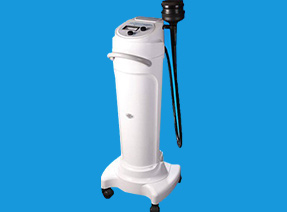
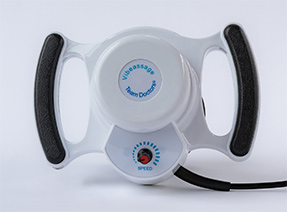
The Vibeassage Sport and the Vibeassage Pro featuring the TDX3 soft-as-the-hand Biomimetic Applicator Pad
https://www.teamdoctors.com/
✓ Get Dr. Stoxen’s #1 International Bestselling Books
Learn how to understand, examine, and reverse your TOS—without surgery.
https://drstoxen.com/1-international-best-selling-author/
✓ Check out Team Doctors Online Courses
Step-by-step video lessons, demonstrations, and self-treatment strategies.
https://teamdoctorsacademy.com/
✓ Schedule a Free Phone Consultation With Dr. Stoxen
Speak directly with him so he can review your case and guide you on your next steps.
https://drstoxen.com/appointment/
#ThoracicOutletSyndrome #HumanSpring #Biomechanics #TOSAwareness #BrachialPlexus #DynamicCompression #PostureMechanics #MusculoskeletalHealth #SystemsBasedCare #ChronicPainEducation #UpperBodyPain #VascularCompression #NeurogenicTOS #VenousTOS #ArterialTOS #MovementScience #ClinicalEducation #TeamDoctors #JamesStoxen #TOSExplained
References
- Sanders, Richard J., and Neal S. Pearce. “Neurogenic Thoracic Outlet Syndrome.” Journal of Vascular Surgery 36, no. 3 (2002): 669–676.
- Roos, David B. “Thoracic Outlet Syndrome Is Underdiagnosed.” Muscle & Nerve 22, no. 1 (1999): 126–129.
- Urschel, Harold C., and R. B. Razzuk. “The Neurovascular Compression Syndromes of the Thoracic Outlet.” Annals of Thoracic Surgery 50, no. 3 (1990): 484–490.
- Zatsiorsky, Vladimir M., and William J. Kraemer. Science and Practice of Strength Training. Champaign, IL: Human Kinetics, 2006.

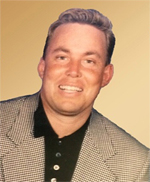
Dr James Stoxen DC., FSSEMM (hon) He is the president of Team Doctors®, Treatment and Training Center Chicago, one of the most recognized treatment centers in the world.
Dr Stoxen is a #1 International Bestselling Author of the book, The Human Spring Approach to Thoracic Outlet Syndrome. He has lectured at more than 20 medical conferences on his Human Spring Approach to Thoracic Outlet Syndrome and asked to publish his research on this approach to treating thoracic outlet syndrome in over 30 peer review medical journals.
He has been asked to submit his other research on the human spring approach to treatment, training and prevention in over 150 peer review medical journals. He serves as the Editor-in-Chief, Journal of Orthopedic Science and Research, Executive Editor or the Journal of Trauma and Acute Care, Chief Editor, Advances in Orthopedics and Sports Medicine Journal and editorial board for over 35 peer review medical journals.
He is a much sought-after speaker. He has given over 1000 live presentations and lectured at over 70 medical conferences to over 50,000 doctors in more than 20 countries. He has been invited to speak at over 300 medical conferences which includes invitations as the keynote speaker at over 50 medical conferences.
After his groundbreaking lecture on the Integrated Spring-Mass Model at the World Congress of Sports and Exercise Medicine he was presented with an Honorary Fellowship Award by a member of the royal family, the Sultan of Pahang, for his distinguished research and contributions to the advancement of Sports and Exercise Medicine on an International level. He was inducted into the National Fitness Hall of Fame in 2008 and the Personal Trainers Hall of Fame in 2012.
Dr Stoxen has a big reputation in the entertainment industry working as a doctor for over 150 tours of elite entertainers, caring for over 1000 top celebrity entertainers and their handlers. Anthony Field or the popular children’s entertainment group, The Wiggles, wrote a book, How I Got My Wiggle Back detailing his struggles with chronic pain and clinical depression he struggled with for years. Dr Stoxen is proud to be able to assist him.
Full Bio) Dr Stoxen can be reached directly at teamdoctors@aol.com