THEY WANTED SURGERY
THE REAL CAUSE WAS SHOCKING
When Surgery Is the Wrong Answer: A Biomechanical Case Study in Thoracic Outlet Failure
Thoracic Outlet Syndrome is often described as a space problem.
A space that is too narrow.
A tunnel that is too crowded.
A passageway where nerves and blood vessels are compressed.
The dominant medical assumption is simple:
If the space is too small, remove something.
This assumption has led to thousands of first rib resections and scalene muscle excisions around the world.
And yet, a significant percentage of patients:
- Do not improve
- Worsen
- Or trade one set of symptoms for another
This article examines a rare but critically important case that exposes why.
Not why surgery sometimes fails.
But why the entire structural model is incomplete.
The Patient Who Didn’t Fit the Model
Richard was not the typical thoracic outlet patient.
He was:
- Athletic
- Lean
- Conditioned
- And highly body-aware
His symptoms began not with trauma, but with a visual sign:
His left shoulder turned blue after workouts.
Over weeks and months, this progressed into:
- Swelling of the arm after exercise
- Prominent, distended veins across the chest and shoulder
- Progressive weakness
- Loss of mobility
- And increasing chronic shoulder pain
He developed the full clinical picture:
- Thoracic outlet syndrome shoulder pain
- Thoracic outlet syndrome shoulder blade pain
- TOS shoulder pain
- Thoracic shoulder pain
- Upper shoulder pain
- Under shoulder pain
- Left shoulder pain
- Left shoulder and neck pain
- And a growing pattern of symptoms shoulder dysfunction
The Standard Diagnostic Pathway
Like most patients, Richard went through:
- Urgent care → dismissed
- Primary care → reassured
- Physical therapy → “never seen this before”
- Ultrasound → normal
- MRI → normal
- Second MRI → 50% reduced blood flow
Only then was he sent to a vascular surgeon.
The diagnosis:
Thoracic Outlet Syndrome.
The recommendation:
First rib resection and scalene muscle removal.
In other words:
Remove anatomy to create space.
The Structural Assumption
This recommendation is based on a static structural model:
- The tunnel is narrow
- Something is in the way
- Remove it
But this model quietly assumes:
- The shoulder is stable
- The clavicle is suspended normally
- The rib cage mechanics are intact
- The joint is not migrating under load
None of those assumptions were ever tested.
The First Red Flag: A Dynamic Problem
Richard’s symptoms had several features that do not fit a purely static compression:
- Symptoms worsened after activity
- Swelling persisted for hours
- Venous congestion was positional and load-dependent
- The shoulder felt unstable, not just tight
These are hallmarks of a dynamic collapse, not a fixed obstruction.
The Patient Chooses a Different Path
Unconvinced that cutting anatomy was the right answer, Richard searched for alternatives.
He found Dr. James Stoxen’s work and began following what could be described as:
- Avoid thoracic outlet surgery
- Thoracic outlet syndrome without surgery
- Natural treatment for thoracic outlet syndrome
- Non-surgical treatment for TOS
- Conservative treatment for thoracic outlet syndrome
- Treat TOS without surgery
- Non-invasive TOS treatment
- Natural recovery from thoracic outlet syndrome
Using:
- Manual therapy
- Movement-based treatment
- Postural correction
- Physical rehabilitation
He improved significantly.
But not completely.
And that was the clue that something deeper was being missed.
Why This Case Matters
Most failed surgical outcomes are blamed on:
- Scar tissue
- Nerve damage
- Incomplete decompression
- Or “severe disease”
But some failures occur for a much more fundamental reason:
The surgery was based on the wrong mechanical model.
Richard’s case demonstrates exactly how that happens.
The Missing Variable: Suspension Integrity
No one had asked:
- Is the shoulder staying suspended?
- Does it collapse under load?
- Is the joint migrating into the outlet?
- Is this a space-creation failure rather than a space-occupation problem?
Those questions require applied clinical biomechanics, not just imaging.
Enter a Different Model
When Richard was finally examined by Dr. Stoxen, the evaluation was not based on:
- Still images
- Static measurements
- Or isolated structures
It was based on function, load, and system behavior.
And that is when the real diagnosis emerged:
The shoulder itself was partially dislocating and collapsing into the thoracic outlet.
A Rare But Critical Mechanism
This is not common.
But it is devastating when missed.
Richard had:
- Genetically loose joint capsules
- Years of overstretching
- Progressive loss of suspension integrity
- And eventually, inferior and anterior migration of the humeral head
In simple terms:
The tunnel wasn’t just being squeezed.
It was being invaded.
Why Surgery Would Have Been Harmful
In this case:
- The scalenes and surrounding structures were part of the active suspension system
- The rib and soft tissues contributed to load distribution and positional control
Removing them would:
- Increase instability
- Allow more collapse
- And worsen the compression mechanism
This is the exact opposite of what the surgery intends to do.
The Bigger Implication
Richard’s case is not just about one patient.
It exposes a flaw in the structural-only model of thoracic outlet syndrome.
It shows that:
Some cases are not caused by things being “in the way.”
They are caused by systems failing to hold things up.
Why the Structural Model Fails: The Biomechanics of Space
The fundamental mistake in most thoracic outlet syndrome treatment is not technical.
It is conceptual.
The dominant medical model assumes this:
If nerves or blood vessels are compressed, something must be physically blocking them.
So the solution becomes:
Remove the blocking structure.
This is a subtraction-based model of medicine.
And it is built on a deeper assumption:
The human body behaves like a rigid machine of levers.
But that assumption is wrong.
The Lever Model vs the Living Body
In the lever model vs spring model debate, most orthopedic and surgical approaches still operate in a lever world:
- Bones = rigid bars
- Joints = hinges
- Muscles = ropes that pull
- Stability = passive structure
- Failure = something in the way
This model works reasonably well for:
- Fractures
- Gross dislocations
- Tumors
- And obvious structural obstructions
But it fails catastrophically in dynamic tunnel syndromes like thoracic outlet syndrome.
Why?
Because the body is not rigid.
It is elastic.
The Human Spring Model
Dr. Stoxen’s human spring model and human spring approach start from a completely different premise:
The body as a spring system is designed to absorb, store, and release energy — not to transmit forces through rigid levers.
This is the integrated spring-mass model applied to human movement.
In this framework, the body depends on:
- spring mechanics in human movement
- stretch-shortening cycle biomechanics
- elastic energy storage in the body
- energy recycling in human motion
- shock absorption biomechanics
This is how:
- Runners don’t destroy their joints
- Football players can tackle with their shoulders
- Humans can jump, land, and change direction repeatedly
Biological Springs Are Everywhere
The human body is not just using one spring.
It is a network of springs — biological springs in the body:
- The foot uses a foot arch spring mechanism
- The spine behaves like stacked compression springs in the spine
- Joints rely on torsional spring mechanics in joints
- Fascia forms a continuous fascial spring network
- Force transfers through the body via kinetic chain spring transfer
This is the real basis of impact attenuation biomechanics.
How the Body Creates Space
Here is the most important concept for understanding thoracic outlet syndrome:
Space for nerves and blood vessels is not carved out of the body.
It is created and maintained dynamically.
This happens through:
- suspension-based anatomy
- joint decompression mechanics
- biomechanical load distribution
- And tunnel mechanics for nerves and blood vessels
The clavicle, scapula, ribs, and shoulder do not just sit there.
They are suspended in a tensioned, spring-loaded system.
When that system works:
- Structures float
- Joints stay centered
- Tunnels stay open
When it fails:
- Structures sag
- Joints migrate
- Tunnels collapse
Spring Stiffness vs Compliance
Every spring system must balance spring stiffness vs compliance:
- Too stiff → brittle, no shock absorption, high injury risk
- Too compliant → unstable, collapses, cannot hold shape
Richard’s system failed on the compliance side:
- Genetically loose joint capsules
- Years of stretching
- Progressive loss of suspension tension
- Eventual inferior and anterior migration of the shoulder
The tunnel didn’t get smaller.
The support system failed.
The Nervous System Is the Spring Controller
The body does not passively hold itself together.
It uses neuromechanical spring control.
When the nervous system detects:
- Instability
- Micro-injury
- Inflammation
- Or abnormal motion
It responds by:
- Increasing muscle tone
- Creating splinting
- Stiffening the region
This is protective.
But it also:
- Narrows tunnels
- Increases compression
- Creates spring failure and chronic pain
This is why patients develop:
- Thoracic outlet syndrome shoulder pain
- Thoracic outlet syndrome shoulder blade pain
- TOS shoulder pain
- Thoracic shoulder pain
- Upper shoulder pain
- Under shoulder pain
- Left shoulder pain
- Left shoulder and neck pain
- And eventually chronic shoulder pain
Why Subtraction Surgery Can Make Things Worse
When surgeons remove:
- Ribs
- Muscles
- Or other stabilizing structures
They are often:
- Weakening the suspension system
- Reducing load-sharing capacity
- Increasing reliance on already overworked stabilizers
In a spring system failure, this is catastrophic.
Instead of restoring space, it can:
- Increase sag
- Increase joint migration
- And worsen tunnel collapse
This is exactly what would have happened in Richard’s case.
Why Imaging Misses This
MRI and CT scans are:
- Static
- Supine
- Unloaded
- And blind to dynamic collapse
They cannot show:
- How the shoulder behaves under load
- Whether the joint migrates during activity
- Or whether the tunnel collapses because the system fails
Only applied clinical biomechanics can reveal that.
The Paradigm Shift
Richard’s case proves something critical:
Some thoracic outlet syndromes are not caused by things being “in the way.”
They are caused by things not being held up.
That is not a surgical problem.
That is a spring system control problem.
What Must Replace the Old Model
Instead of asking:
- “What should we remove?”
We must ask:
- “What has lost its ability to suspend, absorb, and distribute load?”
Instead of:
- Subtraction
We must think in terms of:
- Restoring human spring function
From Subtraction to Restoration: A New Standard for Thoracic Outlet Care
Richard’s case does not just tell a story.
It exposes a failure of a model.
And more importantly, it reveals what must replace it.
The Wrong Question Creates the Wrong Treatment
Traditional thoracic outlet care starts with one question:
“What structure is in the way?”
That question leads to:
- Rib resections
- Muscle excisions
- Decompression surgeries
- And irreversible anatomical changes
But Richard’s case proves that the correct question is often:
“What structure has lost its ability to hold things up?”
This is the difference between:
- A space-occupation problem
- And a space-creation failure
Only the human spring model and human spring approach can even see that difference.
The Real Diagnostic Standard: Function Under Load
Richard’s diagnosis was not made by:
- MRI
- CT
- Or ultrasound
It was made by:
- Applied clinical biomechanics
- Observing system behavior
- Testing joint play and suspension
- And evaluating dynamic load response
This is the future diagnostic standard:
If a tunnel collapses only when the system is loaded, you must test the system under load.
Static imaging cannot do this.
The Treatment Was System Restoration, Not Local Decompression
Richard’s recovery strategy was based on:
- Vibration and spring restoration to normalize tone and neuromuscular control
- Manual therapy to reduce protective splinting
- Targeted strengthening to rebuild active suspension
- Elimination of stretching that was worsening instability
- Precise movement retraining to restore control
This is restoring human spring function, not chasing symptoms.
It fits squarely into:
- Functional treatment for TOS
- Non-surgical recovery TOS
- Conservative treatment for thoracic outlet syndrome
- Best non-surgical TOS treatment
- Non-invasive TOS treatment
- Natural recovery from thoracic outlet syndrome
- And the entire movement to avoid thoracic outlet surgery whenever possible
Why This Model Prevents Surgical Failures
If Richard had undergone surgery:
- Stabilizing structures would have been removed
- The shoulder would have sagged further
- Tunnel collapse would have worsened
- And the underlying spring system failure would have been amplified
This is not hypothetical.
It is a predictable biomechanical outcome when you weaken a suspension system that is already failing.
The New Screening Standard Before Surgery
This case proves something critical:
Every thoracic outlet patient should be screened for suspension failure and joint migration before surgery is even considered.
That screening must include:
- Joint stability testing
- Load-response testing
- Dynamic positional assessment
- And spring-system evaluation
Not just imaging.
Why This Applies Far Beyond TOS
The same biomechanical logic applies to:
- Lumbar stenosis
- Cervical radiculopathy
- Hip impingement
- Shoulder impingement
- And many “mysterious” compression syndromes
In many cases, the problem is not:
- That space is too small
But:
- That the system that creates space has failed
The Paradigm Shift in One Sentence
You do not fix a collapsed suspension bridge by removing pieces of it.
You fix it by restoring the shoulder spring suspension system.
The human body is no different.
The Clinical Takeaway
Richard’s case proves:
- Some thoracic outlet syndromes are spring system failures, not rib problems
- Surgery in these cases is mechanically backward
- The correct solution is system restoration, not subtraction
- And the only framework that consistently identifies this is spring-based biomechanics
The Future Standard of Care
The future of thoracic outlet diagnosis and treatment must be:
- Functional
- Biomechanical
- System-based
- Load-aware
- And spring-centered
Not static.
Not reductionist.
Not purely structural.
Final Conclusion
Richard did not need anatomy removed.
He needed:
- His suspension restored
- His control system reset
- His spring behavior rebuilt
And when that happened, the compression began to resolve without cutting anything.
Why This Case Will Matter for Years
This is not just a success story.
It is a warning.
And it is an opportunity.
A warning that:
The wrong model leads to the wrong surgery.
And an opportunity to:
Replace it with a model that actually reflects how the human body works.
Closing Statement
Thoracic Outlet Syndrome is not always a problem of too much anatomy.
Sometimes, it is a problem of not enough suspension.
And no scalpel can fix that.
Only a restored human spring system can.
#AvoidSurgery #NonSurgicalRecovery #FunctionalMedicine #Biomechanics #RootCauseHealing #NaturalRecovery #MovementMedicine #RehabNotSurgery #RestoreFunction #HumanSpring
Team Doctors Resources
✓ Check out the Team Doctors Recovery Tools
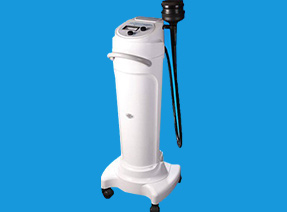
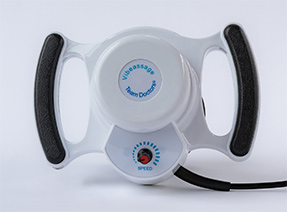
The Vibeassage Sport and the Vibeassage Pro featuring the TDX3 soft-as-the-hand Biomimetic Applicator Pad
https://www.teamdoctors.com/
✓ Get Dr. Stoxen’s #1 International Bestselling Books
Learn how to understand, examine, and reverse your TOS—without surgery.
https://drstoxen.com/1-international-best-selling-author/
✓ Check out Team Doctors Online Courses
Step-by-step video lessons, demonstrations, and self-treatment strategies.
https://teamdoctorsacademy.com/
✓ Schedule a Free Phone Consultation With Dr. Stoxen
Speak directly with him so he can review your case and guide you on your next steps.
https://drstoxen.com/appointment/
#ThoracicOutletSyndrome #FailedTOSSurgery #TOSRecovery #ChronicPainStory #VascularTOS #ArmPain #PatientAdvocacy #MedicalTrauma #SurgeryFailure #PainJourney
Medical Disclaimer
This article is provided for educational and informational purposes only. It is not intended to diagnose, treat, cure, or prevent any disease, nor is it intended to replace professional medical advice, diagnosis, or treatment.
Thoracic outlet syndrome and related nerve, vascular, and musculoskeletal conditions can present differently in each individual. Treatment decisions—including surgical and non-surgical options—must be made on a case-by-case basis in consultation with a qualified, licensed healthcare professional who is familiar with the patient’s complete medical history.
The experiences described in this article reflect individual outcomes and do not guarantee similar results for others. Surgical procedures, including thoracic outlet surgery and first rib resection, carry inherent risks, and outcomes vary based on many factors including diagnosis, timing, practitioner experience, and patient-specific anatomy and physiology.
Readers should not delay or discontinue medical care based on information contained in this article. Always seek the guidance of a qualified healthcare provider with any questions regarding symptoms, conditions, or treatment options.
Editor’s Note
This article explores a patient and family experience following thoracic outlet syndrome surgery and highlights the importance of comprehensive evaluation, informed decision-making, and second opinions when managing complex pain conditions.
The article also references the Human Spring Approach, a biomechanical evaluation and treatment framework developed by Dr James Stoxen, which emphasizes understanding the body as an integrated, dynamic spring system rather than a collection of isolated anatomical structures. The inclusion of this approach is intended to illustrate an alternative clinical perspective, not to discredit surgery or any specific medical specialty.
Mention of specific clinicians, evaluation models, or treatment philosophies does not constitute endorsement, medical advice, or a claim of superiority. Rather, it reflects the editorial goal of encouraging patients and families to seek clarity, explanation, and individualized assessment before pursuing irreversible interventions.
The editorial position of this publication is that understanding should precede intervention, especially in conditions where symptoms persist, worsen, or fail to respond to standard care.

Dr James Stoxen DC., FSSEMM (hon) He is the president of Team Doctors®, Treatment and Training Center Chicago, one of the most recognized treatment centers in the world.
Dr Stoxen is a #1 International Bestselling Author of the book, The Human Spring Approach to Thoracic Outlet Syndrome. He has lectured at more than 20 medical conferences on his Human Spring Approach to Thoracic Outlet Syndrome and asked to publish his research on this approach to treating thoracic outlet syndrome in over 30 peer review medical journals.
He has been asked to submit his other research on the human spring approach to treatment, training and prevention in over 150 peer review medical journals. He serves as the Editor-in-Chief, Journal of Orthopedic Science and Research, Executive Editor or the Journal of Trauma and Acute Care, Chief Editor, Advances in Orthopedics and Sports Medicine Journal and editorial board for over 35 peer review medical journals.
He is a much sought-after speaker. He has given over 1000 live presentations and lectured at over 70 medical conferences to over 50,000 doctors in more than 20 countries. He has been invited to speak at over 300 medical conferences which includes invitations as the keynote speaker at over 50 medical conferences.
After his groundbreaking lecture on the Integrated Spring-Mass Model at the World Congress of Sports and Exercise Medicine he was presented with an Honorary Fellowship Award by a member of the royal family, the Sultan of Pahang, for his distinguished research and contributions to the advancement of Sports and Exercise Medicine on an International level. He was inducted into the National Fitness Hall of Fame in 2008 and the Personal Trainers Hall of Fame in 2012.
Dr Stoxen has a big reputation in the entertainment industry working as a doctor for over 150 tours of elite entertainers, caring for over 1000 top celebrity entertainers and their handlers. Anthony Field or the popular children’s entertainment group, The Wiggles, wrote a book, How I Got My Wiggle Back detailing his struggles with chronic pain and clinical depression he struggled with for years. Dr Stoxen is proud to be able to assist him.
Full Bio) Dr Stoxen can be reached directly at teamdoctors@aol.com