Triple Rollover Accident
Blood Clots From TOS
Nearly Killed Her
From the Crash to the Edge of Death
On the morning of March 9th, 2012, Anna Tori Smith left for work the way she had thousands of times before. There was nothing remarkable about the sky, nothing unusual in the air, and nothing to warn her that by the end of that day, her life would be divided forever into two parts: before the crash and after it.
The accident happened fast. A triple rollover. Steel folding. Glass exploding. Gravity turning violent. In seconds, her body was subjected to forces no human frame is designed to tolerate. When the world finally stopped spinning, she was still alive—but the architecture of her body had been fundamentally altered.
At first, survival felt like victory.
But survival was only the beginning.
In the months that followed, Anna entered what would become a thirteen-year descent through the modern medical system. One surgery led to another. Then another. Then another. By the time she reached her tenth surgery, she no longer thought in terms of recovery. She thought in terms of endurance.
Each operation was supposed to fix something. Each one was described as necessary. Each one came with promises—less pain, more function, better stability, improved quality of life.
None of them delivered.
Instead, every procedure became what she would later describe as “another link in the chain” of inflammation, restriction, and systemic breakdown. Her body did not return to normal. It adapted. It compensated. And slowly, quietly, it began to fail.
By June of 2022, more than a decade after the crash, she underwent what she believed would be her final surgery. She hoped—desperately—that this would be the one that stopped the downward spiral.
Ten days later, she was back in the hospital with pulmonary embolisms.
Blood clots filled her lungs.
She did not yet understand how close she was to dying.
What she did understand was that her body no longer felt like her own.
Her blood pressure began spiking to terrifying levels—180 over 120. Sometimes higher. Ambulance rides became routine. Emergency rooms became familiar. Doctors used words like “stroke,” “heart attack,” and “sudden death” in the same calm tone they used to discuss prescriptions.
Their solution was always the same: more medication.
No one could explain why this was happening. No one could explain why her body was swelling, why her chest felt like it was being crushed from the inside, or why her nervous system felt like it was stuck in a permanent alarm state.
She couldn’t sleep.
So she started researching.
Night after night, hour after hour, she searched for answers. Somewhere in that exhaustion-fueled investigation, she discovered a diagnosis that seemed to describe her experience with frightening accuracy: thoracic outlet syndrome natural treatment was the phrase that first led her down a path that finally made sense.
But knowing the name of something and proving it are two different things.
She couldn’t find a doctor who truly understood it. She couldn’t find anyone who could connect the dots between her surgeries, her inflammation, her vascular symptoms, her nerve symptoms, and her systemic collapse.
By this point, her condition had gone far beyond what people usually mean when they talk about living with thoracic outlet syndrome. This wasn’t just pain. This was loss of circulation. Loss of sensation. Loss of physiological control.
Her hands and feet began to go numb. Then her lower legs. Then large parts of her body felt distant, disconnected, like they belonged to someone else.
She was swelling. Retaining fluid. Her chest felt tight. Breathing felt heavy.
And her blood pressure remained dangerously high.
In a different world, this is where someone would have died.
In this one, she found a book.
She had come across the work of Dr. James Stoxen—his writing, his podcasts, his clinical philosophy. What caught her attention wasn’t a promise. It was the way he described the body: not as a collection of parts, but as a load-bearing, spring-based system that could either maintain space—or collapse into compression.
For the first time, she wasn’t reading about symptoms.
She was reading about mechanics.
She reached out.
He accepted her case.
Within days, she had bought a train ticket from Maryland to Chicago.
She called her cousin in Kansas City. “Can you pick me up?” she asked.
“Yes,” her cousin said immediately.
No hesitation.
By the time she arrived at Dr. Stoxen’s office at six in the evening, her body was already in crisis. She was filling with fluid. Swelling. Struggling. She would later realize that she was closer to death that night than she had been at any point since the car accident.
Dr. Stoxen examined her.
He did not see a surgical case.
He saw a system collapse.
He saw a human suspension system that had lost its ability to maintain space.
He saw a body that had been treated as parts instead of as physics.
And he went to work.
That first night, he worked on her for six hours straight—from six in the evening until nearly midnight. And then he did it again the next day. And the next. And the next.
By the end of the week, he had worked on her for approximately 76 hours in six days.
He used the Vibeassage. He used lymphatic drainage. He worked to unload pressure from her chest—pressure that was quite literally threatening her life.
This was not treatment – general. This was not symptom management.
This was a full-system decompression strategy.
For the first time in years, her body began to change direction.
Not because something had been cut out.
But because something had been given space.
When the Medical Model Breaks and the Body Keeps Collapsing
By the time Anna Tori Smith arrived in Chicago, she was no longer a patient in the ordinary sense of the word. She was a system in failure.
For years, every doctor she had seen had treated her problems as separate events. One surgery for one structure. Another procedure for another symptom. Each intervention existed in isolation, with no unifying model explaining why her body kept deteriorating instead of stabilizing.
What no one had ever explained to her was that the human body does not fail in pieces. It fails as a system.
In her case, the collapse of that system had been slow, cumulative, and masked by short-term interventions that never addressed the underlying mechanics. The triple rollover accident had not simply injured tissues. It had altered how her entire body handled load, pressure, and space.
Over time, this produced a perfect storm of compression, inflammation, vascular congestion, and neurological distress — the kind of terrain where people begin searching for the best treatment for thoracic outlet syndrome, only to discover that no one can agree what that actually means.
Before she found Dr. Stoxen, she had already lived through years of what the medical system calls conservative treatment for thoracic outlet syndrome. She had done therapy. She had done rehabilitation. She had done programs that promised improvement through exercises for thoracic outlet syndrome treatment and protocols based on physical therapy exercises for thoracic outlet syndrome. None of them had failed because they were careless. They had failed because they were operating under the wrong mechanical model.
The assumption was always the same: strengthen this, stretch that, stabilize something else.
But no one had ever asked whether her body still had the mechanical capacity to maintain space under load.
So while charts spoke about conservative management and conservative treatment of thoracic outlet syndrome, her condition continued to deteriorate. Her chest grew tighter. Her arms grew heavier. Her circulation worsened. Her nervous system became more unstable.
Eventually, someone raised the idea of surgery.
In the world she had come from, this was considered the logical next step. When therapy fails, you cut. When symptoms persist, you remove anatomy.
She began hearing words like thoracic outlet surgery, thoracic outlet syndrome surgery, and first rib resection spoken as if they were inevitable milestones rather than last resorts.
But she had already lived through what happens when the body is treated like a collection of parts.
She had seen what happens when surgical logic is applied to systemic mechanical problems.
She had already paid the price of TOS surgery in other parts of her body.
She was warned about thoracic outlet surgery complications, but those warnings were framed as statistical risks, not biomechanical consequences. No one explained to her what happens to a suspension system when you remove a load-bearing strut. No one explained how first rib surgery can destabilize the entire shoulder-neck-thorax complex. No one explained why first rib resection recovery is often measured in pain tolerance rather than functional restoration.
She was told about thoracic outlet surgery success rate numbers, but no one could define what “success” actually meant. Was it less numbness? Less pain? Or simply that the operation had been completed?
She was shown photos of thoracic outlet surgery scars and told about thoracic outlet syndrome surgery recovery time, but she was not shown a single mechanical model that explained how her body would work better afterward.
And deep down, she already knew the truth.
Her body was not failing because something was missing.
It was failing because something was being crushed.
When Dr. Stoxen evaluated her, he did not see a candidate for neurogenic thoracic outlet syndrome surgery or transaxillary first rib resection. He saw a global collapse of the human spring system — a body that had lost its ability to distribute load and preserve internal space.
He explained to her that her problem was not that structures were in the way.
Her problem was that the system that creates space had failed.
That was why thoracic outlet syndrome surgery results so often disappoint. That was why thoracic outlet syndrome surgery complications and first rib resection complications are not rare exceptions but predictable consequences when the underlying mechanics are ignored.
Her body did not need to lose more parts.
It needed to regain function.
Instead of surgery, he built her recovery around non-surgical treatment for thoracic outlet syndrome, but not in the way she had seen before. This was not generic rehab. This was not home treatment or thoracic outlet syndrome self-care in the usual sense. This was a full-system mechanical reset.
He explained that there is no true cure for thoracic outlet syndrome if you are only chasing symptoms. But there is a way to reverse the conditions that create it.
He described his work as thoracic outlet syndrome holistic treatment, not because it was vague, but because it addressed the entire load-bearing system. It was also, by necessity, an alternative treatment for thoracic outlet syndrome, because the dominant model had no framework for what he was seeing in her body.
The goal was not just fixing thoracic outlet syndrome.
The goal was restoring the physics that prevent it.
Her care plan did not look like a protocol. It looked like engineering. There was treatment – physical therapy, but it was subordinated to mechanics. There was treatment – adjustments, but only where they restored spring behavior. There was treatment – first rib, but without cutting anything out. And above all, there was treatment – general decompression of a system that had been collapsing for over a decade.
This was not at-home treatment for thoracic outlet syndrome. This was rescue.
That first week, her body began unloading fluid. Pressure began coming off her chest. Sensation began returning to her hands and legs. Her blood pressure started to fall.
For the first time in years, her body was no longer preparing for death.
It was learning how to hold itself up again.
And that was only the beginning.
From System Collapse to System Recovery
When Anna left Chicago after that first week, she was not “fixed.” But for the first time in more than a decade, her body was no longer spiraling toward shutdown.
Something fundamental had changed.
The crushing pressure in her chest had eased. The swelling that had made her feel as if she were drowning from the inside had begun to recede. Sensation was slowly returning to her hands and legs. Most importantly, her blood pressure—once a constant threat—had begun to come down.
For years, every medical intervention she had received was aimed at parts. A disc. A joint. A nerve. A structure. What she had just experienced was something entirely different: her entire system being decompressed and reorganized.
Before she left, she made a decision that, in retrospect, probably saved her life.
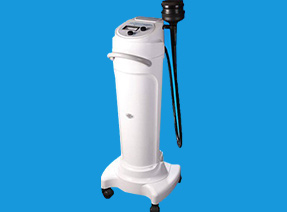
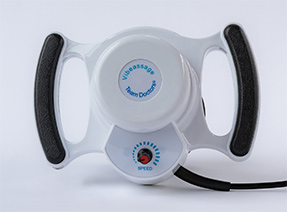
She bought the large Vibeassage tower unit and had it shipped to her home so it would be waiting for her when she arrived. She also brought the travel unit with her. She was not thinking in terms of gadgets or convenience. She was thinking in terms of survival.
She understood now that her recovery could not depend on occasional office visits. Her body needed daily help moving fluid, unloading pressure, and restoring motion to tissues that had been locked in protective spasm for years.
What she was doing was not simply thoracic outlet syndrome self-care. It was active, ongoing mechanical rehabilitation of a system that had been near total collapse.
Back home, the real work began.
She used the Vibeassage at least twice a week. Often more. Whenever her body felt overloaded, congested, or heavy, she used it to keep things moving. The effect was not just on muscles. It was on circulation, lymphatic drainage, and pressure inside her chest and shoulders.
This was no longer about crisis management. This was about rebuilding.
At the same time, she began uncovering something else that explained why her inflammation had been so relentless and so resistant to treatment. Testing revealed toxic levels of mercury, lead, arsenic, cadmium, and gadolinium in her system. On top of that, she was found to have multiple toxic mold exposures that were affecting her brain and nervous system.
In other words, her body had been fighting a biochemical war while also trying to survive a mechanical collapse.
No wonder it had been losing.
She began a detoxification process to slowly and safely remove these burdens. And as the toxic load came down, her inflammatory load came down with it.
What emerged over the following months was not a miracle.
It was something better.
It was a system returning to function.
Her weight dropped—about 25 pounds—without extreme dieting or desperate measures. Her energy improved. Her sleep improved. Her breathing improved. She went from taking a long list of prescriptions to taking just one, with the rest replaced by targeted supplements and nutritional support.
She did not feel like a patient anymore.
She felt like a person who was getting her life back.
For over thirty years, she had worked in construction. Hard work had always been part of her identity. The idea of being fragile, limited, or permanently disabled did not fit who she was. Now, for the first time in years, she could imagine continuing to work, to move, to live fully again.
When she got sore, she used the machine. When her body felt heavy, she unloaded it. When she felt stiffness creeping back, she addressed it early.
This was not passive care.
This was intelligent maintenance.
Looking back, she realized something unsettling: if she had not gotten on that train to Chicago when she did, she probably would not be alive. Her body had been filling with fluid. Her lungs had already been compromised by clots. Her blood pressure had been in a range that kills people.
She had been standing on the edge of a cliff without knowing it.
What saved her was not another procedure. Not another prescription. Not another attempt to manage symptoms.
What saved her was finally finding a doctor who helps avoid cervical surgery.
In the months that followed, she began to understand just how rare that is.
Most people in her situation are funneled toward operations. They are sent to a cervical surgery second opinion doctor, but that “second opinion” is usually just a confirmation of the first. They are rarely guided to a non-surgical neck pain specialist or a doctor who treats neck pain without surgery. The system is built around intervention, not restoration.
What she had found instead was an alternative to cervical spine surgery doctor—someone who thought in terms of mechanics, load, and function rather than cutting and removing.
Dr. Stoxen did not present himself as a miracle worker. He presented himself as an engineer of the human body. A functional spine specialist who understood that nerves, vessels, joints, and muscles live inside a dynamic suspension system.
To her, he became something even more specific: a doctor for unexplained neck and arm pain who actually explained it.
She learned that he was the kind of doctor who treats pinched nerve without surgery, a neck pain specialist conservative treatment expert, and a spine specialist focused on non-surgical care. He was the kind of doctor who avoids cervical fusion and insists that the body’s natural design be restored before anything is sacrificed.
She also came to understand something else.
Her journey was not unique.
Thousands of people are stuck in the same trap—escalating symptoms, escalating interventions, and no one stepping back to ask whether the system itself still works.
They are sent to a neck pain second opinion specialist, but rarely to a holistic neck pain doctor. They are told to see a surgeon before they ever see a movement-based neck pain specialist or a manual therapy doctor for neck pain.
They are treated as if their bodies are broken machines, not living spring systems.
What she had received instead was integrative spine care doctor thinking. Care that respected physics. Care that respected physiology. Care that respected the difference between removing a problem and restoring a system.
Today, she still uses the Vibeassage. She still detoxes. She still pays attention to how her body feels and responds early instead of waiting for crisis.
She is not “cured” in the fantasy sense.
She is something better.
She is stable. Functional. Alive.
Once, her body had been preparing for death.
Now, it is preparing for life.
And she knows—without any doubt—that the decision to get on that train, to seek a best doctor to avoid neck surgery, was the decision that changed everything.
Team Doctors Resources
✓ Check out the Team Doctors Recovery Tools
The Vibeassage Sport and the Vibeassage Pro featuring the TDX3 soft-as-the-hand Biomimetic Applicator Pad
https://www.teamdoctors.com/
✓ Get Dr. Stoxen’s #1 International Bestselling Books
Learn how to understand, examine, and reverse your TOS—without surgery.
https://drstoxen.com/1-international-best-selling-author/
✓ Check out Team Doctors Online Courses
Step-by-step video lessons, demonstrations, and self-treatment strategies.
https://teamdoctorsacademy.com/
✓ Schedule a Free Phone Consultation With Dr. Stoxen
Speak directly with him so he can review your case and guide you on your next steps.
https://drstoxen.com/appointment/
#ThoracicOutletSyndrome #FailedTOSSurgery #TOSRecovery #ChronicPainStory #VascularTOS #ArmPain #PatientAdvocacy #MedicalTrauma #SurgeryFailure #PainJourney
Medical Disclaimer
This article is provided for educational and informational purposes only. It is not intended to diagnose, treat, cure, or prevent any disease, nor is it intended to replace professional medical advice, diagnosis, or treatment.
Thoracic outlet syndrome and related nerve, vascular, and musculoskeletal conditions can present differently in each individual. Treatment decisions—including surgical and non-surgical options—must be made on a case-by-case basis in consultation with a qualified, licensed healthcare professional who is familiar with the patient’s complete medical history.
The experiences described in this article reflect individual outcomes and do not guarantee similar results for others. Surgical procedures, including thoracic outlet surgery and first rib resection, carry inherent risks, and outcomes vary based on many factors including diagnosis, timing, practitioner experience, and patient-specific anatomy and physiology.
Readers should not delay or discontinue medical care based on information contained in this article. Always seek the guidance of a qualified healthcare provider with any questions regarding symptoms, conditions, or treatment options.
Editor’s Note
This article explores a patient and family experience following thoracic outlet syndrome surgery and highlights the importance of comprehensive evaluation, informed decision-making, and second opinions when managing complex pain conditions.
The article also references the Human Spring Approach, a biomechanical evaluation and treatment framework developed by Dr James Stoxen, which emphasizes understanding the body as an integrated, dynamic spring system rather than a collection of isolated anatomical structures. The inclusion of this approach is intended to illustrate an alternative clinical perspective, not to discredit surgery or any specific medical specialty.
Mention of specific clinicians, evaluation models, or treatment philosophies does not constitute endorsement, medical advice, or a claim of superiority. Rather, it reflects the editorial goal of encouraging patients and families to seek clarity, explanation, and individualized assessment before pursuing irreversible interventions.
The editorial position of this publication is that understanding should precede intervention, especially in conditions where symptoms persist, worsen, or fail to respond to standard care.
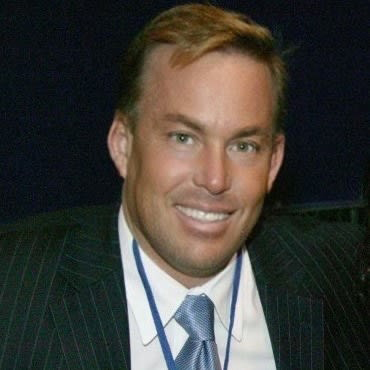
Dr James Stoxen DC., FSSEMM (hon) He is the president of Team Doctors®, Treatment and Training Center Chicago, one of the most recognized treatment centers in the world.
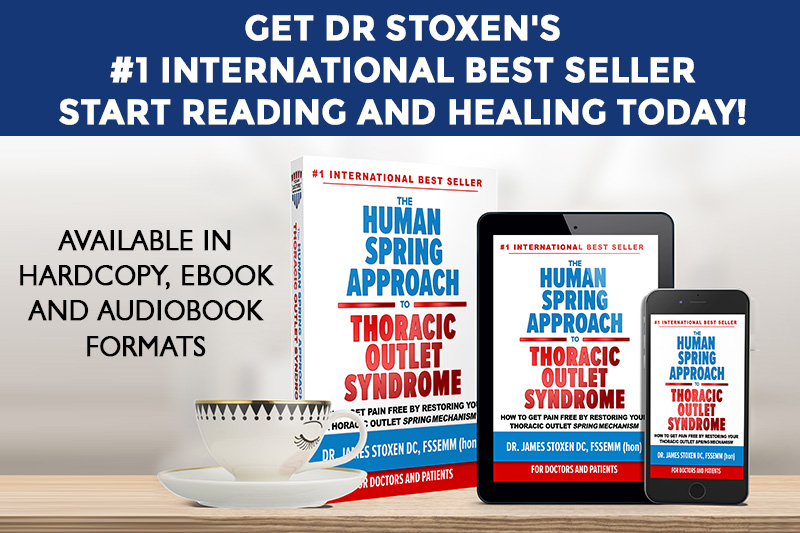
Dr Stoxen is a #1 International Bestselling Author of the book, The Human Spring Approach to Thoracic Outlet Syndrome. He has lectured at more than 20 medical conferences on his Human Spring Approach to Thoracic Outlet Syndrome and asked to publish his research on this approach to treating thoracic outlet syndrome in over 30 peer review medical journals.
He has been asked to submit his other research on the human spring approach to treatment, training and prevention in over 150 peer review medical journals. He serves as the Editor-in-Chief, Journal of Orthopedic Science and Research, Executive Editor or the Journal of Trauma and Acute Care, Chief Editor, Advances in Orthopedics and Sports Medicine Journal and editorial board for over 35 peer review medical journals.
He is a much sought-after speaker. He has given over 1000 live presentations and lectured at over 70 medical conferences to over 50,000 doctors in more than 20 countries. He has been invited to speak at over 300 medical conferences which includes invitations as the keynote speaker at over 50 medical conferences.
After his groundbreaking lecture on the Integrated Spring-Mass Model at the World Congress of Sports and Exercise Medicine he was presented with an Honorary Fellowship Award by a member of the royal family, the Sultan of Pahang, for his distinguished research and contributions to the advancement of Sports and Exercise Medicine on an International level. He was inducted into the National Fitness Hall of Fame in 2008 and the Personal Trainers Hall of Fame in 2012.
Dr Stoxen has a big reputation in the entertainment industry working as a doctor for over 150 tours of elite entertainers, caring for over 1000 top celebrity entertainers and their handlers. Anthony Field or the popular children’s entertainment group, The Wiggles, wrote a book, How I Got My Wiggle Back detailing his struggles with chronic pain and clinical depression he struggled with for years. Dr Stoxen is proud to be able to assist him.
Full Bio) Dr Stoxen can be reached directly at teamdoctors@aol.com