The Human Spring: A New Way to Understand Pain, Movement, and Recovery
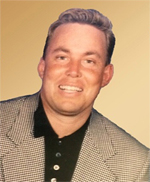
By Dr. James Stoxen
January 25, 2026
A Simple Idea That Changes Everything
Most people are taught to think of the human body like a machine made of levers.
Arms are levers.
Legs are levers.
The spine is a stack of blocks.
Movement is just pushing and pulling.
But what if that model is wrong?
What if your body is not really a lever system at all?
What if your body is actually something much more powerful, more efficient, and more protective?
What if your body is best understood as a human spring model, built on spring-based biomechanics, using elastic energy storage in the body, energy recycling in human motion, and shock absorption biomechanics?
This is the core idea behind Dr. James Stoxen’s human spring approach and his integrated spring-mass model.
In simple words:
Your body is not a stiff machine.
Your body is a living, adaptable body as a spring system.
And when that spring system works well, movement feels easy, light, and efficient.
When it does not, the body becomes stiff, compressed, tired, and painful.
This way of thinking explains:
- Why people lose bounce and energy as they age
- Why joints start to feel “jammed” or “tight”
- Why pain often spreads instead of staying in one spot
- And why many problems are not really “damage”… but spring failure and chronic pain
The Body Was Designed to Work Like a Spring
In engineering, springs are used to:
- Store energy
- Release energy
- Absorb shock
- Protect structures
- Improve efficiency
Your body does the same thing using:
- biological springs in the body
- torsional spring mechanics in joints
- compression springs in the spine
- The foot arch spring mechanism
- The fascial spring network
- And kinetic chain spring transfer from foot to head
This is how:
- Walking feels light instead of heavy
- Running doesn’t destroy your joints
- Jumping doesn’t break your spine
- And everyday movement stays smooth and efficient
This is also why scientists talk about:
- stretch-shortening cycle biomechanics
- impact attenuation biomechanics
- biomechanical energy efficiency
- And neuromechanical spring control
When your spring system works, your body:
- Absorbs force
- Spreads force
- Reuses force
- And protects sensitive structures like nerves and blood vessels
This is what Dr. Stoxen calls restoring human spring function.
The Lever Model vs the Spring Model
The traditional view is the lever model vs spring model.
The lever model says:
- Muscles pull on bones
- Joints are hinges
- Movement is mostly pushing and pulling
The spring model says:
- The body works more like a suspension-based anatomy
- With spring mechanics in human movement
- Using joint decompression mechanics
- And intelligent biomechanical load distribution
In a spring-based body:
- Joints don’t just “hinge” — they float, decompress, and rebound
- The spine doesn’t just stack — it stores and releases energy
- The shoulders don’t just hang — they are suspended systems
This matters enormously for areas where nerves and blood vessels pass through tight spaces, what engineers would call tunnel mechanics for nerves and blood vessels.
Why Compression Problems Are Often Dynamic
Many people are told they have “compression.”
But compression is not always a fixed, structural problem.
Often, it is:
- Posture-dependent
- Fatigue-dependent
- Load-dependent
- Stress-dependent
In other words, it is dynamic.
That is why some people start searching for things like:
All of these searches point to the same human instinct:
“There must be a way to improve function before cutting things out.”
The Human Spring approach is about understanding and improving the system, not just removing parts.
The Spring System Is a Space-Creating System
When a spring is healthy:
- It creates space when loaded
- It rebounds when released
- It protects what runs through it
This is why spring thinking focuses on:
- spring stiffness vs compliance
- joint decompression mechanics
- suspension-based anatomy
- And tunnel mechanics for nerves and blood vessels
If the spring system becomes:
- Too stiff
- Too weak
- Or poorly coordinated
Then space disappears.
Not because bones moved…
…but because the spring behavior failed.
Dr. Stoxen’s Rise to the Keynote Stage
After becoming an international best-selling author, something unusual happened.
Before that, conferences often offered Dr. Stoxen a small breakout room.
But this time, when his team followed up with organizers of seven different medical conferences, every single one replied with something like:
“We’re so happy to hear you’re now an international best-selling author. We’d love to offer you the keynote.”
These were not small events.
They were in places like:
- Abu Dhabi
- Scotland
- And several other major international cities
Here’s the part most people don’t realize:
It was a risk.
He told them:
“Either I’m the keynote… or I’m not interested.”
That’s an all-or-nothing move.
He could have lost all seven.
Instead, he got every single keynote.
Now think about what that means:
These are medical conferences, full of MDs, being taught by Dr. James Stoxen about biomechanics, movement, and complex compression problems — using applied clinical biomechanics and the human spring approach.
When you are the keynote, you are no longer a side speaker.
You are the authority.
And that changes everything.
A New Way to Think About Recovery
The Human Spring approach does not start with:
- “What do we remove?”
It starts with: - “What do we restore?”
It looks at:
- vibration and spring restoration
- restoring human spring function
- spring-based injury prevention
- And applied clinical biomechanics
It asks:
- How does the whole system move?
- Where is it stiff?
- Where is it not sharing load?
- Where is it losing spring behavior?
Tools That Support the Process
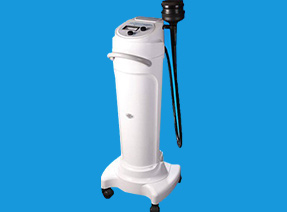
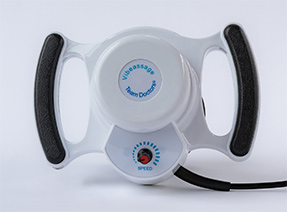
As part of this approach, Dr. Stoxen uses tools like the Vibeassage Pro and Vibeassage Sport.
These are not presented as cures.
They are:
- Self-care tools
- Muscle relaxation tools
- Circulation-support tools
- And comfort and recovery tools that fit into a broader movement and rehabilitation strategy
They are designed to support:
- Softening tight tissues
- Improving comfort
- Supporting movement work
- And helping patients participate in their own care
The Big Idea
The big idea is simple:
The body heals and functions best when its spring system is working.
Not when it is:
- Stiff
- Braced
- Locked
- Or overloaded
From the Ground Up: How Your Foot, Spine, and Fascia Create the Human Spring System
Everything Starts at the Ground
When most people think about shoulder, neck, or arm symptoms, they almost never think about their feet.
But from a biomechanics point of view, the feet are not just something you stand on.
They are the foundation of the entire spring system.
Each step you take sends force upward through your body.
That force does not travel through just one joint.
It travels through the entire chain.
This is why engineers and movement scientists talk about the body as a connected system rather than a group of separate parts.
In the Human Spring view, the foot is not just a platform.
It is a spring.
The Foot Is Not a Rigid Lever— It Is a Spring
The human foot contains an elegant arch system that works like a living spring.
This foot arch spring mechanism is designed to:
- Flatten slightly when loaded
- Store energy
- Then rebound and return that energy when you step forward
This is one of the most important forms of elastic energy storage in the body.
When the foot works well:
- Walking feels light
- Standing feels easy
- Forces are smoothly absorbed and passed upward
When the foot loses its spring behavior:
- More shock goes upward
- More stress goes into the knees, hips, and spine
- The entire system becomes more rigid and overloaded
This is the first place many people quietly lose their spring without realizing it.
The Spine: A Stack of Springs, Not a Stack of Blocks
Most people picture the spine like a stack of bones.
But from a functional point of view, the spine behaves much more like a series of springs.
You can think of it as having many compression springs in the spine, each one meant to:
- Deform slightly under load
- Absorb force
- Then rebound and return energy
This is a huge part of:
- shock absorption biomechanics
- impact attenuation biomechanics
- And energy recycling in human motion
When the spine is moving well, it is not rigid.
It is resilient.
But when the spine becomes:
- Stiff
- Guarded
- Or locked by chronic muscle tension
It stops behaving like a spring and starts behaving like a rigid column.
When that happens:
- Forces stop being absorbed smoothly
- Load stops being shared properly
- Stress concentrates in fewer places
This is one of the major pathways to spring failure and chronic pain.
The Fascia: The Body’s Hidden Spring Network
Most people have never heard of fascia.
But fascia is everywhere.
It is the connective tissue web that wraps:
- Muscles
- Organs
- Nerves
- Blood vessels
- And even bones
From a Human Spring perspective, this fascial spring network is one of the most important parts of the system.
It helps:
- Spread force
- Store energy
- Coordinate movement
- And connect distant parts of the body into one working unit
This is a big reason why tension in one area can affect a completely different area.
It is also why the body works as a kinetic chain spring transfer system instead of a collection of isolated joints.
How Force Moves Through the Whole Body
When you walk, run, or lift something, force does not stop at your foot.
It moves:
Foot → Ankle → Knee → Hip → Spine → Rib cage → Shoulder → Arm
This is what engineers call biomechanical load distribution.
In a healthy spring system:
- No single area takes all the stress
- The load is shared
- The energy is spread out
- And tissues are protected
In a failing spring system:
- Some areas stop contributing
- Other areas get overloaded
- And the body starts to develop compensation patterns
This is how problems slowly migrate upward.
The Shoulder Is a Suspension System, Not a Hinge
Most people think of the shoulder like a hinge or a ball-and-socket joint.
But functionally, it behaves more like a suspension system.
This is part of what Dr. Stoxen means by suspension-based anatomy.
The shoulder is meant to:
- Hang
- Float
- Adapt
- And move in many directions while staying centered
This is also why there are important tunnel mechanics for nerves and blood vessels in this region.
When the spring system is healthy:
- The shoulder floats in space
- The ribs move well
- The spine shares load
- And the tunnels stay more open during movement
When the spring system becomes stiff:
- The shoulder loses its suspension behavior
- The ribs move less
- The spine absorbs less shock
- And space can gradually become more limited during certain positions or loads
Again, not because bones suddenly moved…
…but because the spring behavior of the system changed.
Stiffness vs. Compliance: The Balance That Protects You
Every spring has a balance between:
- Stiffness (stability)
- And compliance (flexibility)
This balance is known as spring stiffness vs compliance.
Too stiff:
- The system becomes brittle
- Shock is not absorbed well
- Stress concentrates
Too loose:
- The system becomes unstable
- Control is lost
- Efficiency drops
A healthy body lives in the middle:
- Stable, but adaptable
- Strong, but elastic
- Supported, but not rigid
This balance is at the heart of spring mechanics in human movement.
Twisting Springs, Bending Springs, and Storing Springs
Not all springs work the same way.
In the body, we see:
- torsional spring mechanics in joints (twisting springs)
- compression springs in the spine (squeezing springs)
- And elastic tissues that stretch and recoil
All of these work together to create:
- biomechanical energy efficiency
- spring-based injury prevention
- And smoother, safer movement
How the System Slowly Breaks Down
Spring failure usually does not happen overnight.
It happens quietly, step by step:
- The feet lose spring
- The spine stiffens
- The fascia loses glide
- The shoulders lose suspension
- The body starts guarding
- Load sharing gets worse
- And stress concentrates in fewer and fewer places
Over time, the body shifts from a spring-based system to a more rigid, lever-like system.
This is exactly the problem described in the lever model vs spring model.
And once the system is no longer behaving like a spring, the risk of overload, irritation, and chronic pain goes way up.
Why Dr. Stoxen Focuses on the Whole System
This is why the human spring approach does not chase only symptoms.
It looks at:
- How force moves through the body
- Where spring behavior is lost
- Where motion is restricted
- Where load is no longer shared
This is applied clinical biomechanics in real life.
It is not about one muscle.
Not about one joint.
Not about one spot.
It is about how the entire spring system is working together.
Where Tools Like Vibeassage Fit In
Tools like the Vibeassage Pro and Vibeassage Sport are used as part of this bigger picture.
They are not presented as cures.
They are used to:
- Help tissues relax
- Improve comfort
- Support circulation
- Reduce protective tension
- And make it easier for people to move and do their rehabilitation work
In other words, they help prepare the system for better movement and better spring behavior.
Your body is not one spring.
It is many springs working together.
When they work together:
- Movement is efficient
- Shock is absorbed
- Space is preserved
- And the body feels lighter and freer
When they stop working together:
- The system stiffens
- Load concentrates
- And problems slowly emerge
How the Body Loses Its Spring: From Tension and Guarding to Compression and Pain
The Body’s First Reaction Is Protection
When something in the body feels threatened — whether from injury, overload, stress, or irritation — the nervous system does not wait for a diagnosis.
It reacts instantly.
Its first response is simple:
“Protect.”
It does this by:
- Tightening muscles
- Limiting movement
- Increasing stiffness
- Reducing motion in sensitive areas
This is a normal and intelligent response.
In the short term, this kind of protective tension can be helpful.
It stabilizes joints.
It limits strain.
It prevents further stress.
But when this protective state lasts too long, something important changes.
The body starts to lose its spring behavior.
From Elastic to Rigid
A healthy body is not floppy, but it is not rigid either.
It is:
- Elastic
- Resilient
- Adaptive
This is what allows:
- energy recycling in human motion
- shock absorption biomechanics
- And biomechanical energy efficiency
But when muscles stay tight for too long:
- Joints stop moving fully
- Fascia stops gliding well
- The spine stops deforming and rebounding normally
- And the whole system starts behaving more like a rigid structure than a spring
This is the gradual shift from a spring-based system to a lever-like system — the exact problem described in the lever model vs spring model.
Guarding Changes How Forces Move Through the Body
When one area becomes stiff, the body does not stop moving.
It adapts.
It finds another way.
This is where compensation begins.
Instead of:
- biomechanical load distribution being shared across many springs
- The load starts passing through fewer and fewer areas
Some springs stop participating.
Others get overloaded.
This is how:
- A foot problem becomes a knee problem
- A knee problem becomes a hip problem
- A hip problem becomes a back problem
- A back problem becomes a shoulder or neck problem
This is not bad luck.
It is system-level adaptation.
The Slow Loss of Joint Space
Healthy joints do not just rotate or hinge.
They also:
- Glide
- Decompress
- Rebound
This is part of joint decompression mechanics.
When protective tension becomes chronic:
- Muscles pull joints more tightly together
- Movement becomes smaller and stiffer
- The natural “floating” quality of joints is reduced
This does not mean bones suddenly move out of place.
It means the spring behavior that normally maintains space is no longer working well.
Why Some Areas Feel “Compressed”
In areas where nerves and blood vessels pass through tight corridors, the body depends heavily on movement and spring behavior to maintain space.
This is where tunnel mechanics for nerves and blood vessels and suspension-based anatomy really matter.
When:
- The spine is stiff
- The ribs move less
- The shoulder loses its suspension behavior
- And the whole system becomes more rigid
Those tunnels do not adapt as well to posture, load, and movement.
Again, not because anatomy suddenly changed…
…but because the system stopped behaving like a healthy spring.
Stress and Fatigue Are Biomechanical Forces Too
Most people think of stress as something emotional.
But stress is also physical.
Stress changes:
- Breathing
- Muscle tone
- Posture
- And movement patterns
Fatigue does the same thing.
When people are tired:
- They move less
- They slump more
- They rely on fewer muscles
- And they stiffen in protective patterns
Over time, this:
- Reduces spring mechanics in human movement
- Reduces elastic energy storage in the body
- And reduces impact attenuation biomechanics
The Body Becomes Efficient at Being Inefficient
Here is the tricky part:
The nervous system learns these patterns.
What starts as protection becomes habit.
What starts as guarding becomes default.
The body becomes very efficient at being stiff.
Unfortunately, that efficiency comes at a cost:
- Higher stress on fewer tissues
- Less shock absorption
- Less energy recycling
- And more fatigue for the same amount of activity
This is one of the hidden pathways to spring failure and chronic pain.
Why Imaging Often Misses the Real Problem
Many people are surprised to learn that:
- Some people with “bad” scans feel fine
- Some people with “good” scans feel terrible
Why?
Because many problems are not just about structure.
They are about function.
They are about:
- How the body moves
- How it loads
- How it distributes force
- And how it behaves as a spring system
This is why Dr. Stoxen emphasizes applied clinical biomechanics instead of just pictures of anatomy.
The Gradual Collapse of the Spring Network
Over time, chronic tension and poor movement patterns:
- Reduce the contribution of the foot arch spring mechanism
- Stiffen the compression springs in the spine
- Restrict the fascial spring network
- And disrupt kinetic chain spring transfer
The body still moves.
But it moves with:
- More effort
- More strain
- Less efficiency
- And less margin for error
Where Vibration and Soft Tissue Work Fit In
This is where approaches focused on relaxation and movement preparation can be helpful.
Methods involving vibration and spring restoration, soft tissue work, and gentle movement are not about “fixing” anatomy.
They are about:
- Reducing protective tone
- Improving tissue comfort
- Making movement easier
- And helping the nervous system allow more normal motion again
Tools like the Vibeassage Pro and Vibeassage Sport fit into this category.
They are used to:
- Help calm overly tight tissues
- Improve comfort
- Support circulation
- And make it easier for people to participate in their movement and rehabilitation work
They are support tools, not magic solutions.
The Turning Point: From Protection Back to Function
The most important shift is not:
- From pain to no pain
It is:
- From rigid to elastic
- From guarded to adaptable
- From stiff to spring-like
This is what restoring human spring function is really about.
Restoring the Spring: How the Human Spring Approach Is Applied in Real Life
A Different Starting Point
Most people who are struggling with long-lasting physical problems are used to being asked one main question:
“Where does it hurt?”
The Human Spring Approach starts with a different question:
“How is your body moving and handling load?”
This is an important shift.
Pain is important, but pain is often the result of a system that is no longer working well as a spring.
So instead of starting with a single spot, Dr. Stoxen looks at:
- How you stand
- How you walk
- How you breathe
- How you sit
- How you reach and lift
- And how force moves through your whole body
This is the practical side of applied clinical biomechanics.
Looking at the Whole System
Because the body works as a body as a spring system, evaluation focuses on:
- Whether the foot arch spring mechanism is contributing
- Whether the compression springs in the spine are moving well
- Whether the fascial spring network is gliding and adapting
- Whether kinetic chain spring transfer is happening smoothly
- And whether the shoulders and upper body are behaving like a suspension-based anatomy system instead of a rigid frame
The goal is not to chase pain.
The goal is to understand where spring behavior has been lost and where it can be gently encouraged to return.
Why This Is a Process, Not an Event
One of the most important ideas in the Human Spring Approach is this:
You do not lose your spring overnight, and you do not get it back overnight.
The body adapts slowly.
So restoring better spring mechanics in human movement, better biomechanical load distribution, and better biomechanical energy efficiency is also a gradual process.
This usually involves:
- Improving movement quality
- Improving posture
- Improving how joints move and share load
- Reducing unnecessary protective tension
- And rebuilding confidence in movement
The Role of Movement and Rehabilitation
In this approach, movement is not something to fear.
It is something to teach, guide, and rebuild.
Care is centered around:
- Gentle mobility work
- Gradual strengthening
- Coordination exercises
- Balance and control
- And restoring spring stiffness vs compliance to a healthier balance
This is the practical expression of:
- spring-based injury prevention
- neuromechanical spring control
- And long-term functional resilience
Why Comfort and Tissue Preparation Matter
When tissues are very tight, guarded, or uncomfortable, people naturally move less.
So part of the process is helping the body feel safe enough to move again.
This is where comfort-oriented methods come in, including approaches focused on vibration and spring restoration and soft tissue relaxation.
Tools like the Vibeassage Pro and Vibeassage Sport are used in this context.
They are not presented as cures or treatments for disease.
They are:
- Self-care tools
- Comfort tools
- Muscle relaxation tools
- Circulation-support tools
- And movement-preparation tools
They help:
- Reduce the feeling of tightness
- Improve comfort before or after exercise
- Make it easier to participate in movement and rehabilitation
- And support consistency at home
The Patient’s Role Is Central
One of the most important differences in this approach is that the patient is not passive.
Recovery is not something that happens to you.
It is something you participate in.
That participation includes:
- Learning how your body works
- Learning how posture affects load
- Learning how movement affects comfort
- And learning how to support your own progress
This is why the Human Spring Approach places such a strong emphasis on education and understanding, not just techniques.
Why This Philosophy Resonates With So Many Professionals
This way of thinking — treating the body as a spring-based system instead of a rigid machine — is one of the reasons Dr. Stoxen has been invited to teach at medical conferences around the world.
After becoming an international best-selling author, something remarkable happened.
Instead of being offered small breakout sessions, he was offered keynote positions — including at major international events in places like Abu Dhabi and Scotland.
He made a bold decision:
“Either I speak as the keynote, or I’m not interested.”
It was an all-or-nothing move.
And every single conference said yes.
That shift reflects something important:
More and more professionals are recognizing the value of system-level thinking, functional biomechanics, and spring-based movement models.
A Philosophy Before a Procedure
At its heart, the Human Spring Approach is not about opposing any particular medical option.
It is about sequence and perspective.
It asks:
“Before we treat the body like a rigid structure that needs parts removed, have we fully explored whether the system can be taught to work better?”
This is the same philosophy used in many areas of modern rehabilitation:
- Start with education
- Start with movement
- Start with function
- Start with conservative, non-invasive strategies
- And build upward from there
The Long-Term Goal: A More Resilient Body
The real goal is not just to feel better today.
It is to build a body that:
- Handles load better
- Absorbs shock better
- Shares work better
- Moves more easily
- And is more resilient over time
In other words, a body that behaves more like the intelligent spring system it was designed to be.
The Big Idea of the Entire Human Spring Approach
Your body is not a collection of parts.
It is a coordinated spring system.
When that system is working well:
- Movement is easier
- Effort is lower
- And stress is better distributed
When that system is not working well:
- The body becomes stiff
- Load concentrates
- And problems slowly appear
The Human Spring Approach is about teaching the system to work better again.
Not through force.
Not through fear.
But through understanding, movement, and intelligent progression.
A Final Thought
The most powerful change is not:
“What was done to you.”
It is:
“What you learned to do for yourself.”
Team Doctors Resources
✓ Check out the Team Doctors Recovery Tools
The Vibeassage Sport and the Vibeassage Pro featuring the TDX3 soft-as-the-hand Biomimetic Applicator Pad
https://www.teamdoctors.com/
✓ Get Dr. Stoxen’s #1 International Bestselling Books
Learn how to understand, examine, and reverse your TOS—without surgery.
https://drstoxen.com/1-international-best-selling-author/
✓ Check out Team Doctors Online Courses
Step-by-step video lessons, demonstrations, and self-treatment strategies.
https://teamdoctorsacademy.com/
✓ Schedule a Free Phone Consultation With Dr. Stoxen
Speak directly with him so he can review your case and guide you on your next steps.
https://drstoxen.com/appointment/
#ThoracicOutletSyndrome #TOSCommunity #ChronicPainSupport #YouAreNotAlone #InvisibleIllness #PainWarrior #ChronicIllnessLife #HealingJourney #HealthStruggles #PainSupport #PatientVoices #ChronicCondition #RecoveryJourney #HopeAndHealing #KeepGoing

Dr James Stoxen DC., FSSEMM (hon) He is the president of Team Doctors®, Treatment and Training Center Chicago, one of the most recognized treatment centers in the world.
Dr Stoxen is a #1 International Bestselling Author of the book, The Human Spring Approach to Thoracic Outlet Syndrome. He has lectured at more than 20 medical conferences on his Human Spring Approach to Thoracic Outlet Syndrome and asked to publish his research on this approach to treating thoracic outlet syndrome in over 30 peer review medical journals.
He has been asked to submit his other research on the human spring approach to treatment, training and prevention in over 150 peer review medical journals. He serves as the Editor-in-Chief, Journal of Orthopedic Science and Research, Executive Editor or the Journal of Trauma and Acute Care, Chief Editor, Advances in Orthopedics and Sports Medicine Journal and editorial board for over 35 peer review medical journals.
He is a much sought-after speaker. He has given over 1000 live presentations and lectured at over 70 medical conferences to over 50,000 doctors in more than 20 countries. He has been invited to speak at over 300 medical conferences which includes invitations as the keynote speaker at over 50 medical conferences.
After his groundbreaking lecture on the Integrated Spring-Mass Model at the World Congress of Sports and Exercise Medicine he was presented with an Honorary Fellowship Award by a member of the royal family, the Sultan of Pahang, for his distinguished research and contributions to the advancement of Sports and Exercise Medicine on an International level. He was inducted into the National Fitness Hall of Fame in 2008 and the Personal Trainers Hall of Fame in 2012.
Dr Stoxen has a big reputation in the entertainment industry working as a doctor for over 150 tours of elite entertainers, caring for over 1000 top celebrity entertainers and their handlers. Anthony Field or the popular children’s entertainment group, The Wiggles, wrote a book, How I Got My Wiggle Back detailing his struggles with chronic pain and clinical depression he struggled with for years. Dr Stoxen is proud to be able to assist him.
Full Bio) Dr Stoxen can be reached directly at teamdoctors@aol.com