For many people, pain does not start as something big.
It starts as a small problem.
A little tightness in the shoulder.
A strange ache in the neck.
A dull, annoying feeling down the arm.
At first, you ignore it.
You tell yourself it will go away.
But then weeks turn into months. And months turn into years.
And one day you find yourself typing these words into Google at three in the morning:
why nothing helps my arm pain
Or maybe it’s:
i’ve tried everything arm pain
when arm pain won’t stop
nothing works for my shoulder pain
And deep down, the scariest question of all:
is surgery my only option
This is what happens when pain slowly takes over your life.
At first, you adapt.
Then you compensate.
Then one day, you realize your whole day is built around protecting your arm.
You stop lifting things.
You stop reaching overhead.
You stop sleeping on one side.
You stop trusting your own body.
Eventually, you may find yourself thinking things like:
can’t lift arm anymore
can’t use my arm without pain
shoulder pain affecting daily life
loss of function arm pain
arm pain disability
And the emotional part is just as heavy:
arm pain ruining my life
life with constant arm pain
chronic pain burnout
arm pain anxiety
chronic nerve pain frustration
desperate for arm pain relief
This is not just physical anymore.
This is psychological.
This is your identity, your work, your sleep, your mood, your relationships.
And somewhere along the way, another fear creeps in:
fear of permanent arm damage
permanent nerve damage risk
chronic nerve compression damage
end stage nerve compression
Some people are told they may have Thoracic Outlet Syndrome. Others are not sure. Some are told it is their neck. Some are told it is their shoulder. Some are told it is “just stress.”
But the pain is real.
They start wondering if they are running out of time.
If they waited too long.
If something inside them is breaking down.
This is the moment when pain is no longer just pain.
It becomes fear.
The Endless Search for “The Right Doctor”
When pain becomes chronic and confusing, people usually start going from doctor to doctor.
They search for:
best doctor for thoracic outlet syndrome
thoracic outlet syndrome specialist
TOS expert near me
who treats thoracic outlet syndrome
doctor who understands thoracic outlet syndrome
who actually understands TOS
They get MRIs.
CT scans.
Nerve tests.
Blood vessel tests.
They hear words like “compression,” “impingement,” “instability,” “posture,” “inflammation,” and “degeneration.”
Some are sent to:
neurologist for arm nerve pain
vascular thoracic outlet specialist
shoulder nerve pain specialist
nerve compression specialist
Some are told different stories by different doctors.
Some are told it’s the neck.
Some are told it’s the shoulder.
Some are told it’s the rib.
Some are told it’s “nothing serious.”
Some are told surgery might be needed.
They just want someone who can finally explain what is happening.
But often, what they get is something else.
They get a system that looks at parts, not systems.
A neck doctor looks at the neck.
A shoulder doctor looks at the shoulder.
A nerve doctor looks at the nerve.
A vessel doctor looks at the vessel.
But nobody is looking at how the whole body works together.
The Missing Question Nobody Asks
There is one simple question that almost no one asks:
“How is your body supposed to carry load, absorb force, and move through gravity?”
Most people are taught that the body is like a machine made of levers.
Bones are levers.
Muscles pull the levers.
Joints are hinges.
This seems logical.
But it misses something very important.
The human body is not built like a crane.
It is built more like a spring system.
This is the idea behind the work of Dr. James Stoxen and what he calls the Human Spring Approach.
Instead of seeing the body as a stack of rigid parts, this way of thinking looks at the body as a living suspension system.
A system that is supposed to:
- absorb force
• spread load
• store energy
• release energy
• protect nerves and blood vessels by maintaining space
When this spring system is working well, movement feels easy.
When it breaks down, the body starts to collapse inward.
And when the body collapses inward, space disappears.
And when space disappears, sensitive structures like nerves and blood vessels can start to get irritated, crowded, or stressed.
Not because something is “wrong” with them…
…but because the support system around them is no longer doing its job.
Why So Many People Never Truly Recover
Many people with long-term arm and shoulder pain are not weak.
They are not broken.
They are overloaded and compressed.
They are living in a body that is no longer managing force correctly.
And when force is not managed correctly, the body tries to protect itself.
It tightens muscles.
It limits motion.
It changes posture.
It creates guarding patterns.
Over time, this can become a vicious cycle:
More tension → less space
Less space → more irritation
More irritation → more guarding
More guarding → even less space
This is how people slowly move toward things like:
disabling arm pain
end stage nerve compression
chronic nerve compression damage
Not because they are doomed.
But because no one fixed the load system.
A Different Way of Looking at the Problem
The Human Spring Approach does not start by asking:
“What do we cut?”
“What do we remove?”
“What do we force?”
It starts by asking:
“How do we restore space, movement, and load sharing?”
How do we help the body remember how to act like a spring again?
How do we reduce unnecessary tension?
How do we improve motion?
How do we improve circulation and fluid movement?
How do we reduce the body’s constant defensive state?
This is not about “fixing” a body part.
It is about changing the environment that body part lives in.
Where Tools Like Vibeassage Fit In
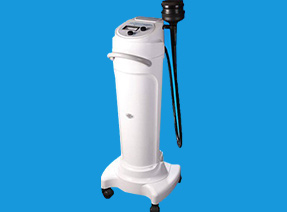
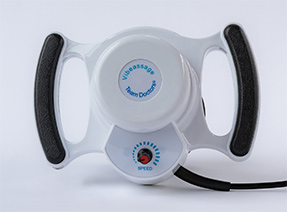
Dr. Stoxen uses tools like the Vibeassage Pro and Vibeassage Sport as self-care and tissue conditioning tools.
Not as magic.
Not as cures.
Not as medical treatment.
But as ways to:
- help people work with their own tissues
• help reduce guarding
• help improve movement comfort
• help prepare the body for motion and exercise
• help people participate in their own recovery process
Many patients feel so guarded and compressed that, at first, when you press on their muscles, they say:
“I don’t feel a thing.”
The tissue is so overloaded and congested that sensation is muted.
But when circulation and movement start to improve, something changes.
The body starts to respond again.
The muscles stop fighting everything.
Movement feels less threatening.
And that’s when real rehabilitation can begin.
The Intensive Model (In Plain English)
Some people spend years doing one or two sessions a week.
Others choose a different path.
They say:
“I don’t want this to take two years.”
They commit to a short, focused, intensive period of work.
Sometimes that means many hours over a few days.
Not because it’s “fast.”
But because it’s complete and concentrated.
This is especially common among people who simply cannot live in pain anymore.
People who say:
“I can’t live like this.”
They don’t want their life back in pieces.
They want momentum.
They want change.
They want their body to start moving in a different direction.
The Big Idea (And the Hope)
The Human Spring Approach is not about promising miracles.
It is not about making medical claims.
It is about something much more honest:
Helping people understand their body,
work with their body,
and stop fighting their body.
For many people, that alone is the first real relief they’ve had in years.
How the Body Slowly Collapses Into Compression
Most people think their pain started with an injury.
A fall.
A car accident.
A bad workout.
Too much time at a computer.
Sometimes that’s true.
But just as often, pain starts quietly.
It starts with tension.
It starts with fatigue.
It starts with load that the body is no longer handling well.
And because the change is slow, people adapt without realizing what is happening.
They change how they sit.
They change how they stand.
They change how they move.
They change how they breathe.
And little by little, the body becomes stiffer, tighter, and more guarded.
The Body’s Protection System
Your body has one main job:
Keep you safe.
When something feels threatened, the body tightens.
This is not a decision you make.
It is automatic.
It is a reflex.
If a joint feels unstable, muscles tighten.
If a nerve feels irritated, muscles tighten.
If the body feels overloaded, muscles tighten.
At first, this is helpful.
It is like putting a brace around something that feels weak.
But braces are not meant to be worn forever.
Over time, this protection system can become stuck in the “on” position.
Muscles stop relaxing fully.
Movement becomes limited.
Breathing becomes shallow.
The body starts to move as a rigid block instead of a fluid spring.
When Stiffness Replaces Spring
Remember the idea from Part 1: the body is supposed to work like a spring system, not a rigid machine.
A spring is supposed to:
- compress
• rebound
• share load
• move energy around
But when the body becomes guarded, the spring system starts to lock up.
Instead of spreading force, it concentrates force.
Instead of sharing load, it dumps load into small areas.
That’s when sensitive tissues start to complain.
Not because they are weak.
But because they are overworked and crowded.
Where “Compression” Comes From
When people hear the word “compression,” they often think something is being crushed by a bone.
But in many cases, compression is more like this:
Too much tension pulling inward.
Too little space being maintained.
Too much stiffness holding everything tight.
Imagine pulling a tent inward from all sides.
The space inside disappears.
Nothing has to break.
Nothing has to tear.
The space is just… gone.
This is one way people slowly move toward symptoms that lead them to search things like:
chronic nerve compression damage
end stage nerve compression
permanent nerve damage risk
fear of permanent arm damage
And this is also why symptoms can be so confusing and changeable.
Why Symptoms Move Around
One day it’s your neck.
One day it’s your shoulder.
One day it’s your arm.
One day it’s your hand.
People start saying things like:
why won’t my arm heal
when arm pain won’t stop
chronic shoulder nerve pain help
life with constant arm pain
This happens because the body is a connected system.
When one area gets stiff, another area has to move more.
When one area collapses, another area takes more load.
So the pain is not always coming from where you feel it.
It is coming from how your whole system is managing force.
Why Rest Alone Often Doesn’t Fix It
Many people are told to “rest.”
Rest can calm symptoms.
But it does not usually rebuild a spring system.
If the body has learned to move in a guarded, collapsed way, it will go right back to that pattern as soon as normal life returns.
That’s why people say:
i’ve tried everything arm pain
nothing works for my shoulder pain
long term arm pain solutions
It’s not that nothing helped.
It’s that nothing changed the underlying pattern.
The Inflammation Traffic Jam
Another part of this story is fluid movement.
Your tissues are supposed to move fluid in and out all the time.
When movement is limited and muscles stay tight, fluid movement slows.
This can create a kind of traffic jam in the tissues.
At first, people don’t feel much.
Sometimes they even say, “I don’t feel anything when you press there.”
But as tissue quality changes and circulation improves, sensation starts to return.
That’s not a bad sign.
It’s a sign that the tissue is waking up.
Why People Start to Panic
When symptoms last long enough, people stop thinking about weeks or months.
They start thinking about forever.
This fear changes how people move.
It changes how they sleep.
It changes how they live.
And ironically, it often makes the body even more guarded.
The Vicious Cycle
Here is the loop many people get stuck in:
Pain → guarding
Guarding → stiffness
Stiffness → less space
Less space → irritation
Irritation → more pain
Around and around it goes.
Until people start saying:
arm pain ruining my life
can’t use my arm without pain
can’t lift arm anymore
loss of function arm pain
arm pain disability
Why This Gets Labeled So Many Different Ways
Depending on which structure is most irritated, people get different labels.
Neck problem.
Shoulder problem.
Nerve problem.
Vascular problem.
Sometimes the label helps.
Sometimes it just adds more confusion.
Because the system is still the system.
The Human Spring View of This Mess
From the Human Spring Approach point of view, the real question is not:
“What structure is angry today?”
The real question is:
“Why is the body no longer maintaining space and movement the way it should?”
Why has the spring system become stiff?
Why has load stopped being shared?
Why is everything being held so tightly?
Where Gentle Self-Work Fits In
This is where tools like Vibeassage Pro and Vibeassage Sport are used in a non-medical, self-care way.
Not to “fix” anything.
Not to “treat” disease.
But to help people:
- explore their own tissues
• reduce guarding
• improve comfort with movement
• prepare the body for stretching and exercise
• become less afraid of touching and moving their own body
For many people, just learning that their body is not fragile is a huge step.
Why Intensive Periods Sometimes Make Sense
When someone has been stuck in a guarded pattern for years, it can take time and repetition to show the nervous system that it is safe to let go.
That’s why some people choose a short, focused, intensive period instead of dragging it out over years.
Not because it’s magic.
But because consistency and volume can matter when trying to change long-held patterns.
The Big Shift in Thinking
Instead of asking:
“What’s broken?”
The Human Spring Approach asks:
“What has become stuck?”
Instead of asking:
“What do we remove?”
It asks:
“How do we restore movement, space, and confidence?”
Lost in the Medical Maze
When pain lasts longer than a few months, something changes inside a person.
At first, you are patient.
Then you are concerned.
Then you are tired.
Then you are scared.
And finally, you become determined to find someone who can explain what is happening to you.
This is when people start searching the internet for things like:
best doctor for thoracic outlet syndrome
thoracic outlet syndrome specialist
TOS expert near me
who treats thoracic outlet syndrome
doctor who understands thoracic outlet syndrome
who actually understands TOS
At this point, people are no longer just looking for relief.
They are looking for certainty.
They want someone to say, “This is what’s wrong, and this is what we’re going to do.”
Why So Many Opinions Don’t Feel Helpful
One of the most confusing parts of long-term arm and shoulder pain is this:
Different doctors often tell you different stories.
One says it’s your neck.
Another says it’s your shoulder.
Another says it’s your rib.
Another says it’s your posture.
Another says, “Your scans don’t look that bad.”
So you start bouncing between offices.
And the deeper you go, the more confusing it feels.
The Problem With a “Parts” Approach
Most medical training is organized by body parts.
Neck specialists look at necks.
Shoulder specialists look at shoulders.
Nerve specialists look at nerves.
Blood vessel specialists look at blood vessels.
But your body does not live in parts.
It lives as one connected system.
So when your problem is about how the whole system is handling load and tension, part-by-part answers often feel incomplete.
They are not looking for another test.
They are looking for someone who sees the whole picture.
When Fear Starts Driving Decisions
After enough time, people stop asking, “What’s going on?”
They start asking:
is surgery my only option
last option for thoracic outlet syndrome
when TOS becomes dangerous
end stage thoracic outlet syndrome
This is a very human reaction.
When something hurts long enough, the mind starts thinking in extremes.
And when doctors cannot give a clear, simple explanation, fear fills the gap.
And that fear changes how people move, think, and choose.
How to Think About “Specialists” Without Panic
People often believe there is one perfect specialist who has the answer.
Here is a calmer way to think about it:
Different specialists look at different parts of the same elephant.
Each perspective can be useful.
But no single test or opinion tells the whole story.
That’s why structured evaluation and thoughtful second opinions matter.
What a Good Evaluation Should Feel Like
A good evaluation should not feel rushed.
It should not feel like someone is only looking at one joint or one scan.
It should feel like someone is asking questions about:
- your history
• how your symptoms started
• how they change during the day
• what makes them better or worse
• how you move, sit, breathe, and work
That’s the spirit behind a TOS specialist evaluation or a whole-system assessment.
Not just: “What does the MRI say?”
But: “How is your body functioning?”
Why People Keep Changing Doctors
Many people do not change doctors because they are difficult.
They change doctors because they still don’t understand what is happening.
They are not chasing procedures.
They are chasing clarity.
The Human Spring Way to Think About This
From the Human Spring Approach point of view, the most important question is not:
“Which structure is the problem?”
It is:
“How is the whole body managing load, tension, and space?”
This does not replace medical diagnosis.
It adds a bigger picture to it.
It explains why two people with the same scan can feel very different.
It explains why symptoms move around.
It explains why fear, stress, and guarding make everything worse.
Where Self-Care Tools Fit (Without Hype)
Tools like Vibeassage Pro and Vibeassage Sport are not presented as medical treatment.
They are self-care tools.
They help people:
- explore stiff or sensitive areas
• become less afraid of touching and moving
• reduce guarding
• prepare for stretching, walking, and exercise
• participate in their own recovery process
This matters because helplessness makes pain feel bigger.
Participation gives people a sense of control again.
Why Second Opinions Are Often Smart
Getting a thoracic outlet syndrome second opinion or a second opinion arm pain is not a sign of weakness.
It is a sign of being thoughtful.
Different doctors see different things.
Good decisions usually come from patterns, not from a single voice.
The Most Important Mental Shift
Instead of asking:
“Who is the one doctor who can save me?”
A better question is:
“Who can help me understand my body, my options, and my next steps?”
That’s how people slowly move out of panic mode and back into problem-solving mode.
You Are Not Broken
This is important enough to say clearly:
Long-term pain does not mean you are broken.
It means your system has become stuck.
Stuck in guarding.
Stuck in stiffness.
Stuck in fear.
Stuck in overload.
And stuck systems can change.
Learning to Trust Your Body Again
By the time most people find Dr. James Stoxen, they are tired.
Not just tired in their body.
Tired in their mind.
They are tired of thinking about their arm all day.
Tired of planning their life around pain.
Tired of wondering if they are getting worse.
Tired of living in a state of constant protection.
Many of them arrive saying things like:
“My arm pain is ruining my life.”
“My shoulder pain is affecting daily life.”
“I can’t use my arm without pain.”
“I’m scared about the loss of function arm pain and the fear of permanent arm damage.”
Some have already convinced themselves that they are heading toward end stage thoracic outlet syndrome, or end stage nerve compression, or that they are living with chronic nerve compression damage and facing permanent nerve damage risk.
And almost all of them carry a quiet question they don’t always say out loud:
“What if this is just how my life is now?”
The First Thing Dr. Stoxen Changes Is the Story
Dr. Stoxen does not start by telling people what is “wrong” with them.
He starts by explaining how the body works.
He explains the body as a living spring system, not a pile of worn-out parts.
He explains that pain does not automatically mean damage.
He explains that stiffness, guarding, and overload can make the body feel fragile even when it is not.
For many people, this is the first time in years that someone has explained their problem in a way that makes sense.
Not with fear.
Not with drama.
But with logic.
And hope.
From “What’s Wrong With Me?” to “What Is My Body Doing?”
The Human Spring Approach changes the main question.
Instead of:
“What’s broken?”
It becomes:
“What has become stuck, overloaded, or guarded?”
Instead of:
“Why won’t my arm heal?”
It becomes:
“What is my whole system doing that keeps me in this pattern?”
This shift alone often reduces arm pain anxiety, chronic pain burnout, and the constant feeling of chronic nerve pain frustration.
Because now the problem is not mysterious.
It is mechanical.
And mechanical things can change.
Why Dr. Stoxen Focuses on the Whole System
In the Human Spring model, your arm is not an isolated structure.
It is part of:
- your spine
• your rib cage
• your breathing
• your posture
• your walking
• your daily habits
If the spring system that supports all of that is stiff and collapsed, the arm is forced to live in a crowded, tense environment.
Over time, that can feel like disabling arm pain, can’t lift arm anymore, or even arm pain disability.
Not because the arm is failing.
But because the support system is failing.
Why the Goal Is Not “Fixing” — It’s Restoring
Dr. Stoxen does not talk about “fixing” bodies.
He talks about restoring function.
Restoring:
- movement
• space
• load sharing
• confidence
• tolerance to activity
This is a very different mindset than chasing symptoms.
It’s also why the Human Spring Approach is not built around one magic technique.
It is built around changing how the body behaves over time.
The Role of Hands-On Work and Self-Care Tools
In Dr. Stoxen’s work, hands-on work and tools like Vibeassage Pro and Vibeassage Sport are used in a supportive, non-medical way.
Not to cure anything.
Not to treat disease.
But to help people:
- explore stiff and guarded tissues
• reduce protective tension
• improve comfort with movement
• prepare the body for walking, stretching, and exercise
• rebuild trust in their own body
Many people are so guarded at first that they say, “I don’t feel anything.”
That’s not strength.
That’s shutdown.
As circulation and movement improve, sensation often returns.
And with it, control.
Why Intensive Periods Sometimes Make Sense
Some people spend years in short, scattered sessions.
Others choose a different path.
They say:
“I don’t want this to take two years.”
They commit to a short, focused, intensive period of work.
Not because it’s magic.
Not because it’s guaranteed.
But because repetition and consistency can help the nervous system learn faster.
This is especially common among people who feel like:
“I can’t live like this anymore.”
They are not chasing miracles.
They are choosing momentum.
The Most Important Change: Fear Starts to Shrink
When people begin to understand their body, something powerful happens.
They stop Googling things like:
when TOS becomes dangerous
ignoring thoracic outlet syndrome risks
severe thoracic outlet syndrome
last option for thoracic outlet syndrome
is surgery my only option
Not because they are ignoring reality.
But because they are no longer living in catastrophe mode.
They are living in problem-solving mode.
What “Progress” Actually Looks Like
Progress in the Human Spring Approach is not a straight line.
It looks like:
- better days mixed with harder days
• more movement tolerance
• less fear
• more confidence
• less obsession with symptoms
Eventually, many people notice something important:
Their arm is no longer the center of their life.
Living With a Body, Not Fighting One
For a long time, many people feel like they are living with thoracic outlet syndrome or some other label.
In Dr. Stoxen’s world, the goal is simpler:
To live with your body again.
Not as an enemy.
Not as a fragile object.
But as a system that can adapt.
The Honest Truth
The Human Spring Approach does not promise cures.
It does not promise timelines.
It does not promise outcomes.
What it offers is something more realistic and more powerful:
A way to understand your body.
A way to work with your body.
A way to stop being afraid of your body.
And for many people who have lived for years in life with constant arm pain, that alone changes everything.
The Real Win
The real win is not “no pain forever.”
The real win is:
- confidence
• movement
• control
• freedom
• and a life that is not organized around fear
Team Doctors Resources
✓ Check out the Team Doctors Recovery Tools
The Vibeassage Sport and the Vibeassage Pro featuring the TDX3 soft-as-the-hand Biomimetic Applicator Pad
https://www.teamdoctors.com/
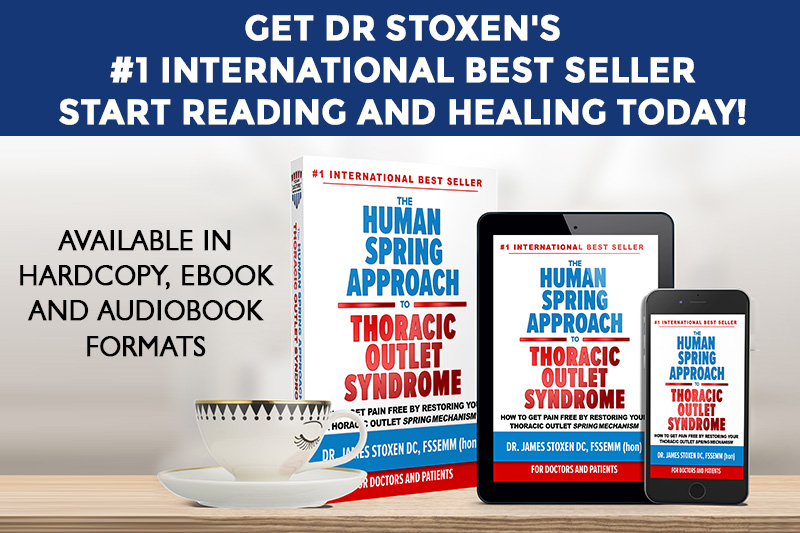
✓ Get Dr. Stoxen’s #1 International Bestselling Books
Learn how to understand, examine, and reverse your TOS—without surgery.
https://drstoxen.com/1-international-best-selling-author/
✓ Check out Team Doctors Online Courses
Step-by-step video lessons, demonstrations, and self-treatment strategies.
https://teamdoctorsacademy.com/
✓ Schedule a Free Phone Consultation With Dr. Stoxen
Speak directly with him so he can review your case and guide you on your next steps.
https://drstoxen.com/appointment/
#ThoracicOutletSyndrome #ChronicFatigue #BrainFog #LowEnergy #NervousSystemHealth #Inflammation #SystemicPain #WholeBodyHealth #BurnoutRecovery #PainAndFatigue #ChronicStress #HealingTheBody #EnergyRestoration #HealthReset #RecoveryMode

Dr James Stoxen DC., FSSEMM (hon) He is the president of Team Doctors®, Treatment and Training Center Chicago, one of the most recognized treatment centers in the world.
Dr Stoxen is a #1 International Bestselling Author of the book, The Human Spring Approach to Thoracic Outlet Syndrome. He has lectured at more than 20 medical conferences on his Human Spring Approach to Thoracic Outlet Syndrome and asked to publish his research on this approach to treating thoracic outlet syndrome in over 30 peer review medical journals.
He has been asked to submit his other research on the human spring approach to treatment, training and prevention in over 150 peer review medical journals. He serves as the Editor-in-Chief, Journal of Orthopedic Science and Research, Executive Editor or the Journal of Trauma and Acute Care, Chief Editor, Advances in Orthopedics and Sports Medicine Journal and editorial board for over 35 peer review medical journals.
He is a much sought-after speaker. He has given over 1000 live presentations and lectured at over 70 medical conferences to over 50,000 doctors in more than 20 countries. He has been invited to speak at over 300 medical conferences which includes invitations as the keynote speaker at over 50 medical conferences.
After his groundbreaking lecture on the Integrated Spring-Mass Model at the World Congress of Sports and Exercise Medicine he was presented with an Honorary Fellowship Award by a member of the royal family, the Sultan of Pahang, for his distinguished research and contributions to the advancement of Sports and Exercise Medicine on an International level. He was inducted into the National Fitness Hall of Fame in 2008 and the Personal Trainers Hall of Fame in 2012.
Dr Stoxen has a big reputation in the entertainment industry working as a doctor for over 150 tours of elite entertainers, caring for over 1000 top celebrity entertainers and their handlers. Anthony Field or the popular children’s entertainment group, The Wiggles, wrote a book, How I Got My Wiggle Back detailing his struggles with chronic pain and clinical depression he struggled with for years. Dr Stoxen is proud to be able to assist him.
Full Bio) Dr Stoxen can be reached directly at teamdoctors@aol.com