Many people are surprised when they are told they have something called a cervical rib. Sometimes it is also called an extra rib, an extra cervical rib, or an accessory cervical rib. It usually shows up on an image like a cervical rib X ray, X-ray cervical rib, or a cervical rib MRI.
Here is the important thing most people are not told right away: you were born with it.
If you have this kind of rib, it has been part of your cervical rib anatomy your whole life. It did not suddenly appear when you started feeling neck pain, shoulder pain, arm pain, shoulder blade pain, clavicle pain, or tingling in collarbone. For many people, it causes no trouble at all for decades.
Yet some people are told that their cervical rib symptoms mean they have cervical rib syndrome or even cervical rib and thoracic outlet syndrome, and that they should think about cervical rib surgery or cervical rib removal.
Before anyone jumps to that conclusion, it is very important to understand something much bigger: how the body is supposed to work like a living spring, and what really changes in the body when pain begins.
The Very Important Logic Most People Are Not Told
Dr. Stoxen explains this with very simple logic:
If a bone you were born with was the cause of your problem,
you would have had the problem your entire life.
If someone is 25 years old, or 40 years old, or 60 years old, and only now starts having cervical rib symptoms, that means something else has changed.
The bone did not change.
The spring system changed.
Posture changed. Load changed. Muscle tension changed. Inflammation changed. Movement patterns changed. Stress changed. Breathing patterns changed.
The body’s mechanics changed.
The Human Spring: Why Your Body Is Not a Machine Made of Levers
Most people are taught to think of the human body like a machine made of stiff parts, hinges, and levers. Bones are seen as rigid. Joints are seen as hinges. Muscles are seen as motors that pull on those hinges.
But that idea is not how your body actually works.
Dr. James Stoxen explains the body in a very different way. He calls it the Human Spring.
A spring is not rigid. A spring bends, stretches, stores energy, and releases energy. A spring protects what is inside it. A spring absorbs shock. A spring keeps space open. A spring keeps things from being crushed.
Your body works the same way.
Your feet, legs, hips, spine, ribs, shoulders, and even your neck are all designed to act like living springs. When these springs work well, movement feels easy, light, and strong. When they stop working well, the body becomes stiff, compressed, and tired.
And that is when people start to feel things like neck pain, shoulder pain, arm pain, shoulder blade pain, clavicle pain, tingling in collarbone, hand numbness, arm numbness, numb hands, cold hands, and hand weakness.
These are not just random symptoms. They are often signs that the body’s spring system is not moving and loading the way it was designed to.
When the Spring System Loses Its Space
One of the most important jobs of a spring is to keep space open.
Think about the suspension on a car. If the springs collapse, the frame drops, parts get squeezed, and things start to rub, pinch, or break.
Your body works the same way.
When your posture collapses, when your feet lose their spring, when your spine stiffens, or when your shoulders slump forward, the “spaces” in your body get smaller.
Those spaces are important because nerves, blood vessels, and soft tissues pass through them.
When space gets smaller, people may notice:
- Shoulder-arm syndrome
- Raised clavicle
- Prominence clavicle
- Clavicle pain
- Arm pain
- Hand numbness
- Arm numbness
- Cold hands
- Hand weakness
Again, these are not “the disease.” These are signals that something in the body’s spring system is not working the way it should.
The Confusing Topic of Extra Ribs
This brings us to one of the most misunderstood topics in neck and shoulder problems: the idea of an extra rib.
Some people are born with what doctors call a cervical rib. This is also called an accessory cervical rib or extra cervical rib. It is simply a variation in cervical rib anatomy.
It is found by imaging tests like a cervical rib X ray, X-ray cervical rib, cervical rib MRI, or MRI cervical rib.
Many people are shocked when they are told they have one.
But here is the most important fact:
You were born with it.
It did not suddenly appear at age 25, 40, or 60.
You had it when you were a baby. You had it when you were a teenager. You had it when you were young and healthy.
And for many years, you were fine.
So the presence of a cervical rib by itself does not explain why someone suddenly develops cervical rib pain, neck pain, shoulder pain, or arm pain later in life.
Why So Many People Are Told They Have “Cervical Rib Syndrome”
When someone has neck and arm symptoms and an image shows an extra rib, it often gets labeled as cervical rib syndrome or 1st rib syndrome or even cervical rib and thoracic outlet syndrome.
Doctors may perform tests like:
- Adson’s test
- Roos test
- cervical rotation lateral flexion test
These tests do not show “a bad rib.”
They show changes in space, tension, and position in the neck and shoulder area.
Imaging may be used for cervical rib diagnosis, but images only show structure, not how the body is actually functioning as a spring system.
The Dangerous Jump in Logic
Here is where many patients get pushed in a scary direction.
They are told:
“You have an extra rib.”
“That rib is the problem.”
“It needs to be removed.”
This leads to discussions about:
- cervical rib surgery
- cervical rib removal
- cervical rib resection
- cervical rib surgery recovery time
- and even cervical rib complications
But again, this skips a very important question:
Why did you live for decades with this rib and have no problem?
Congenital Differences Are Not Automatically Diseases
Human bodies are not all built exactly the same.
Some people have:
- An extra bone in the lower back
- A vertebra that is partly fused to the sacrum
- Slightly different rib shapes
- Slightly different joint shapes
These are called congenital variations. They are normal human differences, not diseases.
An extra rib is usually just another example of that.
It may show up on a scan, but that does not mean it is the cause of your pain.
The Human Spring Viewpoint
The Human Spring approach does not start by blaming bones.
It starts by asking:
- Is the body moving like a spring or like a stiff stick?
- Is posture lifting the body or collapsing it?
- Is breathing lifting the rib cage or dropping it?
- Are the shoulders hanging from springs or slumping forward?
- Is the spine flexible and elastic or rigid and compressed?
When the spring system collapses, the spaces in the neck and shoulder area can narrow. That can be felt as tingling in collarbone, clavicle pain, shoulder blade pain, or arm pain.
That does not mean anything is “broken.” It means the spring mechanics are not working well.
Where Self-Care Fits In
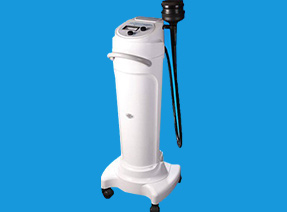
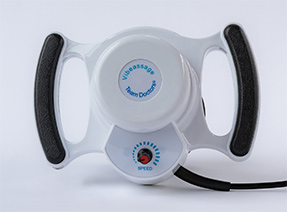
Dr. Stoxen uses tools like the Vibeassage Pro and Vibeassage Sport as personal massage and relaxation tools.
These are not medical treatments. They are not cures. They do not diagnose anything.
They are simply tools people can use at home to help:
- Relax tight muscles
- Improve comfort
- Improve awareness of tight areas
- Support recovery after daily stress or activity
Used properly, they are part of a self-care and body-maintenance routine, like stretching, walking, breathing, or gentle movement.
They do not “fix” bones. They do not “treat” diseases.
They help people care for their soft tissues and comfort while they work on posture, movement, and body mechanics.
The Big Idea You Should Remember
If you are told you have:
- a cervical rib
- an extra cervical rib
- an accessory cervical rib
- or signs of cervical rib syndrome
You should always ask:
“Why was I fine for decades before this?”
That question alone protects many people from rushing into unnecessary procedures.
How Your Neck and Shoulders Are Suspended Like a Living Spring System
Most people think their head sits on their shoulders like a bowling ball sitting on a stack of blocks.
That is not how the body is built.
Your head, neck, shoulders, ribs, and chest are suspended in a system of muscles, connective tissue, and flexible joints that work more like hanging springs than like stacked bricks.
When this suspension system works well, the head feels light. The shoulders move easily. The arms swing freely. The chest stays open. Breathing feels natural.
When this system loses its spring, everything starts to sink, tighten, and compress.
That is when people start to notice things like neck pain, shoulder pain, shoulder blade pain, arm pain, clavicle pain, and tingling in collarbone.
Some people also notice hand numbness, arm numbness, numb hands, cold hands, or hand weakness.
These are not random. They are signs that the suspension system of the upper body is not holding space the way it should.
The Collarbone Is a Floating Bridge, Not a Fixed Beam
Your collarbone (clavicle) is not bolted in place like a steel bar.
It floats.
It moves up and down when you breathe. It moves when you raise your arm. It moves when you walk. It moves when your posture changes.
When posture collapses, the collarbone can become lower, tighter, or stuck. In some people it may look like a raised clavicle or a prominence clavicle on one side compared to the other.
That change in position can be felt as clavicle pain, shoulder pain, or tingling in collarbone.
Again, this is not about a “bad bone.” It is about how the spring system is loading and unloading.
What Really Changes the Space in Your Neck and Shoulder Area
Space in the neck and shoulder region is affected by:
- Head posture
- Rib cage position
- Shoulder position
- Breathing pattern
- Muscle tension
- Overall body alignment
When the spring system is healthy, these parts move in small, smooth, elastic ways all day long.
When the spring system stiffens, the whole area becomes more compressed and less adaptable.
That is when people start hearing words like:
- shoulder-arm syndrome
- 1st rib syndrome
- cervical rib and thoracic outlet syndrome
These labels describe patterns of tightness, position, and space, not just bones.
Why Tests Change When You Move Your Arms or Head
Doctors sometimes use physical tests like Adson’s test, Roos test, or the cervical rotation lateral flexion test.
Here is something very important to understand:
If symptoms change when you move your head or arms, that means position and tension matter.
Bones do not change shape when you lift your arms.
But space, tension, and compression do.
These tests are really showing how posture and movement affect the spring system and the spaces in the neck and shoulder region.
What Imaging Really Shows (And What It Does Not)
Some people get imaging like:
- cervical rib X ray
- X-ray cervical rib
- cervical rib MRI
- MRI cervical rib
These images can show cervical rib anatomy or an extra rib or extra cervical rib or accessory cervical rib.
But imaging cannot show:
- Muscle tension patterns
- How stiff or elastic your tissues are
- How you breathe
- How you hold your posture
- How your body loads and unloads like a spring
So while imaging may help with cervical rib diagnosis, it does not explain why symptoms started now instead of 20 years ago.
The Big Confusion About “Cervical Rib Syndrome”
Many people are told they have cervical rib syndrome because an image shows an extra rib and they also have pain.
But remember:
You were born with that rib.
If the rib were the real cause, you would have had cervical rib symptoms your entire life.
The much more logical explanation is that the spring system has changed.
Posture, breathing, muscle tension, stress, workload, injuries, or long-term habits can all slowly change how the suspension system works.
Eventually, the system reaches a point where it can’t keep space open as well as it used to.
That is when people start feeling neck pain, shoulder pain, arm pain, hand numbness, or cold hands.
Why Surgery Is Sometimes Suggested
Once a structural difference is seen on imaging, conversations often move toward:
- cervical rib treatment
- cervical rib surgery
- cervical rib removal
- cervical rib resection
- cervical rib surgery recovery time
- and cervical rib complications
But removing a bone does not teach the body how to:
- Breathe better
- Stand better
- Move better
- Restore springiness to tissues
- Rebuild elastic suspension
Again, this is not a statement about what any person “should” or “should not” do. It is simply explaining the mechanical logic of the Human Spring model.
The Spring Model Looks at Function First, Not Fear
The Human Spring approach asks different questions:
- Is the rib cage moving like a spring when you breathe?
- Are the shoulders hanging freely or being held up by tight muscles?
- Is the neck floating or being pulled downward by tension?
- Is the body tall and elastic or collapsed and compressed?
When these systems improve, space often improves naturally without anything being cut or removed.
Where Self-Care Tools Fit In
Dr. Stoxen uses tools like the Vibeassage Pro and Vibeassage Sport as personal wellness and comfort tools.
They are used to:
- Relax tight areas
- Improve comfort
- Improve body awareness
- Support daily recovery from stress and activity
They are not medical treatments. They do not cure anything. They do not replace medical care.
They are part of normal body maintenance, like stretching, walking, breathing, or gentle movement.
Why Tension and Stiffness Make the Body Feel “Crowded” on the Inside
Many people describe their problem by saying things like:
“It feels tight.”
“It feels compressed.”
“It feels like something is being pinched.”
“It feels crowded in my neck or shoulder.”
Those feelings are very real.
But in the Human Spring model, they usually do not start with bones.
They start with tension, stiffness, and loss of elastic movement in the soft tissues.
The Body Protects Itself by Tightening
When the body feels stressed, tired, overworked, or irritated, it often responds by tightening muscles to protect itself.
This is a normal reflex.
But when that tightening stays for weeks, months, or years, the tissues stop acting like springs and start acting like tight ropes.
Tight ropes do not stretch. They do not absorb shock. They do not keep space open.
They pull things closer together.
That is when people begin to notice neck pain, shoulder pain, shoulder blade pain, arm pain, or clavicle pain.
Some also notice hand numbness, arm numbness, numb hands, cold hands, or hand weakness.
Again, these are not just labels or symptoms. They are signals that the body is losing its springiness.
Why It Can Feel Like a “Bone Problem” Even When It Isn’t
If an image shows a cervical rib, an extra rib, an extra cervical rib, or an accessory cervical rib, it is very easy to blame that structure.
People may then hear words like:
- cervical rib pain
- cervical rib symptoms
- cervical rib syndrome
But pain does not come from bones just sitting there.
Pain usually comes from tension, irritation, fatigue, and pressure in soft tissues.
The bone did not suddenly change.
The environment around it changed.
Why “Crowding” Is a Better Word Than “Pinching”
In the Human Spring model, the problem is often not that something is being sharply pinched.
It is that the whole area has become more crowded, tighter, and less elastic.
Imagine a spring mattress that has lost its bounce. Everything sinks. Everything gets closer together. Everything feels heavier and more compressed.
That is how the neck and shoulder area can start to feel when posture collapses and tissues stiffen.
This can show up as:
- shoulder-arm syndrome
- 1st rib syndrome
- cervical rib and thoracic outlet syndrome
These names describe patterns of space loss and tension, not a single broken part.
Why Tests and Movements Change How You Feel
Tests like Adson’s test, Roos test, and the cervical rotation lateral flexion test often change symptoms because:
They change tension and position.
If changing position changes your symptoms, that means mechanics and tissue behavior are involved.
It does not mean a bone suddenly became good or bad.
What “Cervical Rib Treatment” Often Really Means
When people talk about cervical rib treatment, they may be thinking about:
- cervical rib surgery
- cervical rib removal
- cervical rib resection
- and concerns about cervical rib surgery recovery time or cervical rib complications
But in the Human Spring model, the first focus is not on removing parts.
It is on restoring movement, softness, and elasticity to the tissues that are pulling everything down and inward.
Where Movement and Gentle Exercise Fit In
People sometimes search for cervical rib exercises.
In the spring-based way of thinking, the goal of movement is not to “fix a rib.”
The goal is to:
- Improve posture
- Improve breathing motion
- Improve shoulder and rib cage movement
- Reduce long-held tension
- Restore gentle elastic motion
When the body moves better, space often improves naturally.
Why Imaging Does Not Tell the Whole Story
Images like:
- cervical rib X ray
- X-ray cervical rib
- cervical rib MRI
- MRI cervical rib
can show cervical rib anatomy and help with cervical rib diagnosis.
But they cannot show:
- How tight your muscles are
- How stiff your tissues are
- How you breathe
- How you hold your posture
- How much spring your body has lost
So they do not explain why you feel crowded inside.
Where Self-Care Tools Can Help With Comfort and Awareness
Dr. Stoxen uses tools like the Vibeassage Pro and Vibeassage Sport as personal comfort and muscle relaxation tools.
They are not medical treatments. They do not cure or diagnose anything.
They are used to:
- Help relax tight areas
- Improve comfort
- Increase awareness of tense regions
- Support daily body maintenance and recovery
Used gently and wisely, they are part of normal self-care, like stretching or walking.
Making Smart Decisions, Protecting Yourself, and Thinking Long-Term
By now, you can see that the Human Spring way of thinking is very different from the idea that the body is a machine made of stiff parts.
In this model, your body is a living spring system.
When that system works well, it holds you up, keeps space open, and lets you move with ease. When it does not, the body slowly becomes tighter, heavier, and more compressed.
That is when people start noticing neck pain, shoulder pain, shoulder blade pain, arm pain, clavicle pain, tingling in collarbone, hand numbness, arm numbness, numb hands, cold hands, and hand weakness.
These are not just random symptoms. They are signals that the spring system is under strain.
Why Labels Can Be Misleading
When these problems happen, people are often given labels like:
- shoulder-arm syndrome
- 1st rib syndrome
- cervical rib syndrome
- or cervical rib and thoracic outlet syndrome
Sometimes imaging like a cervical rib X ray, X-ray cervical rib, cervical rib MRI, or MRI cervical rib shows a cervical rib, an extra rib, an extra cervical rib, or an accessory cervical rib as part of the person’s cervical rib anatomy.
That can sound scary.
But remember the most important fact:
You were born with that bone.
If it were the true cause of your problem, you would have had cervical rib symptoms your entire life.
The Most Important Safety Rule: Get a Second Opinion
If someone tells you that you need:
- cervical rib surgery
- cervical rib removal
- cervical rib resection
You should always get a second opinion.
Not because anyone is bad or wrong, but because surgery is permanent.
It also comes with questions about:
- cervical rib surgery recovery time
- and possible cervical rib complications
The Human Spring way of thinking asks a very simple question first:
“What changed in the way your body moves, holds itself, and carries load?”
Why Surgery Does Not Teach the Body to Move Better
Removing a bone does not teach:
- Better posture
- Better breathing
- Better shoulder movement
- Better springiness
- Better whole-body mechanics
Those things come from how you use your body every day.
Again, this is not telling anyone what to do. It is simply explaining mechanical logic.
What Conservative, Long-Term Thinking Looks Like
A long-term, conservative approach focuses on:
- Posture
- Breathing
- Gentle movement
- Reducing long-held tension
- Restoring elastic, spring-like motion
This is where people often explore things like cervical rib exercises or other gentle movement and posture work—not to “fix a rib,” but to help the whole system move better.
Where Tests Fit Into the Big Picture
Physical tests like Adson’s test, Roos test, and the cervical rotation lateral flexion test can show that:
Position and tension change how you feel.
That supports the idea that mechanics matter.
It does not prove that a bone is the main problem.
What “Cervical Rib Treatment” Really Means in This Model
In the Human Spring model, cervical rib treatment does not start with cutting or removing parts.
It starts with:
- Understanding your body
- Improving how it holds itself
- Improving how it moves
- Improving how it breathes
- Improving how it handles daily load and stress
Where Self-Care Tools Fit In
Dr. Stoxen uses tools like the Vibeassage Pro and Vibeassage Sport as personal wellness and comfort tools.
They are not medical treatments. They do not cure or diagnose anything.
They are simply tools people can use at home to:
- Relax tight muscles
- Improve comfort
- Improve body awareness
- Support daily recovery from stress and activity
They fit into a self-care routine, like stretching, walking, or gentle movement.
How to Think Clearly and Calmly About Your Body
If you have been told you have:
- a cervical rib
- an extra cervical rib
- an accessory cervical rib
- or signs of cervical rib syndrome
The calm, smart questions are:
- Why was I fine for so many years?
- What changed in my posture, movement, or stress?
- How can I help my body move and carry itself better?
The Core Message of the Human Spring Approach
Your body is not a broken machine.
It is a living, adaptable, spring-based system.
Most long-term problems do not come from one bad part.
They come from years of gradual loss of movement, elasticity, and space.
The Final Thought
Before you decide on anything permanent, make sure you fully understand:
- Your options
- The mechanical logic of your body
- The difference between structure and function
And always remember:
Just because something shows up on an image does not mean it is the cause of your pain.
Closing Summary in Plain Language
You were born with your bones.
You were not born with bad posture, bad movement habits, or long-term tension.
Those develop over time.
And that means how you use your body over time matters.
Team Doctors Resources
✓ Check out the Team Doctors Recovery Tools
The Vibeassage Sport and the Vibeassage Pro featuring the TDX3 soft-as-the-hand Biomimetic Applicator Pad
https://www.teamdoctors.com/
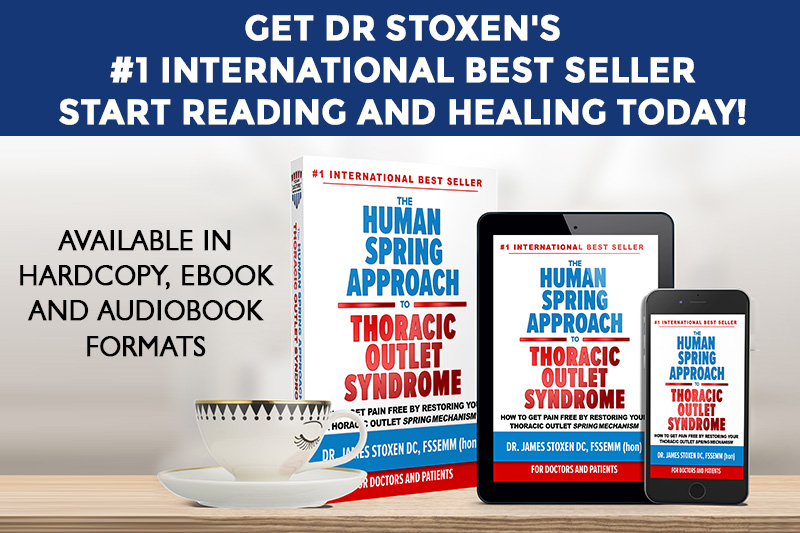
✓ Get Dr. Stoxen’s #1 International Bestselling Books
Learn how to understand, examine, and reverse your TOS—without surgery.
https://drstoxen.com/1-international-best-selling-author/
✓ Check out Team Doctors Online Courses
Step-by-step video lessons, demonstrations, and self-treatment strategies.
https://teamdoctorsacademy.com/
✓ Schedule a Free Phone Consultation With Dr. Stoxen
Speak directly with him so he can review your case and guide you on your next steps.
https://drstoxen.com/appointment/
#ThoracicOutletSyndrome #NervousSystem #Neuroinflammation #ChronicInflammation #StressAndPain #Fatigue #BrainFog #Burnout #WholeBodyHealing #HealingTheSystem #PainRecovery #HealthOptimization #MovementTherapy #Rehab #PainScience

Dr James Stoxen DC., FSSEMM (hon) He is the president of Team Doctors®, Treatment and Training Center Chicago, one of the most recognized treatment centers in the world.
Dr Stoxen is a #1 International Bestselling Author of the book, The Human Spring Approach to Thoracic Outlet Syndrome. He has lectured at more than 20 medical conferences on his Human Spring Approach to Thoracic Outlet Syndrome and asked to publish his research on this approach to treating thoracic outlet syndrome in over 30 peer review medical journals.
He has been asked to submit his other research on the human spring approach to treatment, training and prevention in over 150 peer review medical journals. He serves as the Editor-in-Chief, Journal of Orthopedic Science and Research, Executive Editor or the Journal of Trauma and Acute Care, Chief Editor, Advances in Orthopedics and Sports Medicine Journal and editorial board for over 35 peer review medical journals.
He is a much sought-after speaker. He has given over 1000 live presentations and lectured at over 70 medical conferences to over 50,000 doctors in more than 20 countries. He has been invited to speak at over 300 medical conferences which includes invitations as the keynote speaker at over 50 medical conferences.
After his groundbreaking lecture on the Integrated Spring-Mass Model at the World Congress of Sports and Exercise Medicine he was presented with an Honorary Fellowship Award by a member of the royal family, the Sultan of Pahang, for his distinguished research and contributions to the advancement of Sports and Exercise Medicine on an International level. He was inducted into the National Fitness Hall of Fame in 2008 and the Personal Trainers Hall of Fame in 2012.
Dr Stoxen has a big reputation in the entertainment industry working as a doctor for over 150 tours of elite entertainers, caring for over 1000 top celebrity entertainers and their handlers. Anthony Field or the popular children’s entertainment group, The Wiggles, wrote a book, How I Got My Wiggle Back detailing his struggles with chronic pain and clinical depression he struggled with for years. Dr Stoxen is proud to be able to assist him.
Full Bio) Dr Stoxen can be reached directly at teamdoctors@aol.com