Part 1 – The Difference Between Structure and Function
When people are in long-lasting neck, shoulder, or arm discomfort, they are often told something like this:
“There is something wrong with a structure. If we fix or remove the structure, the problem should go away.”
That idea sounds simple. It also sounds logical.
But it misses something very important:
Structure and function are not the same thing.
That is why so many people start looking for a doctor who helps avoid cervical surgery, a cervical surgery second opinion doctor, or a neck pain second opinion specialist. They are not being difficult. They are sensing that their problem feels more like a system problem than a single broken part.
The Body Is Built to Hang, Not Stack
Your body is not built like a pile of bricks.
Your head is hung by muscles.
Your shoulders are hung by muscles.
Your rib cage is positioned by muscles.
This is why some people look for a functional spine specialist, a movement-based neck pain specialist, or a manual therapy doctor for neck pain. They are trying to find someone who looks at how the system is being held up, not just what it looks like on a scan.
Dr. James Stoxen often explains this using a very simple engineering idea:
If something is suspended, its position depends more on tension and balance than on the parts themselves.
Why Pain Moves and Changes
One of the biggest clues that these problems are not just “broken parts” is this:
Symptoms often change.
They change with:
- Posture
- Fatigue
- Stress
- Workload
- Time of day
This is why people search for a doctor for unexplained neck and arm pain, a doctor for chronic neck pain without surgery, or a doctor who treats neck pain without surgery.
They can feel that something is tightening and loosening, not just damaged.
That is also why people look for a neck nerve pain specialist non-surgical or a doctor who treats pinched nerve without surgery. They are trying to understand pressure and space, not just parts.
The 10 to 12 Muscle Reality
In many people with long-term shoulder, neck, and arm symptoms, there is not just one muscle involved.
There can be 10 to 12 muscles that are:
- Overworked
- Tight
- Fatigued
- Irritated
- Guarding
These muscles do not just hurt.
They pull the system out of position.
Some pull the shoulder downward.
Some pull the rib cage upward.
Some pull forward.
Some pull backward.
The result is not just pain.
The result is a distorted suspension system.
This is why some people look for a doctor who treats cervical spine compression naturally or a non-invasive neck pain treatment doctor. They are sensing that their issue is not just a single structure, but a whole region under uneven tension.
Why “Making More Space” Is Not So Simple
Many surgical ideas are based on this thought:
“If space is tight, remove something to make more room.”
But in a suspension system, space is mostly created by position and balance, not by cutting parts away.
If a tent is sagging because the ropes are too tight on one side and too loose on the other, cutting out part of the tent does not fix the rope tension.
This is the same mechanical problem.
That is why people look for an alternative to cervical spine surgery doctor, a spine specialist focused on non-surgical care, or a neck pain specialist conservative treatment approach.
They are asking:
“Can the system be balanced instead of reduced?”
Why Disc Language Can Be Misleading
Some people are told they have disc problems and start searching for a cervical disc herniation non-surgical doctor or a doctor who treats disc problems without surgery.
Sometimes discs do change.
But here is the mechanical question:
Why do symptoms often get worse with fatigue and better with rest?
That tells us that load and tension are playing a big role.
That is why some people also seek a sports medicine doctor for neck pain or a physical medicine and rehabilitation doctor neck pain specialist. They want someone who understands how the body behaves under load.
The Rib Cage and Shoulder: A Crowded Neighborhood
Between the neck and the chest is a very busy area.
Important nerves pass through.
Important blood vessels pass through.
But this area is not a hard tunnel. It is a space formed by bones that are held in place by muscles.
When the muscle system becomes imbalanced:
- The shoulder can be dragged downward
- The rib cage can be pulled upward
- The space between them becomes smaller
This is why people look for a doctor who treats cervical radiculopathy without surgery or a specialist for neck and arm pain without surgery.
They are not just dealing with “a bad nerve.”
They are dealing with a shrinking mechanical space.
Why Removing One Piece Can’t Fix Twelve Pulling Forces
Here is the core engineering problem:
If twelve forces are pulling a system out of shape, removing one piece does not stop the other eleven forces.
It may change the shape of the space.
But it does not change the direction of the pulls.
This is why so many people start searching for things like avoid thoracic outlet surgery, thoracic outlet syndrome without surgery, or non-surgical treatment for TOS.
They are really asking:
“Is there a way to restore balance instead of removing parts?”
The Question Patients Are Really Trying to Answer
When people search for a best doctor to avoid neck surgery or a non-surgical spine doctor near me, they are not being anti-medicine.
They are being systems-aware.
They are asking:
“Has anyone looked at how this whole region is being held together?”
Where the Human Spring Approach Fits
The Human Spring Approach is not a treatment.
It is not a promise.
It is a way of understanding how the body carries load and loses balance.
It looks at:
- Tension
- Compression
- Position
- Movement
- Fatigue
- Adaptation
It asks:
“Is this system being suspended well, or is it slowly collapsing under uneven load?”
You Can’t Fix a Suspension System by Removing Parts
The “Make More Space” Idea and Why It Often Fails
When people are told that nerves or blood vessels are being “compressed,” the solution sounds obvious:
“Let’s make more space.”
In everyday life, that logic works.
If a closet is too full, you remove some boxes.
If a drawer is jammed, you take something out.
So when people hear about thoracic outlet syndrome surgery, it makes sense at first. The idea is simple: if an area is crowded, remove something to open it up.
That is why many people start asking:
Do I need thoracic outlet surgery?
Is thoracic outlet surgery dangerous?
What are the thoracic outlet surgery risks?
They are trying to understand whether this “make more space” idea really fits their situation.
What “Space” Really Means in the Body
Here is the part that often gets missed:
The space in the neck and shoulder area is not a fixed tunnel.
It is a moving, living space that changes with:
- Posture
- Breathing
- Arm position
- Muscle tone
- Fatigue
This is why people look for a doctor who treats cervical spine compression naturally or a non-invasive neck pain treatment doctor. They are sensing that their compression is dynamic, not permanent.
In a suspension system, space is controlled more by position and tension than by the size of the parts.
The First Rib and Scalene Idea
Some surgical approaches focus on removing:
- A rib
- And/or some muscles
The goal is to create a bigger opening.
What are the first rib resection risks?
What are the scalenectomy surgery risks?
The risks are in my book in the surgery section and the book is still only $2.99 on Kindle or less than a cup of coffee Just get it and learn! www.thoracicoutletsyndrome.com
Again, this is not about fear. It is about understanding the logic.
Here is the mechanical question:
If the rib cage and shoulder are being pulled toward each other by many tight muscles, does removing one rib change the direction of those pulls?
Or does it only change the shape of the hole they are still being pulled into?
Why Shape and Force Are Not the Same
Imagine a tent where the ropes are pulling unevenly.
If you cut out part of the tent fabric, you may create a bigger opening.
But the ropes are still pulling in the same wrong directions.
In the body, those “ropes” are muscles.
If 10 to 12 muscles are tight, tired, and overworking, they are still pulling the system out of balance even if one piece of structure is removed.
What are the thoracic outlet surgery complications?
What happens to me if there is a failed thoracic outlet surgery?
Why didn’t surgery didn’t fix my arm pain?
Again, the risks are in my book in the surgery section and the book is still only $2.99 on Kindle or less than a cup of coffee Just get it and learn!
www.thoracicoutletsyndrome.com
Not because surgery is always wrong — but because force patterns were never corrected.
Why People Are So Careful About This Decision
When people research:
Will you still have pain after thoracic outlet surgery?
Will you still have numbness after TOS surgery?
Will you still have nerve damage after TOS surgery?
blood clot risk after TOS surgery
What is the thoracic outlet surgery success rate?
What is thoracic outlet surgery recovery, like?
What kind of life after thoracic outlet surgery will there be?
How long is recovery after TOS surgery
Again, these answers are in my book in the surgery section and the book is still only $2.99 on Kindle or less than a cup of coffee
www.thoracicoutletsyndrome.com
They are not just asking about pain.
They are asking:
“Will my system actually work better afterward?”
They also see discussions about:
It is risk-aware and system-aware thinking.
Why Some People Improve and Some Don’t
Some people do feel improvement after procedures.
That can happen when:
- A specific structure really was the dominant problem
- Or when the body adapts well afterward
- Or when the person also changes how they move and use their body
This does not mean anyone did anything wrong.
It means the underlying mechanical pattern may still be there.
The Missing Step: Restoring the Suspension
Here is the step that often gets skipped:
After changing structure, the suspension system still has to be rebalanced.
If muscle tone, posture, breathing patterns, and daily loading habits do not change, the system will keep drifting toward the same stressed positions.
That is why many people eventually compare:
- surgery vs conservative treatment TOS
- Or ask about the thoracic outlet surgery decision
- Or wonder is surgery my only option
They are trying to understand whether restoring function first might make more sense.
What Conservative Really Tries to Do
Conservative care is not passive.
It is mechanical problem-solving.
It tries to:
- Reduce overload
- Improve movement options
- Rebalance tension
- Support better posture and breathing
- Give tissues a chance to calm down
That is why people search for:
What is the best conservative approach to TOS?
What is the best conservative treatment for thoracic outlet syndrome?
What is the best conservative care for TOS?
What is the best physical rehabilitation for TOS?
What is the best non-surgical recovery TOS?
They are trying to change the forces, not just the shapes.
The Real Question
The real question is not:
“How much can we remove?”
The real question is:
“How can we help this system carry load more evenly?”
That is the core of the Human Spring way of thinking.
You Can’t Fix a Suspension System by Removing Parts
Part 3 – Structure Thinking vs. System Thinking
Most confusion around neck, shoulder, and arm problems does not come from bad intentions.
It comes from two different ways of thinking about the body.
One way looks at structure.
The other way looks at function and systems.
Both matter.
But they do not answer the same questions.
The Structure Way of Thinking
Structure-based thinking asks:
- What part looks abnormal?
- What part is out of place?
- What part can be changed or removed?
This way of thinking is very good for:
- Broken bones
- Tumors
- Infections
- Clear mechanical damage
It is also why people are told to see a neck pain specialist before surgery or get a cervical surgery second opinion doctor or a neck pain second opinion specialist.
These are smart steps when permanent changes are being considered.
The System Way of Thinking
System-based thinking asks different questions:
- How is this area being loaded?
- How is it being suspended?
- How is tension being shared?
- How does posture, breathing, and fatigue change things?
This is why some people look for a functional spine specialist, a movement-based neck pain specialist, or a manual therapy doctor for neck pain.
They are trying to understand how the system behaves, not just what it looks like.
Why Patients Get Stuck in the Middle
Many patients bounce back and forth between these two worlds.
They are told:
“Your scan looks like this.”
But their body feels different from day to day.
That is why people search for a doctor for unexplained neck and arm pain, a doctor for nerve pain in neck and arm, or a doctor for chronic neck pain without surgery.
They know something is wrong, but it does not behave like a simple broken part.
When the Label Becomes the Problem
Once someone is given a label, everything starts to revolve around that label.
Disc.
Nerve.
Outlet.
Compression.
Then they start searching for:
- doctor who treats cervical radiculopathy without surgery
- neck nerve pain specialist non-surgical
- cervical disc herniation non-surgical doctor
- doctor who treats disc problems without surgery
But here is the hidden issue:
Labels describe where symptoms show up, not why the system is under stress.
The Same System, Many Names
The neck, shoulder, and chest area is one mechanical region.
It does not care what name we give the symptoms.
If the shoulder is being pulled down, the rib cage is being pulled up, and the muscles in between are overworking, the system is under strain.
That is why people also look for:
- specialist for neck and arm pain without surgery
- doctor who treats pinched nerve without surgery
- doctor who treats cervical spine compression naturally
They are chasing mechanics, not just labels.
Why This Shows Up So Strongly in TOS Conversations
The thoracic outlet area is a perfect example of a system problem being treated like a part problem.
That is why people search for:
- thoracic outlet syndrome without surgery
- natural treatment for thoracic outlet syndrome
- non-surgical treatment for TOS
- best non-surgical TOS treatment
They can feel that their problem changes with posture, arm position, and fatigue.
That tells us it is dynamic.
The Fear and the Stories
Once surgery enters the conversation, people naturally read about:
- thoracic outlet surgery risks
- thoracic outlet surgery complications
- failed thoracic outlet surgery
- long-term results of TOS surgery
They also read about:
- symptoms came back after TOS surgery
- recurrence after thoracic outlet surgery
This does not make them anti-surgery.
It makes them careful.
The Deeper Question People Are Asking
When someone types:
- is surgery my only option
- should I avoid TOS surgery
- surgery vs conservative treatment TOS
- thoracic outlet surgery decision
They are really asking:
“Has anyone looked at how my whole system is being held together?”
The Human Spring View
The Human Spring Approach does not start with labels.
It starts with:
- How is load moving through the system?
- Where is tension accumulating?
- Where has movement become limited?
- Where is the suspension losing its balance?
That is why people seek a spine specialist focused on non-surgical care, an integrative spine care doctor, or a sports medicine doctor for neck pain.
They want someone who understands living mechanics, not just images.
Why Many People Drift Toward Natural Recovery Thinking
Over time, many people begin to explore:
- natural recovery from thoracic outlet syndrome
- natural ways to treat TOS
- holistic treatment for thoracic outlet syndrome
- functional treatment for TOS
Not because they reject medicine.
But because they want to restore how their body works, not just change what it looks like.
The Core Conflict
Structure thinking asks:
“What should we remove or change?”
System thinking asks:
“What should we restore, rebalance, and support?”
Both questions have a place.
But they are not the same question.
And confusing them is why so many people feel stuck.
You Can’t Fix a Suspension System by Removing Parts
Restoring Forces Before Removing Structure
By now, a clear pattern should be easy to see.
When people develop long-lasting neck, shoulder, and arm problems, they are rarely dealing with one broken part.
They are usually dealing with a whole region that has slowly lost its balance.
Not overnight.
Not from one single event.
But from years of uneven load, tension, and fatigue.
The 12-Muscle Distortion Pattern
In many people, there are not one or two muscles involved.
There can be 10 to 12 muscles around the neck, shoulder, and chest that are:
- Overworking
- Tight
- Fatigued
- Guarding
Some of these muscles pull down on the shoulder.
Some pull up on the rib cage.
Some pull forward.
Some pull backward.
The result is not just discomfort.
The result is a distorted suspension system.
The shoulder can slowly sink downward.
The rib cage can slowly be pulled upward.
The space between them becomes smaller and more crowded.
This is why people go looking for a doctor who treats cervical spine compression naturally, a non-invasive neck pain treatment doctor, or a neck pain specialist conservative treatment approach. They can feel that something is being squeezed by the system itself.
Why Removing One Piece Doesn’t Change the Pulling
Now think about this mechanically:
If twelve forces are pulling a system out of shape, what happens if you remove one piece of structure?
You may change the shape of the space.
But you do not change the direction of the forces.
The muscles are still pulling.
That is why so many people later search for:
- surgery didn’t fix arm pain
- symptoms came back after TOS surgery
- recurrence after thoracic outlet surgery
- revision TOS surgery
Again, this is not about blaming surgery.
It is about understanding physics.
The Rib Cage Is the Outlet
One of the biggest misunderstandings is thinking that the “outlet” is a small, fixed hole.
In reality, the entire rib cage and shoulder relationship forms that space.
If the rib cage is being pulled upward and the shoulder is being pulled downward, the whole region becomes crowded.
That is why people search for:
- thoracic outlet syndrome without surgery
- natural treatment for thoracic outlet syndrome
- non-surgical treatment for TOS
- avoid thoracic outlet surgery
They are trying to change the position and behavior of the system, not just one part of it.
Why Surgery Changes Shape but Not Strategy
Procedures like thoracic outlet syndrome surgery, including first rib resection and scalenectomy, are based on a space-making idea.
And sometimes they do help certain people.
But they do not automatically:
- Rebalance muscle tone
- Restore posture
- Fix breathing patterns
- Change movement habits
- Redistribute load
That is why people research:
- thoracic outlet surgery success rate
- thoracic outlet surgery recovery
- life after thoracic outlet surgery
- long-term results of TOS surgery
They are trying to understand whether function will really be restored, not just structure changed.
Why Conservative Thinking Is Not “Doing Nothing”
Conservative care is not passive.
It is system engineering.
It tries to:
- Reduce overload
- Improve movement options
- Rebalance tension
- Improve posture and breathing
- Give the system a chance to calm down
They are trying to restore the suspension, not cut pieces out of it.
Why This Also Applies to the Neck
They can feel that their problem is load, tension, and balance, not just one damaged structure.
The Real Order of Operations
From a mechanical point of view, the order should be:
- Restore movement
- Reduce overload
- Rebalance tension
- Improve daily mechanics
- Then, only if needed, consider structural change
That is why people seek a spine specialist focused on non-surgical care, a functional spine specialist, or an integrative spine care doctor.
They want someone who understands systems first, parts second.
The Human Spring View in One Sentence
You do not fix a suspension system by removing parts.
You fix it by restoring how it carries load.
That is the core of the Human Spring way of thinking.
It is not a treatment.
It is not a promise.
It is not anti-surgery.
It is a mechanical understanding of how the body works.
A Calm, Honest Conclusion
Some people will still need surgery.
Some people will choose surgery.
Some situations truly require it.
But many people deserve the chance to ask:
“Has anyone tried to restore my system before changing my structure?”
That is a reasonable question.
That is a responsible question.
And that is the question that leads people toward conservative, system-restoration thinking and a more complete understanding of their own bodies.
Team Doctors Resources
✓ Check out the Team Doctors Recovery Tools
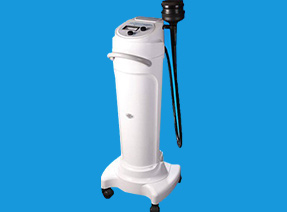
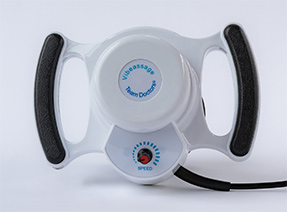
The Vibeassage Sport and the Vibeassage Pro featuring the TDX3 soft-as-the-hand Biomimetic Applicator Pad
https://www.teamdoctors.com/
✓ Get Dr. Stoxen’s #1 International Bestselling Books
Learn how to understand, examine, and reverse your TOS—without surgery.
https://drstoxen.com/1-international-best-selling-author/
✓ Check out Team Doctors Online Courses
Step-by-step video lessons, demonstrations, and self-treatment strategies.
https://teamdoctorsacademy.com/
✓ Schedule a Free Phone Consultation With Dr. Stoxen
Speak directly with him so he can review your case and guide you on your next steps.
https://drstoxen.com/appointment/
#ThoracicOutletSyndrome #TOS #ArmNumbness #ShoulderPain #NerveCompression #PostureMatters #UpperExtremity #ChronicPainEducation #Biomechanics #MovementHealth #NeckPain #HandTingling #ClinicalObservation #ConservativeCare #RehabEducation #SoftTissue #VascularSymptoms #NeurologicalSymptoms #PatientEducation #TeamDoctors

Dr James Stoxen DC., FSSEMM (hon) He is the president of Team Doctors®, Treatment and Training Center Chicago, one of the most recognized treatment centers in the world.
Dr Stoxen is a #1 International Bestselling Author of the book, The Human Spring Approach to Thoracic Outlet Syndrome. He has lectured at more than 20 medical conferences on his Human Spring Approach to Thoracic Outlet Syndrome and asked to publish his research on this approach to treating thoracic outlet syndrome in over 30 peer review medical journals.
He has been asked to submit his other research on the human spring approach to treatment, training and prevention in over 150 peer review medical journals. He serves as the Editor-in-Chief, Journal of Orthopedic Science and Research, Executive Editor or the Journal of Trauma and Acute Care, Chief Editor, Advances in Orthopedics and Sports Medicine Journal and editorial board for over 35 peer review medical journals.
He is a much sought-after speaker. He has given over 1000 live presentations and lectured at over 70 medical conferences to over 50,000 doctors in more than 20 countries. He has been invited to speak at over 300 medical conferences which includes invitations as the keynote speaker at over 50 medical conferences.
After his groundbreaking lecture on the Integrated Spring-Mass Model at the World Congress of Sports and Exercise Medicine he was presented with an Honorary Fellowship Award by a member of the royal family, the Sultan of Pahang, for his distinguished research and contributions to the advancement of Sports and Exercise Medicine on an International level. He was inducted into the National Fitness Hall of Fame in 2008 and the Personal Trainers Hall of Fame in 2012.
Dr Stoxen has a big reputation in the entertainment industry working as a doctor for over 150 tours of elite entertainers, caring for over 1000 top celebrity entertainers and their handlers. Anthony Field or the popular children’s entertainment group, The Wiggles, wrote a book, How I Got My Wiggle Back detailing his struggles with chronic pain and clinical depression he struggled with for years. Dr Stoxen is proud to be able to assist him.
Full Bio) Dr Stoxen can be reached directly at teamdoctors@aol.com