Greg’s Descent Into Pain: When Cervical Fusion Became the Only Answer
A Career Built on Endurance
Greg was an Emmy-, Tony-, and Grammy-nominated producer whose career demanded long hours, constant travel, and relentless mental focus. Creative excellence required physical stamina, and for years he pushed through discomfort without concern. Pain, when it appeared, had always been temporary. Until one day, it wasn’t.
The First Signs of Trouble
The symptoms began quietly with neck stiffness and upper back tightness after extended workdays. What once resolved overnight began lingering for days. Greg attributed it to stress, posture, and workload, assuming rest would restore balance.
Pain That Refused to Leave
Instead of improving, the discomfort deepened into persistent neck pain. Stiffness evolved into restriction, and movement became guarded and cautious. The sensation felt less like soreness and more like something locked inside his neck.
Radiating Symptoms and Growing Concern
Soon, pain spread into Greg’s shoulders and arms. Numbness, tingling, and weakness appeared intermittently, disrupting everyday tasks. These symptoms introduced fear, signaling that nerves might be involved.
The Conservative Care Loop
Greg pursued chiropractic care, acupuncture, massage therapy, and medication. Each approach offered short-lived relief but no lasting solution. The pattern was consistent: brief improvement followed by rapid regression.
Escalation Despite Treatment
Over time, Greg’s neck felt increasingly rigid and unstable. Simple movements triggered sharp nerve pain. Fatigue set in, not just physically, but emotionally, as answers remained elusive.
Imaging Without Clarity
MRI scans revealed disc degeneration and cervical disc changes consistent with common age-related findings. Specialists focused on structural abnormalities seen on imaging. Functional movement and muscle behavior were largely ignored.
The Surgical Recommendation
Eventually, multiple doctors recommended cervical fusion surgery. They described removing damaged discs and permanently fusing cervical vertebrae using rods, plates, and screws. The procedure was presented as the definitive solution.
Understanding What Fusion Meant
Greg learned that cervical fusion would permanently reduce neck motion. He was told this sacrifice was necessary to relieve nerve compression. However, explanations about long-term consequences were limited.
Questions Without Satisfying Answers
Greg asked about cervical fusion complications, recovery time, and long-term outcomes. He learned about risks including chronic pain, adjacent segment disease, and possible revision surgery. The uncertainty left him uneasy.
The Fear of Permanent Change
The idea of losing natural neck movement troubled Greg deeply. He worried about life after cervical fusion and whether his creative work would suffer. The permanence of the procedure felt overwhelming.
A Body Treated as Static
What bothered Greg most was how his body was described. His neck was treated as a broken structure rather than a living, adaptive system. No one explained why his pain fluctuated or why inflammation played such a major role.
Muscle Guarding and Unanswered Why
Greg noticed constant muscle tension and guarding around his neck and shoulders. These muscles never fully relaxed, even at rest. No provider explained why this protective response persisted.
Pressure to Proceed
Surgeons warned that delaying surgery could worsen nerve damage. Cervical fusion for herniated disc and spinal stenosis was framed as standard care. Surgery became less of a choice and more of an ultimatum.
Searching for Another Perspective
Despite scheduling surgery, Greg continued searching for a cervical surgery second opinion doctor. He wanted a doctor who treats neck pain without surgery. He needed someone who could explain the problem differently.
A Call From Chicago
During this period, a close friend from Chicago reached out. He spoke of a doctor known for helping patients avoid cervical surgery. The doctor had treated entertainers and athletes with severe chronic pain.
A Different Explanation Emerges
According to Greg’s friend, this doctor viewed the spine as a spring system, not a rigid lever. Pain developed when these springs became stiff and locked. Inflammation and muscle guarding were central to the problem.
Curiosity Replaces Hopelessness
For the first time in months, Greg felt hopeful rather than desperate. The explanation resonated with his lived experience of fluctuating pain and stiffness. It offered logic where none had existed.
A Narrow Window of Opportunity
Greg’s surgery date was approaching quickly. He had limited time and could spare only three days for evaluation and care. Still, he knew he needed this final perspective.
Making the Appointment
Greg scheduled an appointment with Dr. James Stoxen in Chicago. Skepticism remained, but so did curiosity. He decided that understanding his body fully was worth the risk.
Standing at the Crossroads
Greg arrived in Chicago uncertain but determined. One path led to permanent cervical fusion. The other promised understanding, movement, and the possibility of recovery without surgery.
The Examination No One Had Ever Performed: Discovering the Human Spring
An Unfamiliar First Impression
From the moment Greg arrived, the tone of the evaluation felt different. There was no rush, no immediate glance at imaging, and no assumptions about surgery. The focus was on understanding Greg’s body, not just his diagnosis.
A Review Beyond the Reports
Before any hands-on work began, Greg’s full medical history was reviewed in detail. Imaging, prior treatments, symptom progression, and failed interventions were all examined. Nothing was dismissed, but nothing was accepted at face value either.
Function Before Structure
Instead of focusing solely on discs and vertebrae, the evaluation began with function. Movement patterns, posture, and balance were assessed. The question was not “What looks damaged?” but “What is no longer working correctly?”
Reflexes Tell a Story
Neurological testing followed, including reflex assessments that revealed subtle imbalances. These findings suggested nerve irritation without clear evidence of irreversible damage. It challenged the assumption that structural fusion was necessary.
Muscle Testing With Precision
Each muscle in Greg’s neck, shoulders, arms, and upper back was tested individually. Strength, endurance, and fatigue patterns were carefully observed. Weakness appeared inconsistently, pointing toward inhibition rather than destruction.
Inflammation Mapping Begins
The examination progressed inch by inch through Greg’s upper body muscles. Every section was palpated and rated on a pain scale from one to ten. This process took hours and revealed extensive inflammation patterns no scan had shown.
The Meaning of Guarding Muscles
Many muscles were found in a constant state of contraction. These protective spasms restricted movement and compressed sensitive structures. Greg learned that muscle guarding was not random—it was a response to chronic inflammation and overload.
A System Locked, Not Broken
Rather than identifying a single damaged structure, the evaluation revealed a system-wide issue. Greg’s neck behaved like a locked spring rather than a failed joint. This distinction changed everything.
The Human Spring Explained
The spine was described as an elastic system designed to absorb and release force. When healthy, it distributes load efficiently through motion and recoil. When inflamed and stiff, it loses this spring behavior and transfers stress to nerves and discs.
Why Prior Treatments Failed
Greg’s previous treatments targeted symptoms but not the system. Adjustments moved joints temporarily without addressing inflammation. Massage loosened tissue without restoring elastic recoil.
Inflammation as the Central Driver
The underlying issue was not structural collapse but unresolved inflammation. This inflammation kept muscles locked and prevented normal motion. Without restoring movement, pain could not resolve.
Why Imaging Was Misleading
Greg learned that imaging often shows common age-related changes. These findings do not always correlate with pain severity. Treating images instead of function can lead to unnecessary surgery.
Reframing the Cervical Fusion Recommendation
Cervical fusion was described as a last-resort stabilization strategy. It does not restore function, but restricts motion to reduce irritation. In Greg’s case, motion was not the enemy—dysfunction was.
Risk Versus Root Cause
Fusion would have permanently removed movement without addressing why the system failed. Adjacent areas would be forced to compensate. Over time, this could create new problems.
A Non-Surgical Path Emerges
Based on the findings, a non-surgical approach was proposed. The goal was to reduce inflammation, release guarding muscles, and restore spring behavior. Surgery was no longer the only option.
Introducing a Specialized Tool
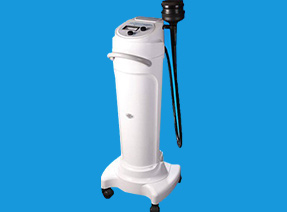
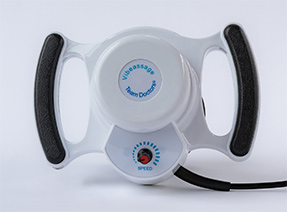
Greg was introduced to a device designed to combine vibration and massage. Its purpose was to create fluid outflow from inflamed tissue. This process supported healing rather than forcing change.
Why Vibration Matters
Low-amplitude vibration was explained as a way to stimulate circulation. It helped move inflammatory byproducts out of tissue. This created an environment where muscles could finally relax.
Deep Tissue With a Purpose
Unlike traditional massage, deep tissue work was used strategically. Sessions were long and methodical, focused on specific inflammation patterns. The goal was not intensity, but precision.
Preventing Post-Treatment Soreness
Each deep tissue session ended with vibration therapy. This prevented inflammation from reaccumulating. For the first time, Greg experienced deep work without lingering soreness.
Tracking Change in Real Time
Pain levels were reassessed repeatedly throughout treatment. Areas that once rated high on the pain scale softened noticeably. Mobility improved incrementally with each session.
The Body Responds
As inflammation decreased, muscles released their grip. Movement became smoother and less guarded. Greg felt changes not just physically, but neurologically.
A Plan Built on Logic
The treatment plan was based on observed patterns, not guesswork. Progress was measured continuously. Decisions were adjusted based on how Greg’s body responded.
Hope Replaces Fear
By the end of the second day, Greg noticed a shift. Pain that once felt permanent began to loosen its hold. The idea of surgery no longer felt inevitable.
The Release, the Adjustment, and the Decision to Cancel Surgery
The Final Day Begins Differently
On the third day, Greg noticed something unmistakable before treatment even began. His neck felt lighter, less guarded, and more responsive to movement. The constant sense of compression had begun to fade.
A Body No Longer Locked
What once felt rigid now moved with subtle elasticity. The stiffness that had defined Greg’s daily life was giving way to fluid motion. This shift signaled that the system was unlocking rather than being forced.
The Human Spring Model in Action
Dr. Stoxen explained that Greg’s improvement was not accidental. His body was beginning to function again as a spring system, capable of absorbing and releasing energy. Pain had diminished because spring mechanics were being restored.
Spring-Based Biomechanics Explained Simply
The spine was described as a series of compression springs designed to manage load dynamically. When inflammation increases spring stiffness, motion becomes restricted. Restoring compliance allows forces to dissipate safely.
From Lever Thinking to Spring Understanding
Greg learned that many treatments rely on a lever model, forcing movement at joints. The Human Spring Approach recognizes the body as an integrated spring-mass model. Motion emerges naturally when spring tension is normalized.
Elastic Energy Returns
As inflammation resolved, Greg’s tissues regained elastic energy storage. Movement no longer felt effortful or guarded. Energy recycling in human motion began working again.
Shock Absorption Restored
The neck resumed its role in shock absorption biomechanics. Instead of transmitting stress directly to nerves and discs, forces were dissipated across multiple tissues. Pain decreased as load was redistributed.
Biological Springs Reawaken
Muscles, fascia, and joints began behaving as biological springs. The fascial spring network softened and reconnected. This restored kinetic chain spring transfer throughout the upper body.
Joint Decompression Without Force
As muscles released, joint decompression occurred naturally. There was no cracking, forcing, or manipulation. Space returned to joints because tension was removed, not imposed.
Tunnel Mechanics Normalize
Dr. Stoxen explained tunnel mechanics for nerves and blood vessels. When spring suspension is restored, tunnels remain open dynamically. Compression resolves because anatomy regains lift rather than collapsing inward.
Suspension-Based Anatomy Reclaimed
Greg’s neck and shoulders began functioning as suspended structures again. The roof of the neurovascular tunnels lifted as muscles released. This relieved nerve irritation without cutting or fusing.
Torsional and Compression Springs Working Together
Joints regained torsional spring mechanics that allow rotation without strain. Compression springs in the spine began absorbing vertical load properly. This coordination reduced stress at vulnerable segments.
Spring Stiffness Versus Compliance
Pain had been driven by excessive stiffness, not weakness. Treatment shifted the system toward compliance. Balanced tension allowed motion without instability.
The Stretch-Shortening Cycle Returns
Greg’s neck began using stretch-shortening cycle biomechanics again. Muscles could lengthen and recoil smoothly. This efficiency reduced fatigue and strain.
Vibration as Spring Restoration
Vibration therapy played a critical role in restoring human spring function. It improved neuromechanical spring control by calming the nervous system. This allowed muscles to stop guarding reflexively.
The Adjustment That Wasn’t Forced
At the end of the third day, a light adjustment was performed. Greg felt his vertebrae release effortlessly. There was no pain, no resistance, only movement.
An Emotional Turning Point
The release triggered more than physical relief. Greg felt overwhelmed by the realization that surgery had not been necessary. Relief, gratitude, and disbelief blended together.
Reevaluating the Surgical Decision
With pain resolved and motion restored, cervical fusion no longer made sense. The original problem had not been structural failure. It had been spring failure and chronic pain driven by inflammation.
Canceling Cervical Fusion
Greg canceled his cervical fusion surgery immediately. The risks of fusion—loss of motion, adjacent segment disease, and chronic pain—were no longer acceptable. His body had proven capable of recovery.
Understanding What Truly Healed Him
This outcome was not luck or coincidence. It was the result of applied clinical biomechanics. Treating the root cause restored function instead of removing anatomy.
Education Beyond Treatment
Dr. Stoxen addressed habits that contributed to spring overload. Posture, movement patterns, and recovery strategies were corrected. Greg was given tools to protect his system long-term.
Taking the Spring Home
Greg was provided with a portable vibration device. This allowed him to maintain spring compliance at home. Ongoing care focused on preservation rather than crisis management.
Life Without Chronic Neck Pain
In three days, Greg regained comfort, mobility, and confidence. The fear that once dominated his thoughts dissolved. His quality of life returned fully.
A New Understanding of the Body
Greg left with a deeper understanding of biomechanical energy efficiency. The body thrives when energy is absorbed, stored, and released properly. Pain emerges when springs fail.
A Message to Others at the Crossroads
Greg now urges others to seek evaluation before surgery. Understanding spring mechanics in human movement can change outcomes. Surgery should never be the first answer when function can be restored.
3 Human Spring–Based Health Tips
Restore Elastic Motion Daily
Gentle vibration, rhythmic movement, and dynamic stretching help maintain spring compliance. These practices prevent stiffness and reduce inflammation before pain develops.
Reduce Spring Stiffness Early
Address muscle guarding and inflammation immediately. Waiting allows spring failure to progress into chronic pain and nerve compression.
Protect the Entire Kinetic Chain
Neck health depends on the whole system, including the foot arch spring mechanism and fascial connections. Maintaining spring function from the ground up preserves biomechanical load distribution.
Team Doctors Resources
✓ Check out the Team Doctors Recovery Tools
The Vibeassage Sport and the Vibeassage Pro featuring the TDX3 soft-as-the-hand Biomimetic Applicator Pad
https://www.teamdoctors.com/
✓ Get Dr. Stoxen’s #1 International Bestselling Books
Learn how to understand, examine, and reverse your TOS—without surgery.
https://drstoxen.com/1-international-best-selling-author/
✓ Check out Team Doctors Online Courses
Step-by-step video lessons, demonstrations, and self-treatment strategies.
https://teamdoctorsacademy.com/
✓ Schedule a Free Phone Consultation With Dr. Stoxen
Speak directly with him so he can review your case and guide you on your next steps.
https://drstoxen.com/appointment/
#CervicalFusion #NeckSurgeryAlternatives #HumanSpringModel #NonSurgicalSpineCare #ChronicNeckPain #Biomechanics #SpineHealth #FunctionalMedicine #PainEducation #MovementMedicine #ThoracicOutletSyndrome #FailedTOSSurgery #TOSRecovery #ChronicPainStory #VascularTOS #ArmPain #PatientAdvocacy #MedicalTrauma #SurgeryFailure #PainJourney
Medical Disclaimer
This article is provided for educational and informational purposes only. It is not intended to diagnose, treat, cure, or prevent any disease, nor is it intended to replace professional medical advice, diagnosis, or treatment.
Thoracic outlet syndrome and related nerve, vascular, and musculoskeletal conditions can present differently in each individual. Treatment decisions—including surgical and non-surgical options—must be made on a case-by-case basis in consultation with a qualified, licensed healthcare professional who is familiar with the patient’s complete medical history.
The experiences described in this article reflect individual outcomes and do not guarantee similar results for others. Surgical procedures, including thoracic outlet surgery and first rib resection, carry inherent risks, and outcomes vary based on many factors including diagnosis, timing, practitioner experience, and patient-specific anatomy and physiology.
Readers should not delay or discontinue medical care based on information contained in this article. Always seek the guidance of a qualified healthcare provider with any questions regarding symptoms, conditions, or treatment options.
Editor’s Note
This article explores a patient and family experience following thoracic outlet syndrome surgery and highlights the importance of comprehensive evaluation, informed decision-making, and second opinions when managing complex pain conditions.
The article also references the Human Spring Approach, a biomechanical evaluation and treatment framework developed by Dr James Stoxen, which emphasizes understanding the body as an integrated, dynamic spring system rather than a collection of isolated anatomical structures. The inclusion of this approach is intended to illustrate an alternative clinical perspective, not to discredit surgery or any specific medical specialty.
Mention of specific clinicians, evaluation models, or treatment philosophies does not constitute endorsement, medical advice, or a claim of superiority. Rather, it reflects the editorial goal of encouraging patients and families to seek clarity, explanation, and individualized assessment before pursuing irreversible interventions.
The editorial position of this publication is that understanding should precede intervention, especially in conditions where symptoms persist, worsen, or fail to respond to standard care.
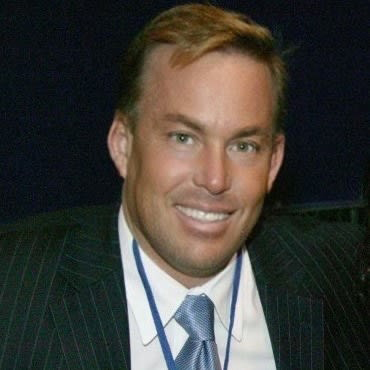
Dr James Stoxen DC., FSSEMM (hon) He is the president of Team Doctors®, Treatment and Training Center Chicago, one of the most recognized treatment centers in the world.
Dr Stoxen is a #1 International Bestselling Author of the book, The Human Spring Approach to Thoracic Outlet Syndrome. He has lectured at more than 20 medical conferences on his Human Spring Approach to Thoracic Outlet Syndrome and asked to publish his research on this approach to treating thoracic outlet syndrome in over 30 peer review medical journals.
He has been asked to submit his other research on the human spring approach to treatment, training and prevention in over 150 peer review medical journals. He serves as the Editor-in-Chief, Journal of Orthopedic Science and Research, Executive Editor or the Journal of Trauma and Acute Care, Chief Editor, Advances in Orthopedics and Sports Medicine Journal and editorial board for over 35 peer review medical journals.
He is a much sought-after speaker. He has given over 1000 live presentations and lectured at over 70 medical conferences to over 50,000 doctors in more than 20 countries. He has been invited to speak at over 300 medical conferences which includes invitations as the keynote speaker at over 50 medical conferences.
After his groundbreaking lecture on the Integrated Spring-Mass Model at the World Congress of Sports and Exercise Medicine he was presented with an Honorary Fellowship Award by a member of the royal family, the Sultan of Pahang, for his distinguished research and contributions to the advancement of Sports and Exercise Medicine on an International level. He was inducted into the National Fitness Hall of Fame in 2008 and the Personal Trainers Hall of Fame in 2012.
Dr Stoxen has a big reputation in the entertainment industry working as a doctor for over 150 tours of elite entertainers, caring for over 1000 top celebrity entertainers and their handlers. Anthony Field or the popular children’s entertainment group, The Wiggles, wrote a book, How I Got My Wiggle Back detailing his struggles with chronic pain and clinical depression he struggled with for years. Dr Stoxen is proud to be able to assist him.
Full Bio) Dr Stoxen can be reached directly at teamdoctors@aol.com