Thoracic Outlet Syndrome is a term used to describe a collection of symptom patterns that arise when nerves or blood vessels experience stress as they travel from the neck into the arm. Rather than being a rigid pipe, this region functions as a dynamic passageway that must adapt to posture, movement, and load.
The thoracic outlet is formed by the relationship between the cervical spine, the upper ribs, the clavicle, and the shoulder girdle. These structures do not operate in isolation. They are suspended and stabilized by multiple layers of muscle that must remain adaptable for normal motion to occur.
In my clinical experience, problems begin when this adaptable system becomes stiff. Muscles that are designed to lengthen and shorten smoothly can remain partially contracted for long periods of time. Over time, this alters how forces move through the neck, shoulder, and upper chest.
One of the most commonly discussed contributors is the group known as the scalene muscles. These muscles attach from the cervical spine down to the first and second ribs. Their position places them directly adjacent to the brachial plexus and subclavian vessels.
When individuals describe muscle spasms in neck, they are often referring to sustained tension in this region rather than brief contractions. This type of tension can change the resting shape of the thoracic outlet without any single traumatic event.
Sustained postures play a large role in this process. Prolonged forward head positioning, long hours at a desk, or frequent use of handheld devices can maintain low-level contraction in the neck and chest muscles. Over time, this leads to fatigue and irritation.
Patients often report tight scalene muscles that feel resistant to stretching. This sensation is not always due to shortness of the tissue itself. In many cases, it reflects a protective response from the nervous system.
The anterior scalene muscle deserves special attention because of its anatomical relationship to the neurovascular bundle. It forms part of the boundary that structures must pass through on their way to the arm.
Descriptions of anterior scalene syndrome symptoms often include neck discomfort, arm heaviness, or sensory changes that vary with posture. These patterns tend to fluctuate rather than remain constant.
Many individuals describe tight scalene muscles symptoms that worsen when the arms are elevated or held forward for extended periods. This provides clues about how muscle tension alters space within the outlet.
Below the clavicle lies another often-overlooked structure, the subclavius muscle. Although small, it plays a role in stabilizing the clavicle during shoulder movement and load transfer.
When tension accumulates beneath the collarbone, people may describe muscle under clavicle pain that radiates into the chest or shoulder. This discomfort often increases with prolonged arm positioning.
The chest wall also contributes through the pectoralis minor. This muscle attaches from the ribs to the coracoid process of the scapula, passing underneath the clavicle in a region already crowded with important structures.
When this muscle becomes chronically shortened, the condition is often described as pectoralis minor syndrome. This reflects altered mechanics rather than a single tissue injury.
The convergence of several muscles at the coracoid process makes this region sensitive to posture. The coracobrachialis and the short head of the biceps share this attachment point, increasing the mechanical demand placed on it.
Sustained contraction in this area can contribute to irritation of nearby tissues. Over time, this irritation feeds back to the nervous system through sensory receptors that monitor tissue stress.
This reflexive feedback loop explains why attempts to force stretching can sometimes aggravate symptoms. The nervous system may interpret aggressive lengthening as a threat and respond with increased guarding.
In discussions of thoracic outlet syndrome, it is important to recognize that the condition reflects altered relationships between structures rather than damage to a single muscle or nerve. The system functions as a whole.
The thoracic muscles that surround the rib cage also influence outlet mechanics. Rib position affects the height and angle of the clavicle, which in turn alters the available space beneath it.
When muscle tension pulls ribs upward or forward, the outlet narrows dynamically. This does not require permanent structural change to influence symptoms.
Some individuals describe widespread chest discomfort, often labeled as thoracic myalgia, that accompanies neck and arm symptoms. This reflects the interconnected nature of the region.
Patterns involving the muscles scalene frequently coexist with chest wall tension. These muscles must coordinate smoothly for breathing, head movement, and arm use.
Descriptions of anterior scalene syndrome often overlap with other thoracic outlet patterns. This overlap highlights the challenge of isolating a single structure as the cause.
In more severe or persistent cases, surgical terms such as anterior scalenectomy may appear in discussions. These references reflect historical approaches to addressing space limitations rather than guarantees of outcome.
Similarly, procedures like pectoralis minor tenotomy are discussed in literature as methods to alter mechanics in selected cases. Their mention underscores the role of muscle tension in outlet dynamics.
It is also common to encounter phrases such as muscles scalene treatment or anterior scalene syndrome treatment in patient searches. These terms reflect a desire to understand how muscle behavior influences symptoms rather than a request for a specific intervention.
The phrase anterior scalene muscle syndrome further illustrates how anatomy-based naming has evolved to describe recurring patterns rather than isolated injuries.
From a biomechanical perspective, the thoracic outlet behaves like a suspension system. The shoulder girdle is suspended over the rib cage by muscles that must remain elastic.
When elasticity is lost, the system behaves more like a rigid structure. Forces that should be absorbed are instead transmitted directly to sensitive tissues.
This helps explain why symptoms may appear during activities that involve sustained arm positioning rather than heavy lifting. Low-level load applied for long durations can be more disruptive than brief high-force events.
Breathing mechanics also play a role. The scalenes and upper chest muscles assist with respiration, especially during stress or exertion. Altered breathing patterns can therefore influence outlet tension.
In individuals who habitually breathe with upper chest dominance, these muscles may remain overactive. Over time, this contributes to fatigue and altered resting tone.
The pectoralis minor responds similarly to prolonged shoulder protraction. When the shoulders remain forward, the muscle adapts to that shortened position.
As adaptation occurs, rib and scapular mechanics change. These changes subtly influence the dimensions of the thoracic outlet.
Many individuals notice that symptoms fluctuate throughout the day. This variability reflects changes in posture, activity, and nervous system tone rather than structural damage.
From an observational standpoint, side-to-side differences are often more informative than absolute findings. Comparing one arm or shoulder to the other can reveal asymmetries in movement or tension.
Visual assessments, such as comparing hand or forearm fullness, can provide additional context. These observations do not diagnose conditions but help identify patterns worth further evaluation.
In discussions of outlet mechanics, it is essential to avoid oversimplification. No single muscle acts alone, and no single posture explains every presentation.
The nervous system plays a central role by regulating muscle tone based on perceived threat or irritation. When sensory input suggests ongoing stress, protective contraction can become habitual.
This habitual contraction reinforces altered mechanics, creating a self-sustaining cycle. Understanding this cycle helps explain why symptoms can persist even after the original stressor is removed.
Education about anatomy and mechanics allows individuals to better interpret their own symptom patterns. Awareness does not resolve the issue but provides clarity.
It is also important to recognize that imaging findings do not always correlate with symptoms. Many structural variations exist without causing discomfort.
Thoracic outlet discussions therefore benefit from a functional perspective. How the system behaves during movement often matters more than how it appears at rest.
The language surrounding muscles scalene and chest wall tension reflects decades of evolving understanding. Modern interpretations emphasize adaptability rather than fixed compression.
By viewing the thoracic outlet as a dynamic system, patterns that once seemed unrelated begin to make sense. Neck tension, chest discomfort, and arm symptoms often share common mechanical roots.
This framework encourages careful observation rather than quick conclusions. Patterns emerge over time when posture, activity, and symptoms are considered together.
In summary, Thoracic Outlet Syndrome represents a functional disturbance in a complex anatomical region. Muscles, ribs, clavicle, and nervous system responses interact continuously.
Understanding how these elements influence one another provides context for why symptoms vary and why no single explanation fits all cases. Education remains the foundation for informed decision-making.
Team Doctors Resources
✓ Check out the Team Doctors Recovery Tools
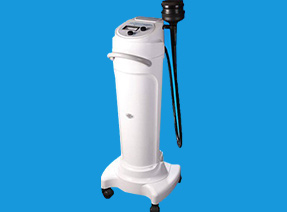
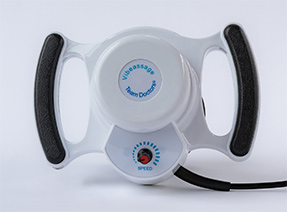
The Vibeassage Sport and the Vibeassage Pro featuring the TDX3 soft-as-the-hand Biomimetic Applicator Pad
https://www.teamdoctors.com/
✓ Get Dr. Stoxen’s #1 International Bestselling Books
Learn how to understand, examine, and reverse your TOS—without surgery.
https://drstoxen.com/1-international-best-selling-author/
✓ Check out Team Doctors Online Courses
Step-by-step video lessons, demonstrations, and self-treatment strategies.
https://teamdoctorsacademy.com/
✓ Schedule a Free Phone Consultation With Dr. Stoxen
Speak directly with him so he can review your case and guide you on your next steps.
https://drstoxen.com/appointment/
#ThoracicOutletSyndrome #TOS #ThoracicOutletAnatomy #NeckMuscles #ScaleneMuscles #PectoralisMinor #PostureMechanics #Neurovascular #UpperExtremity #ShoulderAnatomy #Biomechanics #MuscleTension #ChestWall #RibMechanics #ClinicalObservation #AnatomyEducation #MovementScience #PainPatterns #UpperBody #HumanMovement
References:
- Sanders, R. J., & Hammond, S. L. “Thoracic Outlet Syndrome: A Review.” Neurologic Clinics 21, no. 2 (2003): 461–471. https://doi.org/10.1016/S0733-8619(02)00105-1
- Urschel, H. C., & Razzuk, M. A. “Neurovascular Compression in the Thoracic Outlet.” Annals of Thoracic Surgery 64, no. 5 (1997): 1467–1474. https://doi.org/10.1016/S0003-4975(97)00952-4
- Hooper, T. L., et al. “Thoracic Outlet Syndrome: A Controversial Clinical Condition.” Journal of Manual & Manipulative Therapy 18, no. 2 (2010): 74–83. https://doi.org/10.1179/106698110X12640740712734
- Atasoy, E. “Thoracic Outlet Compression Syndrome.” Orthopedic Clinics of North America 27, no. 2 (1996): 265–303. https://pubmed.ncbi.nlm.nih.gov/8658288/

Dr James Stoxen DC., FSSEMM (hon) He is the president of Team Doctors®, Treatment and Training Center Chicago, one of the most recognized treatment centers in the world.
Dr Stoxen is a #1 International Bestselling Author of the book, The Human Spring Approach to Thoracic Outlet Syndrome. He has lectured at more than 20 medical conferences on his Human Spring Approach to Thoracic Outlet Syndrome and asked to publish his research on this approach to treating thoracic outlet syndrome in over 30 peer review medical journals.
He has been asked to submit his other research on the human spring approach to treatment, training and prevention in over 150 peer review medical journals. He serves as the Editor-in-Chief, Journal of Orthopedic Science and Research, Executive Editor or the Journal of Trauma and Acute Care, Chief Editor, Advances in Orthopedics and Sports Medicine Journal and editorial board for over 35 peer review medical journals.
He is a much sought-after speaker. He has given over 1000 live presentations and lectured at over 70 medical conferences to over 50,000 doctors in more than 20 countries. He has been invited to speak at over 300 medical conferences which includes invitations as the keynote speaker at over 50 medical conferences.
After his groundbreaking lecture on the Integrated Spring-Mass Model at the World Congress of Sports and Exercise Medicine he was presented with an Honorary Fellowship Award by a member of the royal family, the Sultan of Pahang, for his distinguished research and contributions to the advancement of Sports and Exercise Medicine on an International level. He was inducted into the National Fitness Hall of Fame in 2008 and the Personal Trainers Hall of Fame in 2012.
Dr Stoxen has a big reputation in the entertainment industry working as a doctor for over 150 tours of elite entertainers, caring for over 1000 top celebrity entertainers and their handlers. Anthony Field or the popular children’s entertainment group, The Wiggles, wrote a book, How I Got My Wiggle Back detailing his struggles with chronic pain and clinical depression he struggled with for years. Dr Stoxen is proud to be able to assist him.
Full Bio) Dr Stoxen can be reached directly at teamdoctors@aol.com