Vascular Thoracic Outlet Syndrome and Arm Blood Flow Disruption
Vascular thoracic outlet syndrome is a condition defined by mechanical restriction of blood vessels as they pass from the chest into the arm.
This restriction alters circulation and produces a recognizable pattern of symptoms involving color changes, swelling, and activity-related discomfort.
Many individuals first notice poor circulation in arm during daily tasks or exercise.
The arm may feel heavier than normal and slower to recover after use.
A common early complaint is arm swelling and pain that worsens with overhead or repetitive activity.
These changes reflect altered venous or arterial flow rather than a primary muscular injury.
In some cases, patients observe blue or purple arm symptoms that appear suddenly or fluctuate with posture.
Color changes often raise concern and prompt urgent medical evaluation.
Others report a cold hand circulation problem that becomes noticeable in cool environments or during sustained activity.
Temperature differences between arms are frequently described.
When blood vessels are narrowed, blood flow blocked to arm can occur intermittently.
This produces fatigue and pressure sensations during use.
Patients often describe arm heaviness and swelling after carrying objects or holding the arm elevated.
These sensations typically ease with rest or position change.
Mechanical narrowing may involve vein compression in shoulder, particularly with certain arm positions.
Venous congestion leads to visible fullness and tightness.
Color changes combined with discomfort create arm discoloration and pain that can be alarming.
These features are commonly associated with vascular involvement.
Clinically, this pattern aligns with vascular thoracic outlet symptoms rather than isolated nerve irritation.
The defining factor is altered circulation through the thoracic outlet.
Symptoms frequently intensify as arm swelling after activity becomes more pronounced.
Exercise increases demand on already restricted vessels.
Many individuals experience blood flow issues in arm that fluctuate throughout the day.
Posture, load, and repetition influence symptom severity.
Reports of arm circulation problems are often accompanied by fatigue and pressure.
These complaints are distinct from sharp or shooting nerve pain.
A frequent observation is cold hand or arm during exertion or prolonged positioning.
This reflects compromised arterial inflow.
Swelling combined with color change may present as hand swelling and discoloration.
Venous outflow restriction is a common contributor.
Some patients notice blue or purple hand changes that resolve with rest.
This cyclical pattern is characteristic of vascular compression.
Pain localized along superficial veins may suggest vein compression symptoms arm.
These sensations differ from deep muscular soreness.
Structural narrowing produces vascular compression shoulder during arm elevation.
This explains why symptoms worsen overhead.
Patients frequently state the arm feels heavy and tight rather than weak.
This heaviness is circulation related.
With exertion, arm pressure with activity becomes increasingly noticeable.
The sensation often builds gradually.
A classic feature is swollen arm after exercise, especially following repetitive tasks.
Venous congestion develops when outflow is limited.
Localized discomfort may be described as arm vein pain rather than joint pain.
This distinction helps guide evaluation.
Collectively, these signs represent arm circulation disorder symptoms rather than isolated injury.
The pattern reflects vascular compromise.
Reduced arterial supply results in reduced blood flow to arm during demand.
This limits endurance and recovery.
External narrowing leads to arm swelling from compression within the thoracic outlet.
The swelling often resolves partially with rest.
When nerves and vessels are involved together, vascular nerve compression symptoms may overlap.
This creates mixed presentations.
Structural narrowing near the clavicle contributes to blood flow problems shoulder.
This region is a common site of restriction.
Patients often report arm color changes pain that vary with posture.
This variability is a key feature.
General complaints of circulatory issues arm pain are common in clinical histories.
These complaints prompt vascular evaluation.
In advanced cases, clinicians recognize vascular tos signs on examination.
These include swelling, color change, and pulse alteration.
Ultimately, the defining issue is blood flow obstruction arm due to mechanical narrowing.
This distinguishes vascular thoracic outlet syndrome from other conditions.
Clinical Evaluation and Imaging
Evaluation often includes Doppler ultrasound to assess flow changes with movement.
This test provides dynamic information.
Temperature differences and Cold hands are documented during examination.
These findings support vascular involvement.
Advanced imaging such as CT angiography helps visualize vessel narrowing.
It is commonly used in positional assessment.
Soft tissue and vessel relationships may be assessed with MRI angiography.
This provides detailed anatomical context.
Provocative maneuvers like Adson’s test are sometimes used during examination.
These tests assess positional changes in pulse.
Upper extremity circulation may also be evaluated with the Allen test.
This helps assess arterial contribution.
Activity-related discomfort includes Pain in forearm with activity during exertion.
This reflects ischemic stress.
Fine motor tasks may provoke Pain in hand with activity as demand increases.
Symptoms often resolve with rest.
Examination may reveal a Weak pulse in certain positions.
Pulse changes are positional rather than constant.
Sensory changes may include Numbness and tingling ischemic in nature.
These differ from nerve entrapment patterns.
Patients often describe generalized Arm fatigue during repetitive use.
Fatigue reflects reduced perfusion.
Definitive vessel imaging may involve Angiography when needed.
This outlines arterial anatomy.
Distal changes such as Blue finger discoloration may be observed.
These changes are circulation dependent.
Severe restriction can lead to Digital ischemia in advanced cases.
This represents prolonged arterial compromise.
Provocative exams may show an Absent pulse test response.
This supports vascular compression.
Venous congestion may produce Cyanotic discoloration of the limb.
This indicates impaired outflow.
Some individuals report Chest pain arterial compression due to proximity of structures.
This can mimic cardiac conditions.
Exercise-induced pain may resemble Ischemic claudication in the arm.
This pattern reflects demand ischemia.
Venous assessment may include Venography to visualize outflow restriction.
This is used selectively.
In rare advanced cases, prolonged ischemia may lead to Ulceration tissue loss.
This represents severe vascular compromise.
Mechanical Basis of Vascular Thoracic Outlet Syndrome
The thoracic outlet is a confined passage bordered by bone, muscle, and connective tissue.
Blood vessels and nerves traverse this space to reach the arm.
Changes in posture, muscle tone, or repetitive loading can reduce available space.
This leads to intermittent vessel narrowing.
Venous compression often produces swelling and discoloration.
Arterial compression produces coldness and fatigue.
Symptoms fluctuate with arm position and activity level.
This variability is characteristic.
Importantly, vascular thoracic outlet syndrome is mechanical in nature.
It is not a primary blood disorder.
Understanding this distinction helps explain why cardiac testing is often normal.
The heart itself is not the source of symptoms.
Educational Perspective and Self-Observation
Patients are often confused by normal test results despite persistent symptoms.
Education helps clarify the underlying mechanism.
In my clinical experience, recognizing positional triggers is key.
Symptoms often worsen with overhead activity.
Patients often report symptom relief with rest and posture change.
This supports a mechanical explanation.
Many individuals describe frustration after repeated evaluations.
Clear explanation improves understanding.
This is a pattern I commonly see in vascular thoracic outlet syndrome presentations.
The symptom cluster is consistent.
Educational Tools and Resources
Understanding vascular thoracic outlet syndrome requires clear education and observation.
Mechanical factors drive circulation changes.
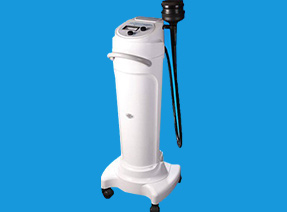
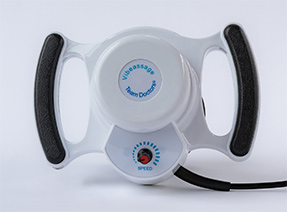
Tools such as Vibeassage® Sport and Vibeassage® Pro are often discussed in educational contexts.
They are associated with Team Doctors® resources.
The TDX3 soft-as-the-hand Biomimetic Applicator Pad is referenced in discussions of tissue interaction.
These references are educational in nature.
Team Doctors Resources
✓ Check out the Team Doctors Recovery Tools
The Vibeassage Sport and the Vibeassage Pro featuring the TDX3 soft-as-the-hand Biomimetic Applicator Pad
https://www.teamdoctors.com/
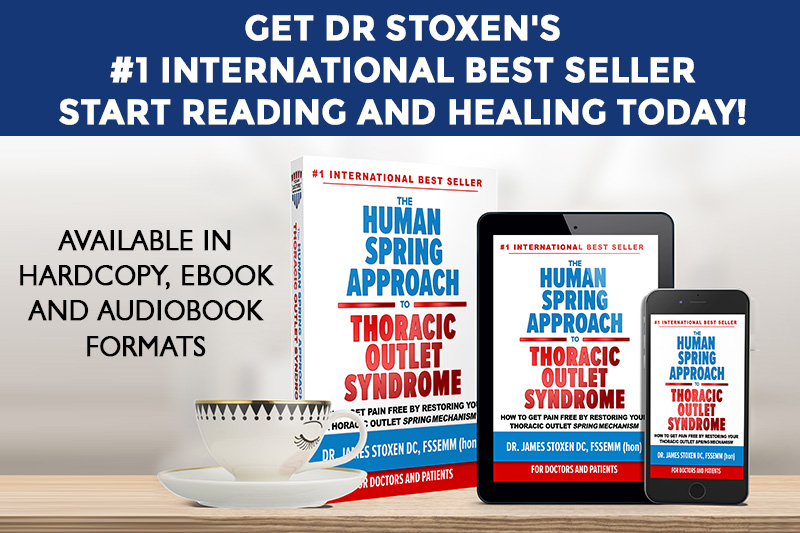
✓ Get Dr. Stoxen’s #1 International Bestselling Books
Learn how to understand, examine, and reverse your TOS—without surgery.
https://drstoxen.com/1-international-best-selling-author/
✓ Check out Team Doctors Online Courses
Step-by-step video lessons, demonstrations, and self-treatment strategies.
https://teamdoctorsacademy.com/
✓ Schedule a Free Phone Consultation With Dr. Stoxen
Speak directly with him so he can review your case and guide you on your next steps.
https://drstoxen.com/appointment/
#ThoracicOutletSyndrome #TOS #VascularTOS #ArmCirculation #BloodFlowIssues #ArmSwelling #VascularCompression #ShoulderAnatomy #UpperExtremity #ClinicalEducation #Biomechanics #PostureMechanics #VascularHealth #ArmPain #CirculationAwareness #MedicalEducation #AnatomyEducation #OrthopedicAssessment #DiagnosticImaging #PatientEducation
References
- Illig, Karl A., et al. “Thoracic Outlet Syndrome.” Journal of Vascular Surgery 60, no. 3 (2014): 795–803. https://doi.org/10.1016/j.jvs.2014.04.069
- Sanders, Richard J., and Neal M. Pearce. “Vascular Thoracic Outlet Syndrome.” Journal of Vascular Surgery 49, no. 6 (2009): 1533–1540. https://doi.org/10.1016/j.jvs.2009.02.019
- Peek, J., et al. “Diagnostic Imaging of Thoracic Outlet Syndrome.” Insights into Imaging 8, no. 3 (2017): 297–305. https://doi.org/10.1007/s13244-017-0552-4

Dr James Stoxen DC., FSSEMM (hon) He is the president of Team Doctors®, Treatment and Training Center Chicago, one of the most recognized treatment centers in the world.
Dr Stoxen is a #1 International Bestselling Author of the book, The Human Spring Approach to Thoracic Outlet Syndrome. He has lectured at more than 20 medical conferences on his Human Spring Approach to Thoracic Outlet Syndrome and asked to publish his research on this approach to treating thoracic outlet syndrome in over 30 peer review medical journals.
He has been asked to submit his other research on the human spring approach to treatment, training and prevention in over 150 peer review medical journals. He serves as the Editor-in-Chief, Journal of Orthopedic Science and Research, Executive Editor or the Journal of Trauma and Acute Care, Chief Editor, Advances in Orthopedics and Sports Medicine Journal and editorial board for over 35 peer review medical journals.
He is a much sought-after speaker. He has given over 1000 live presentations and lectured at over 70 medical conferences to over 50,000 doctors in more than 20 countries. He has been invited to speak at over 300 medical conferences which includes invitations as the keynote speaker at over 50 medical conferences.
After his groundbreaking lecture on the Integrated Spring-Mass Model at the World Congress of Sports and Exercise Medicine he was presented with an Honorary Fellowship Award by a member of the royal family, the Sultan of Pahang, for his distinguished research and contributions to the advancement of Sports and Exercise Medicine on an International level. He was inducted into the National Fitness Hall of Fame in 2008 and the Personal Trainers Hall of Fame in 2012.
Dr Stoxen has a big reputation in the entertainment industry working as a doctor for over 150 tours of elite entertainers, caring for over 1000 top celebrity entertainers and their handlers. Anthony Field or the popular children’s entertainment group, The Wiggles, wrote a book, How I Got My Wiggle Back detailing his struggles with chronic pain and clinical depression he struggled with for years. Dr Stoxen is proud to be able to assist him.
Full Bio) Dr Stoxen can be reached directly at teamdoctors@aol.com