Thoracic Outlet Syndrome is a mechanical compression problem involving nerves, blood vessels, and surrounding muscles.
It occurs when the passageway from the neck to the arm becomes narrowed and irritated by chronic tension, posture, and load.
Many people searching for the best treatment for thoracic outlet syndrome are confused by conflicting advice.
Some are told to stretch, some to strengthen, and others to consider surgery without understanding the mechanics.
In my clinical experience, symptoms persist when the compression is not fully addressed first.
Pain, numbness, tingling, weakness, and vascular symptoms reflect a narrowed outlet rather than weak muscles.
Thoracic Outlet Syndrome involves the brachial plexus, subclavian artery, and subclavian vein.
These structures must pass through a space bordered by bone, muscle, and connective tissue.
When muscles surrounding this space shorten or stiffen, the outlet narrows.
This is why conservative treatment for thoracic outlet syndrome focuses on restoring space before adding demand.
Patients often report that exercise made their symptoms worse.
This typically happens when strengthening is introduced before decompression.
The thoracic outlet functions like a spring-loaded tunnel.
If the spring is compressed, loading it further increases strain on the contents inside.
A thoracic outlet syndrome natural treatment approach begins with mechanical reasoning.
The goal is not force, but space, movement, and circulation.
Ten primary muscles contribute to outlet compression.
These include the scalenes, subclavius, pectoralis minor, levator scapulae, and surrounding stabilizers.
When these muscles remain shortened, even good posture cannot overcome the restriction.
This is why fixing thoracic outlet syndrome requires addressing muscle tone directly.
Many individuals describe temporary relief after stretching.
Lasting change requires consistent decompression across all contributing structures.
This is where conservative treatment of thoracic outlet syndrome differs from symptom-based care.
It prioritizes sequence rather than intensity.
Step one is always release.
Release restores length, glide, and elasticity to tissues that have been guarding for years.
Only after release can circulation normalize.
Only then can nerves tolerate movement without irritation.
Introducing physical therapy exercises for thoracic outlet syndrome too early can be harmful.
Increasing blood flow into a restricted outlet raises internal pressure.
The artery can deliver blood efficiently.
The vein, however, may not drain adequately if compression remains.
This imbalance increases risk for effort-related vascular problems.
In severe cases, it can contribute to thrombosis.
This is why non-surgical treatment for thoracic outlet syndrome must follow a strict progression.
Decompression always comes before strengthening.
Many programs reverse this order.
That mistake explains why patients feel worse despite “doing everything right.”
Exercises for thoracic outlet syndrome treatment should only begin once full release is confirmed.
Confirmation comes from symptom response, movement quality, and vascular tolerance.
Patients often ask about a cure for thoracic outlet syndrome.
From an educational standpoint, TOS management focuses on mechanics, not guarantees.
The goal is restoring normal movement and load distribution.
When the spring system functions properly, symptoms often diminish.
Thoracic outlet syndrome self-care is most effective when guided by anatomy.
Random stretching and resistance can reinforce compression patterns.
A structured home treatment approach emphasizes gentle release, breathing, and posture awareness.
These reduce baseline tone without provoking symptoms.
Many people are living with thoracic outlet syndrome for years without understanding why.
They adapt by avoiding activity rather than correcting mechanics.
Alternative treatment for thoracic outlet syndrome often fails when it ignores load sequence.
Modalities may relax tissue briefly but do not restore functional space.
A thoracic outlet syndrome holistic treatment framework integrates movement, respiration, and load control.
It respects the nervous and vascular systems equally.
At-home treatment for thoracic outlet syndrome should never provoke numbness, swelling, or discoloration.
These are signs the outlet is still restricted.
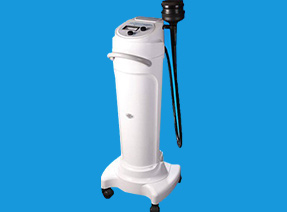
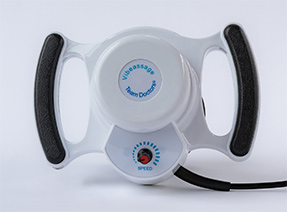
During the release phase, tools such as Vibeassage® Sport and Vibeassage® Pro may be used educationally.
The TDX3 soft-as-the-hand Biomimetic Applicator Pad is designed to match hand-like compliance.
In a clinical setting, release focuses on tissue compliance rather than force.
This aligns with principles used by Team Doctors®.
Once release is complete, treatment – physical therapy can begin safely.
Exercises now reinforce space rather than collapse it.
Strengthening targets scapular control and endurance.
Load is added gradually and monitored closely.
Treatment – adjustments are sometimes used to restore joint motion.
They are not substitutes for muscular decompression.
Treatment – general success depends on respecting sequence.
Skipping steps leads to relapse.
Treatment – first rib strategies aim to reduce elevation and stiffness.
They must be paired with surrounding muscle release.
Throughout care, conservative management emphasizes patience.
Rushing recovery increases risk rather than speed.
This step-by-step logic explains why some patients improve rapidly while others stagnate.
The difference is sequence, not effort.
Education empowers individuals to recognize warning signs.
Symptoms during activity indicate unresolved compression.
Understanding mechanics changes decision-making.
It reduces fear and improves compliance.
Thoracic Outlet Syndrome is not mysterious.
It follows predictable mechanical rules.
When those rules are respected, outcomes improve.
When ignored, frustration grows.
This educational framework explains why conservative approaches work when applied correctly.
It also explains why they fail when applied out of order.
Team Doctors Resources
✓ Check out the Team Doctors Recovery Tools
The Vibeassage Sport and the Vibeassage Pro featuring the TDX3 soft-as-the-hand Biomimetic Applicator Pad
https://www.teamdoctors.com/
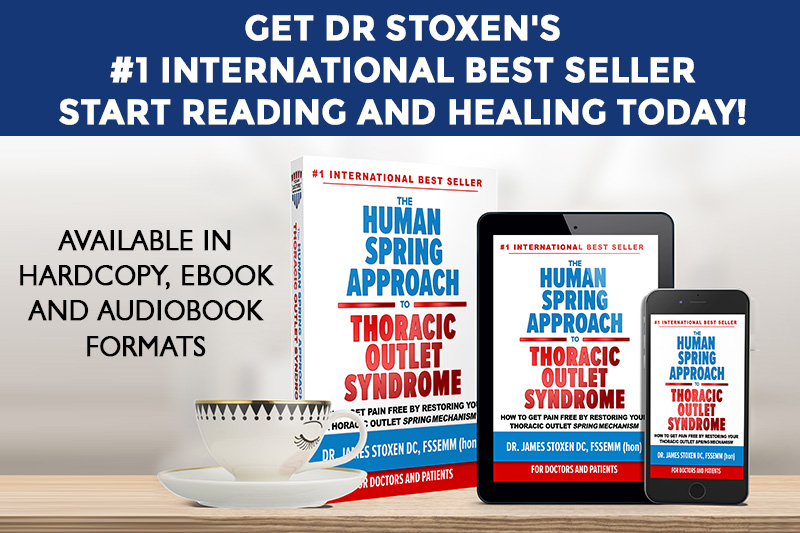
✓ Get Dr. Stoxen’s #1 International Bestselling Books
Learn how to understand, examine, and reverse your TOS—without surgery.
https://drstoxen.com/1-international-best-selling-author/
✓ Check out Team Doctors Online Courses
Step-by-step video lessons, demonstrations, and self-treatment strategies.
https://teamdoctorsacademy.com/
✓ Schedule a Free Phone Consultation With Dr. Stoxen
Speak directly with him so he can review your case and guide you on your next steps.
https://drstoxen.com/appointment/
#ThoracicOutletSyndrome #TOS #TOSRecovery #TOSEducation #ConservativeCare #Biomechanics #PostureMechanics #NerveCompression #VascularCompression #PainEducation #MovementScience #PhysicalTherapy #RehabEducation #HumanSpring #TeamDoctors #Vibeassage #HealthEducation #ChronicPain #SelfCare #InjuryRecovery
References
- Sanders, R. J., & Hammond, S. L. “Thoracic Outlet Syndrome: A Review.” Neurologic Clinics 27, no. 2 (2009): 423–442. https://pubmed.ncbi.nlm.nih.gov/19289225/
- Illig, K. A., et al. “Thoracic Outlet Syndrome.” Journal of Vascular Surgery 53, no. 3 (2011): 845–852. https://pubmed.ncbi.nlm.nih.gov/21292295/
- Povlsen, B., Hansson, T., & Povlsen, S. D. “Treatment for Thoracic Outlet Syndrome.” Cochrane Database of Systematic Reviews (2014). https://pubmed.ncbi.nlm.nih.gov/25026838/

Dr James Stoxen DC., FSSEMM (hon) He is the president of Team Doctors®, Treatment and Training Center Chicago, one of the most recognized treatment centers in the world.
Dr Stoxen is a #1 International Bestselling Author of the book, The Human Spring Approach to Thoracic Outlet Syndrome. He has lectured at more than 20 medical conferences on his Human Spring Approach to Thoracic Outlet Syndrome and asked to publish his research on this approach to treating thoracic outlet syndrome in over 30 peer review medical journals.
He has been asked to submit his other research on the human spring approach to treatment, training and prevention in over 150 peer review medical journals. He serves as the Editor-in-Chief, Journal of Orthopedic Science and Research, Executive Editor or the Journal of Trauma and Acute Care, Chief Editor, Advances in Orthopedics and Sports Medicine Journal and editorial board for over 35 peer review medical journals.
He is a much sought-after speaker. He has given over 1000 live presentations and lectured at over 70 medical conferences to over 50,000 doctors in more than 20 countries. He has been invited to speak at over 300 medical conferences which includes invitations as the keynote speaker at over 50 medical conferences.
After his groundbreaking lecture on the Integrated Spring-Mass Model at the World Congress of Sports and Exercise Medicine he was presented with an Honorary Fellowship Award by a member of the royal family, the Sultan of Pahang, for his distinguished research and contributions to the advancement of Sports and Exercise Medicine on an International level. He was inducted into the National Fitness Hall of Fame in 2008 and the Personal Trainers Hall of Fame in 2012.
Dr Stoxen has a big reputation in the entertainment industry working as a doctor for over 150 tours of elite entertainers, caring for over 1000 top celebrity entertainers and their handlers. Anthony Field or the popular children’s entertainment group, The Wiggles, wrote a book, How I Got My Wiggle Back detailing his struggles with chronic pain and clinical depression he struggled with for years. Dr Stoxen is proud to be able to assist him.
Full Bio) Dr Stoxen can be reached directly at teamdoctors@aol.com