Thoracic Outlet Syndrome is a condition defined by compression within the thoracic outlet, the narrow passageway between the neck and upper chest. This space allows nerves, arteries, and veins to travel from the spine to the arm. When the mechanics of this region become disturbed, symptoms can appear far from where the true problem originates.
Many individuals report chest pain that feels alarming and unfamiliar. This discomfort often leads people to worry about heart or lung conditions. In clinical settings, it is common for musculoskeletal sources of chest discomfort to be overlooked in early evaluations.
A frequent presentation involves chest pain and arm pain occurring together. This combination suggests that the source is not isolated to the chest wall alone. Instead, it often reflects a shared mechanical stress affecting nerves and muscles traveling into the upper extremity.
Some patients describe chest pain and neck pain that worsens with posture or arm movement. This pattern highlights the importance of cervical and upper thoracic mechanics. The neck and upper chest are functionally linked through muscular and fascial connections.
Others experience chest pain with arm pain during overhead activity or prolonged sitting. This pattern suggests compression that changes with position. Mechanical compression behaves differently than inflammatory or visceral conditions.
The term chest pains is often used broadly, but not all chest discomfort has the same origin. In Thoracic Outlet Syndrome, pain frequently arises from muscle tension, rib distortion, and altered breathing mechanics rather than organ disease.
A related complaint is thoracic pain, which refers to discomfort in the upper and mid-back region. This area forms the posterior boundary of the thoracic outlet and plays a key role in rib cage motion.
Understanding thoracic pain causes requires examining posture, muscle balance, and joint mobility. Poor thoracic extension and rib stiffness can reduce the space available for neurovascular structures.
People may report thoracic pain symptoms such as aching, tightness, or burning between the shoulder blades. These sensations often increase during static postures like desk work or driving.
Another common description is thoracic chest pain, which blends sensations from the back and front of the rib cage. This reflects the ring-like structure of the ribs, where dysfunction in one area affects the entire circumference.
Some individuals notice thoracic pain right side more than the left. Asymmetry in posture, handedness, or previous injury can contribute to uneven loading of the thoracic outlet.
Reports of thoracic back pain symptoms often include stiffness, restricted breathing, and difficulty rotating the torso. These signs point toward rib cage rigidity rather than isolated spinal injury.
Muscle-related discomfort is frequently labeled thoracic muscle pain. This pain arises when muscles responsible for stabilizing and moving the ribs remain in prolonged contraction.
When discussing thoracic muscle pain treatment, it is essential to understand that education focuses on restoring normal mechanics rather than targeting symptoms alone. Muscle tone changes when posture and movement improve.
A distinctive complaint involves chest pain around collar bone, which often raises concern for cardiac or pulmonary issues. However, this area is densely populated with muscles and connective tissue involved in the thoracic outlet.
Some describe chest pain under the collarbone that increases with arm elevation. This region corresponds to where the subclavian vessels and brachial plexus pass beneath the clavicle.
Others localize discomfort as chest pain by the collarbone, especially during lifting or sustained shoulder activity. This pattern reflects mechanical narrowing under the clavicle.
Right-sided discomfort such as chest pain below collar bone right side may relate to asymmetrical muscle tension or rib positioning. Dominant arm use can influence these patterns.
History of trauma or overuse may present as thoracic injury symptoms, including localized tenderness, guarding, and reduced motion. Even minor injuries can alter long-term mechanics.
Movement-based education often includes thoracic pain exercises designed to restore rib mobility and postural awareness. These are discussed from an educational perspective, not as prescriptions.
Muscle soreness described as thoracic myalgia reflects chronic tension rather than acute strain. This tension can persist when breathing mechanics are restricted.
Neck involvement frequently appears as muscle spasms in neck, especially in individuals with prolonged forward head posture. These spasms increase tension transmitted to the upper ribs.
A key contributor in Thoracic Outlet Syndrome is tight scalene muscles. These muscles attach from the cervical spine to the first and second ribs, directly influencing outlet space.
The scalene muscles play a role in both neck movement and breathing. When overactive, they elevate the ribs excessively and reduce available space for nerves and vessels.
Another important structure is the pectoralis minor, which runs from the coracoid process to the ribs. Shortening of this muscle pulls the shoulder forward and narrows the outlet.
The anterior scalene muscle is particularly relevant due to its relationship with the brachial plexus and subclavian artery. Increased tone here can significantly alter mechanics.
Symptoms may be described as muscle under clavicle pain, which reflects tension in muscles anchoring the clavicle to the rib cage.
Educational discussions of Thoracic Outlet Syndrome emphasize that symptoms develop through mechanical progression. Muscle tension, posture, and rib movement interact over time, gradually reducing functional space.
Restricted rib motion affects breathing. As ribs lose their ability to expand, individuals may feel unable to take a full breath. This sensation often increases anxiety, even though the origin is mechanical.
Postural collapse contributes to these patterns. Forward shoulders and a flexed thoracic spine place continuous load on the muscles forming the thoracic outlet boundaries.
Prolonged sitting reinforces these stresses. Without regular thoracic extension and rib movement, muscles adaptively shorten and stiffen.
Breathing patterns also change. Upper chest breathing increases scalene and pectoralis minor activity, reinforcing compression patterns.
In educational settings, Thoracic Outlet Syndrome is explained as a functional space problem rather than a single structure failure. Multiple tissues contribute simultaneously.
This understanding helps explain why symptoms can fluctuate. Changes in posture, activity level, or stress can temporarily increase or decrease compression.
It also explains why imaging may appear normal. Static images cannot fully capture dynamic compression that occurs with movement or posture.
Mechanical explanations emphasize observation rather than diagnosis. Patterns of symptom behavior provide valuable insight into underlying contributors.
From an educational perspective, awareness of rib cage mechanics is central. The thoracic spine, ribs, and sternum must move as a coordinated unit.
When this coordination is lost, load shifts to soft tissues. Muscles compensate by increasing tone to stabilize the region.
Over time, this compensation becomes habitual. Chronic tension replaces efficient movement.
The result is a cluster of symptoms that may include chest discomfort, arm symptoms, neck tension, and breathing restriction.
Understanding this progression helps individuals contextualize their experience. Symptoms that feel alarming often have a mechanical explanation rooted in posture and movement.
Thoracic Outlet Syndrome highlights the interconnected nature of the upper body. Neck, chest, shoulder, and back function as an integrated system.
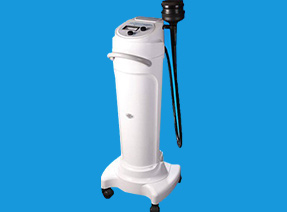
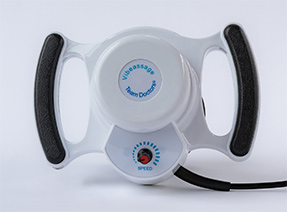
Educational resources from Team Doctors® focus on explaining these relationships clearly. Tools like the Vibeassage® Sport and Vibeassage® Pro featuring the TDX3 soft-as-the-hand Biomimetic Applicator Pad are discussed in educational contexts related to muscle tone and sensory input.
The goal of education is to improve understanding, not to promise outcomes. Recognizing patterns allows individuals to make informed decisions.
Thoracic mechanics are often neglected in daily life. Modern environments encourage postures that reduce rib movement.
Reintroducing awareness of thoracic motion can change how people perceive their symptoms. Chest discomfort becomes less mysterious when its mechanical contributors are understood.
Education also emphasizes patience. Mechanical adaptations develop over time and do not resolve instantly.
By learning how posture, breathing, and muscle tone interact, individuals gain a clearer picture of their own patterns.
Thoracic Outlet Syndrome serves as an example of how structure and function influence sensation. Pain is often the end result of prolonged mechanical stress.
Understanding does not replace professional evaluation. It complements it by providing context.
Educational discussions remain descriptive, not prescriptive. They aim to clarify rather than instruct treatment.
In summary, chest pain associated with Thoracic Outlet Syndrome often reflects mechanical compression influenced by muscle tension, rib position, and posture. Recognizing these relationships helps explain why symptoms can mimic other conditions and why they vary with activity and position.
Team Doctors Resources
✓ Check out the Team Doctors Recovery Tools
The Vibeassage Sport and the Vibeassage Pro featuring the TDX3 soft-as-the-hand Biomimetic Applicator Pad
https://www.teamdoctors.com/
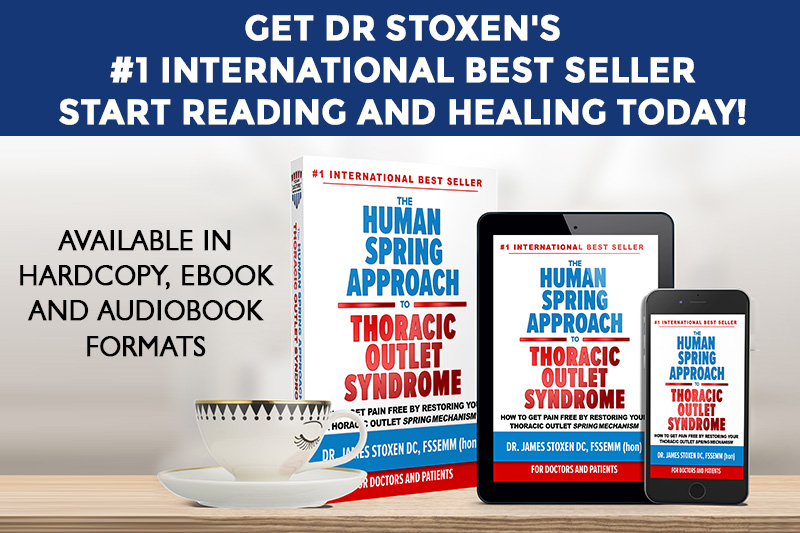
✓ Get Dr. Stoxen’s #1 International Bestselling Books
Learn how to understand, examine, and reverse your TOS—without surgery.
https://drstoxen.com/1-international-best-selling-author/
✓ Check out Team Doctors Online Courses
Step-by-step video lessons, demonstrations, and self-treatment strategies.
https://teamdoctorsacademy.com/
✓ Schedule a Free Phone Consultation With Dr. Stoxen
Speak directly with him so he can review your case and guide you on your next steps.
https://drstoxen.com/appointment/
#ThoracicOutletSyndrome #TOS #ChestPain #ThoracicPain #PostureHealth #RibCageMechanics #ScaleneMuscles #PectoralisMinor #UpperBodyBiomechanics #MuscleTension #BreathingMechanics #NeckPain #ArmPain #ThoracicSpine #MusculoskeletalEducation #PainPatterns #MovementScience #ClinicalObservation #TeamDoctors #HumanSpring
References:
- Sanders, Richard J., and Neal M. Pearce. “Thoracic Outlet Syndrome: A Common Sequela of Neck Injuries.” Clinical Orthopaedics and Related Research, no. 368 (1999): 91–100. https://pubmed.ncbi.nlm.nih.gov/10613160/
- Illig, Karl A., et al. “Thoracic Outlet Syndrome.” Journal of Vascular Surgery 53, no. 3 (2011): 845–852. https://pubmed.ncbi.nlm.nih.gov/21397400/
- Hooper, Troy L., et al. “Thoracic Outlet Syndrome: A Controversial Clinical Condition. Part 1.” Journal of Manual & Manipulative Therapy 18, no. 2 (2010): 74–83. https://pubmed.ncbi.nlm.nih.gov/21655389/
- Borrel, Francisco, et al. “Anatomy and Pathophysiology of Thoracic Outlet Syndrome.” International Journal of Anatomy and Research 6, no. 2 (2018): 5236–5242. https://www.ncbi.nlm.nih.gov/pmc/articles/PMC6221084/

Dr James Stoxen DC., FSSEMM (hon) He is the president of Team Doctors®, Treatment and Training Center Chicago, one of the most recognized treatment centers in the world.
Dr Stoxen is a #1 International Bestselling Author of the book, The Human Spring Approach to Thoracic Outlet Syndrome. He has lectured at more than 20 medical conferences on his Human Spring Approach to Thoracic Outlet Syndrome and asked to publish his research on this approach to treating thoracic outlet syndrome in over 30 peer review medical journals.
He has been asked to submit his other research on the human spring approach to treatment, training and prevention in over 150 peer review medical journals. He serves as the Editor-in-Chief, Journal of Orthopedic Science and Research, Executive Editor or the Journal of Trauma and Acute Care, Chief Editor, Advances in Orthopedics and Sports Medicine Journal and editorial board for over 35 peer review medical journals.
He is a much sought-after speaker. He has given over 1000 live presentations and lectured at over 70 medical conferences to over 50,000 doctors in more than 20 countries. He has been invited to speak at over 300 medical conferences which includes invitations as the keynote speaker at over 50 medical conferences.
After his groundbreaking lecture on the Integrated Spring-Mass Model at the World Congress of Sports and Exercise Medicine he was presented with an Honorary Fellowship Award by a member of the royal family, the Sultan of Pahang, for his distinguished research and contributions to the advancement of Sports and Exercise Medicine on an International level. He was inducted into the National Fitness Hall of Fame in 2008 and the Personal Trainers Hall of Fame in 2012.
Dr Stoxen has a big reputation in the entertainment industry working as a doctor for over 150 tours of elite entertainers, caring for over 1000 top celebrity entertainers and their handlers. Anthony Field or the popular children’s entertainment group, The Wiggles, wrote a book, How I Got My Wiggle Back detailing his struggles with chronic pain and clinical depression he struggled with for years. Dr Stoxen is proud to be able to assist him.
Full Bio) Dr Stoxen can be reached directly at teamdoctors@aol.com