Thoracic Outlet Syndrome is commonly discussed as a condition involving compressed nerves or blood vessels, but this description alone does not explain why symptoms persist despite repeated examinations. Many individuals describe ongoing arm pain, numbness, or vascular symptoms even after imaging appears “normal.” This disconnect often begins with how the shoulder is understood biomechanically. In my clinical experience, misunderstanding shoulder mechanics leads to confusion when evaluating Thoracic Outlet Syndrome.
When patients search for a thoracic outlet syndrome specialist, they are often looking for clarity rather than quick answers. The thoracic outlet is not a static tunnel formed by bones alone. It is a dynamic space that depends on how the shoulder is suspended above the rib cage. Without understanding this suspension system, it becomes difficult to explain why symptoms change with posture, fatigue, or activity.
The shoulder is not built like a rigid lever. It is supported by a coordinated suspension system that behaves like a spring. This concept becomes clear when observing high-impact athletes. Many individuals describe watching football players collide shoulder-first and immediately return to play. The forces involved in these collisions exceed what most people experience in daily life, yet nerve and vascular injury is uncommon. This observation raises important biomechanical questions.
The answer lies in how the shoulder absorbs and redistributes force. The shoulder girdle is suspended by muscles, connective tissue, and joint relationships that allow controlled movement in multiple directions. This suspension preserves space beneath the clavicle and above the rib cage. In Thoracic Outlet Syndrome, that space becomes compromised when suspension fails.
Patients often report that symptoms worsen as the day goes on. This pattern suggests a fatigue-related loss of suspension rather than a fixed structural blockage. A best doctor for thoracic outlet syndrome understands that the problem is rarely a single structure pressing on a nerve. Instead, it is a system-level collapse of spring-like mechanics.
Traditional lever-based evaluation models view the body as a series of rigid segments rotating around joints. While this model can explain simple movements, it struggles to account for energy absorption and distribution. In the thoracic outlet, lever thinking focuses on bones and angles while ignoring how soft tissues maintain spacing under load.
Those searching for a TOS expert near me are often frustrated by conflicting opinions. One clinician emphasizes posture, another focuses on imaging, while another suggests invasive procedures. These differences arise because lever-based frameworks do not adequately describe how the shoulder protects the neurovascular bundle during movement.
The thoracic outlet contains the brachial plexus, subclavian artery, and subclavian vein. These structures pass through a space that must remain adaptable. During arm elevation, rotation, and load-bearing tasks, the shoulder must rise, rotate, and suspend without collapsing downward. This is not a lever action. It is a spring response.
When individuals ask who treats thoracic outlet syndrome, they are often seeking someone who recognizes this dynamic behavior. A static examination performed in a seated or supine position may miss the moment when suspension fails. Many individuals describe symptoms that appear only during sustained activity or prolonged posture.
A thoracic outlet syndrome second opinion is frequently requested after standard approaches fail to explain fluctuating symptoms. From a spring-based perspective, variability makes sense. As tissues fatigue, elastic recoil diminishes. The shoulder gradually settles downward, narrowing the thoracic outlet.
This is why a doctor who understands thoracic outlet syndrome must look beyond isolated tests. Observing movement, endurance, and postural control provides insight into how the shoulder maintains or loses suspension over time. In my clinical experience, these observations often explain symptoms that imaging alone cannot.
Patients attempting to find thoracic outlet specialist care frequently encounter disagreement between disciplines. Neurology, orthopedics, and vascular medicine each focus on different components. Without a unifying biomechanical model, interpretations diverge. A spring-based framework integrates these perspectives by focusing on space preservation rather than single-structure compression.
A TOS specialist evaluation that includes dynamic assessment reveals how posture, breathing mechanics, and muscular endurance influence the thoracic outlet. The shoulder does not simply hang from bones. It is actively suspended, and that suspension must adapt continuously.
Those seeking the best treatment center for TOS often ask why symptoms return after temporary improvement. Lever-based interventions may temporarily alter alignment without restoring elastic behavior. Once external support is removed, collapse can recur.
A thoracic outlet syndrome doctor grounded in biomechanics recognizes that restoring function requires understanding how load is managed. This does not imply a specific intervention but emphasizes accurate explanation. Educational clarity helps patients understand why symptoms fluctuate rather than assuming structural damage.
The role of a nerve compression specialist is often misunderstood in TOS. Compression is not always constant. It may appear intermittently as suspension fails under fatigue. This explains why nerve conduction studies may be normal despite clear symptoms.
Similarly, a shoulder nerve pain specialist may observe that pain patterns change with arm position. These positional changes reflect dynamic narrowing rather than fixed entrapment. A spring model accounts for these shifts naturally.
Vascular symptoms add another layer of complexity. A vascular thoracic outlet specialist may observe changes in blood flow during arm elevation. From a suspension perspective, vascular compromise reflects loss of upward support rather than isolated vessel pathology.
Patients referred to a neurologist for arm nerve pain are often told that imaging does not show significant compression. This can be confusing. Spring mechanics explain how transient compression occurs only when suspension fails, leaving no permanent structural evidence.
Debate between orthopedic vs vascular TOS specialist perspectives often centers on anatomy versus flow. A spring-based model reconciles both by focusing on space maintenance. When space collapses, both nerve and vascular symptoms may appear.
A TOS diagnosis specialist must therefore consider endurance and load tolerance. Static tests capture only a snapshot. Many individuals describe symptoms that emerge after minutes or hours, not seconds.
Patients frequently ask where to go for TOS because they sense something is being missed. Education about shoulder suspension often provides relief by explaining why symptoms do not follow simple rules.
Searching for a TOS clinic near me reflects the desire for coordinated evaluation. Thoracic Outlet Syndrome is not isolated to one tissue type. It involves coordinated failure of muscular, connective, and postural systems.
A second opinion arm pain consultation often reveals that prior evaluations focused narrowly. Broadening the framework to include spring behavior allows symptoms to be contextualized without labeling them as mysterious.
Understanding the best care for thoracic outlet syndrome begins with understanding mechanics. Care pathways vary widely, but explanation should remain consistent. The shoulder must remain suspended to protect the thoracic outlet.
Those seeking a doctor for chronic arm pain often report long diagnostic journeys. Chronicity often reflects repeated exposure to load without restoring elastic support. Over time, fatigue becomes the dominant factor.
A specialist for unexplained arm pain may encounter overlapping symptoms that defy simple categorization. Spring mechanics provide a unifying explanation for variability, fatigue sensitivity, and positional change.
An expert in thoracic outlet syndrome recognizes that collapse of suspension is gradual. Early stages may produce subtle symptoms that worsen under sustained activity. This progression aligns with patient narratives.
A TOS evaluation center that includes movement observation can identify loss of suspension before structural changes appear. This proactive understanding reframes Thoracic Outlet Syndrome as a mechanical problem rather than a mysterious condition.
An advanced TOS treatment center often emphasizes interdisciplinary collaboration. Spring-based thinking bridges gaps between specialties by focusing on shared space rather than isolated structures.
A coordinated thoracic outlet syndrome care team benefits from shared language. When clinicians agree on mechanical principles, communication improves and conflicting explanations decrease.
Many individuals inquire about conservative treatment for thoracic outlet syndrome because they sense their problem is functional rather than structural. Education about spring mechanics supports this intuition without making claims.
Interest in non-surgical treatment for TOS often reflects concern about irreversible changes. Understanding that suspension failure can be dynamic helps patients frame decisions more clearly.
A movement-based treatment TOS framework aligns with how the shoulder actually behaves. Movement reveals whether elastic recoil is preserved or diminished.
Finally, postural correction for TOS is often discussed without context. Posture is not static alignment but sustained suspension. Without endurance, posture collapses regardless of intention.
From an engineering perspective, the shoulder functions like a living spring. When intact, it absorbs force, preserves space, and protects vulnerable structures. When compromised, the thoracic outlet narrows under load. Lever-based models cannot adequately describe this behavior.
This spring-based understanding does not promise outcomes. It provides a coherent explanation for why Thoracic Outlet Syndrome behaves unpredictably under traditional frameworks. In my clinical experience, clarity alone often changes how individuals perceive their symptoms.
Understanding mechanics does not replace clinical judgment. It refines it. When the shoulder is viewed as a suspension system rather than a lever, Thoracic Outlet Syndrome becomes understandable rather than enigmatic.
Team Doctors Resources
✓ Check out the Team Doctors Recovery Tools
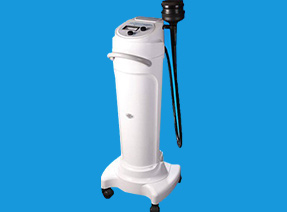
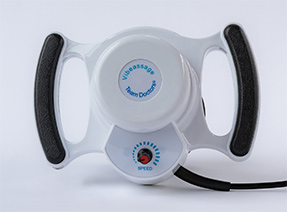
The Vibeassage Sport and the Vibeassage Pro featuring the TDX3 soft-as-the-hand Biomimetic Applicator Pad
https://www.teamdoctors.com/
✓ Get Dr. Stoxen’s #1 International Bestselling Books
Learn how to understand, examine, and reverse your TOS—without surgery.
https://drstoxen.com/1-international-best-selling-author/
✓ Check out Team Doctors Online Courses
Step-by-step video lessons, demonstrations, and self-treatment strategies.
https://teamdoctorsacademy.com/
✓ Schedule a Free Phone Consultation With Dr. Stoxen
Speak directly with him so he can review your case and guide you on your next steps.
https://drstoxen.com/appointment/
#ThoracicOutletSyndrome #TOS #ShoulderBiomechanics #NeurovascularCompression #HumanSpring #ShoulderSuspension #BrachialPlexus #PostureMechanics #MovementScience #ArmPain #VascularCompression #NerveCompression #SportsBiomechanics #ClinicalEducation #TeamDoctors #Vibeassage #TDX3 #BiomechanicalEngineering #PainScience #OrthopedicEducation
References
- Sanders, Richard J., and Neal M. Rao. “The Thoracic Outlet Syndromes.” Annals of Vascular Surgery 24, no. 1 (2010): 131–145. https://doi.org/10.1016/j.avsg.2009.07.016
- Atasoy, Ergun. “Thoracic Outlet Syndrome: Anatomy.” Hand Clinics 20, no. 1 (2004): 7–14. https://doi.org/10.1016/S0749-0712(03)00087-6
- Hooper, Timothy L., et al. “Thoracic Outlet Syndrome: A Controversial Clinical Condition.” Journal of Manual & Manipulative Therapy 18, no. 2 (2010): 74–83. https://www.tandfonline.com/doi/full/10.1179/106698110X12640740712734

Dr James Stoxen DC., FSSEMM (hon) He is the president of Team Doctors®, Treatment and Training Center Chicago, one of the most recognized treatment centers in the world.
Dr Stoxen is a #1 International Bestselling Author of the book, The Human Spring Approach to Thoracic Outlet Syndrome. He has lectured at more than 20 medical conferences on his Human Spring Approach to Thoracic Outlet Syndrome and asked to publish his research on this approach to treating thoracic outlet syndrome in over 30 peer review medical journals.
He has been asked to submit his other research on the human spring approach to treatment, training and prevention in over 150 peer review medical journals. He serves as the Editor-in-Chief, Journal of Orthopedic Science and Research, Executive Editor or the Journal of Trauma and Acute Care, Chief Editor, Advances in Orthopedics and Sports Medicine Journal and editorial board for over 35 peer review medical journals.
He is a much sought-after speaker. He has given over 1000 live presentations and lectured at over 70 medical conferences to over 50,000 doctors in more than 20 countries. He has been invited to speak at over 300 medical conferences which includes invitations as the keynote speaker at over 50 medical conferences.
After his groundbreaking lecture on the Integrated Spring-Mass Model at the World Congress of Sports and Exercise Medicine he was presented with an Honorary Fellowship Award by a member of the royal family, the Sultan of Pahang, for his distinguished research and contributions to the advancement of Sports and Exercise Medicine on an International level. He was inducted into the National Fitness Hall of Fame in 2008 and the Personal Trainers Hall of Fame in 2012.
Dr Stoxen has a big reputation in the entertainment industry working as a doctor for over 150 tours of elite entertainers, caring for over 1000 top celebrity entertainers and their handlers. Anthony Field or the popular children’s entertainment group, The Wiggles, wrote a book, How I Got My Wiggle Back detailing his struggles with chronic pain and clinical depression he struggled with for years. Dr Stoxen is proud to be able to assist him.
Full Bio) Dr Stoxen can be reached directly at teamdoctors@aol.com