When you review published explanations of Thoracic Outlet Syndrome from major medical institutions, one word appears repeatedly: compression. This repetition is not accidental. It reflects the core mechanism driving symptoms rather than a degenerative disease process.
Thoracic Outlet Syndrome is not defined by tissue breakdown or progressive structural failure. It is defined by crowding. To understand why this crowding occurs, it is necessary to identify which structures in the body are capable of creating compression.
Within the spring-mass model, muscles are the only tissues that can actively compress the body’s spring system. Bones do not shorten. Blood vessels do not tighten by themselves. Nerves do not constrict voluntarily. Only muscle tissue can generate sustained force.
The thoracic outlet itself can be visualized as a tunnel rather than a static opening. This tunnel is dynamic and responds to changes in muscle tone, posture, and load.
The shoulder complex forms the roof of this tunnel. The clavicle and scapula are not rigid beams anchored in place. They are suspended in space by muscles that control position and elevation.
Two primary contributors to shoulder suspension are the trapezius and latissimus dorsi muscles. These muscles help hold the shoulder girdle up and back, preserving space beneath the clavicle.
The rib cage forms the floor of the tunnel. Most importantly, the first rib establishes the lower boundary of the thoracic outlet.
The first rib is not a passive structure. Its position is influenced directly by muscle tension, particularly from the scalene muscles of the neck.
When the anterior and middle scalenes become chronically tight or guarded, they pull upward on the first rib. This action elevates the floor of the tunnel into the space occupied by nerves and blood vessels.
At the same time, fatigue, postural overload, or adaptive shortening in the shoulder suspension system allows the roof of the tunnel to drift downward.
The mechanics are straightforward.
The floor rises.
The roof falls.
The tunnel narrows.
This dual-direction narrowing is how compression of the brachial plexus and subclavian vessels occurs. The nerves and vessels are not damaged initially. They are crowded.
Over time, this crowding alters blood flow, nerve conduction, and tissue tolerance. Symptoms emerge gradually as the system loses its ability to adapt.
From an educational standpoint, this model explains why Thoracic Outlet Syndrome is frequently misunderstood. Imaging may appear normal. Bones may look intact. No single structure appears broken.
Yet symptoms persist because the compression is dynamic and muscular rather than structural destruction.
The problem is not what is missing. The problem is what is pulling.
When muscles maintain elevated tone, they create constant inward pressure on the thoracic outlet. This pressure fluctuates with posture, fatigue, breathing mechanics, and load.
This also explains why symptoms often worsen with prolonged sitting, arm elevation, sustained posture, or end-of-day fatigue. These conditions increase muscular demand and reduce available space.
It further explains why static tests can fail to capture the issue. Imaging taken at rest does not reflect the real-world mechanics of compression under load.
In clinical observation, Thoracic Outlet Syndrome behaves like a mechanical bottleneck rather than a single lesion. When the bottleneck tightens, symptoms increase. When it loosens, symptoms ease.
Understanding this helps clarify why treatments aimed solely at distal symptoms often fail. Treating the hand, wrist, or elbow does not change the dimensions of the tunnel upstream.
Compression must be understood before it can be interpreted correctly.
At Team Doctors®, evaluation focuses on identifying how muscular tension, shoulder suspension, and rib elevation interact to narrow the outlet. The goal is not to label structures, but to understand force relationships.
This perspective transforms Thoracic Outlet Syndrome from a confusing diagnosis into a biomechanical problem with identifiable contributors.
Compression is not random.
It is not mysterious.
It is created.
And what creates it matters more than what it affects.
When individuals understand that muscles drive compression, symptom patterns become logical rather than alarming. Fluctuation makes sense. Variability becomes expected.
Education shifts the focus away from fear and toward mechanism. Once the mechanism is understood, the condition stops feeling unpredictable.
Thoracic Outlet Syndrome is not a disease of deterioration. It is a problem of load, tension, and space.
Recognizing this distinction is foundational for anyone trying to understand why symptoms persist despite normal imaging and repeated evaluations.
The thoracic outlet narrows because forces act on it.
Those forces come from muscles.
And muscles respond to how the body is used every day.
Compression is created.
And understanding that creation is the first step toward clarity.
Team Doctors Resources
✓ Check out the Team Doctors Recovery Tools
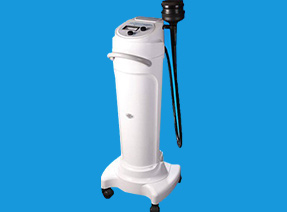
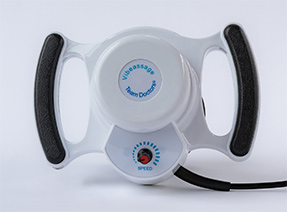
The Vibeassage Sport and the Vibeassage Pro featuring the TDX3 soft-as-the-hand Biomimetic Applicator Pad
https://www.teamdoctors.com/
✓ Get Dr. Stoxen’s #1 International Bestselling Books
Learn how to understand, examine, and reverse your TOS—without surgery.
https://drstoxen.com/1-international-best-selling-author/
✓ Check out Team Doctors Online Courses
Step-by-step video lessons, demonstrations, and self-treatment strategies.
https://teamdoctorsacademy.com/
✓ Schedule a Free Phone Consultation With Dr. Stoxen
Speak directly with him so he can review your case and guide you on your next steps.
https://drstoxen.com/appointment/
#ThoracicOutletSyndrome #TOSCompression #ThoracicOutletAnatomy #Biomechanics #MuscleGuarding #BrachialPlexus #SubclavianVessels #PostureMechanics #UpperBodyCompression #TOSAwareness #ClinicalEducation #MovementScience #RibElevation #ShoulderMechanics #ThoracicOutlet #PainPatterns #DynamicCompression #AnatomyEducation #TOSExplained #HealthEducation
References
- Sanders, Richard J., and Neal S. Pearce. “Neurogenic Thoracic Outlet Syndrome.” Journal of Vascular Surgery 36, no. 3 (2002): 669–676.
- Roos, D. B. “Thoracic Outlet Syndrome Is Underdiagnosed.” Muscle & Nerve 22, no. 1 (1999): 126–129.
- Urschel, Harold C., and R. B. Razzuk. “The Neurovascular Compression Syndromes of the Thoracic Outlet.” Annals of Thoracic Surgery 50, no. 3 (1990): 484–490.

Dr James Stoxen DC., FSSEMM (hon) He is the president of Team Doctors®, Treatment and Training Center Chicago, one of the most recognized treatment centers in the world.
Dr Stoxen is a #1 International Bestselling Author of the book, The Human Spring Approach to Thoracic Outlet Syndrome. He has lectured at more than 20 medical conferences on his Human Spring Approach to Thoracic Outlet Syndrome and asked to publish his research on this approach to treating thoracic outlet syndrome in over 30 peer review medical journals.
He has been asked to submit his other research on the human spring approach to treatment, training and prevention in over 150 peer review medical journals. He serves as the Editor-in-Chief, Journal of Orthopedic Science and Research, Executive Editor or the Journal of Trauma and Acute Care, Chief Editor, Advances in Orthopedics and Sports Medicine Journal and editorial board for over 35 peer review medical journals.
He is a much sought-after speaker. He has given over 1000 live presentations and lectured at over 70 medical conferences to over 50,000 doctors in more than 20 countries. He has been invited to speak at over 300 medical conferences which includes invitations as the keynote speaker at over 50 medical conferences.
After his groundbreaking lecture on the Integrated Spring-Mass Model at the World Congress of Sports and Exercise Medicine he was presented with an Honorary Fellowship Award by a member of the royal family, the Sultan of Pahang, for his distinguished research and contributions to the advancement of Sports and Exercise Medicine on an International level. He was inducted into the National Fitness Hall of Fame in 2008 and the Personal Trainers Hall of Fame in 2012.
Dr Stoxen has a big reputation in the entertainment industry working as a doctor for over 150 tours of elite entertainers, caring for over 1000 top celebrity entertainers and their handlers. Anthony Field or the popular children’s entertainment group, The Wiggles, wrote a book, How I Got My Wiggle Back detailing his struggles with chronic pain and clinical depression he struggled with for years. Dr Stoxen is proud to be able to assist him.
Full Bio) Dr Stoxen can be reached directly at teamdoctors@aol.com