Chronic Neck and Shoulder Pain: Why Inflammation, Muscle Guarding, and Brain Chemistry Trap the Thoracic Outlet
Introduction: When Pain Becomes a Neurological Pattern
Chronic neck pain, chronic shoulder pain, and chronic neck and shoulder pain are rarely isolated problems. When symptoms become constant neck pain or constant neck and shoulder pain, the issue has often moved beyond simple tissue irritation into a neurologically reinforced protective pattern.
Patients with chronic thoracic pain, thoracic myalgia, or recurring upper-extremity symptoms frequently cycle through treatments—massage therapy, physical therapy, chiropractic treatment, acupuncture, injections, or even surgery—only to experience a recurrence of symptoms after surgery.
Why?
Because the brain, not just the muscles, is now driving the pattern.
The Brain’s Protective Reflex: How Chemistry Locks Muscles On
Dr. James Stoxen explains a critical but often overlooked mechanism: the brain reacts chemically to inflammation, even when no structural damage is occurring.
Inflammation sends danger signals upward. The brain responds by activating what can be described as a dominant protective reflex—a neurological command that increases muscle tone to protect perceived vulnerable areas.
Over time:
- Muscles stop relaxing
- Reflexive contraction becomes automatic
- Voluntary control is reduced
- The body twists into defensive postures
This is how muscle spasms in neck, tight scalene muscles, and deep thoracic guarding develop—even without new injury.
Why the Thoracic Outlet Becomes the Compression Zone
The thoracic outlet syndrome region is uniquely vulnerable because it is not a rigid tunnel—it is a dynamic muscular corridor.
Structures commonly involved include:
- Anterior scalene muscle
- Scalene muscles
- Subclavius muscle
- Pectoralis minor
- Surrounding thoracic muscles
When protective contraction becomes chronic, these muscles shorten, thicken, and harden, leading to:
- Scar tissue entrapment
- Reduced glide between layers
- Compression of nerves, veins, and arteries
- Progressive symptom escalation
This is the foundation of postural thoracic outlet complications.
Drooping Shoulder Syndrome: A Gravity Problem, Not a Strength Problem
Many patients develop drooping shoulder syndrome or droopy shoulder syndrome, where the shoulder girdle collapses downward under gravity.
This creates:
- Tension on the brachial plexus
- Compression beneath the clavicle
- Muscle under clavicle pain
- Increased load on the pectoralis minor
Contrary to popular belief, this is not solved by strengthening alone. Without restoring neurological relaxation and spring-like suspension, strengthening often worsens compression.
Targeted droopy shoulder syndrome exercises must focus on decompression, timing, and neuromuscular control—not brute force.
Scalene Muscles: Small Muscles, Massive Impact
The muscles scalene—especially the anterior scalene muscle—play a disproportionate role in thoracic outlet compression.
Common anterior scalene syndrome symptoms include:
- Neck tightness
- Shoulder heaviness
- Arm tingling
- Hand weakness
- Breathing restriction
- Headaches
When tight scalene muscles symptoms persist, patients may be diagnosed with:
- Anterior scalene syndrome
- Anterior scalene muscle syndrome
In extreme cases, surgical procedures such as anterior scalenectomy are performed—yet symptoms often return due to unresolved neurological guarding.
Effective muscles scalene treatment and anterior scalene syndrome treatment must address brain-driven tone, not just tissue length.
Pectoralis Minor Syndrome: The Forgotten Compressor
Pectoralis minor syndrome is another major contributor to thoracic outlet compression.
The pectoralis minor:
- Attaches from ribs to coracoid
- Pulls the shoulder forward and downward
- Narrows the costoclavicular and subcoracoid spaces
Procedures like pectoralis minor tenotomy may temporarily relieve symptoms, but without restoring postural suspension and reflex relaxation, compression patterns re-establish.
Scar Tissue Entrapment and Why Surgery Often Fails Long-Term
Scar tissue does not stretch, glide, or adapt like muscle.
After surgery:
- The brain increases protective tone
- Scar tissue stiffens surrounding tissues
- Movement becomes more guarded
- Compression returns
This explains the recurrence of symptoms after surgery seen in many thoracic outlet cases.
Unless neurological control is restored, the body rebuilds the same dysfunctional pattern—often tighter than before.
Thoracic Myalgia and Chronic Thoracic Pain: The Mid-Body Driver
Thoracic myalgia and chronic thoracic pain are often dismissed, yet the thoracic spine acts as a central relay for posture and breathing.
When thoracic mobility is lost:
- Scalenes overwork
- Pectoralis minor tightens
- Cervical muscles compensate
- Shoulder girdle collapses
Restoring thoracic motion is essential in any effective thoracic outlet physical therapy plan.
Why Traditional Treatments Plateau
Many patients try:
- Thoracic outlet syndrome physical therapy
- Thoracic outlet syndrome massage
- Thoracic outlet syndrome massage treatment
- Chiropractic for thoracic outlet syndrome
- Acupuncture for thoracic outlet syndrome
These can help—but only temporarily—if the brain’s protective reflex remains active.
Passive care without neurological retraining often reinforces dependency rather than resolution.
The Missing Piece: Neurological Self-Treatment
Effective recovery requires:
- Active participation
- Sensory input to calm the nervous system
- Re-establishing muscle relaxation
- Re-educating movement patterns
This is where TOS self treatment, TOS stretches, and carefully designed TOS exercises become critical.
Exercise Is Not Just Movement—It’s Neurological Input
Correctly designed:
- Thoracic outlet syndrome exercises
- Thoracic outlet syndrome physical therapy exercises
- Exercises to relieve thoracic outlet syndrome
- Exercises for thoracic outlet syndrome
- Exercises for thoracic outlet syndrome pdf
These focus on:
- Decompression
- Rhythm
- Breathing
- Low-load neuromuscular activation
Aggressive strengthening too early reinforces protective contraction.
Myofascial Release and Sensory Reset
Myofascial release for thoracic outlet syndrome works best when used as a neurological calming tool, not a forceful mechanical intervention.
When combined with:
- Breath control
- Gentle oscillation
- Sensory awareness
It helps down-regulate the brain’s alarm response.
Deep Tissue, and Low Amplitude Vibration
Deep tissue work combined with low-amplitude vibration is one of the most effective ways to move inflammation out of chronically tight, guarded muscles because it addresses both the mechanical and neurological drivers of inflammation.
Deep tissue pressure helps break up dense, stagnant muscle fibers and adhesions that trap inflammatory byproducts, while low-amplitude vibration introduces gentle oscillation that signals the nervous system that the tissue is safe to relax.
This dual approach allows muscles that have been locked in protective contraction to finally let go, restoring normal circulation and fluid exchange.
One of the main reasons inflammation persists in muscle is poor microcirculation.
Chronically contracted muscles compress their own blood vessels and lymphatic channels, preventing metabolic waste and inflammatory chemicals from being cleared.
Deep tissue techniques decompress these vessels, while low-amplitude vibration acts like a pump, encouraging blood flow and lymphatic drainage without triggering a defensive muscle response.
This combination helps flush inflammatory mediators out of the tissue instead of forcing them deeper, which often happens with aggressive or percussive techniques.
Low-amplitude vibration is especially powerful because it communicates directly with the nervous system.
Gentle vibration activates sensory receptors that down-regulate excessive muscle tone and calm the brain’s protective reflexes.
When the nervous system relaxes its grip, muscles stop clenching, oxygen delivery improves, and inflammatory chemistry begins to normalize.
This neurological reset is something deep tissue alone often cannot achieve, which is why combining the two creates longer-lasting results.
Another advantage of this approach is that it reduces inflammation without causing additional tissue damage.
High-force techniques can create micro-trauma, which may temporarily increase inflammation even if the muscle feels looser afterward.
Deep tissue applied intelligently, paired with low-amplitude vibration, works within the body’s tolerance instead of overwhelming it.
This allows repeated treatments to build progress rather than restarting the inflammatory cycle each session.
Ultimately, deep tissue and low-amplitude vibration work so well because they restore the muscle’s natural ability to move fluids, relax reflexively, and heal itself.
By improving circulation, calming the nervous system, and releasing chronic guarding, this combination creates an internal environment where inflammation can drain away instead of being trapped.
The result is not just temporary relief, but a more sustainable return to normal muscle function and comfort.
The Core Message: You Can’t Stretch Your Way Out of a Reflex
Dr. Stoxen’s key insight is this:
If the brain believes danger is present, muscles will not relax—no matter how many treatments you receive.
Without addressing inflammation, chemistry, sleep, stress, and neurological safety, patients may undergo 85 treatments and still remain trapped in the same pattern.
Breaking the Cycle: A Smarter Path Forward
True resolution requires:
- Calming inflammatory signaling
- Restoring thoracic suspension
- Re-educating posture
- Teaching self-regulation
- Using movement as medicine
This is not about doing more—it’s about doing what the nervous system will accept.
Conclusion: Stop Fighting the Body—Teach It Safety
Thoracic outlet syndrome is not just a structural problem—it is a protective neurological strategy gone wrong.
When you address the brain, the muscles follow.
When the muscles relax, the outlet opens.
When the outlet opens, symptoms resolve.
Team Doctors Resources
✓ Check out the Team Doctors Recovery Tools
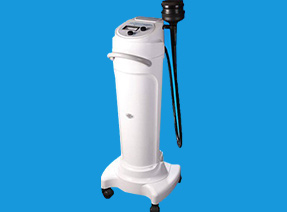
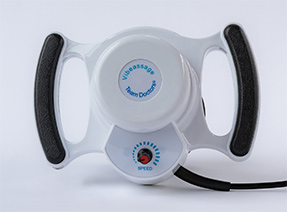
The Vibeassage Sport and the Vibeassage Pro featuring the TDX3 soft-as-the-hand Biomimetic Applicator Pad
https://www.teamdoctors.com/
✓ Get Dr. Stoxen’s #1 International Bestselling Books
Learn how to understand, examine, and reverse your TOS—without surgery.
https://drstoxen.com/1-international-best-selling-author/
✓ Check out Team Doctors Online Courses
Step-by-step video lessons, demonstrations, and self-treatment strategies.
https://teamdoctorsacademy.com/
✓ Schedule a Free Phone Consultation With Dr. Stoxen
Speak directly with him so he can review your case and guide you on your next steps.
https://drstoxen.com/appointment/

Dr James Stoxen DC., FSSEMM (hon) He is the president of Team Doctors®, Treatment and Training Center Chicago, one of the most recognized treatment centers in the world.
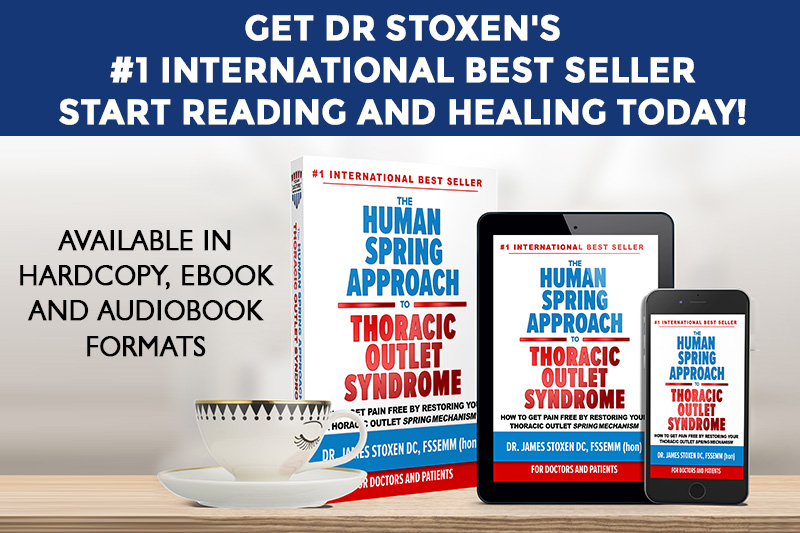
Dr Stoxen is a #1 International Bestselling Author of the book, The Human Spring Approach to Thoracic Outlet Syndrome. He has lectured at more than 20 medical conferences on his Human Spring Approach to Thoracic Outlet Syndrome and asked to publish his research on this approach to treating thoracic outlet syndrome in over 30 peer review medical journals.
He has been asked to submit his other research on the human spring approach to treatment, training and prevention in over 150 peer review medical journals. He serves as the Editor-in-Chief, Journal of Orthopedic Science and Research, Executive Editor or the Journal of Trauma and Acute Care, Chief Editor, Advances in Orthopedics and Sports Medicine Journal and editorial board for over 35 peer review medical journals.
He is a much sought-after speaker. He has given over 1000 live presentations and lectured at over 70 medical conferences to over 50,000 doctors in more than 20 countries. He has been invited to speak at over 300 medical conferences which includes invitations as the keynote speaker at over 50 medical conferences.
After his groundbreaking lecture on the Integrated Spring-Mass Model at the World Congress of Sports and Exercise Medicine he was presented with an Honorary Fellowship Award by a member of the royal family, the Sultan of Pahang, for his distinguished research and contributions to the advancement of Sports and Exercise Medicine on an International level. He was inducted into the National Fitness Hall of Fame in 2008 and the Personal Trainers Hall of Fame in 2012.
Dr Stoxen has a big reputation in the entertainment industry working as a doctor for over 150 tours of elite entertainers, caring for over 1000 top celebrity entertainers and their handlers. Anthony Field or the popular children’s entertainment group, The Wiggles, wrote a book, How I Got My Wiggle Back detailing his struggles with chronic pain and clinical depression he struggled with for years. Dr Stoxen is proud to be able to assist him.
Full Bio) Dr Stoxen can be reached directly at teamdoctors@aol.com