Thoracic Outlet Syndrome is one of the most intense patterns of sustained muscle tension observed in the human body. It affects the neck, chest, collarbone, shoulder, and arm simultaneously.
In many individuals, Thoracic Outlet Syndrome produces forces strong enough to distort posture and twist the entire upper body into a chronic pain state.
This is not simple discomfort. It represents a structural distortion driven by involuntary muscle contraction and inflammation-based reflex guarding.
The muscles surrounding the thoracic outlet pull the shoulder downward while simultaneously lifting the rib cage upward. This opposing force collapses the available space.
As the outlet narrows, three critical structures are compressed: the brachial plexus, the subclavian artery, and the subclavian vein.
This compression explains the classic symptom patterns patients describe. Nerve compression leads to tingling, numbness, and shooting pain.
Arterial compression contributes to coldness, weakness, and gradual muscle atrophy in the arm and hand.
Venous compression results in swelling, heaviness, and increased risk of clot formation in the upper extremity.
Beyond these symptoms, there is a broader mechanical consequence. Sustained muscle contraction applies rotational forces across the neck, chest, scapulae, and upper spine.
Over time, these forces twist the torso, alter rib cage position, and lock the body into a guarded pain posture.
Many evaluations focus on creating a larger anatomical opening by removing bone or muscle. This approach assumes space alone is the problem.
A functional solution requires addressing all three thoracic outlet choke points, not just one anatomical location.
The first choke point is the interscalene triangle, where hypertonic scalene muscles elevate the first rib upward into the outlet.
The second is the costoclavicular space, where the rib cage rises while the clavicle and shoulder are pulled downward, compressing the passageway.
The third is the sub-pectoralis minor space, where the pectoralis minor muscle can compress nerves and vessels beneath the collarbone.
Each choke point is driven by the same underlying mechanism: muscle hypertonicity, splinting, and guarding caused by inflammation.
Because of this, determining which muscles are inflamed and which choke points are active is essential for meaningful evaluation.
This process is accomplished through inflammation mapping, a detailed hands-on examination.
During inflammation mapping, each of the twelve muscles influencing thoracic outlet space is examined from origin to insertion using methodical pressure.
As each muscle is assessed, patients report tenderness on a numerical scale that reflects inflammation severity.
This creates an objective map showing which muscles are inflamed, how intense the inflammation is, and how compression is occurring.
The map also reveals how rotational forces are twisting the upper body and maintaining chronic pain patterns.
Once this information is established, a logical plan can be developed to reduce inflammation and calm reflex muscle guarding.
When inflammation decreases, involuntary contraction begins to shut down. Muscles stop pulling the shoulder downward and lifting the rib cage upward.
As tone normalizes, compression is reduced across all involved choke points rather than one isolated area.
This allows the thoracic outlet to reopen dynamically while relieving twisting forces acting on the upper body.
This approach contrasts with surgical first rib resection and scalenectomy, which address only the interscalene triangle.
Removing a rib or cutting two muscles does not directly resolve inflammation-driven contraction in the chest, shoulder, or costoclavicular region.
As a result, twisting forces and compression may persist elsewhere despite structural alteration.
At Team Doctors®, evaluation and care emphasize restoring balanced muscle tone and rib cage mechanics across the entire thoracic outlet.
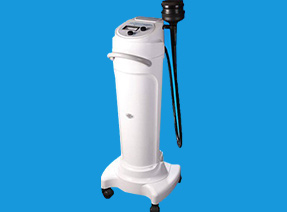
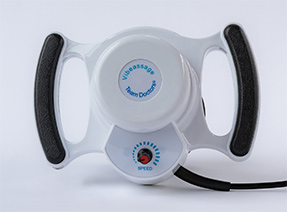
This includes hands-on techniques, targeted pressure, and vibration-based tools such as Vibeassage®, Vibeassage® Sport, and Vibeassage® Pro.
These tools feature the TDX3 soft-as-the-hand Biomimetic Applicator Pad, designed to interact with muscle tissue in a controlled manner.
Rib cage mechanics are addressed globally, not just at the first rib, allowing downward and outward repositioning of the thorax.
Patients who have undergone this approach include individuals with severe TOS, persistent symptoms after surgery, and prior venous clot history.
Clinical observation shows that when muscle-driven forces are reduced, the body begins to untwist naturally.
As rotational stress decreases, chronic pain patterns involving the neck, chest, shoulders, and upper spine often diminish.
Thoracic Outlet Syndrome is not a single-point compression problem. It is a system-wide mechanical distortion driven by inflammation and muscle behavior.
Understanding this helps explain why symptoms are widespread and why local solutions alone often fall short.
A comprehensive evaluation of muscle tone, inflammation, and choke point involvement provides clarity that imaging alone cannot.
Thoracic Outlet Syndrome requires an engineering perspective that considers force, tension, and movement rather than static anatomy.
Recognizing how muscle-driven compression twists the body allows for more informed decisions and realistic expectations.
Team Doctors Resources
✓ Check out the Team Doctors Recovery Tools
The Vibeassage Sport and the Vibeassage Pro featuring the TDX3 soft-as-the-hand Biomimetic Applicator Pad
https://www.teamdoctors.com/
✓ Get Dr. Stoxen’s #1 International Bestselling Books
Learn how to understand, examine, and reverse your TOS—without surgery.
https://drstoxen.com/1-international-best-selling-author/
✓ Check out Team Doctors Online Courses
Step-by-step video lessons, demonstrations, and self-treatment strategies.
https://teamdoctorsacademy.com/
✓ Schedule a Free Phone Consultation With Dr. Stoxen
Speak directly with him so he can review your case and guide you on your next steps.
https://drstoxen.com/appointment/
#ThoracicOutletSyndrome #TOSMechanics #ChronicPainPatterns #UpperBodyPain #ThoracicOutletEngineering #MuscleGuarding #InflammationMapping #TOSAwareness #NerveCompression #VascularCompression #Biomechanics #TeamDoctors #DrStoxen #NonSurgicalCare #ThoracicOutlet #PosturalDistortion #ClinicalEducation #MuscleHypertonicity #PainScience #PatientEducation
References
- Illig, Karl A., et al. “Thoracic Outlet Syndrome.” Journal of Vascular Surgery 53, no. 3 (2011): 845–852. https://doi.org/10.1016/j.jvs.2010.09.055
- Sanders, Richard J., and Neal S. Pearce. “The Treatment of Thoracic Outlet Syndrome.” Journal of Vascular Surgery 55, no. 4 (2012): 1053–1062. https://doi.org/10.1016/j.jvs.2011.10.121
- Atasoy, Ergun. “Thoracic Outlet Compression Syndrome.” Orthopedic Clinics of North America 27, no. 2 (1996): 265–303.
- Povlsen, Sebastian, et al. “Treatment for Thoracic Outlet Syndrome.” Cochrane Database of Systematic Reviews (2014). https://doi.org/10.1002/14651858.CD007218

Dr James Stoxen DC., FSSEMM (hon) He is the president of Team Doctors®, Treatment and Training Center Chicago, one of the most recognized treatment centers in the world.
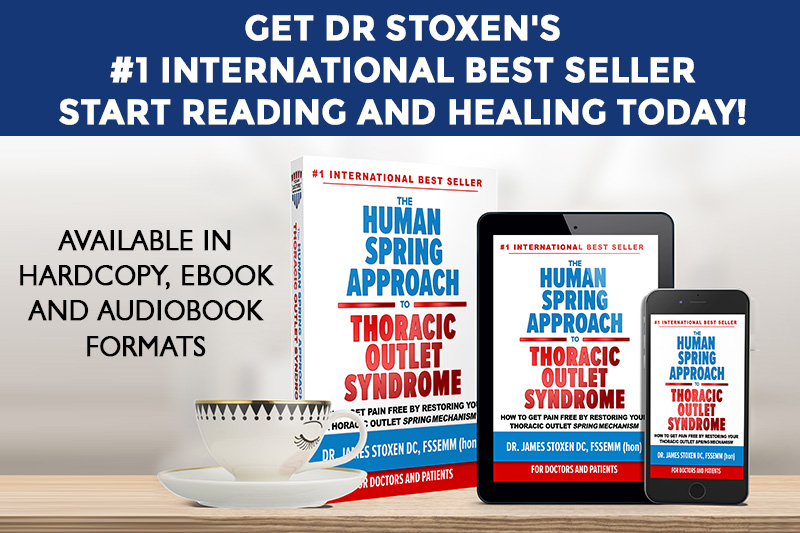
Dr Stoxen is a #1 International Bestselling Author of the book, The Human Spring Approach to Thoracic Outlet Syndrome. He has lectured at more than 20 medical conferences on his Human Spring Approach to Thoracic Outlet Syndrome and asked to publish his research on this approach to treating thoracic outlet syndrome in over 30 peer review medical journals.
He has been asked to submit his other research on the human spring approach to treatment, training and prevention in over 150 peer review medical journals. He serves as the Editor-in-Chief, Journal of Orthopedic Science and Research, Executive Editor or the Journal of Trauma and Acute Care, Chief Editor, Advances in Orthopedics and Sports Medicine Journal and editorial board for over 35 peer review medical journals.
He is a much sought-after speaker. He has given over 1000 live presentations and lectured at over 70 medical conferences to over 50,000 doctors in more than 20 countries. He has been invited to speak at over 300 medical conferences which includes invitations as the keynote speaker at over 50 medical conferences.
After his groundbreaking lecture on the Integrated Spring-Mass Model at the World Congress of Sports and Exercise Medicine he was presented with an Honorary Fellowship Award by a member of the royal family, the Sultan of Pahang, for his distinguished research and contributions to the advancement of Sports and Exercise Medicine on an International level. He was inducted into the National Fitness Hall of Fame in 2008 and the Personal Trainers Hall of Fame in 2012.
Dr Stoxen has a big reputation in the entertainment industry working as a doctor for over 150 tours of elite entertainers, caring for over 1000 top celebrity entertainers and their handlers. Anthony Field or the popular children’s entertainment group, The Wiggles, wrote a book, How I Got My Wiggle Back detailing his struggles with chronic pain and clinical depression he struggled with for years. Dr Stoxen is proud to be able to assist him.
Full Bio) Dr Stoxen can be reached directly at teamdoctors@aol.com