When Jonathan first contacted me from Denver, Colorado, he sounded like so many patients I’ve met over the last four decades—intelligent, exhausted, frightened, and convinced he was running out of options.
What he didn’t know then, and what he would come to discover, was that the pain destroying his life was not the mysterious, hopeless monster he had been told it was. It had a source.
And with the right knowledge, skill, and time, it also had a solution.
His story began long before he ever reached my clinic.
In 2018, Jonathan was a project engineer for a large construction management firm, often working 60 to 80 hours a week. His job demanded constant computer work, phone use, planning, coordination, and high stress—all done in poor posture, under deadlines, compensating with tense shoulders and overworked forearm muscles.
It was the perfect recipe for escalating muscle spasms in neck, chronic upper-body tightness, and progressive nerve compression that would one day erupt into full-blown thoracic outlet syndrome.
He told me the burning in his hands and forearms began subtly.
At first, it was just discomfort—something he tried to ignore.
But within weeks it became searing, relentless burning, the kind that makes sleep impossible and daily life agonizing.
He visited a primary care physician who told him he had carpal tunnel syndrome and sent him back to work with wrist braces and Advil.
But his symptoms didn’t match classic carpal tunnel.
He described numb fingers, numbness in hand, and deep hand numbness and tingling that also traveled up the forearm.
Worse, he felt numbness in arm and hand with shoulder pain, which is not the typical pattern of simple wrist-based compression.
Soon his hands felt cold—classic cold hands presentation—and occasionally he noticed a bluish tint to one finger, a frightening vascular symptom commonly called blue finger.
At the time, no one recognized this as part of a bigger picture.
The pain escalated so rapidly that when he clenched his fists, he could hear popping noises from across the room—evidence of severe tension in the forearm fascia and flexor mass.
His arms felt like bricks—rigid, inflamed, impenetrable. He sought more help and was told he had radial tunnel syndrome.
He went through cupping, Graston, massage therapy, physical therapy, and various manual techniques. None of them reduced the burning. None relieved the tension.
None explained why his arms felt dead, swollen, and electrically alive at the same time.
As his forearms worsened, his neck followed. He began experiencing thoracic myalgia, lightning-like pain in the sides of his neck, and pulsating sensations that terrified him.
The scalene muscles—already strained from years of postural collapse—tightened into rigid ropes.
He began developing tight scalene muscles, tight scalene muscles symptoms, and pressure beneath the collarbone that I later recognized as classic muscle under clavicle pain associated with thoracic outlet compression.
At work, he could barely type. At home, he could barely use his phone.
Eventually, he laid down to work because sitting made the burning unbearable. Friends noticed. His girlfriend, now his wife, grew increasingly concerned.
Her friends asked her how Jonathan would someday hold a baby if he couldn’t lift even a few pounds without pain.
He started to worry he wouldn’t be able to provide for his future family. And he was right to worry—the condition was propagating at frightening speed.
Doctors ordered EMGs and nerve conduction studies.
The results showed significant nerve irritation—proof that the compression was not imaginary. He tried injections, dry needling, acupuncture, chiropractic treatment, stretching, more therapy.
He tried every modality generally recommended, including myofascial release for thoracic outlet syndrome, yet nothing worked.
That’s because the underlying issue was never addressed.
The source of Jonathan’s suffering was not in his hands at all—it was in his thoracic outlet. His anterior scalene muscle had shortened and thickened, placing pressure on the brachial plexus. His pectoralis minor was clamping the neurovascular bundle downward.
The subclavius muscle was rigid. The thoracic muscles were inflamed. His symptoms matched classic anterior scalene syndrome symptoms, pectoralis minor syndrome, anterior scalene muscle syndrome, and even early vascular compromise.
In cases like Jonathan’s, where chronic inflammation traps tissue in a feedback loop, the muscles no longer behave like healthy contractile tissue.
They become dense, fibrotic, and electrically overactive.
The neck becomes locked. The nervous system becomes hypersensitive.
And the patient becomes stuck in a cycle they cannot exit without outside help.
He didn’t know this yet, but he was on the path toward the surgeries doctors had recommended: anterior scalenectomy, pectoralis minor tenotomy, and first-rib resection.
He had even scheduled a thoracic outlet operation at Johns Hopkins, believing this was his last hope.
But two things stopped him.
First, the prognosis for surgery was poor—success rates as low as 30%, often only measured two years after surgery, and rarely considering long-term recurrence. Second, he discovered my lecture from a medical conference overseas and began researching my work.
He reached out, ordered my book on the Human Spring Approach to thoracic outlet syndrome, and realized that his condition could be reversed—if treated properly.
When I finally saw Jonathan in person, the severity of his condition was immediately clear.
His arm was toxic with inflammation. His thoracic outlet was collapsing. His pectoralis minor was clamping downward while his anterior scalene muscle pulled upward, narrowing the tunnel like a vice.
The scalene muscles were rigid. The subclavius muscle was swollen.
He had pain characteristics of tingling ribs symptoms, vascular compromise, and neurological compression.
This was severe TOS—both neurogenic and inflammatory.
I told him the truth:
“To reverse this, we will need 40–50 hours of hands-on decompression and mechanical inflammation removal.”
He didn’t flinch. He simply said, “Let’s do it.”
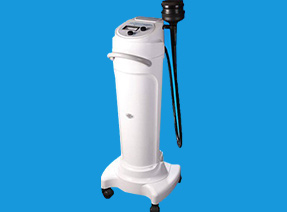
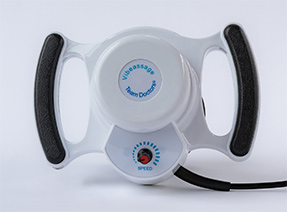
We began with vibration therapy using the Vibeassage devices—precisely engineered to penetrate deeply without bruising the tissue. After that came manual decompression.
For hours each day, I applied pressure point by point, breaking the neurological contraction patterns one at a time.
This was not general massage.
This was not stretching. This was not generic thoracic outlet syndrome physical therapy or standard thoracic outlet syndrome exercises.
This was reprogramming the muscles themselves.
Every inch of the scalene muscles, every fiber of the pectoralis minor, every strand of the thoracic muscles, every area of muscle under clavicle pain, every trigger point involved in the cycle of compression was released.
It was the only way to reverse anterior scalene syndrome, prevent the need for anterior scalenectomy, and avoid pectoral minor tenotomy.
By day three, Jonathan began noticing what patients rarely experience elsewhere:
Warmth returning to the hand.
Color returning to the fingers.
Pain dissipating.
Movement returning.
Strength awakening.
His symptoms of hand numbness tingling, numbness in arm and hand, and numbness in arm and hand with shoulder pain diminished rapidly.
The burning eased. The forearms softened. The muscles scalene returned to normal texture. The neurological firing calmed.
By day five, he told me, “This is the first time in three years I believe I can be pain-free.”
By day ten, he no longer had symptoms.
He wasn’t cured by luck or chance.
He was cured because we addressed every part of the thoracic outlet—not two muscles, not stretching routines, not generic therapy.
We broke the inflammatory loop. We decompressed the neural pathways. We restored the mechanical spring of the upper body.
Jonathan returned home a new man.
Three years later, he remains pain-free. No burning. No numbness. No tension. No surgeries. And no medications.
He avoided the permanent disability he feared.
He avoided losing his career, his relationship, and his identity.
His wife no longer worries about his future as a father.
His life returned because he chose the path of knowledge, precision, and effort.
His story is one of the most powerful reminders that thoracic outlet syndrome— even severe cases with blue finger, vascular narrowing, neurological compression, and deep inflammatory toxicity—can be reversed.
Not with shortcuts.
Not with guesswork.
But with the right understanding, the right tools, and the right treatment.
And Jonathan proved that.
Team Doctors Resources
✓ Team Doctors Recovery Tools
Vibeassage Sport & Pro featuring the TDX3 soft-as-the-hand Biomimetic Applicator Pad
https://www.teamdoctors.com/
✓ Dr. Stoxen’s Bestselling Books
Learn how to understand, examine, and reverse your TOS—without surgery.
https://drstoxen.com/1-international-best-selling-author/
✓ Team Doctors Online Courses
Step-by-step lessons, demonstrations, and self-treatment strategies.
https://teamdoctorsacademy.com/
✓ Schedule a Free Phone Consultation
Speak directly with Dr. Stoxen to review your case.
https://drstoxen.com/appointment/
#ThoracicOutletSyndrome #TOSRecovery #ScaleneSyndrome #NeurogenicTOS #ArterialTOS #ChronicPainSupport #NeckPainRelief #ArmNumbnessRelief #ShoulderPainHelp #MyofascialReleaseTherapy #NonSurgicalHealing #DeepTissueRecovery #ForearmCompartmentSyndrome #ExertionalCompartmentSyndrome #ForearmPressureInjury #ChronicForearmPain #CompartmentSyndromeRecovery

Dr James Stoxen DC., FSSEMM (hon) He is the president of Team Doctors®, Treatment and Training Center Chicago, one of the most recognized treatment centers in the world.
Dr Stoxen is a #1 International Bestselling Author of the book, The Human Spring Approach to Thoracic Outlet Syndrome. He has lectured at more than 20 medical conferences on his Human Spring Approach to Thoracic Outlet Syndrome and asked to publish his research on this approach to treating thoracic outlet syndrome in over 30 peer review medical journals.
He has been asked to submit his other research on the human spring approach to treatment, training and prevention in over 150 peer review medical journals. He serves as the Editor-in-Chief, Journal of Orthopedic Science and Research, Executive Editor or the Journal of Trauma and Acute Care, Chief Editor, Advances in Orthopedics and Sports Medicine Journal and editorial board for over 35 peer review medical journals.
He is a much sought-after speaker. He has given over 1000 live presentations and lectured at over 70 medical conferences to over 50,000 doctors in more than 20 countries. He has been invited to speak at over 300 medical conferences which includes invitations as the keynote speaker at over 50 medical conferences.
After his groundbreaking lecture on the Integrated Spring-Mass Model at the World Congress of Sports and Exercise Medicine he was presented with an Honorary Fellowship Award by a member of the royal family, the Sultan of Pahang, for his distinguished research and contributions to the advancement of Sports and Exercise Medicine on an International level. He was inducted into the National Fitness Hall of Fame in 2008 and the Personal Trainers Hall of Fame in 2012.
Dr Stoxen has a big reputation in the entertainment industry working as a doctor for over 150 tours of elite entertainers, caring for over 1000 top celebrity entertainers and their handlers. Anthony Field or the popular children’s entertainment group, The Wiggles, wrote a book, How I Got My Wiggle Back detailing his struggles with chronic pain and clinical depression he struggled with for years. Dr Stoxen is proud to be able to assist him.
Full Bio) Dr Stoxen can be reached directly at teamdoctors@aol.com