In my clinical experience, some of the most emotional and eye-opening cases come from individuals who have undergone procedures that never addressed the true source of their symptoms. This particular story highlights how missed thoracic outlet choke points can lead to years of unnecessary suffering. It begins with a mother watching her teenage son, Brady, lose function in his arms despite undergoing a first rib resection and scalenectomy, surgeries designed to widen the interscalene triangle. When circulation did not improve after the operation, it raised an important question: was the real problem located somewhere else?
Brady’s mother described years of relentless pain, severe cold hands, loss of strength, and difficulty performing everyday tasks. He struggled to hold utensils, open doors, and even manage a cell phone. The coldness in his hands was so intense that he repeatedly warmed them under hot water, sometimes ten times a day. Despite this, the recommendation from surgeons was to repeat the same procedure on the left side, even though the right-side operation did not restore blood flow. This is often a sign that another thoracic outlet choke point is involved.
During evaluation, it became clear that Brady’s symptoms were not coming from the interscalene region alone. Several other potential compression sites required examination. One such area involved the pectoralis minor, a muscle capable of pulling the shoulder downward into the thoracic outlet and contributing to subclavian vein obstruction. Nearby muscles such as the coracobrachialis, subclavius, and biceps short head can also alter shoulder mechanics. These structural changes can mimic neurovascular compression when the real issue is muscular tension.
Another overlooked pattern was hyperabduction syndrome, where the head of the humerus shifts forward, stretching the shoulder capsule and irritating nearby tissues. This subtle displacement can create symptoms similar to brachial plexus irritation. Many individuals develop this pattern from weight training, trauma, or chronic forward-flexed posture. If the capsule becomes inflamed, shoulder positioning may worsen, narrowing the thoracic outlet even further.
To identify the true choke points, I performed detailed inflammation mapping, a process that evaluates how soft tissues respond to pressure. When pressure was applied to Brady’s biceps, coracobrachialis, and upper arm musculature, his symptoms were reproduced. This finding matched previous cases, such as a woman whose persistent tingling remained after both a cervical fusion and a rib resection. Once deep tissue work targeted the inflamed arm muscles, 90% of her symptoms disappeared within a day.
However, the most significant choke point for Brady was surprisingly located in the forearms. Years of gaming, texting, and sustained gripping created patterns similar to exertional compartment syndrome. The forearm muscles were fatigued, swollen, and releasing inflammatory chemicals that triggered spinal reflexes. These reflexes caused additional muscle guarding, worsening the compression and restricting blood flow to the hand. When this cycle intensifies, individuals may experience weakness, coldness, and rapid loss of function.
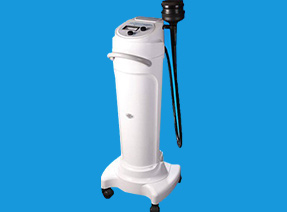
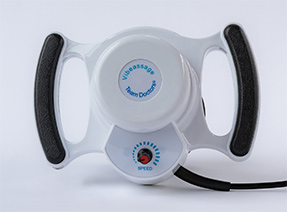
Over the next several days, we applied focused deep tissue therapy and vibration massage using instruments such as the Vibeassage®, Vibeassage® Sport, and Vibeassage® Pro featuring the TDX3 soft-as-the-hand Biomimetic Applicator Pad. These tools helped reduce soft-tissue congestion, improve circulation, and interrupt the guarding cycle. The most dramatic moment occurred when Brady woke up with warm hands for the first time in years. By the fifth day, his hands were hot—a sign that blood flow had returned.
His mother described the moment as indescribable. After years of watching her son struggle, she finally saw him improving. The severe, chronic pain vanished. He regained hope for a normal life—one where he could play hockey again and return to activities he loved.
What made this case even more meaningful was the effort to ensure Brady received care despite financial and travel limitations. Without passports or visas, traveling to the U.S. was not possible. To ensure he received treatment, I traveled to Toronto to perform the necessary work, reducing fees to make the care accessible. This case reinforced how vital it is to take time to evaluate every potential thoracic outlet compression site instead of relying solely on imaging or assuming symptoms originate from the interscalene region.
In summary, Brady’s story demonstrates that many individuals suffer because the wrong choke point is treated. Comprehensive evaluation of the pectoralis minor, coracobrachialis, biceps, forearm flexors, and shoulder mechanics is essential to correctly identify the source of symptoms. When the true compression site is addressed, recovery becomes possible—even after years of struggle.
Team Doctors Resources
✓ Check out the Team Doctors Recovery Tools
The Vibeassage Sport and the Vibeassage Pro featuring the TDX3 soft-as-the-hand Biomimetic Applicator Pad
https://www.teamdoctors.com/
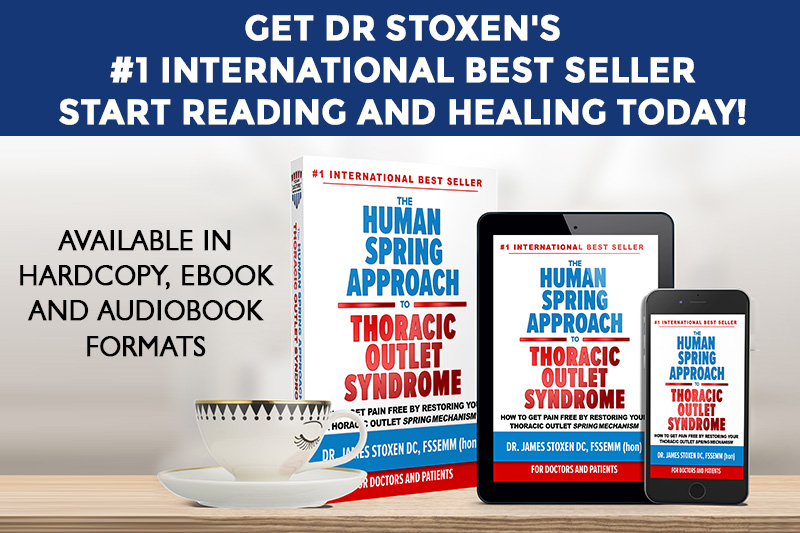
✓ Get Dr. Stoxen’s #1 International Bestselling Books
Learn how to understand, examine, and reverse your TOS—without surgery.
https://drstoxen.com/1-international-best-selling-author/
✓ Check out Team Doctors Online Courses
Step-by-step video lessons, demonstrations, and self-treatment strategies.
https://teamdoctorsacademy.com/
✓ Schedule a Free Phone Consultation With Dr. Stoxen
Speak directly with him so he can review your case and guide you on your next steps.
https://drstoxen.com/appointment/
#thoracicoutletsyndrome #TOS #pectoralisminor #brachialplexus #subclavianvein #firstribresection #muscleguarding #hyperabduction #forearmcompartment #gaminginjury #upperextremitypain #coldhands #posturemechanics #inflammationcycle #deepTissue #TeamDoctors #successstory #armweakness #nervecompression #vascularcompression
References
- Illig, Karl A., et al. Thoracic Outlet Syndrome. Springer, 2013. https://link.springer.com/book/10.1007/978-1-4614-4833-0
- Hooper, T. L., et al. “Thoracic Outlet Syndrome: A Functional Approach.” Journal of Manual & Manipulative Therapy, 2010. https://doi.org/10.1179/jmt.2010.18.2.79
- Sanders, R. J., and Annest, S. J. “Thoracic Outlet Syndrome: A Review.” Neurologic Clinics, 2018. https://doi.org/10.1016/j.ncl.2018.01.008
- Povlsen, B., et al. “Treatment for Neurogenic Thoracic Outlet Syndrome.” Journal of Hand Surgery, 2014. https://doi.org/10.1177/1753193413509808

Dr James Stoxen DC., FSSEMM (hon) He is the president of Team Doctors®, Treatment and Training Center Chicago, one of the most recognized treatment centers in the world.
Dr Stoxen is a #1 International Bestselling Author of the book, The Human Spring Approach to Thoracic Outlet Syndrome. He has lectured at more than 20 medical conferences on his Human Spring Approach to Thoracic Outlet Syndrome and asked to publish his research on this approach to treating thoracic outlet syndrome in over 30 peer review medical journals.
He has been asked to submit his other research on the human spring approach to treatment, training and prevention in over 150 peer review medical journals. He serves as the Editor-in-Chief, Journal of Orthopedic Science and Research, Executive Editor or the Journal of Trauma and Acute Care, Chief Editor, Advances in Orthopedics and Sports Medicine Journal and editorial board for over 35 peer review medical journals.
He is a much sought-after speaker. He has given over 1000 live presentations and lectured at over 70 medical conferences to over 50,000 doctors in more than 20 countries. He has been invited to speak at over 300 medical conferences which includes invitations as the keynote speaker at over 50 medical conferences.
After his groundbreaking lecture on the Integrated Spring-Mass Model at the World Congress of Sports and Exercise Medicine he was presented with an Honorary Fellowship Award by a member of the royal family, the Sultan of Pahang, for his distinguished research and contributions to the advancement of Sports and Exercise Medicine on an International level. He was inducted into the National Fitness Hall of Fame in 2008 and the Personal Trainers Hall of Fame in 2012.
Dr Stoxen has a big reputation in the entertainment industry working as a doctor for over 150 tours of elite entertainers, caring for over 1000 top celebrity entertainers and their handlers. Anthony Field or the popular children’s entertainment group, The Wiggles, wrote a book, How I Got My Wiggle Back detailing his struggles with chronic pain and clinical depression he struggled with for years. Dr Stoxen is proud to be able to assist him.
Full Bio) Dr Stoxen can be reached directly at teamdoctors@aol.com