I have treated world-class entertainers from every corner of the globe, but I will never forget the day The Boss Clown of the Ringling Bros. and Barnum & Bailey Circus stepped into my clinic.
A man who had spent decades bringing joy to millions now walked with the burden of unrelenting pain.
The circus spotlight had dimmed in his life, replaced by something he never expected: progressive neck pain, hand numbness and tingling, radiating weakness, and the creeping fear that his career—and identity—might be slipping away.
He came to me after years of misdiagnosis.
Some doctors told him it was “just stress.” Others blamed aging, or “overuse,” or even suggested early arthritis.
One physician diagnosed carpal tunnel syndrome, another insisted it was simple rotator cuff irritation.
But nothing explained the numbness in arm and hand, the cold hands, the occasional blue finger, the sudden jolts beneath the clavicle, or the terrifying tightness in his upper chest that made him think he was having a heart attack in the middle of a show.
I remember the day clearly.
He entered my office wearing normal street clothes, but the essence of circus life followed him—vibrant energy, expressive eyes, the posture of a man who had lifted acrobats, juggled flaming torches, twisted balloons for children, and balanced his world on a single comedic gesture. But beneath that energy, he carried suffering.
“Doc,” he said, setting down a duffel bag embroidered with circus patches, “I can’t raise my arm without fire shooting down to my fingers.
I can’t grip props. I can’t do my makeup without shaking. And I sure as hell can’t climb the ladder to the high platform. Something is choking the life out of my upper body.”
His symptoms screamed a diagnosis no one had ever mentioned to him: thoracic outlet syndrome.
As I began the examination, the truth unfolded. His scalene muscles were like braided ropes of inflammation.
The pectoralis minor pulled downward with an iron grip.
The subclavius muscle was dense, rigid, almost stone-like.
Every test position we used triggered changes: his pulse diminished, his fingers cooled, the tingling worsened.
He had classic anterior scalene syndrome, signs of pectoralis minor syndrome, and unmistakable thoracic myalgia radiating across his ribs.
When he tilted his head, the nerve supply faltered.
When he elevated his arm, blood flow dropped dramatically. The tension of years spent performing physically demanding routines—carrying heavy props, swinging from ladders, repeatedly shrugging and elevating his arms in exaggerated comedic gestures—had compressed the nerves and vessels of the thoracic outlet. He was trapped by his own muscular armor.
“This is why the heart tests have been normal,” I told him. “This isn’t cardiac. It’s structural.
The compression is coming from multiple directions.
The good news? You don’t need a pectoralis minor tenotomy, you don’t need an anterior scalenectomy, and you don’t need anything removed from your rib cage.
You need decompression of all twelve muscles controlling this region. And we can reverse this.”
He stared at me, silent, then whispered, “So I’m not broken?”
“No,” I said, placing a hand on his shoulder. “You’re inflamed. You’re compressed. But you’re not broken.”
We began treatment the next morning. For him, it felt like stepping out of the circus ring and into a battlefield against his own tight musculature.
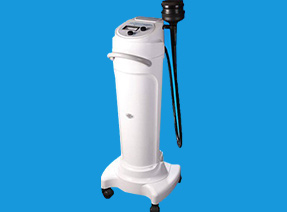
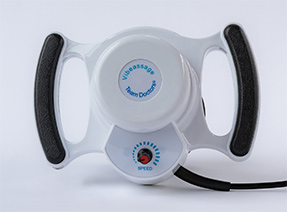
First came the Vibeassage Sport and Vibeassage Pro, tools that replicate the softness of the human hand while delivering vibration designed often dense fibrotic muscle. The moment the vibration touched his neck, he gasped—not in pain, but in the shock of relief.
“It feels like something is finally moving,” he murmured.
Hours of deep, precise muscle reprogramming followed—fraction of an inch by fraction of an inch—across the anterior scalene muscle, the pectoralis minor, the thoracic muscles, the subclavius, and the rigid bands that had formed across years of physical comedy.
Each tender point was held until the pain melted, the muscle softened, and the neural reflex released.
It was long, focused work: decompressing every fiber until the concrete shell around his upper body cracked and dissolved.
Between sessions, I taught him TOS exercises, customized TOS stretches, and specialized thoracic outlet syndrome physical therapy exercises designed to retrain movement.
He practiced TOS self-treatment techniques, integrating gentle myofascial release for thoracic outlet syndrome, and he learned how to maintain gains using exercises for thoracic outlet syndrome pdf materials.
By the end of day two, he felt warmth returning to his fingertips.
By day three, the numb fingers were gone. On day four, he lifted his arm overhead without the stabbing electric pain.
On day five, he cried—not because of pain, but because he realized he could return to the circus ring.
“You’ve given me back the thing I thought I’d lost forever,” he told me.
His voice cracked.
“My career… my body… my laughter.”
For a performer like The Boss Clown, healing was not just a physical necessity—it was an identity recovery.
The circus had shaped his muscles, his posture, his reflexes, and even his sense of self.
Years of exaggerated movements, dramatic gestures, heavy-costume performances, and long tours in cramped trailers created a perfect storm for upper-body breakdown.
As we continued treatment through the week, I saw layer after layer of inflammation, reflex guarding, and old micro-injuries unravel.
On the morning of Day 6, he walked into the clinic with a bounce—not the stiff, protective shuffle of the first day.
“Doc,” he said, “my body feels twenty years younger.”
But the journey to this moment had been deeper than he expected. As I treated him with hours of targeted deep tissue decompression, he often shared pieces of his past.
He told me about 4-hour shows, back-to-back weekends, 14-foot falls onto padded mats, comedic tumbles, carrying 40-pound prop trunks, holding contortionists overhead, and gripping ropes through a thousand performances. Behind the laughter was a lifetime of strain.
His thoracic outlet had been collapsing long before the symptoms appeared.
He recalled one moment vividly: a show in Cleveland where he felt a sudden burning beneath the clavicle while climbing a ladder to perform a high-platform gag.
“That was the first time,” he said, “I felt the kind of pain that scared me.”
That pain was the beginning of muscle spasms in neck, tight scalene muscles, and the creeping burn of thoracic outlet syndrome he didn’t yet recognize.
When the numbness crept into his ring and pinky fingers, he blamed it on props.
When the muscle under clavicle pain woke him at night, he blamed age.
When the tingling shot down his arm, ending in trembling hands, he blamed exhaustion.
But nothing prepared him for the moment he couldn’t hold a juggling club.
“That,” he said, “was the moment I realized I might lose everything.”
Most performers—circus, Broadway, even elite athletes—are conditioned to ignore pain. They push through.
They adapt. They hide weakness because the show must go on.
But the human body keeps score, especially when tight scalene muscles symptoms, pectoralis minor syndrome, and anterior scalene syndrome symptoms are misread as simple fatigue.
During treatment, I took him through the entire anatomical map of the thoracic outlet.
“There are twelve muscles that contribute to your compression,” I explained.
“Surgeons target two or three. But look at this—your scalene muscles, your pectoralis minor, your subclavius muscle, the deep rotators, the rib elevators—all of these work together. When they tighten, they create a clamp.”
He nodded, studying the diagram like it was a script.
“So even if someone did an anterior scalenectomy, you’d still have compression from all the others. That’s why surgery fails so many people.”
“That’s exactly why I didn’t want anything cut out of me,” he replied.
“You can’t perform in the circus missing parts of your neck.”
Day after day, inch by inch, we broke the cycle.
Using the Vibeassage Pro and then the Vibeassage Sport, we softened the hardened muscle layers.
As vibration opened circulation, I used thumb, elbow, knuckle, and carefully positioned deep pressure to release each trigger point.
These weren’t simple knots—they were entrenched protective spasms. Pavement-like. Sometimes decades old.
But when each point released, the effect was immediate.
On one afternoon, as I worked along his thoracic muscles, he suddenly inhaled sharply.
“What was that?” he asked.
“That,” I said, “was your brachial plexus getting room to breathe.”
He flexed his hand. His fingers responded faster.
“No tingling,” he whispered, almost afraid to believe it.
Other days were more emotional. When decompressing his anterior scalene muscle, he felt heat rush down his arm.
When addressing his pectoralis minor insertion, he felt his chest expand like he hadn’t breathed fully in years.
When releasing his subclavius muscle, a tear rolled down his cheek.
“It feels like my arm is waking up from a coma.”
“That’s exactly what’s happening,” I told him.
“We’re restoring the electrical system of your upper body.”
Between sessions, I instructed him on thoracic outlet syndrome exercises, specific exercises to relieve thoracic outlet syndrome, and the broader strategy of TOS Physical Therapy.
He practiced TOS stretches in the hallway between sessions, using the wall for leverage.
He learned TOS self treatment techniques he could apply even in a circus trailer.
He reviewed the exercises for thoracic outlet syndrome pdf and studied them with the seriousness of a performer learning choreography.
He joked that he should add a new clown routine called “The Scalene Shuffle.”
I told him to trademark it.
But beneath the humor, I could see something else emerging: confidence.
The transformation reached a peak on Day 7.
He walked into the clinic carrying a prop—one of his legendary oversized clown shoes.
“Doc,” he said, raising his arm overhead effortlessly,
“It doesn’t hurt. Not at all.”
I checked his circulation patterns. Perfect.
I retested his nerve response. Normal.
I evaluated his range of motion. Full and smooth.
He was no longer living inside a muscular cage.
“You’re ready to return to the ring,” I told him.
His eyes filled.
“Doc… you gave me back my act. My life.”
But the circus never leaves a performer. That evening, as he left the clinic, he slipped on a red foam nose, honked a horn, and marched down the hallway with a comedic swagger that echoed decades of joy he had shared with the world.
Except this time, he was finally pain-free.
On the final day of treatment, The Boss Clown returned to my clinic wearing a bright yellow jacket, suspenders, and mismatched socks—his classic pre-show “warm-up uniform.” He told me it was the first morning in years he woke without neck pain, without numbness in hand, without the awful dread of lifting his arm. He sat on the exam table and looked at me with a mixture of disbelief and excitement.
“I feel alive again, Doc,” he said.
It wasn’t a performance. It was truth.
Before discharging him, I conducted a full re-evaluation. I tested his pulse while his arm was overhead—no drop. I rotated his head—no loss of sensation. I compressed and stretched the thoracic region—no reproduction of symptoms.
His numb fingers, hand numbness tingling, numbness in arm and hand with shoulder pain, and tingling ribs symptoms were gone. His previously cold hands were now warm with restored circulation. Even the subtle discoloration of his blue finger episodes had resolved.
More importantly, he felt whole again.
When performers lose their physical freedom, they lose a piece of their identity. A clown is not just a character—it is an extension of the soul. His wide movements, exaggerated gestures, and expressive physical comedy were woven into his sense of purpose.
Thoracic outlet syndrome had stolen that.
But now, after decompressing all twelve muscular components of the thoracic outlet—including the scalene muscles, pectoralis minor, subclavius muscle, and deep rib elevators—and retraining his movement patterns with thoracic outlet syndrome physical therapy exercises, he had regained the ability to move like himself again.
He told me he hadn’t realized how much he had adapted.
He learned to juggle with stiffness.
He learned to climb with pain.
He learned to smile while breaking inside.
“Performers hide pain better than anyone,” he said. “But hiding pain doesn’t heal you.”
I nodded.
“That’s why we heal the system, not the symptom.”
As part of his home program, I reinforced the importance of daily maintenance.
“You must continue your TOS exercises, your TOS stretches, and your TOS self treatment.
And don’t let the inflammation build again. Use the Vibeassage Sport and the Vibeassage Pro every day for 15 minutes—soften the fascia before it becomes armor again.”
He held up the device and smiled.
“Doc, I’m going to take this into the ring. Maybe blast my fellow clowns with it as a gag.”
I laughed.
“Just don’t start a circus-wide therapy revolution.”
But perhaps the most meaningful moment came that afternoon when he told me his origin story. Long before the bright lights and the laughter, he had been a shy kid from a small town who discovered joy in making others smile.
He joined a youth circus, practiced endlessly, and slowly climbed the ranks until the day he received the honor of becoming The Boss Clown—the leader, the mentor, the spirit of the troupe.
But the pressure to perform at the highest level took a toll.
Years of carrying heavy props, hoisting performers, swinging from ladders, falling backward into padded mats, and keeping his arms elevated for comedic exaggeration created chronic overload in the very muscles that caused his collapse: the anterior scalene muscle, pectoralis minor, and deep thoracic stabilizers.
This cascade tightened the outlet, restricted nerve mobility, and inflamed the neurovascular bundle.
As I explained how each muscle had contributed to his condition, he shook his head in amazement.
“So the very movements that made me the clown I am… were also the movements that crushed me.”
“Not crushed,” I corrected gently.
“Compressed. And we reversed that compression.”
He leaned back in his chair.
“Doc, I started to think I wasn’t going to make it back to the circus. I thought my act was done. But now I feel like I’ve been given a whole second career.”
Before leaving, he asked me to evaluate his performance posture.
He demonstrated exaggerated comedic gestures, arm swings, wide shrugs, and his signature “oversized clown shoe walk.”
Together, we adjusted mechanics to prevent recurrence. He learned how to elevate his arms without triggering the scalene load, how to breathe diaphragmatically rather than with the upper chest, and how to stabilize his rib cage so the thoracic outlet syndrome would never return.
We also reinforced the importance of supportive care:
– massage therapy for fascial maintenance
– physical therapy for strengthening
– chiropractic treatment for joint play
– acupuncture for sympathetic nervous system regulation
He smiled as if collecting new circus tools.
“I’ve got myself a whole backstage crew now,” he joked.
Later, in the parking lot, he turned back toward me, still wearing one red shoe and one blue shoe.
“If you ever want to come backstage at the circus,” he said, “just call The Boss Clown. You’ve earned VIP access for life.”
He honked his horn twice, waved with the flamboyant flair only a master clown could possess, and drove away—pain-free, full-hearted, and ready to step back into the brightest ring in the world.
For people watching this story today, understand this:
Thoracic outlet syndrome can take everything from you—your work, your sleep, your confidence, your ability to raise your arm, your sense of self. But it can be reversed.
No matter how long you’ve suffered… no matter how many doctors misdiagnosed you with carpal tunnel syndrome or simple neck pain… no matter how hopeless it feels…
The human body can be rebuilt.
And like The Boss Clown discovered, sometimes the greatest comeback of your life begins not under the spotlight… but on a treatment table, reclaiming the freedom to move without pain.
Team Doctors Resources
✓ Check out the Team Doctors Recovery Tools
The Vibeassage Sport and the Vibeassage Pro featuring the TDX3 soft-as-the-hand Biomimetic Applicator Pad
https://www.teamdoctors.com
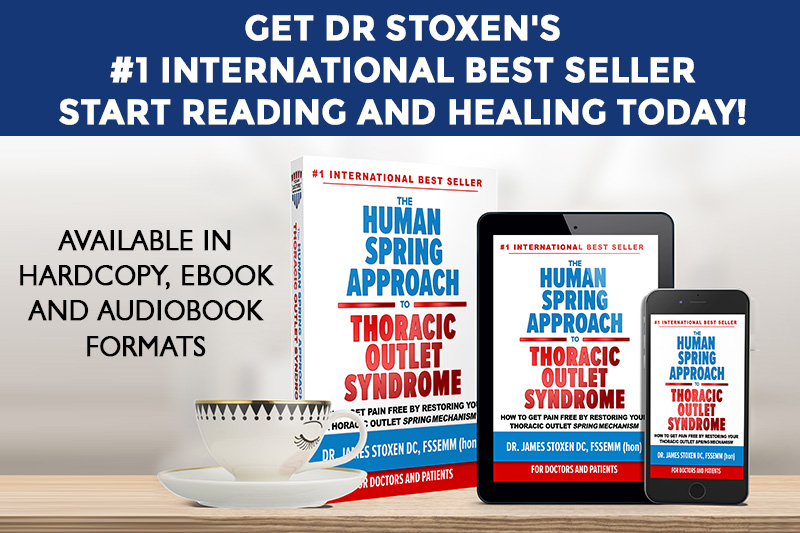
✓ Get Dr. Stoxen’s #1 International Bestselling Books
Learn how to understand, examine, and reverse your TOS—without surgery.
https://drstoxen.com/1-international-best-selling-author
✓ Check out Team Doctors Online Courses
Step-by-step video lessons, demonstrations, and self-treatment strategies.
https://teamdoctorsacademy.com
✓ Schedule a Free Phone Consultation With Dr. Stoxen
Speak directly with him so he can review your case and guide you on your next steps.
https://drstoxen.com/appointment
#ThoracicOutletSyndrome #TOSRecovery #NeckPainRelief #ScaleneMuscles #PectoralisMinorSyndrome #CarpalTunnelMisdiagnosis #DeepTissueTherapy #VibeassagePro #VibeassageSport #NerveCompression #ChronicPainJourney #CirculationRestoration #MuscleInflammation #BodyHealing #NonSurgicalTreatment

Dr James Stoxen DC., FSSEMM (hon) He is the president of Team Doctors®, Treatment and Training Center Chicago, one of the most recognized treatment centers in the world.
Dr Stoxen is a #1 International Bestselling Author of the book, The Human Spring Approach to Thoracic Outlet Syndrome. He has lectured at more than 20 medical conferences on his Human Spring Approach to Thoracic Outlet Syndrome and asked to publish his research on this approach to treating thoracic outlet syndrome in over 30 peer review medical journals.
He has been asked to submit his other research on the human spring approach to treatment, training and prevention in over 150 peer review medical journals. He serves as the Editor-in-Chief, Journal of Orthopedic Science and Research, Executive Editor or the Journal of Trauma and Acute Care, Chief Editor, Advances in Orthopedics and Sports Medicine Journal and editorial board for over 35 peer review medical journals.
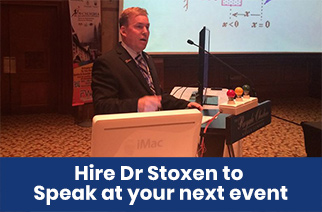
He is a much sought-after speaker. He has given over 1000 live presentations and lectured at over 70 medical conferences to over 50,000 doctors in more than 20 countries. He has been invited to speak at over 300 medical conferences which includes invitations as the keynote speaker at over 50 medical conferences.
After his groundbreaking lecture on the Integrated Spring-Mass Model at the World Congress of Sports and Exercise Medicine he was presented with an Honorary Fellowship Award by a member of the royal family, the Sultan of Pahang, for his distinguished research and contributions to the advancement of Sports and Exercise Medicine on an International level. He was inducted into the National Fitness Hall of Fame in 2008 and the Personal Trainers Hall of Fame in 2012.
Dr Stoxen has a big reputation in the entertainment industry working as a doctor for over 150 tours of elite entertainers, caring for over 1000 top celebrity entertainers and their handlers. Anthony Field or the popular children’s entertainment group, The Wiggles, wrote a book, How I Got My Wiggle Back detailing his struggles with chronic pain and clinical depression he struggled with for years. Dr Stoxen is proud to be able to assist him.
Full Bio) Dr Stoxen can be reached directly at teamdoctors@aol.com