The Roads That Failed
By the time Helen reached her late forties, she had become what the medical system quietly turns many long-term pain patients into: an expert patient. She didn’t want the title. She didn’t ask for the education. But pain is a ruthless teacher, and she had been forced to learn the language of symptoms, the choreography of appointments, and the repeating cycle of hope followed by disappointment.
She knew the names of medications before the doctor finished the sentence. She knew which therapies would be offered next, because she had already tried them—or knew someone who had. She recognized the subtle shift in tone when a provider ran out of ideas: the pause, the glance at the chart, the careful suggestion that maybe it was “stress,” maybe it was “sensitivity,” maybe it was something that couldn’t be “fixed,” only “managed.”
That was the turning point in her life. Not the first pain. Not the first numb hand. Not the first sleepless night.
The turning point was when her story stopped being about recovery and started being about survival.
Her days began to revolve around the simplest decisions: Can she drive today? Can she type long enough to finish her work? Can she lift a grocery bag? Can she wash her hair without needing to rest? The more she tried to keep her life intact, the more her body punished her for it. In quiet moments, she admitted what she never said out loud at work: this wasn’t a sore shoulder. It wasn’t an ache. It was living with thoracic outlet syndrome—the kind that doesn’t simply hurt, but gradually shrinks a person’s life.
At first, she tried to be “reasonable.” She tried to do it the right way. She followed instructions. She did the exercises. She took the medications. She returned for follow-ups. She trusted that the system would eventually connect the dots.
But pain has a way of turning “reasonable” into desperate.
Relief vs. Resolution
Helen didn’t start out wanting a miracle. She wanted an explanation. She wanted a plan that made mechanical sense. Most of all, she wanted to stop feeling like her body was betraying her without reason.
Relief—temporary reduction in symptoms—was offered again and again. But resolution—the kind that changes direction—never arrived.
Her symptoms weren’t just uncomfortable. They were life-altering: heaviness in the arm, numbness, tingling, burning pain, weakness that arrived unexpectedly. Some days the coldness in her hand felt like a warning. Other days the aching felt like a threat. And she couldn’t predict which version of her body she would wake up with.
She had what so many patients describe in private conversations: chronic pain in arm and shoulder that didn’t behave like ordinary strain. The pain didn’t “warm up.” It didn’t “work itself out.” It didn’t respond consistently to rest, movement, or therapy. It simply lingered, changing shape, changing intensity, but never truly leaving.
Over time, what was once a problem she could work around became a crisis she couldn’t escape. She began to think in bleak, honest phrases: arm pain ruining my life. Not because she wanted attention, but because the sentence described her reality with brutal accuracy.
The First Assumption: “Something Is Inflamed”
Early on, doctors assumed the problem was inflammation. It made sense on the surface. She had neck pain, shoulder pain, headaches, stiffness, and dizziness. She had pain near the collarbone and symptoms that radiated down the arm. There were days the whole region felt irritated and “hot,” even if no test could prove it.
So the system did what it often does first: anti-inflammatories. Then stronger ones. Then steroids. Sometimes it helped. Briefly. Just enough to tease her into believing the next step would finally be the one that stuck.
But the improvement never lasted, because the underlying mechanism wasn’t truly being addressed. The deeper problem—the one no one named yet—didn’t behave like a purely chemical fire. It behaved like a mechanical collapse.
Compression doesn’t resolve simply because inflammation calms down.
If a door is being crushed by a collapsing ceiling, anti-inflammatory paint will not fix the ceiling.
Helen didn’t have the words for this yet, but she felt it in her body: the pain would return the moment she used her arm like a normal person. That became the theme of her life—shoulder pain affecting daily life in ways no one could see from the outside.
The Second Assumption: “The Muscles Are Weak or Tight”
Next came therapy. Physiotherapy. Stretching. Strengthening. Posture correction. Exercise programs. The instructions were familiar, almost scripted.
Strengthen the upper back. Stretch the chest. Mobilize the neck. Stabilize the shoulders.
Some of it improved her movement. Almost none of it improved her pain. And certain movements—especially anything overhead or loaded—made her symptoms surge.
She started to fear the very activities she was told would “fix” her. She noticed that repetition didn’t build resilience—it built irritation. Load didn’t build strength—it built pressure. And she began to feel something deeply unsettling: can’t use my arm without pain.
That sentence wasn’t drama. It was the arithmetic of her day.
She wasn’t refusing to move. She was avoiding consequences.
This is where many patients silently fall into a trap: they assume that if therapy worsens symptoms, they must be doing it wrong. But Helen was doing it exactly as instructed. The problem was that the underlying structure wasn’t responding like a normal, stable system.
You do not strengthen a collapsed suspension bridge.
If the spring-like suspension that holds the shoulder and collarbone up has failed, then:
- Strengthening can increase compression
- Stretching can increase irritation
- Repetition can increase inflammation
- Load can increase nerve pressure
The system is already overloaded. Adding more load does not fix overload.
The Third Assumption: “The Nervous System Is the Problem”
As symptoms spread and became more complex, the focus shifted to nerves. Helen developed face numbness and tingling. Her arm went numb. Her hand felt weak. Grip strength faded. Coldness appeared. She experienced burning sensations and shooting pains that seemed to light up the entire pathway from neck to fingertips.
The labels followed: pinched nerve, carpal tunnel, possible cervical radiculopathy.
The medications followed: gabapentin, nerve meds, more imaging, more tests.
But the system still wasn’t asking the most important question:
Why are so many nerves being irritated at so many levels?
They treated the wires. They did not study the tunnel the wires were passing through.
Helen’s frustration became a kind of daily companion—chronic nerve pain frustration—because each new label explained only one slice of the experience. None explained the whole.
She began to wonder, late at night, in the quiet that makes pain louder: why won’t my arm heal?
The Fourth Assumption: “It’s a Pain Syndrome”
When symptoms became widespread, persistent, and resistant, the system reached for a familiar label. Fibromyalgia. Myofascial pain syndrome. Central sensitization.
In other words: “Your nervous system is overreacting.”
This diagnosis did not mean her pain was fake. It meant the system could not offer a mechanical explanation that tied everything together.
And when a system cannot explain mechanics, it often turns the problem into a chemical or neurological abstraction. But Helen’s body was not abstract. It was compressed. It was reactive. It was overloaded.
This is the moment many patients begin to experience something that doesn’t show up on imaging: the emotional collapse that follows repeated medical dead-ends. Pain becomes more than pain. It becomes fear. It becomes vigilance. It becomes a constant scanning of the body for the next surge.
It becomes arm pain anxiety—the kind that makes a person think twice before lifting a cup, turning a steering wheel, or reaching for a coat.
Why Massage Helped—And Didn’t
Massage always felt good. Sometimes it felt wonderful. Sometimes it was the only time her body truly relaxed. For an hour, she could breathe deeper. For an hour, the muscles softened. For an hour, she remembered what “normal” might have felt like.
But the relief never lasted.
Massage can reduce tone temporarily, improve circulation temporarily, calm the nervous system temporarily.
But it does not restore suspension. It does not rebuild spring function. It does not re-establish space in collapsed tunnels.
So the body would relax. Then collapse again. Over and over.
Why Chiropractic Helped—And Sometimes Hurt
Adjustments sometimes helped. Sometimes they made things worse. That inconsistency haunted her. Was she too sensitive? Was something unstable? Was she missing a diagnosis?
The inconsistency wasn’t random.
In a system that is guarded, collapsed, inflamed, and unstable, high-velocity input can briefly reduce pressure—or briefly increase it.
Without rebuilding the supporting suspension system, joints are being moved on top of a failing foundation.
Why Stimulation Made Her Worse
Electrical stimulation confused her for years. Why would something designed to “help the muscles” make the pain explode?
Because her muscles were not weak. They were protectively contracted. They were guarding. They were holding up a collapsing structure.
Stimulating them meant: contract harder.
That increased compression. That increased nerve pressure. That increased pain.
And this is where Helen began to experience a level of severity that no longer felt like an inconvenience. It felt dangerous. It felt like something was being damaged over time. She didn’t have a confirmed answer yet, but the fear became unavoidable: fear of permanent damage.
The Missing Model
Every therapy Helen tried had something in common: it was built on a lever model of the body.
Push this. Pull that. Strengthen here. Stretch there.
But her body wasn’t responding like a simple system of levers. It was responding like a suspension system that had lost its ability to maintain space under load.
And when that kind of system fails, symptoms don’t stay polite. They spread. They intensify. They become disabling.
Helen didn’t wake up one day and decide to label it severe. The condition earned that label by what it took from her. It became severe thoracic outlet syndrome not because it sounded dramatic, but because her function and freedom were steadily disappearing.
By the end of that chapter of her life, Helen was no longer bargaining with pain. She was trying to protect what was left of her life.
And she was starting to realize the worst part wasn’t the pain itself.
The worst part was the sense that she was running out of time—because when compression persists long enough, people begin to whisper about things patients dread: chronic nerve compression damage, permanent nerve damage risk, and the frightening possibility of end-stage nerve compression if the underlying mechanics are never addressed.
That was the moment Helen stopped asking for another temporary fix.
She started searching for long-term arm pain solutions—the kind that restore function, not just reduce symptoms.
And that search—slow, exhausting, and full of false starts—led her toward the next part of the story.
The Surgery Trap
By the time surgery enters the conversation, something very specific has usually already happened—not only in the body, but in the narrative around the body.
The story shifts, almost invisibly, from:
“How do we fix this?”
to:
“How do we manage this?”
to:
“How do we live with this?”
to:
“What do we remove?”
Helen didn’t arrive at that point suddenly. She was guided there, one reasonable step at a time.
And that is how almost everyone arrives there.
When Nothing Works, Cutting Sounds Logical
After years of pain that resisted medications, therapy, injections, massage, adjustments, and stimulation, the system began asking a different kind of question:
“What is physically in the way?”
The MRI was examined. The CT scan was examined. The anatomy was examined. And someone eventually said what patients both want and fear:
“This structure looks close to that structure.”
“This rib is close to the nerve.”
“This muscle is tight around the artery.”
“This disc is bulging.”
It sounded like clarity. It sounded mechanical. It sounded decisive.
And when a patient is exhausted—when they’ve spent years living in life with chronic arm pain—decisiveness can feel like rescue.
Helen had reached that level of exhaustion. She wasn’t simply uncomfortable. She was losing her ability to function. She had begun saying things she never thought she’d say, even to herself:
can’t lift arm anymore
The sentence terrified her, not only because it described her function, but because it suggested a future. A future where she wouldn’t get it back.
The Logic of Surgical Decompression
In thoracic outlet syndrome, surgical decompression often means removing the first rib, cutting the scalene muscles, or both.
The logic is simple:
“If something is pressing, remove what’s pressing.”
But that logic depends on a hidden assumption:
That the problem is what is there, not what is missing.
Helen didn’t yet have a clear way to challenge that assumption. She only had a feeling—deep, wordless—that the system still hadn’t explained why her symptoms behaved the way they did. Why they flared under load. Why they surged with overhead movement. Why the entire region felt like it was collapsing inward.
Her pain did not behave like a single structure pinching a single nerve.
It behaved like a space-maintenance failure—like the tunnel itself was becoming hostile.
The Bridge Analogy
Imagine a suspension bridge.
The cables fail. The road deck begins to sag. Cars start scraping the underside. Drivers panic. Engineers debate which parts of the bridge are “rubbing.”
The solution is not:
“Cut away part of the road.”
The solution is:
“Restore the suspension.”
But modern intervention is very good at cutting away the road.
And not always focused on restoring the cables.
Helen wasn’t anti-surgery. She wasn’t trying to prove a point. She simply needed to know whether surgery would fix the mechanism—or merely change the anatomy.
Because she could feel something else happening: the gradual conversion of pain into disability. Not the kind of disability people can see—no cast, no crutch—but the invisible disability of losing strength, endurance, and trust in one’s own body.
It became arm pain disability in the quietest, most humiliating way: she stopped doing normal things because she couldn’t predict the aftermath.
What Danielle Taught Helen
When Helen spoke to Danielle—a woman who had already walked the surgery road—she heard the story that most surgical brochures never tell.
Danielle had undergone a first rib resection and scalenectomy. They removed anatomy to “create space.” And in the short term, they did.
But they also removed load-bearing structures.
The body does not respond to that by relaxing. It responds by guarding harder.
More muscle tension. More instability. More protective contraction. More compression.
Danielle did not get better. She got worse.
And Helen heard something in Danielle’s voice that no imaging report captures: the grief of realizing she may have crossed a line that could not be uncrossed.
That conversation became the emotional edge of Helen’s decision-making. She wasn’t just afraid of pain anymore.
She was afraid of permanent loss.
Why Cutting Often Fails in TOS
Because thoracic outlet syndrome is often not a space-occupying lesion problem.
It is a space-maintenance failure problem.
The space collapses because the shoulder is no longer suspended properly, the collarbone is no longer held up dynamically, the system has lost elasticity, load paths have changed, and muscles are guarding to prevent collapse.
When you remove a rib or a muscle, you have not restored suspension.
You have destabilized the structure.
So the body guards even harder. And the tunnel often becomes more hostile, not less.
This is where Helen began to understand something that frightened her more than pain:
when TOS becomes dangerous
Not in the sensational sense—but in the slow, quiet sense, where compression persists long enough to threaten function, circulation, and nerve integrity.
She began to realize there were two risks:
- the risk of doing nothing, and
- the risk of doing something irreversible without a full mechanical explanation.
The Psychological Corner
By the time surgery is proposed, patients are often told:
“You’ve tried everything.”
“This is the last option.”
“Is surgery my only option?”
This is a terrible place to be.
Because desperation changes decision-making.
Helen felt that shift in herself. She felt it when she caught herself thinking: maybe it doesn’t matter what they remove—maybe she just needs anything that might help. That’s the moment patients become vulnerable to the surgery trap: not because they are naive, but because they are burned out.
It’s chronic pain burnout—the exhaustion of living for years in a body that feels like it’s slowly closing in.
And by that stage, the pain isn’t just physical. It begins to take on emotional weight. It becomes the sense of losing identity, independence, and the ability to plan a life.
The Edge of the Story
Helen realized she was approaching something like an end-stage conversation—not necessarily a medical stage yet, but a narrative stage, where the next step would define everything after it.
She began to notice the subtle warnings in her own symptoms. Flare-ups that lasted longer. Weakness that didn’t rebound. Numbness that lingered.
She didn’t have proof of irreversible damage—but she had the growing sense of risk.
And she began to see the cost of delay:
ignoring thoracic outlet syndrome risks
Because “waiting it out” had not improved her. It had allowed the pattern to deepen.
She started asking a different question—not “what can I tolerate,” but “what is this doing to me over time?”
The words that haunted her were stark: end-stage thoracic outlet syndrome. She didn’t know if she was there. She only knew she feared getting there.
The Real Question Nobody Was Asking
Not:
“What should we remove?”
But:
“Why did the space collapse in the first place?”
Not:
“What structure is the problem?”
But:
“What system failed?”
That question became the hinge of Helen’s story.
Because once a patient asks that question, the search changes.
And that search—relentless, careful, and fueled by fear—led Helen toward a model she didn’t know existed.
A model that could explain the entire machine, not just one broken part.
The Model That Explains Everything
For most of her adult life, Helen had lived inside a story that never quite made sense.
She had been told she had inflammation, nerve problems, muscle problems, pain syndromes, degeneration, stress-related illness.
And yet none of those explanations could fully account for the pattern that ruled her days.
Why did her arm feel heavy even at rest? Why were her hands ice cold? Why did her face go numb? Why did breathing feel restricted? Why did her symptoms span from neck to fingers? Why did “normal” activity trigger abnormal consequences?
The story was fragmented.
Then one day, someone finally showed her the whole machine.
The Human Spring Model
Dr. Stoxen explained something no one else had explained to her:
The human body is not a stack of blocks.
It is a suspended spring system.
The head, shoulders, collarbones, rib cage, spine, and pelvis are not meant to sit on each other like bricks. They are meant to be suspended by elastic tissues—structures that maintain space through dynamic recoil, not static stacking.
When that elastic suspension works:
- loads are distributed
- shocks are absorbed
- space is preserved
- motion is efficient
When it fails:
- the system collapses downward
- tunnels narrow
- compression increases
- nerves and vessels get crushed
Helen finally heard a sentence that made the chaos coherent:
Your problem is not weakness.
It is not inflammation.
It is loss of suspension.
And in that moment, years of confusion began to organize into a single mechanical narrative.
Why Thoracic Outlet Syndrome Happens
Thoracic outlet syndrome is not just “tight muscles.”
It is collapse of the space between:
- the neck
- the collarbone
- the shoulder
- the rib cage
The roof drops. The floor rises. The tunnel becomes hostile.
And through that tunnel pass:
- the brachial plexus (nerves)
- the subclavian artery
- the subclavian vein
That explained why Helen’s symptoms didn’t behave like one localized problem. She wasn’t imagining complexity. She was living inside a compression corridor that affected multiple tissues at once.
This model also explained why her symptoms kept returning after temporary relief.
Massage could soften tone briefly. Medication could quiet inflammation briefly. But if the suspension remained collapsed, the body would default back into the same compressed posture under load.
When Arm Pain Won’t Stop
Helen had been living in a loop: relax a little, collapse again. Improve briefly, flare again. Sleep, wake, brace.
That loop is what drives people toward despair—not because they are weak, but because the pattern never ends.
It becomes when arm pain won’t stop, not as a rhetorical phrase, but as a daily reality.
It also explained why Helen had begun to feel an escalating sense of danger.
Persistent tunnel compression isn’t just painful. Over time, it threatens the body’s ability to maintain normal nerve and vascular function.
That’s why some patients begin to experience severe functional loss, color changes, swelling, or escalating weakness.
That’s when people begin asking questions like: is this becoming irreversible?
The Emotional Toll
Once Helen saw the mechanics, she didn’t only feel relief.
She felt grief.
Grief for the years lost. For the misdirected therapies. For the hours spent trying to “strengthen” what was collapsing. For the times she blamed herself when the plan didn’t work.
And she finally understood why her emotional world had changed.
Pain had rewritten her identity. It had narrowed her choices. It had turned ordinary life into constant calculation.
It wasn’t just discomfort. It was the emotional toll of chronic pain—the slow erosion of confidence, patience, and hope.
She had begun experiencing depression from arm pain, not because she was giving up, but because her life had been shrinking for years.
She had begun experiencing anxiety from nerve pain, because nerve flares are unpredictable, frightening, and hard to explain to others.
She wasn’t failing psychologically.
She was reacting normally to an abnormal, relentless stressor.
Living With Constant Arm Pain
The model also gave language to something Helen had never been able to describe cleanly: how pain becomes a full-body experience.
It wasn’t only her arm. It was her breathing, posture, sleep, concentration, mood, and sense of safety.
It was living with constant arm pain, the kind that changes how you sit, how you stand, how you drive, how you hug someone, how you rest, and how you think.
It was the chronic pain impact daily life in ways other people don’t see—like the fact that she would plan errands based on how long she could tolerate holding a steering wheel.
It was the loss of function arm pain created—not by laziness or fear—but by protective adaptations that had become permanent patterns.
Why Vibration and Deep Tissue Work Together
Dr. Stoxen explained something that finally matched what Helen felt in her body:
Her muscles were not simply “tight.”
They were protectively contracted.
They were guarding to hold up a collapsing structure.
You can’t force a guarding system to relax. You have to persuade it.
Vibration can help reset muscle tone, reduce guarding, improve circulation, and help tissue soften.
Deep tissue work can change tissue length, restore glide, reopen planes, and reclaim space.
Together, the strategy is not to “fight” the body, but to decompress it dynamically—by restoring motion and elasticity rather than removing anatomy.
Helen didn’t interpret this as magic. She interpreted it as an engineering explanation for biology. Something she could finally trust.
The Thoracic Outlet Recovery Roadmap
For the first time, Helen saw a step-by-step plan that wasn’t just symptom management:
- Reduce guarding
- Restore tissue length
- Reopen joint space
- Rebuild spring behavior
- Retrain load paths
- Maintain elasticity
This was not framed as a quick fix. It was framed as restoring suspension—the missing mechanism.
And that’s why it offered something Helen had not had in years: the possibility of chronic shoulder nerve pain help that was rooted in mechanics, not guesswork.
It also gave her a way to understand how and why symptoms can become disabling if ignored long enough—how progressive collapse can lead to the kind of severe, persistent dysfunction patients describe as disabling arm pain.
Helen’s story was finally moving from “What’s wrong with me?” to “What failed—and how do we restore it?”
That shift didn’t just change her treatment decisions.
It changed her future.
Recovery Turn—and the Warnings
When Helen finally underwent treatment based on a suspension-and-space model, the first change she noticed was not dramatic.
It was subtle.
Her body felt quieter.
The constant background tension—the clenched, guarded feeling around the neck, collarbone, and shoulder—began to soften. And with that softening, something else happened: she started to feel less afraid to move.
Fear had become part of her pain pattern. Not irrational fear—protective fear. Fear built from experience.
She had learned that reaching overhead could trigger a flare. She had learned that lifting could cause numbness. She had learned that trying to “push through” could punish her for days.
So the first sign of change wasn’t just physical relief.
It was the return of trust.
The Shift From Surviving to Living
As the guarding reduced and tissue planes began to restore glide, Helen started doing small tasks she had stopped doing.
She carried a bag without bracing for the spike.
She drove without having to shake out her hand at every stoplight.
She slept and woke up without the same immediate dread.
These were small victories—but they were the exact victories that chronic pain takes away.
Because the truth of her previous life was simple: living with constant arm pain had made every day a negotiation.
When her function improved, she felt something she hadn’t felt in years: choice.
The Questions Patients Ask at This Stage
Even as her symptoms improved, Helen still had questions that are common among patients who’ve been through long cycles of failure.
What if it comes back?
What if something was damaged permanently?
Is there a point where recovery becomes harder?
These questions matter because thoracic outlet syndrome exists on a spectrum. Some cases respond relatively quickly once mechanics are addressed. Other cases are more complex—especially when compression has persisted long enough to create secondary issues.
That’s why people search for long-term arm pain solutions. They’re not only seeking relief today. They’re trying to protect their future.
When TOS Becomes a Threat to Function
Helen had lived long enough in collapse to recognize something important: there are stages of suffering, and there are stages of risk.
Pain alone can be brutal. But when pain is paired with escalating weakness, persistent numbness, severe vascular symptoms, or progressive loss of endurance, the concern shifts.
That’s when patients start asking about when TOS becomes dangerous.
Not because they want drama.
Because they can feel the stakes rising.
Long-standing compression can threaten nerve function over time, and it can create patterns of guarding and overload that become self-reinforcing. This is where patients begin to fear that the condition is crossing into a more advanced stage—what some describe as end-stage thoracic outlet syndrome—when function loss, sensitivity, and persistent compression dominate daily life.
Helen didn’t use those words casually. She used them as a warning: a reminder of where her path could have led if she had accepted the “manage it forever” narrative.
The Reality of Disability
Before treatment, Helen wasn’t just in pain.
She was losing her arm.
She had reached points where she felt she can’t use my arm without pain, and moments where she admitted she can’t lift arm anymore.
That loss wasn’t theoretical. It was measurable: reduced grip, reduced endurance, reduced capacity to tolerate daily load.
It was arm pain disability—not because she had surrendered, but because her body could not keep absorbing the same mechanical collapse without consequence.
That disability is why the conversation about risk matters.
Because when symptoms persist long enough, people begin to worry about what happens to nerves under chronic pressure.
Fear of Permanent Damage
Helen had lived with the quiet terror that many patients never say aloud: fear of permanent damage.
They worry about nerves. They worry about circulation. They worry about whether the body is slowly crossing a threshold where function won’t come back.
That fear is often tied to phrases like permanent nerve damage risk—a phrase that sounds extreme until you’ve lived years with progressive numbness, weakness, and burning pain.
Helen learned that the goal of evaluation should never be “wait until it’s unbearable.”
Because by the time it’s unbearable, patterns can be entrenched: guarding can be chronic, posture can be collapsed, tissues can be sensitized, and the tolerance for load can be profoundly reduced.
This is part of why ignoring the condition can carry long-term costs—ignoring thoracic outlet syndrome risks isn’t just about pain. It’s about what pain can evolve into when the underlying mechanics remain unresolved.
The Emotional Aftermath
Even as the body improves, the mind often needs time to recover.
Helen’s years of pain had rewired her vigilance. She had lived with constant scanning, constant anticipation, constant adaptation.
That’s why recovery wasn’t just physical.
She had to unlearn the expectation of punishment.
And she had to process what pain had taken from her emotionally.
Chronic pain doesn’t just hurt the body. It steals energy. It narrows identity. It isolates.
It creates the emotional toll of chronic pain in a way that can be difficult to explain to people who haven’t lived it.
It can lead to depression from arm pain, especially when a person feels trapped in a body that won’t cooperate.
It can lead to anxiety from nerve pain, especially when symptoms are unpredictable and frightening.
It can produce chronic pain burnout, the exhaustion of fighting the same battle every day for years.
Helen recognized that she didn’t just need less pain.
She needed her life back.
What “End-Stage” Really Means in Real Life
When Helen looked back at her worst months, she realized what “end-stage” felt like from the inside.
It felt like when arm pain won’t stop—when rest doesn’t reset the system, and activity only makes the tunnel more hostile.
It felt like chronic pain impact daily life in a thousand invisible ways.
It felt like losing the ability to plan, because she couldn’t predict her body.
It felt like life with chronic arm pain—not as a phrase, but as a daily constraint.
And it felt like being afraid that the condition was moving toward end-stage nerve compression, where function loss becomes the dominant feature of the story.
Helen’s improvement didn’t erase those memories. But it did transform them into something else:
a warning, and a map.
The Bigger Meaning
Helen’s case is not rare.
It is misunderstood.
Millions of people live in the space between “I’ve tried everything” and “Is surgery my only option?” and never hear a mechanical explanation that unifies the entire pattern.
Helen’s turning point was not a miracle.
It was a model.
A model that shifted the question from “what do we remove?” to “what must we restore?”
And that shift changed everything.
Team Doctors Resources
✓ Check out the Team Doctors Recovery Tools
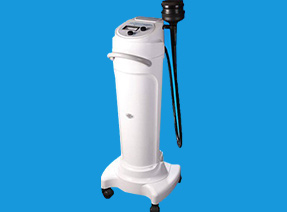
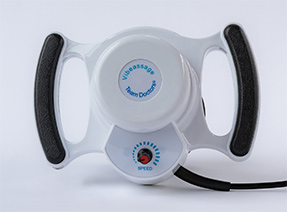
The Vibeassage Sport and the Vibeassage Pro featuring the TDX3 soft-as-the-hand Biomimetic Applicator Pad
https://www.teamdoctors.com/
✓ Get Dr. Stoxen’s #1 International Bestselling Books
Learn how to understand, examine, and reverse your TOS—without surgery.
https://drstoxen.com/1-international-best-selling-author/
✓ Check out Team Doctors Online Courses
Step-by-step video lessons, demonstrations, and self-treatment strategies.
https://teamdoctorsacademy.com/
✓ Schedule a Free Phone Consultation With Dr. Stoxen
Speak directly with him so he can review your case and guide you on your next steps.
https://drstoxen.com/appointment/
#ThoracicOutletSyndrome #FailedTOSSurgery #TOSRecovery #ChronicPainStory #VascularTOS #ArmPain #PatientAdvocacy #MedicalTrauma #SurgeryFailure #PainJourney
Medical Disclaimer
This article is provided for educational and informational purposes only. It is not intended to diagnose, treat, cure, or prevent any disease, nor is it intended to replace professional medical advice, diagnosis, or treatment.
Thoracic outlet syndrome and related nerve, vascular, and musculoskeletal conditions can present differently in each individual. Treatment decisions—including surgical and non-surgical options—must be made on a case-by-case basis in consultation with a qualified, licensed healthcare professional who is familiar with the patient’s complete medical history.
The experiences described in this article reflect individual outcomes and do not guarantee similar results for others. Surgical procedures, including thoracic outlet surgery and first rib resection, carry inherent risks, and outcomes vary based on many factors including diagnosis, timing, practitioner experience, and patient-specific anatomy and physiology.
Readers should not delay or discontinue medical care based on information contained in this article. Always seek the guidance of a qualified healthcare provider with any questions regarding symptoms, conditions, or treatment options.
Editor’s Note
This article explores a patient and family experience following thoracic outlet syndrome surgery and highlights the importance of comprehensive evaluation, informed decision-making, and second opinions when managing complex pain conditions.
The article also references the Human Spring Approach, a biomechanical evaluation and treatment framework developed by Dr James Stoxen, which emphasizes understanding the body as an integrated, dynamic spring system rather than a collection of isolated anatomical structures. The inclusion of this approach is intended to illustrate an alternative clinical perspective, not to discredit surgery or any specific medical specialty.
Mention of specific clinicians, evaluation models, or treatment philosophies does not constitute endorsement, medical advice, or a claim of superiority. Rather, it reflects the editorial goal of encouraging patients and families to seek clarity, explanation, and individualized assessment before pursuing irreversible interventions.
The editorial position of this publication is that understanding should precede intervention, especially in conditions where symptoms persist, worsen, or fail to respond to standard care.

Dr James Stoxen DC., FSSEMM (hon) He is the president of Team Doctors®, Treatment and Training Center Chicago, one of the most recognized treatment centers in the world.
Dr Stoxen is a #1 International Bestselling Author of the book, The Human Spring Approach to Thoracic Outlet Syndrome. He has lectured at more than 20 medical conferences on his Human Spring Approach to Thoracic Outlet Syndrome and asked to publish his research on this approach to treating thoracic outlet syndrome in over 30 peer review medical journals.
He has been asked to submit his other research on the human spring approach to treatment, training and prevention in over 150 peer review medical journals. He serves as the Editor-in-Chief, Journal of Orthopedic Science and Research, Executive Editor or the Journal of Trauma and Acute Care, Chief Editor, Advances in Orthopedics and Sports Medicine Journal and editorial board for over 35 peer review medical journals.
He is a much sought-after speaker. He has given over 1000 live presentations and lectured at over 70 medical conferences to over 50,000 doctors in more than 20 countries. He has been invited to speak at over 300 medical conferences which includes invitations as the keynote speaker at over 50 medical conferences.
After his groundbreaking lecture on the Integrated Spring-Mass Model at the World Congress of Sports and Exercise Medicine he was presented with an Honorary Fellowship Award by a member of the royal family, the Sultan of Pahang, for his distinguished research and contributions to the advancement of Sports and Exercise Medicine on an International level. He was inducted into the National Fitness Hall of Fame in 2008 and the Personal Trainers Hall of Fame in 2012.
Dr Stoxen has a big reputation in the entertainment industry working as a doctor for over 150 tours of elite entertainers, caring for over 1000 top celebrity entertainers and their handlers. Anthony Field or the popular children’s entertainment group, The Wiggles, wrote a book, How I Got My Wiggle Back detailing his struggles with chronic pain and clinical depression he struggled with for years. Dr Stoxen is proud to be able to assist him.
Full Bio) Dr Stoxen can be reached directly at teamdoctors@aol.com