“The First Pain”
(Helen’s Journey — A 37-Year Descent Into Compression)
Helen had always thought of herself as strong.
Not in the loud or dramatic way. Not in the way people announce. But in the quiet, dependable way—someone who carried groceries in one trip, who painted for hours without noticing time pass, who worked in the garden until the sun dropped low and the air cooled. She and her husband lived in Northern Ontario, Canada, where the seasons taught patience and resilience whether you wanted to learn them or not.
She was thirty years old when the first pain arrived.
It wasn’t dramatic. There was no accident, no fall, no sudden injury. Just a sharp, unfamiliar ache near her collarbone, close to the base of her neck. At first, she assumed she had slept wrong. Or strained something lifting. Or worked too long with her arms forward. It felt like collarbone neck pain, the kind you expect to disappear in a few days.
It didn’t.
Instead, it stayed. And then it spread.
The ache turned into neck pain, then neck shoulder pain, then neck pain and headaches that arrived without warning and lingered far too long. Some mornings she woke up already tired, already sore, already aware that something in her body was not right. Other mornings, she woke up stiff, barely able to turn her head—neck stiffness so severe she had to rotate her whole torso just to look to the side.
She told herself it was stress. Or posture. Or age.
But she was only thirty.
Within months, the pain began to radiate. What started as collarbone pain near neck became collarbone neck and shoulder pain, then pain above collarbone, then tingling in collarbone that felt like electricity under the skin. Some days it burned. Some days it throbbed. Some days it felt like a deep, dull pressure that never fully went away.
Soon, it wasn’t just her neck.
It was neck and arm pain. Then arm neck pain. Then collarbone and arm pain that made simple movements feel heavy and difficult. Her arms began to feel strange—not weak exactly at first, but weighted, as if gravity had been turned up just for her.
She noticed it while lifting groceries. Then while brushing her hair. Then while reaching overhead.
Her arms felt too heavy.
At the same time, her chest began to hurt. Not in the sharp, frightening way people describe heart attacks—but in a deep, pressure-filled way. Chest pain around collar bone. Chest pain under the collarbone. Sometimes it felt like something was pulling downward inside her rib cage. Sometimes it felt like her ribs were being squeezed from the inside out.
Breathing changed too.
She could still breathe—but not deeply. Not fully. There was always a sense of resistance. Shortness of breath. Difficulty taking a deep breath. And then came the dry cough that never seemed to have a reason.
Doctors would later look at her lungs and say they were fine.
But she knew something was wrong.
As months turned into years, the pain didn’t stay contained. It migrated downward—neck and back pain, then upper back, then midback, then lower back. Some days it felt as if her entire spine had become one long, sensitive, overworked structure that could never truly relax.
And still, it kept spreading.
Her shoulders began to ache constantly—constant neck pain blended into shoulder pain until she could no longer tell where one ended and the other began. Eventually she developed severe left and right shoulder pain, and later a rotator cuff tear in her right shoulder. Both shoulders slowly stiffened into what doctors would eventually call frozen shoulder—on both sides.
She could no longer lift her arms above shoulder height.
Not because she didn’t want to.
Because she couldn’t.
Her arms were weak. Not tired—weak. For decades—37 years—she would live with arms that felt too heavy to lift, too exhausted to hold up, too painful to move freely.
Below the shoulders, the symptoms kept going.
Left and right elbow pain. Forearm pain. Wrist pain. Her hands began to change. Her fingers felt stiff. Painful. Sometimes numb. Sometimes burning. Sometimes both at once.
Eventually she was diagnosed with carpal tunnel syndrome.
But that diagnosis didn’t explain why both arms felt heavy even at rest. Or why her hands were ice cold. Or why her grip strength was slowly disappearing.
She started dropping things.
She started avoiding things.
Buttons. Jars. Writing. Carrying.
Even rest didn’t help.
And then came the neurological symptoms.
The pinched nerve in her neck caused numbness in her face and head. Sometimes it felt like her skin wasn’t quite hers. Sometimes like cotton had been stuffed under one side of her face. Other times it felt like static.
She also began experiencing neck pain and dizziness. Then vertigo. Then brain fog. Then a constant sense that her nervous system was overwhelmed and never truly calm.
Fatigue followed.
Not normal tiredness. Not “I need a good night’s sleep” tiredness.
Chronic fatigue. Extreme fatigue. The kind that makes even small tasks feel like climbing a hill in deep snow. The kind that turns your life into a series of calculations about what you can afford to do today—because you won’t have energy for everything.
Her mood changed too.
Pain does that.
Years of pain do it even more.
She became anxious. Depressed. Short-tempered. Emotionally exhausted. Slowly, almost without noticing, she became antisocial. Not because she didn’t love people—but because everything cost energy she no longer had.
Painting stopped.
Sports stopped.
Gardening became minimal.
Her world grew smaller.
And still, nobody had a real answer.
The First Diagnoses
Doctors were not unkind.
They were simply operating inside a system that looks for structures instead of mechanics.
They gave her medications:
- Muscle relaxants
- Narcotics
- Antidepressants
- Anti-inflammatories
They sent her to:
- Physiotherapy
- Massage therapy
- Chiropractic
- Hydrotherapy
Some things helped a little. Some made her worse. None changed the direction of her life.
At the Mayo Clinic in Minnesota, she was diagnosed with myofascial pain, and later fibromyalgia. Rheumatologists examined her. Specialists reviewed her case. More labels were added.
But the core problem remained untouched.
No one asked a different question:
“What if this isn’t a disease of tissues… but a failure of the body’s load-bearing suspension system?”
No one yet recognized that what she was living with was thoracic outlet syndrome — a condition where nerves and blood vessels become chronically compressed between the neck, collarbone, and shoulder, not because something is “in the way,” but because the spring suspension system of the body has collapsed.
No one yet understood that her neck muscle pain, collarbone neck pain, chest pain under the collarbone, arm heaviness, cold hands, numbness, and weakness were all part of one mechanical problem.
So the years continued.
And the compression continued.
And the suffering became normal.
The Quiet Tragedy of Chronic Neck Pain
This is what chronic neck pain really does.
It doesn’t just hurt.
It shrinks your life.
Helen didn’t wake up one day and lose everything.
She lost it one small ability at a time.
And because it happened slowly, she kept adapting—until adaptation became survival.
She would later learn that what she had been living with was not just:
- Neck pain causes
- Or a pinched nerve
- Or “just fibromyalgia”
But a full-body mechanical collapse of space — where nerves, blood vessels, and joints no longer had room to exist and move safely.
But at this point in her story…
She didn’t know any of that yet.
She only knew she was tired.
She was hurting.
And she was running out of hope.
Excellent. Here is:
“The Long Road of Wrong Answers”
By the time Helen was in her forties, pain was no longer something that came and went.
It was simply there.
It greeted her when she woke up. It followed her through the day. It decided how much she could do, how far she could go, how long she could last. Constant neck pain had become the background noise of her life—sometimes loud, sometimes quieter, but never truly gone.
She learned to measure her days not in hours, but in energy.
Could she go to the store today?
Could she make a simple meal?
Could she stand long enough to wash dishes?
Her neck and back pain had become a permanent companion. So had the neck shoulder pain, the collarbone neck and shoulder pain, the chest pain around collar bone, and the strange, oppressive sensation of chest pain under the collarbone that made breathing feel shallow and incomplete.
Her arms still felt heavy.
Even when she wasn’t moving them.
Sometimes especially when she wasn’t moving them.
The neck and arm pain had evolved into something deeper and more disturbing—a combination of pain, numbness, coldness, and weakness that no single word could fully describe. Her hands were often ice cold, even in summer. Her fingers felt stiff and uncooperative. Her grip strength continued to fade.
Doctors added diagnoses as the years passed.
First it was carpal tunnel syndrome.
Then myofascial pain.
Then fibromyalgia.
Each label came with a new set of prescriptions, new therapies, new hope—and then, slowly, the familiar disappointment.
The Medication Years
At different points in her life, Helen found herself taking a long list of medications:
- Painkillers
- Muscle relaxants
- Anti-depressants
- Anti-inflammatories
- Later, even morphine
- Gabapentin
- Prednisone
- Sleep medications
- Blood pressure medication
- And others
Some dulled the pain.
Some dulled her mind.
Some made her feel like she was watching her own life through fogged glass.
None of them fixed the problem.
They were designed to quiet symptoms, not to restore function.
And deep inside, even if she didn’t yet have the words for it, Helen knew something was wrong with that approach.
Because her body wasn’t just hurting.
It was failing to work properly.
The Therapy Carousel
She tried everything.
Physiotherapy gave her exercises. It helped a little with mobility, but not with pain.
Hydrotherapy felt good while she was in the water. But the relief never followed her home.
Chiropractic adjustments sometimes gave short-term relief. Sometimes they made things worse. Her body felt unstable, sensitive, reactive.
Massage therapy helped her relax—but the pain always came back.
Acupuncture helped a little. Temporarily.
Homeopathic medicine. Kinesiology. Alternative treatments.
She tried tools at home:
- A massage ball
- Trigger point tools
- Hot stones
- Heating pads
- An electric muscle stimulator
- A TENS machine
- Other vibration devices
- Oils and creams and topical treatments
Some things were comforting.
Some things were useless.
Some things—like the TENS machine and electric muscle stimulation—made her much worse.
It was confusing.
Why would something designed to “stimulate” muscles make her pain explode?
She didn’t know it yet, but the answer was simple:
You don’t stimulate a system that is already overloaded, compressed, and guarded.
You decompress it.
But no one had explained that to her yet.
The Invisible Pattern
What made her case especially difficult for the medical system was this:
Her pain was everywhere.
Neck. Shoulders. Chest. Ribs. Back. Arms. Elbows. Forearms. Wrists. Hands. Fingers.
She had:
- Neck muscle pain
- Pain above collarbone
- Tingling in collarbone
- Collarbone and arm pain
- Arm neck pain
- Neck pain and dizziness
- Neck pain and headaches
- Neck stiffness
- Neck pain causes that nobody could clearly explain
And yet, every specialist looked only at their piece.
The neck doctor looked at her neck.
The hand doctor looked at her hands.
The rheumatologist looked at blood tests.
The neurologist looked at nerve conduction.
Nobody was looking at the whole mechanical chain.
Nobody was asking:
“What if this is one long compression pattern running from neck to hand?”
“What if the space for nerves and blood vessels is collapsing at multiple points?”
“What if the shoulder and collarbone are not being held up by a functioning suspension system?”
The Mayo Clinic and the Labels
When Helen went to the Mayo Clinic, she hoped—like so many patients do—that this would finally be the place where someone would put all the pieces together.
Instead, she was given the diagnoses of:
- Myofascial pain
- Fibromyalgia
These labels explained that she was in pain.
They did not explain why.
They did not explain:
- Why her arms were heavy
- Why her hands were cold
- Why her face went numb
- Why her shoulders were frozen
- Why her breathing was restricted
- Why her grip strength was disappearing
And they certainly did not explain why, year after year, she was getting worse.
The Psychological Toll
Chronic pain doesn’t just hurt the body.
It changes the mind.
It changes your relationship to the future.
Helen began to live in a smaller and smaller world.
She stopped making plans because plans were too easy to cancel.
She stopped committing to activities because she never knew how she would feel that day.
She became anxious.
Then depressed.
Then emotionally exhausted.
Her brain fog made it hard to concentrate. The dizziness and vertigo made it hard to feel safe moving sometimes. The chronic fatigue made everything feel like work.
She wasn’t just in pain.
She was trapped in a body that no longer felt reliable.
The First Whispers of Surgery
Eventually, as happens to so many people with long-standing neck and arm pain, the conversation began to shift.
“What if surgery is the next step?”
“What if something needs to be removed?”
“What if something is compressing the nerves?”
The idea was frightening.
But so was the idea of living the rest of her life like this.
She had already tried everything.
Or so she thought.
She would later learn that there was a massive category of care she had never actually been offered:
Care focused not on cutting, not on stimulating, not on masking—but on restoring the body’s spring-based suspension system.
But she wasn’t there yet.
The Problem No One Was Naming
What Helen was actually living with was:
- Progressive collapse of space in the thoracic outlet
- Chronic compression of nerves and blood vessels
- Failure of the shoulder and collarbone suspension system
- Protective muscle guarding that never shut off
- Loss of elastic recoil in the system
But the medical model she was in only knew how to:
- Medicate
- Inject
- Stretch
- Strengthen
- Or cut
And none of those address compression caused by spring failure.
So the years continued.
And the suffering continued.
And the hope became thinner.
Until one day, something unexpected happened.
She met someone who had gone further down the surgical road…
…and come back with a warning.
Here is:
“The Story That Changed Everything”
By the time Helen met Danielle, she had already learned not to expect miracles.
Hope had become something she handled carefully—like a fragile object that broke too easily if dropped.
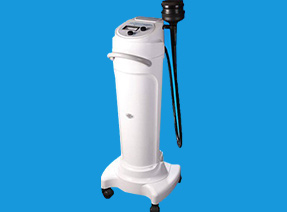
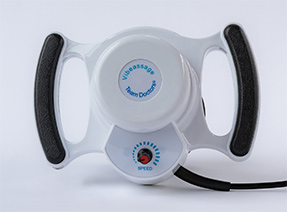
She met Danielle through a chiropractor who owned a device called a Vibeassage. At first, the name meant nothing to her. It was just another tool in a long list of things she had already tried.
But Danielle was different.
Danielle had thoracic outlet syndrome too. And not just any case—she had gone all the way to surgery.
She had undergone what the surgeons called a first rib resection and scalenectomy. They had cut out the rib at the base of her neck and removed the scalene muscles in an attempt to “create space” for the nerves and blood vessels.
In theory, it was supposed to solve everything.
In reality, Danielle was much worse after the operation.
Her pain increased. Her function decreased. And years went by without improvement.
When Helen spoke to her on the phone, Danielle didn’t sound bitter.
She sounded honest.
She explained something that immediately lodged in Helen’s mind:
“They created space by cutting. But they never fixed why the space collapsed in the first place.”
Danielle told her that eventually she found a doctor in Chicago—Dr. James Stoxen—who used a completely different approach. He didn’t cut. He didn’t remove. He didn’t fuse.
He restored the spring system that holds the shoulder, collarbone, and rib cage up in the first place.
Danielle told her about a book:
The Human Spring Approach to Thoracic Outlet Syndrome.
She told her about a device:
The Vibeassage.
And she told her something else that made Helen pause:
“I have my life back.”
The First Small Miracle
Helen decided to buy the Vibeassage.
She didn’t tell herself it would fix everything.
She had learned not to do that.
But at the time, she had been suffering from sciatic nerve pain for about a month—deep, sharp, relentless pain that shot down her leg and made sitting and sleeping miserable.
She decided to try.
She used the Vibeassage two or three times a day, sometimes for one or two hours at a time.
Within a week…
The sciatic pain was gone.
Completely.
She couldn’t remember the last time something had worked that clearly, that decisively, that logically.
Then she tried it on her lower back, where she had been suffering from severe back pain.
Again, after weeks, the pain was gone.
This was not subtle.
This was not placebo.
This was mechanical change.
For the first time in decades, Helen allowed herself to think:
“Maybe this man really understands something no one else has explained to me.”
The Call
Helen and her husband decided to contact Dr. Stoxen.
They expected a short consultation.
Instead, they got a three-hour conversation.
He didn’t rush.
He didn’t interrupt.
He started at the beginning.
He asked about:
- The very first pain near her collarbone
- The spread into neck pain, neck shoulder pain, neck pain and headaches
- The development of neck stiffness, neck muscle pain, constant neck pain
- The progression into neck and arm pain, collarbone and arm pain, arm neck pain
- The chest pain under the collarbone and chest pain around collar bone
- The tingling in collarbone and pain above collarbone
- The neck pain and dizziness, vertigo, brain fog
- The weakness, the cold hands, the numbness, the grip loss
He asked about every test.
Every doctor.
Every therapy.
Every medication.
And then, for the first time in her life, someone explained her story back to her in a way that made sense.
He explained why:
- Stimulating muscles made her worse
- Stretching didn’t fix compression
- Strengthening a collapsed spring system increases compression
- Cutting anatomy doesn’t restore suspension
- Masking pain doesn’t restore space
He explained that her body wasn’t broken.
It was collapsed.
He explained that the shoulder and collarbone are not meant to sit on the rib cage.
They are meant to be suspended.
Like a bridge.
Like a spring system.
And when that suspension fails, the roof falls into the tunnel.
And when the roof falls into the tunnel, nerves and blood vessels get crushed.
That is thoracic outlet syndrome.
Not as a diagnosis.
But as a mechanical failure.
He explained what would be required to reverse it.
And how long it would likely take.
They were on the phone for hours.
He never charged them.
The Decision
Helen and her husband decided to go to Chicago.
They were hopeful.
But they were also afraid to hope.
So many doctors had promised help.
So many had failed.
They almost canceled.
Her husband called Dr. Stoxen again.
Dr. Stoxen said simply:
“She will get better.”
So they drove.
Twelve hours.
From Sudbury to Chicago.
They had to stop often because sitting for long periods caused her pain to explode.
The Examination
When they arrived, Dr. Stoxen spent three hours examining her.
Not just reflexes.
Not just imaging.
He touched every painful muscle.
He assessed tension, density, guarding, tenderness across her entire body.
He wrote nine pages of findings.
Helen had never been examined like that before.
Not even close.
The Treatment
The treatment began with the Vibeassage Pro.
Then came hours of meticulous deep tissue work.
Not rushed.
Not generic.
Not superficial.
Day after day.
Two hours of vibration.
Hours of hands-on work.
Focused first on the thoracic outlet.
Then on the entire body.
The Result
Within days:
Her neck pain was gone.
Her neck shoulder pain was gone.
Her chest pain under the collarbone was gone.
Her arm numbness was gone.
Her hand numbness was gone.
Her headaches were gone.
She could raise her arms above her head.
Her hands were warm.
Her circulation had returned.
Her body felt alive again.
The Aftermath
At the time, Helen had been on:
- Morphine for 5 years
- Gabapentin
- Prednisone
- Muscle relaxants
- Antidepressants
- Sleep medications
- Blood pressure meds
After treatment, her doctor took her off all pain medications.
She now only takes medication for lupus.
The Meaning
After 37 years of suffering…
Her life came back.
🌱 Three Human Spring Principles Helen Now Lives By
- Never compress what must be suspended — Restore spring support before adding load or force.
- Decompression comes before strengthening — You don’t build on a collapsed system.
- The body heals when space is restored — Nerves and blood vessels don’t need “fixing”; they need room.
Team Doctors Resources
✓ Check out the Team Doctors Recovery Tools
The Vibeassage Sport and the Vibeassage Pro featuring the TDX3 soft-as-the-hand Biomimetic Applicator Pad
https://www.teamdoctors.com/
✓ Get Dr. Stoxen’s #1 International Bestselling Books
Learn how to understand, examine, and reverse your TOS—without surgery.
https://drstoxen.com/1-international-best-selling-author/
✓ Check out Team Doctors Online Courses
Step-by-step video lessons, demonstrations, and self-treatment strategies.
https://teamdoctorsacademy.com/
✓ Schedule a Free Phone Consultation With Dr. Stoxen
Speak directly with him so he can review your case and guide you on your next steps.
https://drstoxen.com/appointment/
#ThoracicOutletSyndrome #FailedTOSSurgery #TOSRecovery #ChronicPainStory #VascularTOS #ArmPain #PatientAdvocacy #MedicalTrauma #SurgeryFailure #PainJourney
Medical Disclaimer
This article is provided for educational and informational purposes only. It is not intended to diagnose, treat, cure, or prevent any disease, nor is it intended to replace professional medical advice, diagnosis, or treatment.
Thoracic outlet syndrome and related nerve, vascular, and musculoskeletal conditions can present differently in each individual. Treatment decisions—including surgical and non-surgical options—must be made on a case-by-case basis in consultation with a qualified, licensed healthcare professional who is familiar with the patient’s complete medical history.
The experiences described in this article reflect individual outcomes and do not guarantee similar results for others. Surgical procedures, including thoracic outlet surgery and first rib resection, carry inherent risks, and outcomes vary based on many factors including diagnosis, timing, practitioner experience, and patient-specific anatomy and physiology.
Readers should not delay or discontinue medical care based on information contained in this article. Always seek the guidance of a qualified healthcare provider with any questions regarding symptoms, conditions, or treatment options.
Editor’s Note
This article explores a patient and family experience following thoracic outlet syndrome surgery and highlights the importance of comprehensive evaluation, informed decision-making, and second opinions when managing complex pain conditions.
The article also references the Human Spring Approach, a biomechanical evaluation and treatment framework developed by Dr James Stoxen, which emphasizes understanding the body as an integrated, dynamic spring system rather than a collection of isolated anatomical structures. The inclusion of this approach is intended to illustrate an alternative clinical perspective, not to discredit surgery or any specific medical specialty.
Mention of specific clinicians, evaluation models, or treatment philosophies does not constitute endorsement, medical advice, or a claim of superiority. Rather, it reflects the editorial goal of encouraging patients and families to seek clarity, explanation, and individualized assessment before pursuing irreversible interventions.
The editorial position of this publication is that understanding should precede intervention, especially in conditions where symptoms persist, worsen, or fail to respond to standard care.

Dr James Stoxen DC., FSSEMM (hon) He is the president of Team Doctors®, Treatment and Training Center Chicago, one of the most recognized treatment centers in the world.
Dr Stoxen is a #1 International Bestselling Author of the book, The Human Spring Approach to Thoracic Outlet Syndrome. He has lectured at more than 20 medical conferences on his Human Spring Approach to Thoracic Outlet Syndrome and asked to publish his research on this approach to treating thoracic outlet syndrome in over 30 peer review medical journals.
He has been asked to submit his other research on the human spring approach to treatment, training and prevention in over 150 peer review medical journals. He serves as the Editor-in-Chief, Journal of Orthopedic Science and Research, Executive Editor or the Journal of Trauma and Acute Care, Chief Editor, Advances in Orthopedics and Sports Medicine Journal and editorial board for over 35 peer review medical journals.
He is a much sought-after speaker. He has given over 1000 live presentations and lectured at over 70 medical conferences to over 50,000 doctors in more than 20 countries. He has been invited to speak at over 300 medical conferences which includes invitations as the keynote speaker at over 50 medical conferences.
After his groundbreaking lecture on the Integrated Spring-Mass Model at the World Congress of Sports and Exercise Medicine he was presented with an Honorary Fellowship Award by a member of the royal family, the Sultan of Pahang, for his distinguished research and contributions to the advancement of Sports and Exercise Medicine on an International level. He was inducted into the National Fitness Hall of Fame in 2008 and the Personal Trainers Hall of Fame in 2012.
Dr Stoxen has a big reputation in the entertainment industry working as a doctor for over 150 tours of elite entertainers, caring for over 1000 top celebrity entertainers and their handlers. Anthony Field or the popular children’s entertainment group, The Wiggles, wrote a book, How I Got My Wiggle Back detailing his struggles with chronic pain and clinical depression he struggled with for years. Dr Stoxen is proud to be able to assist him.
Full Bio) Dr Stoxen can be reached directly at teamdoctors@aol.com